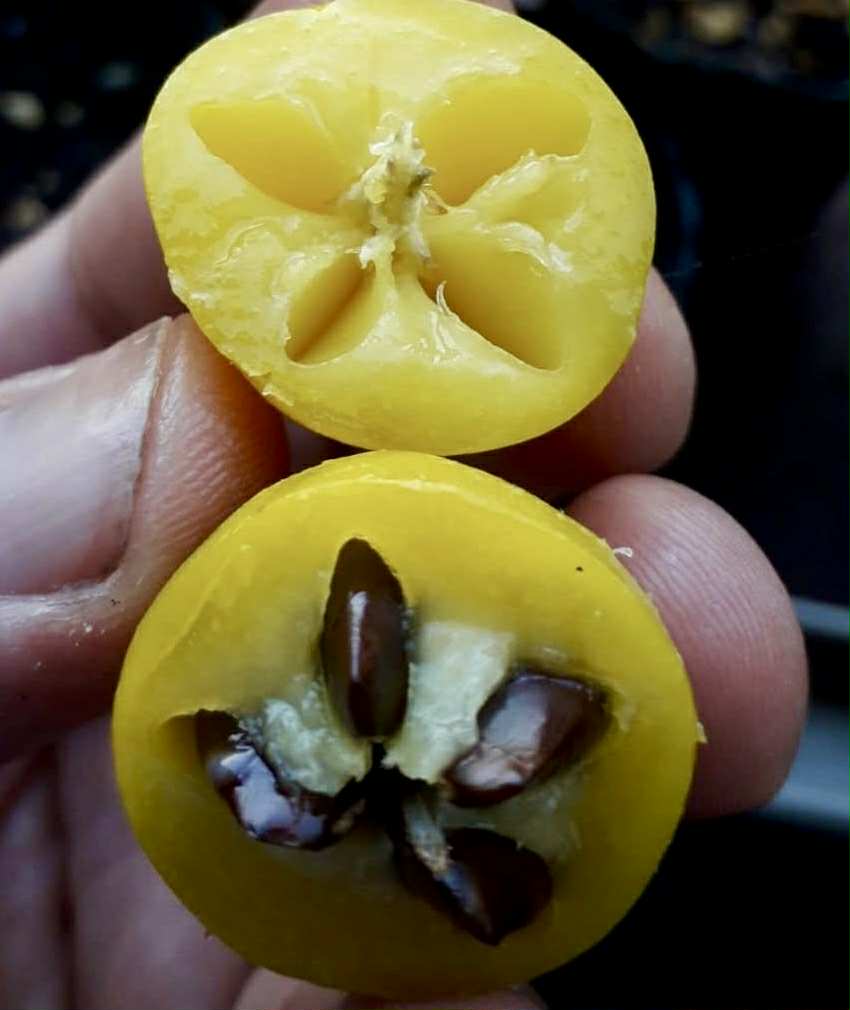
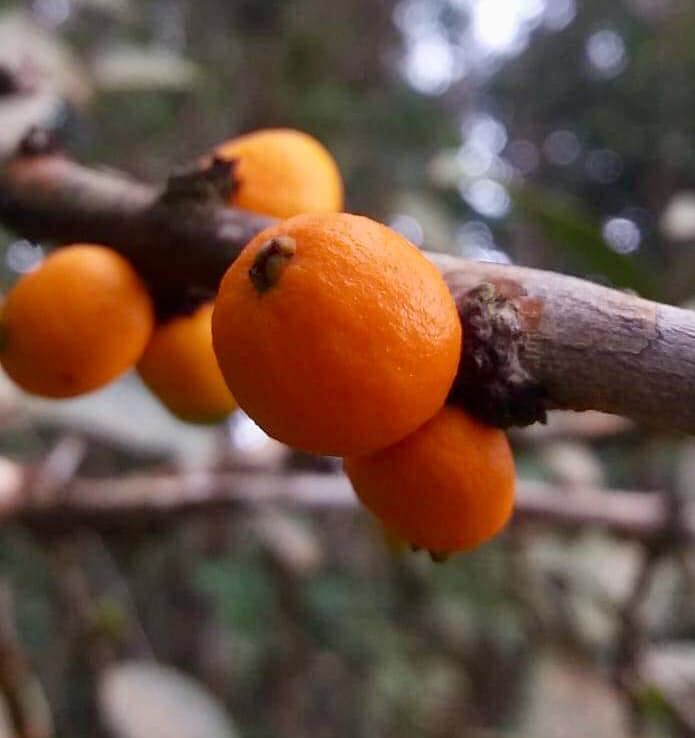
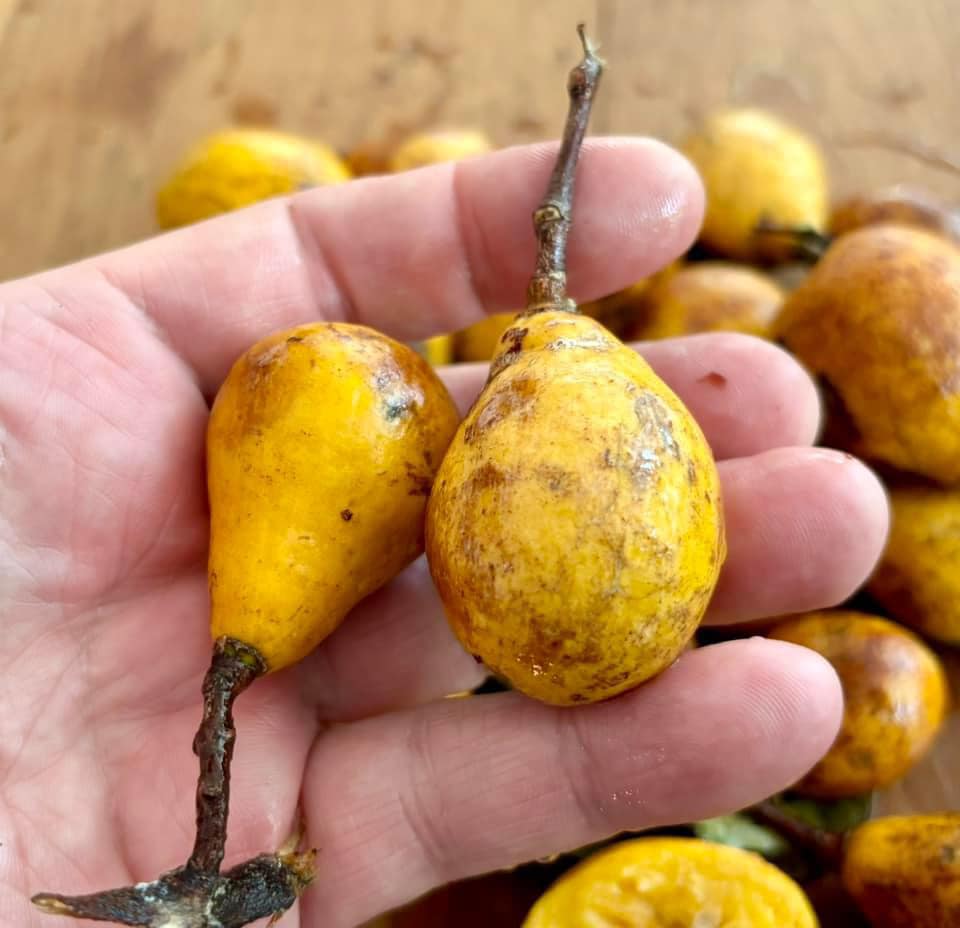
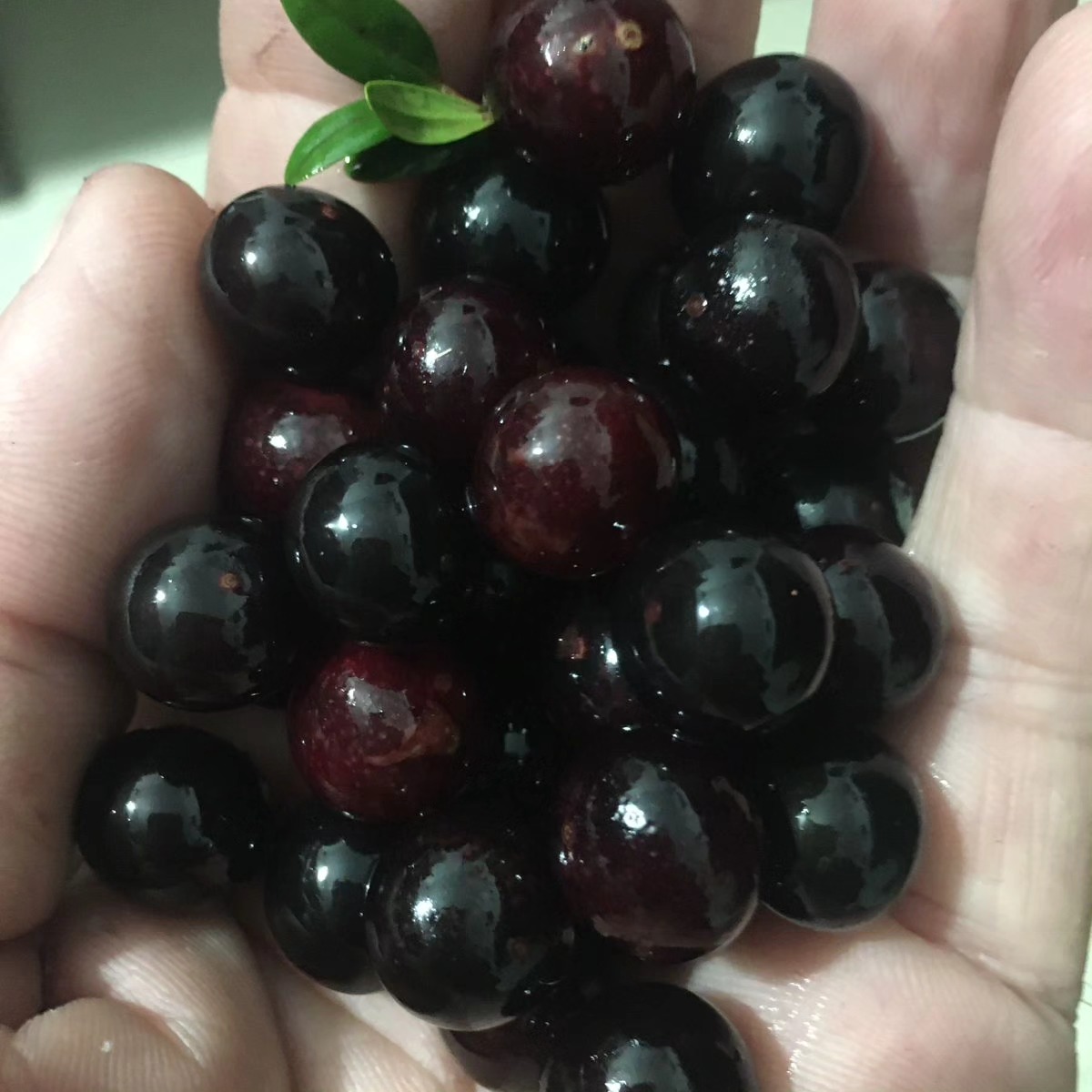
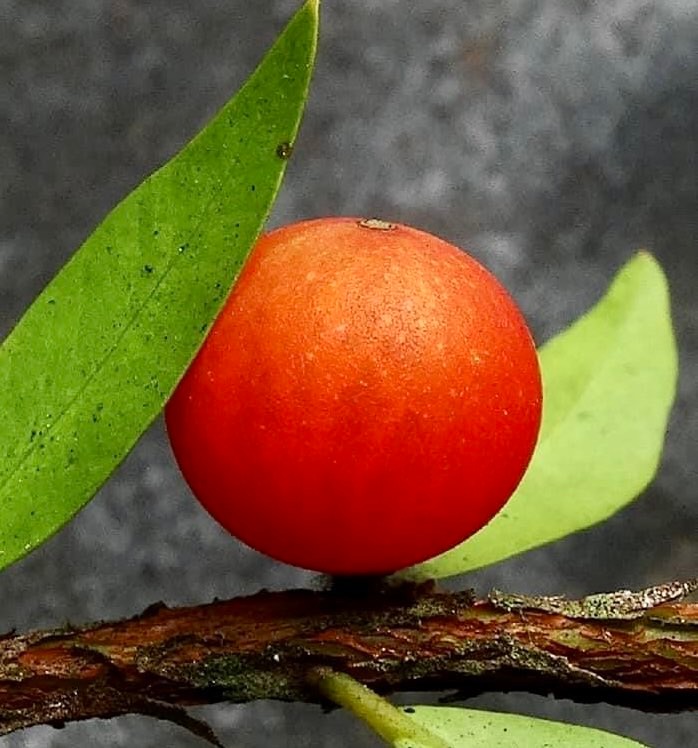
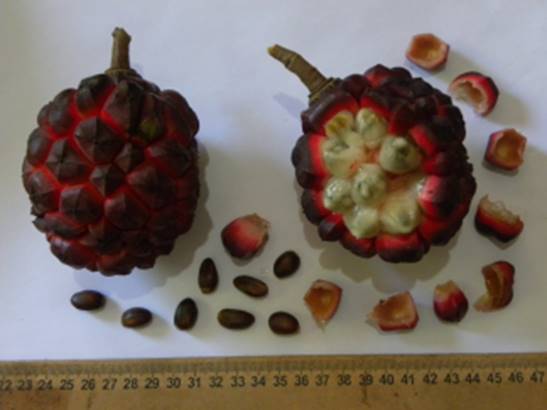
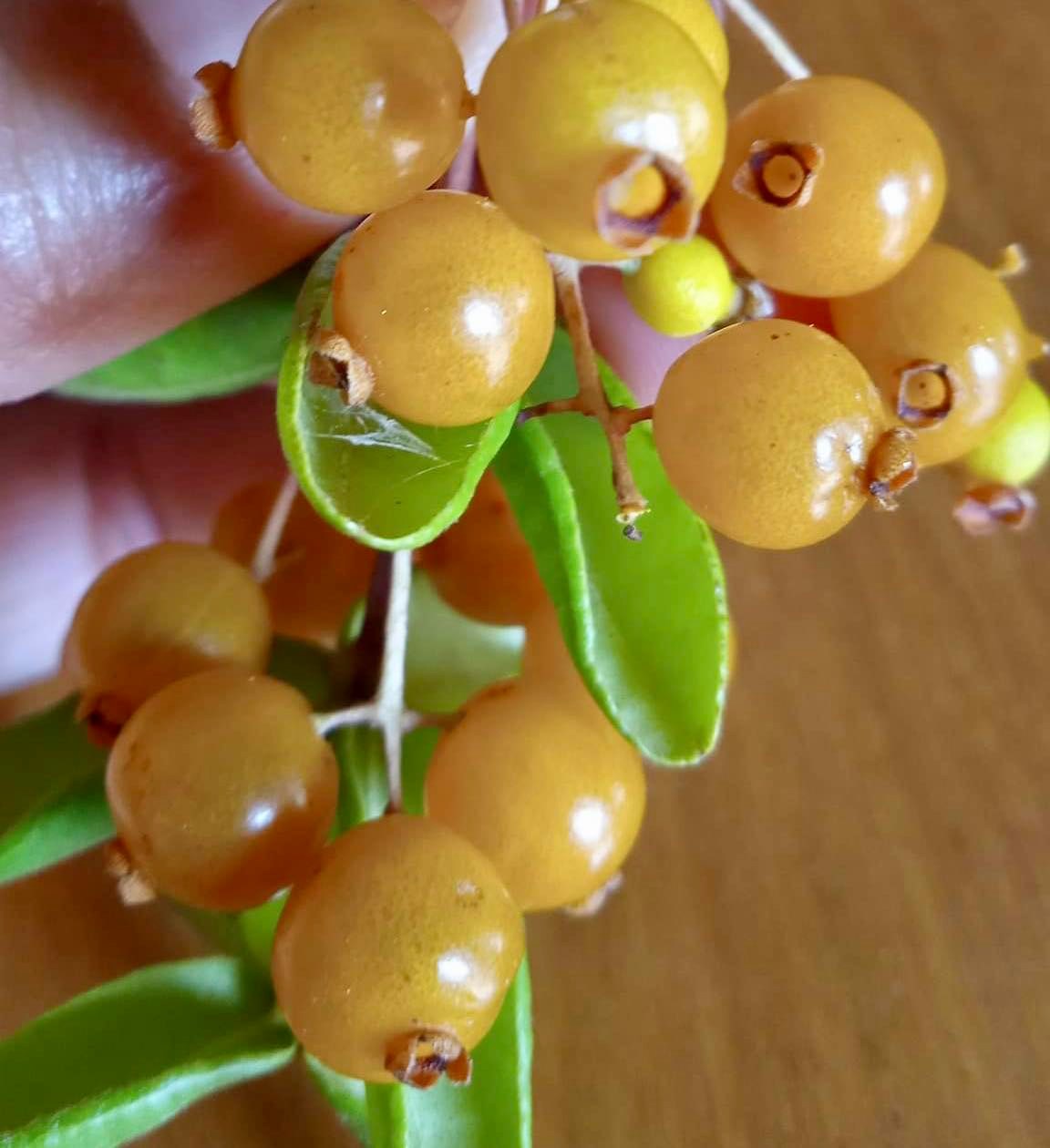
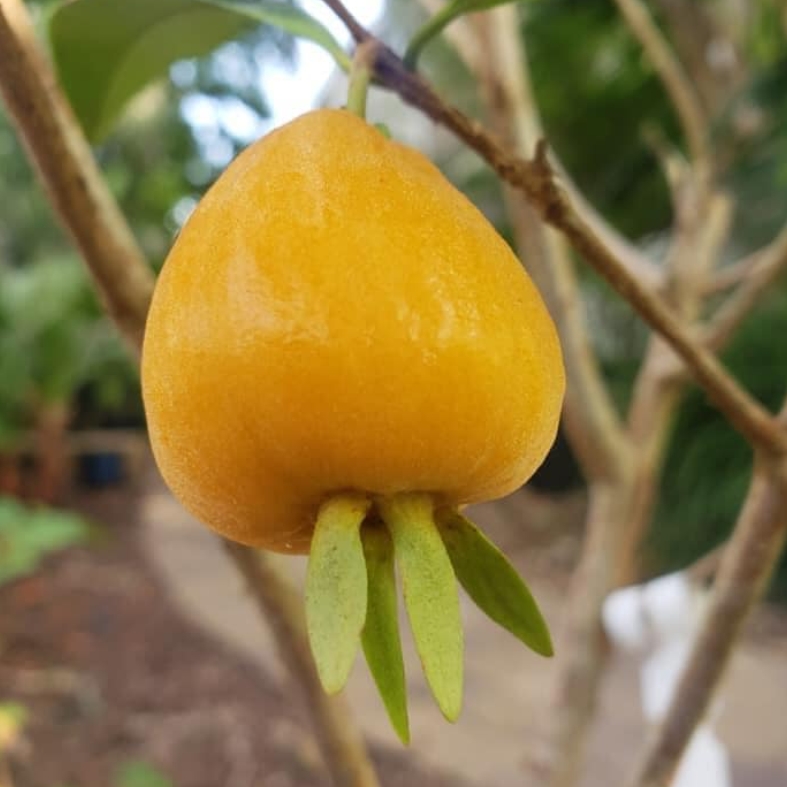
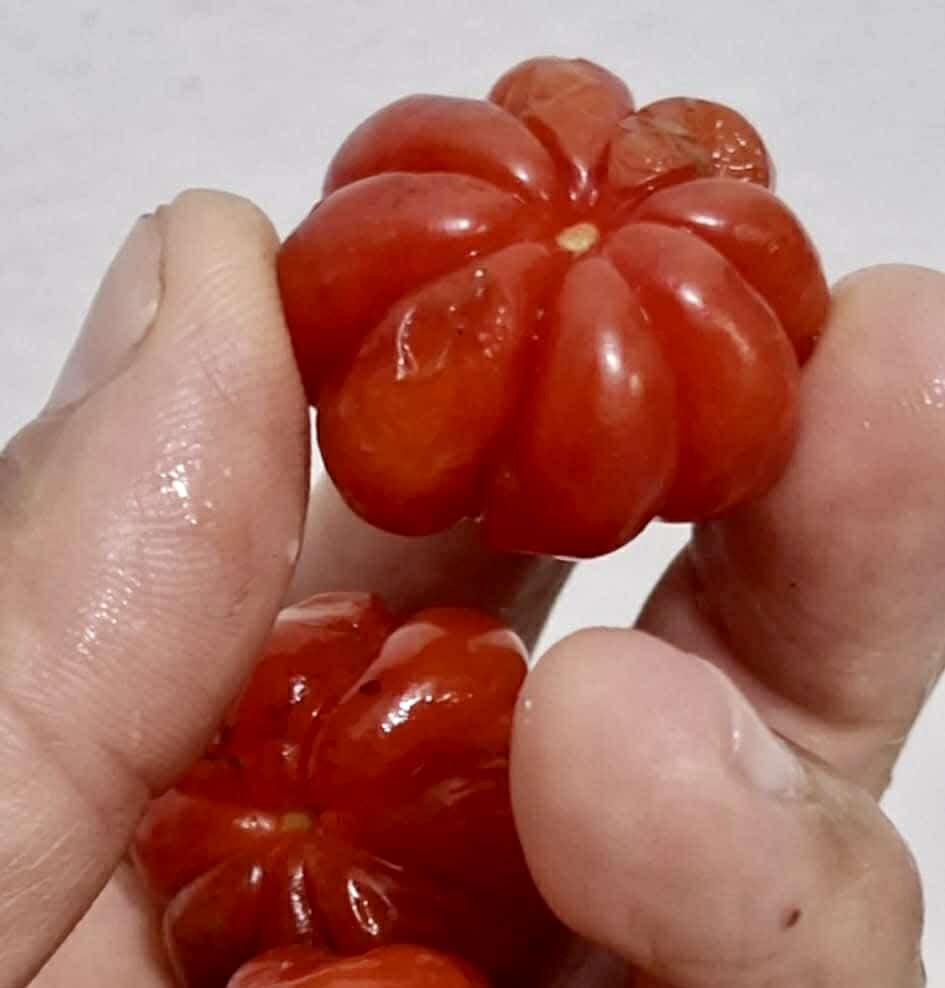
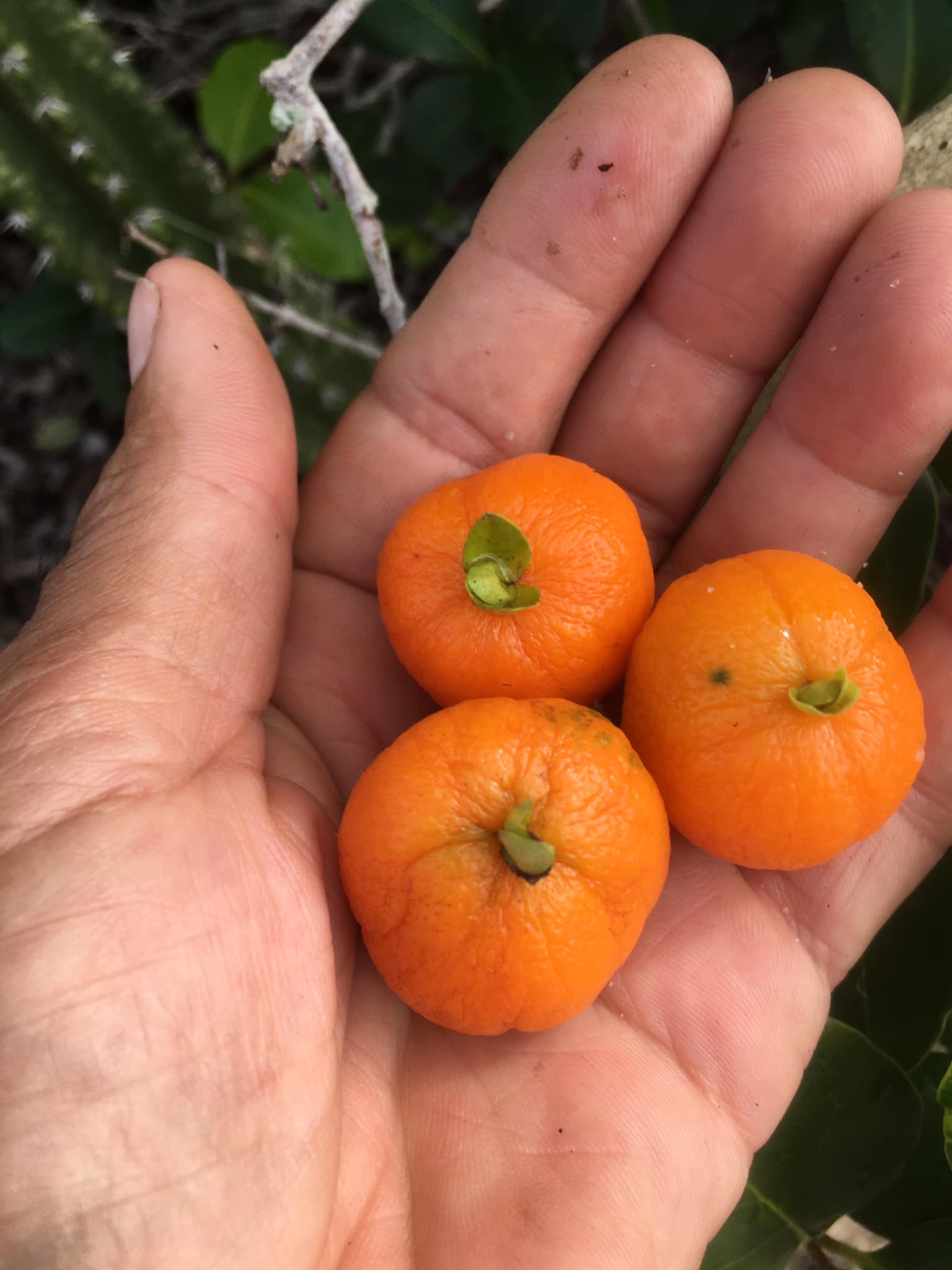
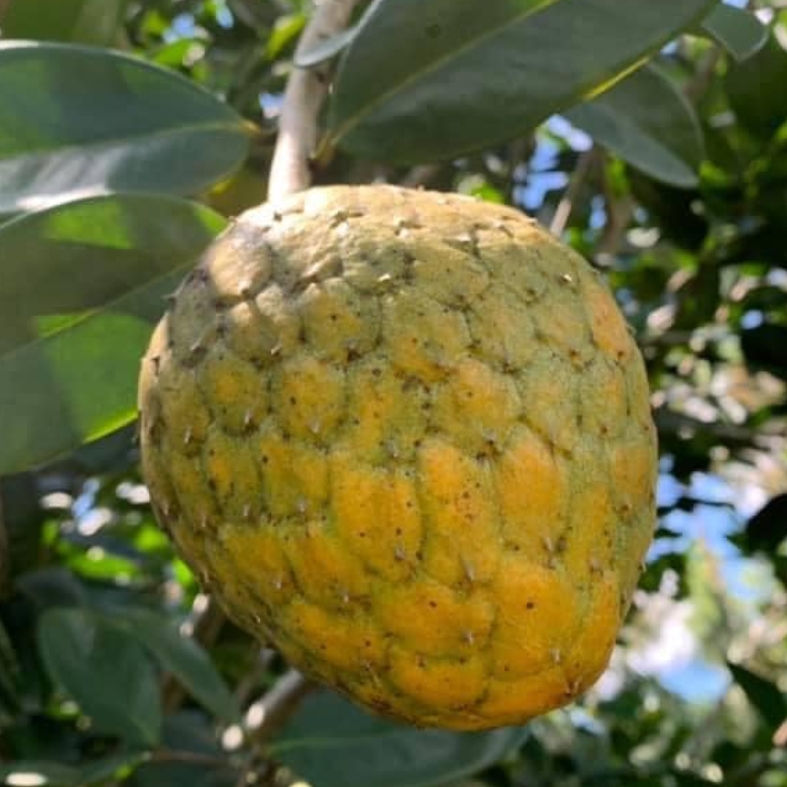
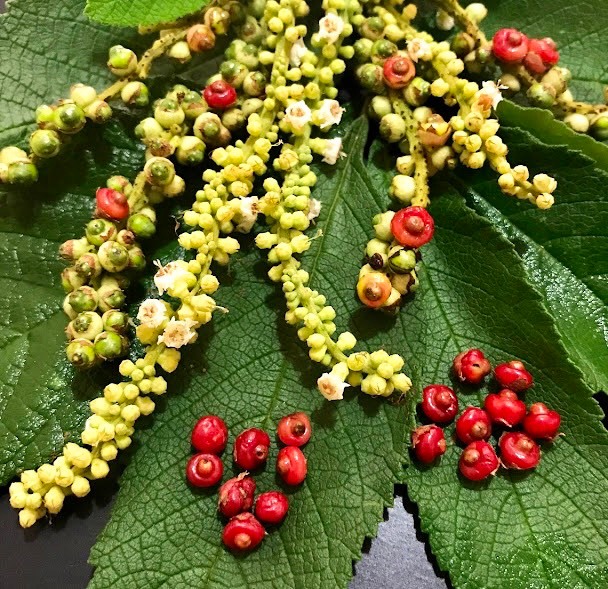
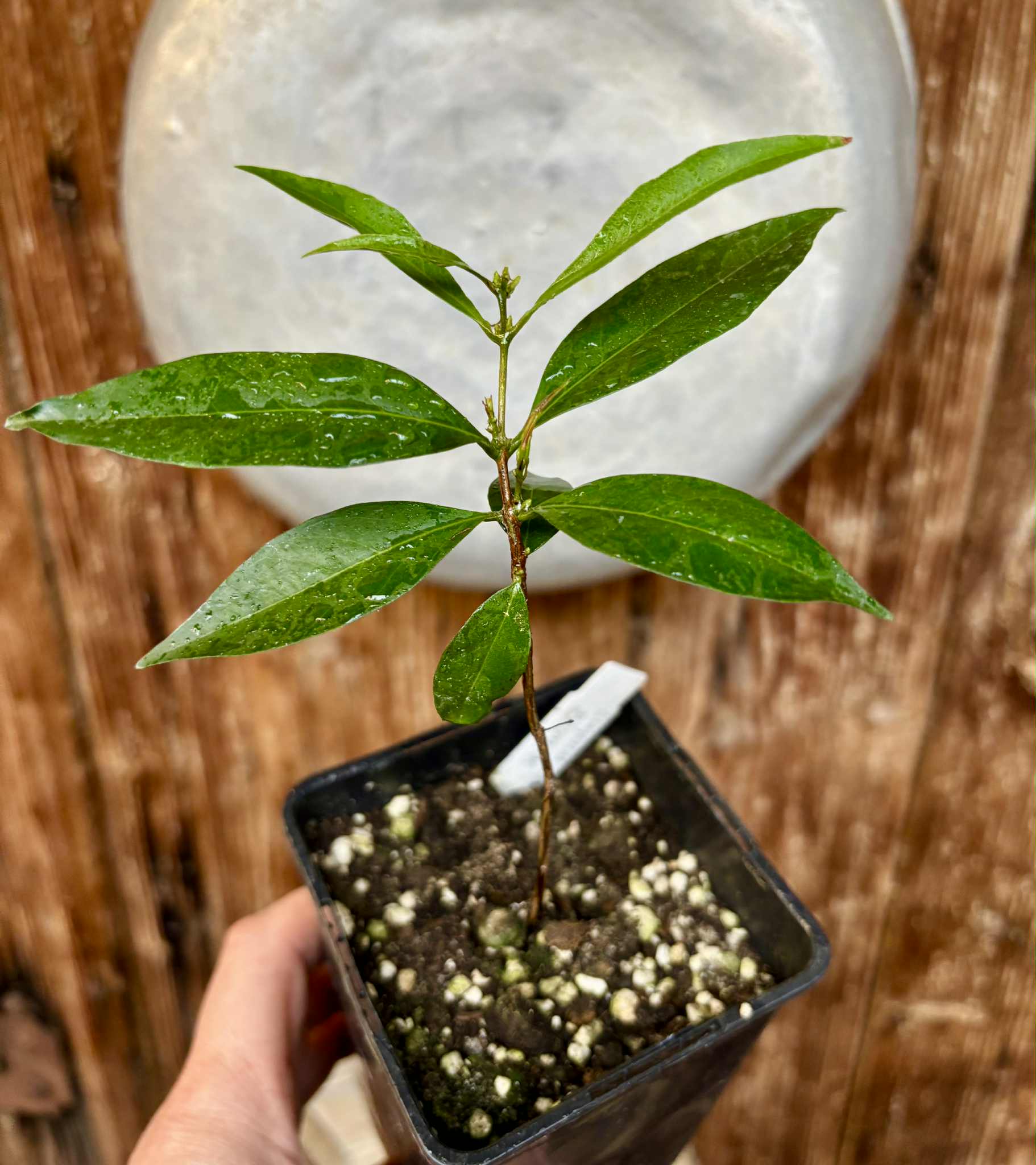
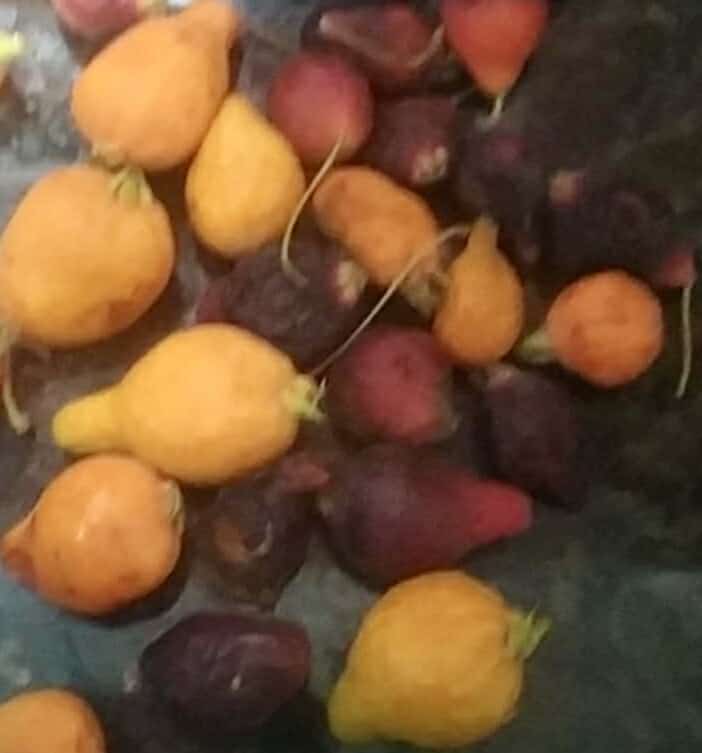
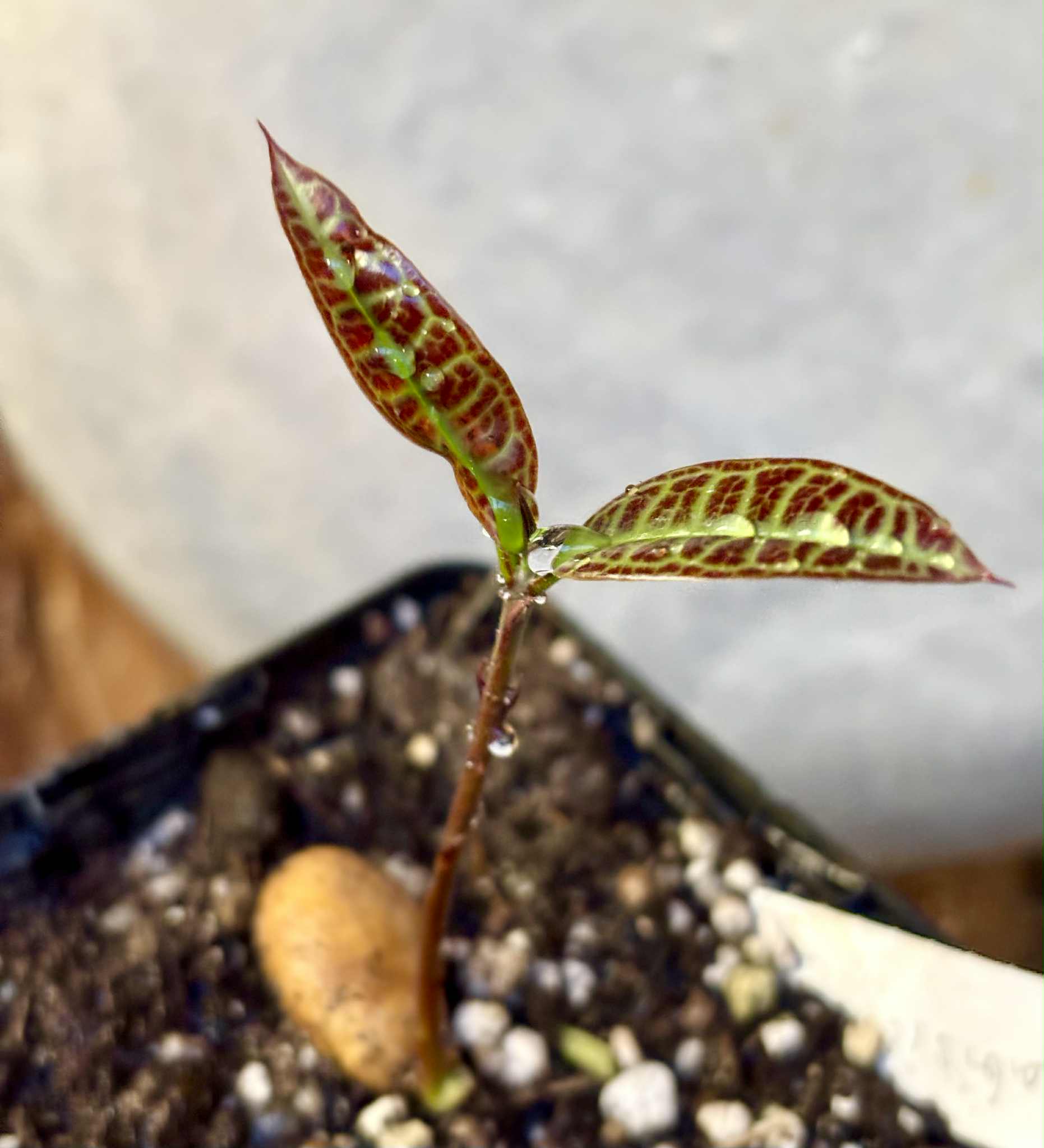
Aquai (Chrysophyllum gonocarpum)
Family / Familie: Sapotaceaeorigin from / Herkunft: Brasil / Brasilien Climate / Klima: temperate to warm (10-30C / 50-86F) / gemäßigt bis warm (10-30C / 50-86F)Use / Verwendung: edible fruits, juice, jam, ice cream, etc. / essbare Früchte, Säfte, Marmelade, Eis usw.you buy / sie kaufen: 1 potted seedling / 1 getopfter Sämling
Delivery EU only
Exotic Treasure from Brazil – Fast-Growing, Aromatic, and Visually Striking
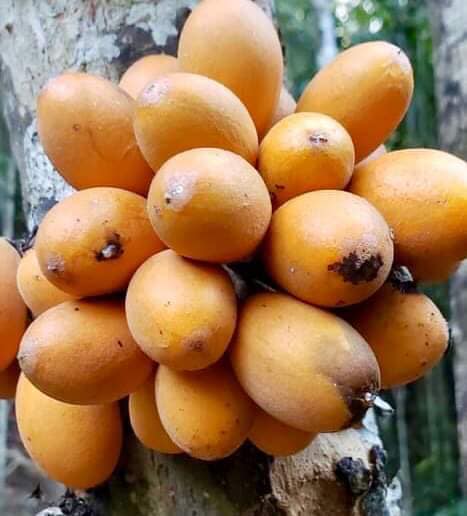
Aquai is a rare and lesser-known species from the Chrysophyllum genus, native to the tropical regions of Brazil. This medium-sized tree captivates not only with its beautiful form but also with its delicious fruits and the distinctive glossy foliage that Chrysophyllum species are known for.
Fruits: Small but Packed with Flavor
The fruits grow up to 4 cm in size.
They are sweet, juicy, and full of flavor – a true treat straight from the tree.
Perfect for fresh eating, but also great for making juices, desserts, and jams.
Growth and Care
Growth Rate: Fast-growing – it can start flowering within 3 to 4 years under the right conditions.
Size: Medium-sized tree, making it suitable for large containers as well.
Light Requirements: Prefers full sun to partial shade.
Soil: Well-draining soil; avoid waterlogging.
Temperature: Should be kept above 10°C (50°F) during winter. In tropical or subtropical climates, it can be grown outdoors year-round.
Special Features
Besides its excellent fruit quality, Aquai stands out as a stunning ornamental plant. The metallic sheen on the underside of its leaves gives it a truly exotic and elegant appearance.
Aquai is a fantastic choice for collectors and tropical fruit lovers – rare, beautiful, fast-growing, and with a flavor that delights.Tropischer Geheimtipp aus Brasilien – Schnell wachsend, aromatisch und wunderschön!
Aquai ist eine seltene, wenig bekannte Art aus der Gattung Chrysophyllum, die in den tropischen Regionen Brasiliens beheimatet ist. Dieser mittelgroße Baum beeindruckt nicht nur durch seine attraktive Wuchsform, sondern vor allem durch seine großartig schmeckenden Früchte und das typisch glänzende, oft silbrig unterlegte Laub, das viele Chrysophyllum-Arten auszeichnet.
Früchte: Klein, aber voller Geschmack
Die Früchte des Aquai erreichen eine Größe von bis zu 4 cm.
Sie sind süß, saftig und sehr aromatisch – ein echter Genuss direkt vom Baum.
Ideal für den Frischverzehr, aber auch für Säfte, Desserts oder Marmeladen bestens geeignet.
Wuchsverhalten und Pflege
Wuchs: Der Baum wächst schnell und kann bereits nach 3 bis 4 Jahren am geeigneten Standort zu blühen beginnen.
Größe: Mittelgroß, daher auch gut für größere Kübel geeignet.
Standort: Sonnig bis halbschattig, bevorzugt feuchtes, tropisches Klima.
Substrat: Gut durchlässige Erde, Staunässe vermeiden.
Temperatur: Die Pflanze sollte bei mindestens 10 °C überwintert werden. In tropischen oder subtropischen Regionen kann sie ganzjährig draußen kultiviert werden.
Besonderheit
Neben dem köstlichen Fruchterlebnis ist Aquai auch ein echter Hingucker im Garten oder auf der Terrasse. Die metallisch glänzenden Blattunterseiten verleihen dem Baum eine edle, exotische Ausstrahlung.
Aquai ist die perfekte Wahl für alle, die etwas Besonderes suchen: exotisch, pflegeleicht, schnell wachsend – und mit einem herrlichen Fruchtgenuss.
Eugenia punicifolia Family / Familie: Myrtaceae origin from / Herkunft: Brasil / Brasilien Climate / Klima: temperate to warm (10-30C / 50-86F) / gemäßigt bis warm (10-30C / 50-86F)Use / Verwendung: edible fruits, juice, jam, ice cream, etc. / essbare Früchte, Säfte, Marmelade, Eis usw.you buy / sie kaufen: 1 potted plant / 1 getopfte Pflanze Delivery EU onlyThe ever-blooming Eugenia
Small but mighty!Eugenia punicifolia remains compact, growing to under 1 meter in height, yet produces flowers almost year-round – sometimes yielding up to four harvests a year in Brazil.Hardly any other Eugenia is so productive and yet so easy to care for.Your highlights at a glanceHeight: Maximum 1m – perfect for balconies, patios, or indoor cultivationEarly fruiting: Often after just 2 years in BrazilFlowering & fruiting: Almost continuous – a true long-blooming plantFruit: Delicious and strikingly beautiful, a real ornamentalLocation: Sunny to partially shaded – the more sun, the better the yieldGrowth: Rather slow in the first year, then steadily strongerCare instructionsSubstrate: Well-draining, humus-rich – avoid waterlogging at all costsWatering: Keep evenly moist, but not soggyFertilizing: Every 4–6 weeks in summer with organic fertilizerPot growing: Ideally suited – also as an indoor fruiting plant with sufficient lightOverwintering: Not below 10°C – briefly frost-tolerant, but best kept in a sheltered locationDie Dauerblüherin unter den Eugenien
Klein aber oho!Eugenia punicifolia bleibt kompakt mit unter 1 Meter Wuchshöhe, trägt aber nahezu ganzjährig – mit teils vier Ernten pro Jahr in Brasilien.Kaum eine andere Eugenia ist so produktiv und gleichzeitig so pflegeleicht.Ihre Highlights auf einen BlickWuchshöhe: Maximal 1 m – perfekt für Balkon, Terrasse oder Indoor-KulturFrüh tragend: In Brasilien oft schon nach 2 JahrenBlüte & Frucht: Fast durchgehend – eine echte DauerblüherinFrüchte: Lecker und auffallend schön, eine wahre ZierdeStandort: Sonnig bis halbschattig – je mehr Sonne, desto besser der ErtragWachstum: Im ersten Jahr eher langsam, dann stetig kräftigerPflegehinweiseSubstrat: Durchlässig, humos – Staunässe unbedingt vermeidenGießen: Gleichmäßig feucht halten, aber keine nassen FüßeDüngung: Im Sommer alle 4–6 Wochen mit organischem DüngerTopfkultur: Ideal geeignet – auch als Indoor-Fruchtpflanze mit ausreichend LichtÜberwinterung: Nicht unter 10 °C – kurzzeitig frosttolerant, aber lieber geschützt halten
Campomanesia viatorisFamily / Familie: Myrtaceaeorigin from / Herkunft: Brasil / BrasilienClimate / Klima: temperate to warm (10-30C / 50-86F) / gemäßigt bis warm (10-30C / 50-86F)Use / Verwendung: edible fruits, juice, jam, ice cream, etc. / essbare Früchte, Säfte, Marmelade, Eis usw.you buy / sie kaufen: 1 potted plant / 1 getopfte PflanzeDelivery EU only
This rare Campomanesia was found in the UNO Ecopark of the Brazilian state of Bahia.The yellow fruits are small and have a very nice scent.They taste very sweet and the pulp contains a few small seeds.The tree grows to around 10m tall and has beautiful, typical Campomanesia leaves.The flowers of this campomanesis are relatively large and have a strong scent.Please overwinter this Campomanesia at at least 10 degrees.Diese seltene Campomanesia wurde im UNO Ecopark des brasilianischen Bundesstaates Bahia gefunden.Die gelben Früchte sind klein und haben einen sehr schönen Duft.Sie schmecken sehr süß und das Fruchtfleisch enthält ein paar kleine Samen.Der Baum wird bis ca. 10m groß und hat schöne, typische Campomanesia Blätter.Die Blüten dieser Campomanesis sind relativ groß und duften stark.Bitte diese Campomanesia bei mindestens 10 Grad überwintern.
Eugenia flamingensis
Family / Familie: Myrtaceaeorigin from / Herkunft: South America / SüdamerikaClimate / Klima: temperate to warm (10-25C / 50-77F) / gemäßigt bis warm (10-25C / 50-77F)Use / Verwendung: edible fruits, juice, jam, ice cream, etc. / essbare Früchte, Säfte, Marmelade, Eis usw.you buy / sie kaufen: 1 small potted seedling / 1 kleiner, getopfter Sämling
Delivery EU only
Eugenia flamingensis – The Rare Beauty from Brazil
This exceptionally rare Eugenia hails from the tropical regions of Rio de Janeiro and Rio Grande do Sul in Brazil. It is one of the rarest and most sought-after species within the Eugenia genus, renowned for its unique leaf pattern and stunning coloration.
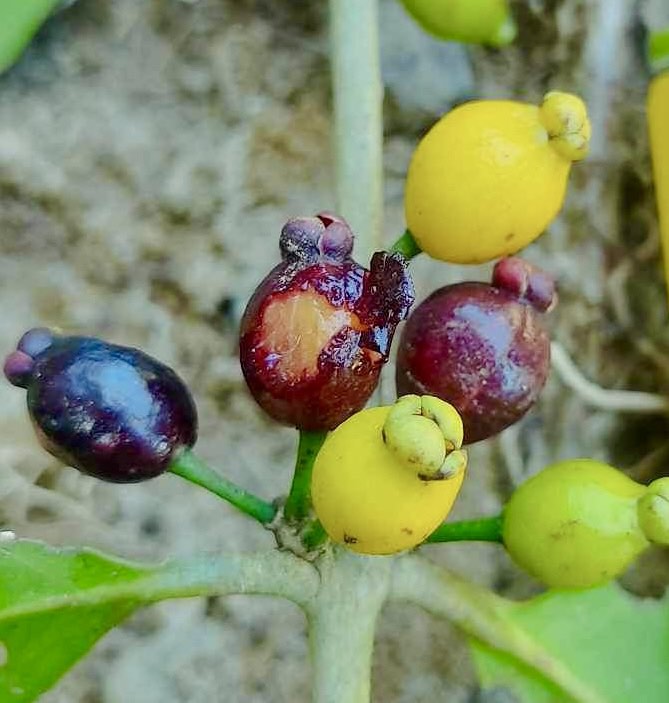
Cauliflorous Fruit – A True Collector's GemThe fruits of this Eugenia grow cauliflorously, meaning they appear directly on the stem. This unusual growth habit makes harvesting particularly challenging, as birds and animals often get to the fruits before humans do. This rarity has made it a highly desired specimen for collectors and botanists alike.
Distinctive Leaf Pattern and ColorThe leaves of Eugenia flamingensis are known for their striking and beautiful coloration, making this species one of the most visually stunning Eugenias. Its exotic appearance makes it a showstopper in any plant collection.
Care & OverwinteringLike many tropical plants, Eugenia flamingensis is sensitive to cold. It requires a minimum temperature of 10°C (50°F) to thrive and should be kept in a bright, warm location during the colder months to maintain its health and growth.
NoteA true highlight for collectors of rare tropical plants: beautiful, rare, and unique – one of the most impressive Eugenia species, and very difficult to find.
Eugenia flamingensis – Die seltene Schönheit aus Brasilien
Diese außergewöhnlich seltene Eugenia stammt aus den tropischen Regionen von Rio de Janeiro und Rio Grande do Sul in Brasilien. Sie gehört zu den seltensten und begehrtesten Arten innerhalb der Gattung Eugenia und begeistert mit einer faszinierenden Blattzeichnung und einzigartigen Färbungen.
Kauliflor wachsende Früchte – Ein wahres SammlerstückDie Früchte dieser Eugenia wachsen kauliflor, das bedeutet, sie entstehen direkt am Stamm der Pflanze. Aufgrund dieser Wuchsweise ist es besonders schwierig, sie zu ernten, da Vögel und Tiere die Früchte oft vor den Menschen erreichen. Diese Seltenheit macht sie zu einem gesuchten Highlight für Sammler und Botaniker.
Einzigartige Blattzeichnung und FarbeDie Blätter dieser Eugenia zeichnen sich durch eine markante und wunderschöne Färbung aus, die sie zu einer der attraktivsten Eugenia-Arten überhaupt macht. Ihr exotisches Aussehen macht sie zu einem visuellen Juwel in jeder Pflanzensammlung.
Überwinterung & PflegeWie viele tropische Pflanzen ist auch Eugenia flamingensis empfindlich gegenüber niedrigen Temperaturen. Mindestens 10 °C sind für das Überwintern erforderlich, um das Wachstum und die Gesundheit der Pflanze zu erhalten. Ein heller, warmer Standort fördert das Wohlbefinden dieser Rarität.
HinweisEin echtes Highlight für Sammler von seltenen tropischen Pflanzen: schön, selten und einzigartig – eine der beeindruckendsten Eugenia-Arten, die nur schwer zu finden ist.
Diploon cuspidatum
Family / Familie: Sapotaceaeorigin from / Herkunft: Brasil / Brasilien Climate / Klima: temperate to warm (10-30C / 50-86F) / gemäßigt bis warm (10-30C / 50-86F)Use / Verwendung: edible fruits, juice, jam, ice cream, etc. / essbare Früchte, Säfte, Marmelade, Eis usw.you buy / sie kaufen: 1 potted seedling / 1 getopfter Sämling
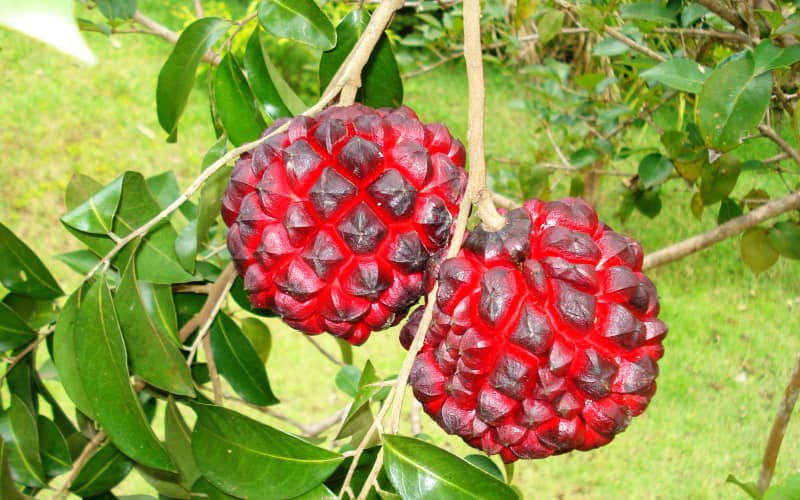
Delivery EU onlyDiploon belongs to the Sapote family.This tree is extremely rare and can hardly be found even in Brazil.The fruits have a pleasantly sweet taste.An absolute highlight for collectors of rare exotic fruit trees.Please overwinter at a minimum of 10 degrees.Diploon gehört zur Familie der Sapoten.Dieser Baum ist äußerst selten und selbst in Brasilien kaum zu finden.Die Früchte haben einen angenehm süßen Geschmack.Für Sammler seltener exotischer Fruchtbäume ein absolutes Highlight.Überwintern bitte bei mindestens 10 Grad.
Siphonodon celastrineusFamily / Familie: Celastraceaeorigin from / Herkunft: South Asia / SüdasienClimate / Klima: temperate to warm (15-25C / 60-77F) / gemäßigt bis warm (15-25C / 60-77F)Use / Verwendung:edible fruits, juice, jam, ice cream, etc. / essbare Früchte, Säfte, Marmelade, Eis usw.you buy / sie kaufen: 1 potted plant / 1 getopfte PflanzeDelivery EU onlyThis rare wild fruit comes from Asia.It looks like a small pear and has a complex taste.I can describe the taste as follows:What you taste most is banana, then pineapple, then vanilla, some passion fruit and something indefinably exotic.The consistency of the pulp is reminiscent of a mixture of canistel and black sapote.Here is another excerpt from a Thai study:“Siphonodon celastrineus is one of the Thai medicinal plants that has long been used in traditional recipes to treat inflammation, abscesses, skin diseases, pain and paralysis, and is used as a bone tonic. “In addition, cytotoxicity against breast cancer cell lines of the ethanol extract from the leaves and twigs and the antimalarial activity of the ethyl acetate extract from the stems of S. celastrineus were also reported.”A remarkable fruit.Please overwinter at at least 15 degrees.Diese seltene Wildfrucht haben wir selbst gegessen und waren über den überdurchschnittlich guten Geschmack ersatunt.Diese Siphonodon stammt aus Asien.Sie sieht aus wie eine kleine Birne und hat einen komplexen Geschmack.Den Geschmack kkönnen wir wie folgt beschreiben:Am meisten schmeckt man Banane, dann Ananas, danach Vanille, etwas Maracuja und etwas undefinierbares Exotisches.Die Konsistenz des Fruchtfleisches erinnert an eine Mischung aus Canistel und Schwarzer Sapote. Hier noch ein Auszug aus einer thailändischen Studie:„Siphonodon celastrineus ist eine der thailändischen Heilpflanzen, die seit langem in traditionellen Rezepten zur Behandlung von Entzündungen, Abszessen, Hautkrankheiten, Schmerzen und Lähmungen verwendet wird und als Knochentonikum verwendet wird. Darüber hinaus wurden auch Zytotoxizität gegen Brustkrebszelllinien des Ethanolextrakts aus den Blättern und Zweigen und die Antimalariaaktivität des Ethylacetat-Extrakts aus den Stängen von S. celastrineus berichtet.“Eine bemerkenswerte Frucht.Bitte bei mindestens 15 Grad überwintern.
Myrciaria cuspidata BLACK
Family / Familie: Myrtaceaeorigin from / Herkunft: Brasil / BrasilienClimate / Klima: temperate to warm (10-30C / 50-86F) / gemäßigt bis warm (10-30C / 50-86F)Use / Verwendung: edible fruits, juice, jam, ice cream, etc. / essbare Früchte, Säfte, Marmelade, Eis usw.you buy / sie kaufen: 1 potted seedling / 1 getopfter SämlingDelivery worldwideThe Myrciaria cuspidata is available with different colored fruits.Here you can get the black-fruited variety.This Myrciaria likes to grow near the beach and tolerates sand in the soil.The plant does not grow very large and is therefore well suited to being kept in a pot.It can be placed in full sun and when it flowers everything is white.It then bears masses of small, delicious, sweet fruits.In Brazil it bears from the third year onwards.Please overwinter at a temperature of at least 10 degrees.Die Myrciaria cuspidata gibt es mit verschiedenfarbigen Früchten.Hier bekommt ihr die schwarzfruchtige Sorte.Diese Myrciaria wächst gern in Strandnähe und verträgt Sand in der Erde.Die Pflanze wird nicht sehr groß und ist daher gut für eine Haltung im Kübel geeignet.Sie kann vollsonnig stehen und wenn sie blüht ist alles weiß.Dann trägt sie massenhaft kleine, leckere, süße Früchte.In Brasilien trägt sie ab dem dritten Jahr.Bitte bei mindestens 10 Grad überwintern.
Myrciaria cuspidata Orange
Family / Familie: Myrtaceaeorigin from / Herkunft: Brasil / BrasilienClimate / Klima: temperate to warm (10-30C / 50-86F) / gemäßigt bis warm (10-30C / 50-86F)Use / Verwendung: edible fruits, juice, jam, ice cream, etc. / essbare Früchte, Säfte, Marmelade, Eis usw.you buy / sie kaufen: 1 potted plant / 1 getopfte PflanzeDelivery EU onlyThe Myrciaria cuspidata is available with different colored fruits.Here you can get the orange-fruited variety.This Myrciaria likes to grow near the beach and tolerates sand in the soil.The plant does not grow very large and is therefore well suited to being kept in a pot.It can be placed in full sun and when it flowers everything is white.It then bears masses of small, delicious, sweet fruits.In Brazil it bears from the third year onwards.Please overwinter at a temperature of at least 10 degrees.Die Myrciaria cuspidata gibt es mit verschiedenfarbigen Früchten.Hier bekommt ihr die orangefruchtige Sorte.Diese Myrciaria wächst gern in Strandnähe und verträgt Sand in der Erde.Die Pflanze wird nicht sehr groß und ist daher gut für eine Haltung im Kübel geeignet.Sie kann vollsonnig stehen und wenn sie blüht ist alles weiß.Dann trägt sie massenhaft kleine, leckere, süße Früchte.In Brasilien trägt sie ab dem dritten Jahr.Bitte bei mindestens 10 Grad überwintern.
Duguetia aff. lanceolata - Pindauva RoxaFamily / Familie: Annonaceae origin from / Herkunft: Brasil / Brasilien Climate / Klima: temperate to warm (10-30C / 50-86F) / gemäßigt bis warm (10-30C / 50-86F)Use / Verwendung: edible fruits, juice, jam, ice cream, etc. / essbare Früchte, Säfte, Marmelade, Eis usw.you buy / sie kaufen: 1 potted plant / 1 getopfte Pflanze Delivery EU onlyThis Duguetia was discovered by the famous Brazilian collector Helton Muniz and is very rare. This Duguetia is a botanical treasure.Externally, this Duguetia is similar to the Duguetia lanceolata. However, there are some huge differences that identify this plant as a new, distinct Duguetia.The tree remains smaller and has more elongated leaves than the lanceolata.The fruits become larger, sweeter and have a darker, almost black skin. Even the seeds are different - they are smaller and rounder.The fruits of this Duguetia are very tasty and last up to 10 days after harvest.Slow growing species in the first two years.Very suitable for keeping in a bucket.Please overwinter at at least 10 degrees, even if it can tolerate light frost for a short time later.Diese Duguetia ist eine Entdeckung des berühmten, brasilianischen Sammlers Helton Muniz und sehr selten. Diese Duguetia ist eine botanische Kostbarkeit.Rein äußerlich hat diese Duguetia Ähnlichkeit mit der Duguetia lanceolata. Es gibt aber einige enorme Unterschiede, die diese Pflanze als eine neue, eigenständige Duguetia identifiziert.Der Baum bleibt kleiner und bekommt länglichere Blätter als die lanceolata.Die Früchte werden größer, süßer und haben eine dunklere, fast schwarze Schale. Selbst die Samen unterscheiden sich - sie sind kleiner und runder.Die Früchte dieser Duguetia sind sehr lecker und bis zu 10 Tage nach der Ernte haltbar.Langsam wachsende Art in den ersten beiden Jahren.Sehr gut für eine Kübelhaltung geeignet.Bitte bei mindestens 10 Grad überwintern, auch wenn sie später kurzfristig leichten Frost verträgt.
Guamirim amarelo (Calyptranthes sp)
Family / Familie: Myrtaceaeorigin from / Herkunft: Brasil / BrasilienClimate / Klima: temperate to warm (15-25C / 60-77F) / gemäßigt bis warm (15-25C / 60-77F)Use / Verwendung: edible fruits, juice, jam, ice cream, etc. / essbare Früchte, Säfte, Marmelade, Eis usw.you buy / sie kaufen: 1 potted plant / getopfte PflanzeDelivery EU onlyThe rare Guamirim comes from Brazil. (Calyptranthes sp)Like most plants from the Cerrado, they grow very slowly in the first two years.These small fruits taste sweet and can be eaten straight from the hand or processed into juice and jam.Well suited for pot cultivation as it does not grow very large. (approx. 1.5m to 2m)Please avoid waterlogging with this plant and use poor soil mixed with sand.Please overwinter at a minimum of 10 degrees.Die seltene Guamirim stammt aus Brasilien. (Calyptranthes sp)Wie die meisten Pflanzen aus dem Cerrado, wachsen sie in den ersten beiden Jahren sehr langsam.Diese kleinen Früchte schmecken süß und können direkt aus der Hand gegessen werden oder zu Säften und Marmelade weiterverarbeitet werden.Gut für Topfkultur geeignet da sie nicht sehr groß wird. (ca. 1,5m bis 2m)Bitte bei dieser Pflanze Staunässe vermeiden und magere Erde mit Sand als Gemisch verwenden.Bitte bei mindestens 10 Grad überwintern.
Pitomba (Eugenia luschnathiana)Family / Familie: Myrtaceaeorigin from / Herkunft: Bahia (Brasil)Climate / Klima: temperate to warm (10-25C / 50-77F) / gemäßigt bis warm (10-25C / 50-77F)Use / Verwendung: edible fruits, juice, jam, ice cream, etc. / essbare Früchte, Säfte, Marmelade, Eis usw.you buy / sie kaufen: 1 potted seedling / 1 getopfter SämlingDelivery EU only
🍊 Pitomba (Eugenia luschnathiana) – A Tropical Gem with Apricot Notes
Beauty, flavor, and vitamin-rich fruit in one stunning tree
Straight from Bahia, Brazil – Pitomba is an exotic fruit tree that combines elegant looks with delicious rewards. It features pure white blossoms, glossy dark green leaves on top and light green underneath, and a compact, ornamental growth habit.
🌸 From flower to fruit – fast:
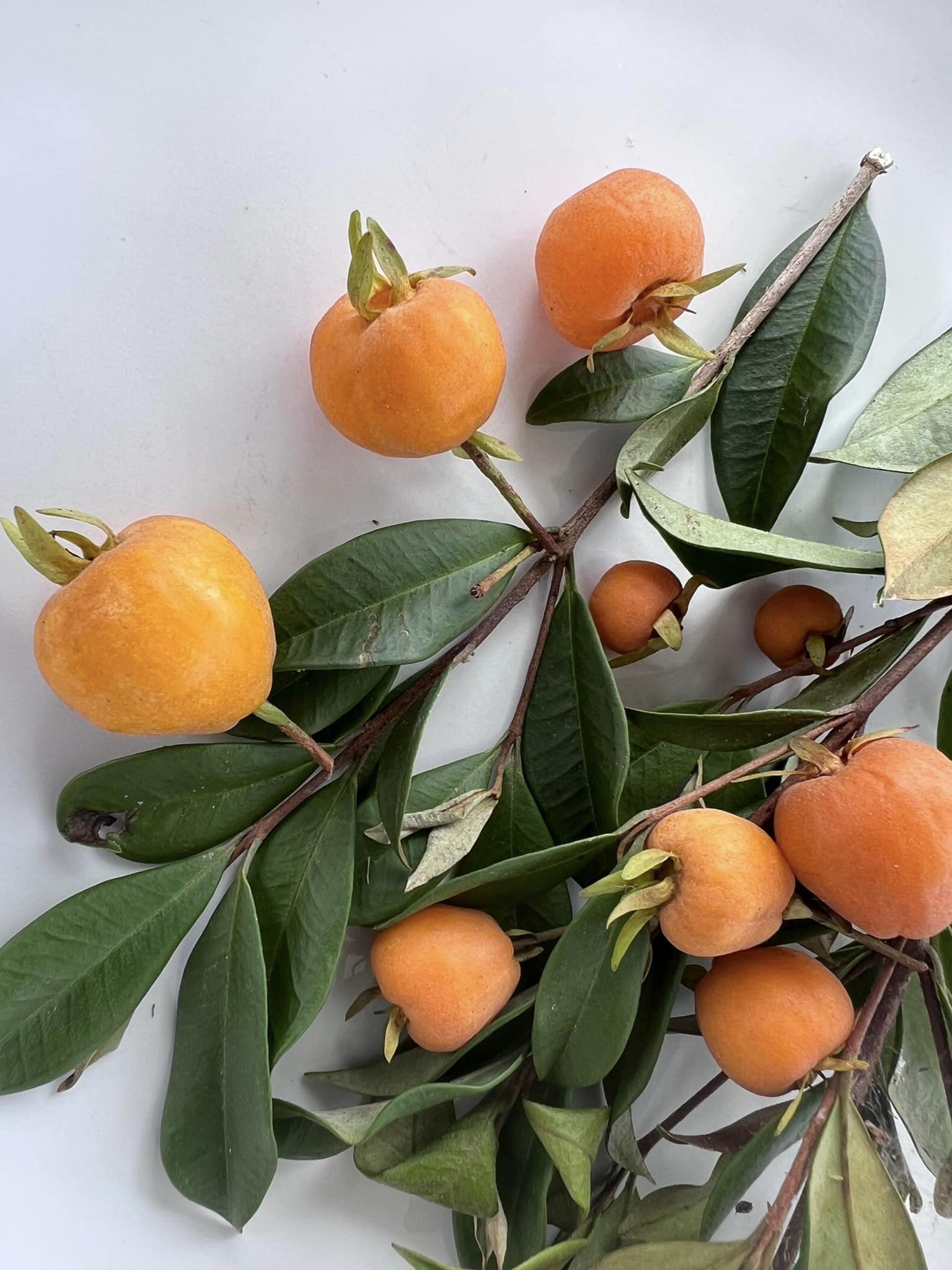
Just 4–6 weeks after flowering, this tree rewards you with glowing orange fruits, each up to 5 cm in size.With a thin skin and soft, juicy flesh, they’re made to be enjoyed fresh.
🍑 Flavor profile:
Aromatic, slightly tangy, and reminiscent of a ripe apricot – an unexpected and delightful tropical taste.Rich in vitamin C, too!
🌿 Perfect for pots & easy to care for:
Excellent for container growing on balconies, patios, or in conservatories
Prefers well-draining, slightly acidic soil
Mature trees can tolerate brief cold spells (as low as -1 °C / 30 °F)
But for best results, overwinter above 10 °C (50 °F)
With proper care, Pitomba may even fruit twice per year – a productive and flavorful rarity for your collection!
📦 Add a taste of Brazil to your garden – limited availability!A rare, vitamin-rich treat with unforgettable flavor and exotic charm.🍊 Pitomba (Eugenia luschnathiana) – Tropenschatz mit Aprikosen-Aroma
Zierde, Vitaminkick & Geschmackserlebnis in einem Baum
Direkt aus Bahia, Brasilien – die Pitomba ist ein eleganter, exotischer Obstbaum mit wunderschönen, großen reinweißen Blüten und auffällig zweifarbigen Blättern: oben sattgrün, unten hellgrün schimmernd.
🌸 Blüte trifft Aroma:
Nur 4–6 Wochen nach der Blüte reifen bereits die leuchtend orangen Früchte, die bis zu 5 cm groß werden können.Mit ihrer dünnen Schale und dem saftigen, schmelzenden Fruchtfleisch sind sie ein echter Genuss.
🍑 Der Geschmack:
Fein säuerlich, intensiv aromatisch – mit einer überraschenden Note, die an Aprikose erinnert.Und obendrein reich an Vitamin C!
🌱 Pflegeleicht & kübeltauglich:
Ideal für Kübelhaltung auf Balkon, Terrasse oder im Wintergarten
Liebt durchlässige, leicht saure Erde
Teilweise frosttolerant (kurzzeitig bis -1 °C), dennoch:→ Bitte frostfrei überwintern – mindestens 10 °C empfohlen
Mit etwas Glück trägt die Pitomba sogar zweimal jährlich Früchte – ein Exot mit hoher Ertragsfreude!
📦 Jetzt sichern & brasilianisches Fruchtfeeling nach Hause holen!Eine elegante, fruchtige Bereicherung für jede Sammlung.
Pouteria cuspidata
Family / Familie: Sapotaceaeorigin from / Herkunft: Brasil / Brasilien Climate / Klima: temperate to warm (10-30C / 50-86F) / gemäßigt bis warm (10-30C / 50-86F)Use / Verwendung: edible fruits, juice, jam, ice cream, etc. / essbare Früchte, Säfte, Marmelade, Eis usw.you buy / sie kaufen: 1 small potted seedling / 1 kleiner, getopfter Sämling
Delivery EU onlyDoesn't this fruit look really delicious?It is also called AGUAÍ DE BICO because the fruit has this extension.It is only rarely found in the dense rainforest of the states of Rio de Janeiro and São Paulo.Very good taste.The tree grows slowly and likes subtropical climates.Well suited for pot cultivation.Please overwinter at a minimum of 10 degrees.Sieht diese Frucht nicht richtig lecker aus?Sie wird auch AGUAÍ DE BICO genannt, da die Frucht diese Verlängerung hat.Sie kommt nur noch selten im dichten Regenwald der Bundesstaaten Rio de Janeiro und São Paulo vor.Sehr guter Geschmack.Der Baum wächst langsam und mag subtropisches Klima. Gut für Topfkultur geeignet.Überwintern bitte bei mindestens 10 Grad.
Marmixa (Pradosia lactescens)Family / Familie: Sapotaceaeorigin from / Herkunft: South America / SüdamerikaClimate / Klima: temperate to warm (15-25C / 60-77F) / gemäßigt bis warm (15-25C / 60-77F)Use / Verwendung: edible fruits, juice, jam, ice cream, etc. / essbare Früchte, Säfte, Marmelade, Eis usw.you buy / sie kaufen: 1 pottet plant / 1 getopfte PflanzeDelivery EU onlyMarmixa (Pradosia lactescens)
Deep within Brazil’s Atlantic Rainforest, particularly in the unique Restinga forests — the transitional zone between coastal dunes and the inland — grows a true natural treasure: Marmixa, also known locally as Pau Doce or Casca Doce. Its scientific name is Pradosia lactescens.This remarkable tree can live for over 100 years. In its early years, Marmixa grows slowly, reaching about 30 cm in its first year, and prefers a sheltered, shady spot. However, from the third year onwards, it thrives in full sun and its growth rate increases significantly.Like most inhabitants of the Restinga ecosystem, Marmixa develops deep root systems and is highly sensitive to waterlogging. Nevertheless, it flourishes in a subtropical climate with ample moisture.With patience and care, Marmixa matures into a stunning tree. From the third year, strategic pruning is recommended: remove lower branches to encourage the formation of a strong, well-shaped canopy.One of Marmixa’s greatest delights are its delicious fruits. The name Doce ("sweet" in Portuguese) already hints at their outstanding flavor. The fruits are described as a perfect blend of peach and Abiu – rich, sweet, and irresistibly aromatic. In addition, the flowers and fruits grow directly from the trunk, a fascinating phenomenon known as cauliflor.Marmixa is also self-fertile, meaning a single tree is enough to enjoy its wonderful harvest.Care instructions:Please overwinter at a minimum of 10 °C (50 °F). A bright, frost-free environment ensures healthy growth.Marmixa (Pradosia lactescens)
Im Herzen des brasilianischen Atlantikregenwaldes, insbesondere in den Restinga-Wäldern – den faszinierenden Übergangszonen zwischen Küste und Landesinnerem – wächst ein ganz besonderes Juwel: Marmixa, auch bekannt als Pau Doce oder Casca Doce. Sein wissenschaftlicher Name lautet Pradosia lactescens.Dieser eindrucksvolle Baum kann ein wahres Naturdenkmal werden und über 100 Jahre alt werden. In seinen ersten Lebensjahren wächst Marmixa eher langsam – etwa 30 cm im ersten Jahr – und bevorzugt einen geschützten, schattigen Standort. Doch bereits ab dem dritten Jahr entwickelt er sich rasant, liebt dann die volle Sonne und beginnt kräftig auszutreiben.Wie es für Bewohner der sandigen Restinga-Gebiete typisch ist, bildet Marmixa tiefe Wurzeln aus. Staunässe mag er überhaupt nicht, gleichzeitig schätzt er ein feucht-warmes, subtropisches Klima mit guter Wasserversorgung.Mit etwas Geduld und der richtigen Pflege wird Marmixa zu einem prachtvollen Baum. Ab dem dritten Jahr empfiehlt sich ein gezielter Rückschnitt: Entfernen Sie die unteren Äste, um eine schöne, stabile Krone zu formen.Ein ganz besonderes Highlight sind die köstlichen Früchte: Der Beiname Doce („süß“) verrät es bereits – die Früchte sind wunderbar süß und erinnern im Geschmack an eine Mischung aus Pfirsich und Abiu. Die Blüten und Früchte erscheinen direkt am Stamm – ein spektakuläres botanisches Phänomen namens Cauliflor.Zudem ist Marmixa selbstfruchtend, sodass für eine Ernte kein zweiter Baum notwendig ist.Pflegehinweis:Bitte bei mindestens 10 °C überwintern. Ein heller, frostfreier Standort sorgt für gesundes Wachstum.
Eugenia schottiana
Family / Familie: Myrtaceaeorigin from / Herkunft: Brasil / BrasilienClimate / Klima: temperate to warm (10-25C / 50-77F) / gemäßigt bis warm (10-25C / 50-77F)Use / Verwendung: edible fruits, juice, jam, ice cream, etc. / essbare Früchte, Säfte, Marmelade, Eis usw.you buy / sie kaufen: 1 small potted seedling / 1 kleiner, getopfter Sämling
Delivery EU onlyThis is one of the super rare Eugenia.It was described by Otto Berg in 1857 but has hardly been found since then.It is a large tree with beautiful leaves.The fruits are small and ripen from green to yellow to black.The taste is sweet.This tree was found in the state of Bahia in Brazil.Please overwinter this Eugenia at at least 10 degrees.Dies ist eine der super seltenen Eugenien.Sie wurde 1857 von Otto Berg beschrieben, ist seitdem aber kaum noch zu finden.Es ist ein großer Baum mit wunderschönen Blättern.Die Früchte sind klein und reifen von grün über gelb nach schwarz.Der Geschmack ist süß.Dieser Baum wurde im Bundesstaat Bahia in Brasilien gefunden.Bitte überwintern Sie diese Eugenia bei mindestens 10 Grad.
Pitomba (Eugenia luschnathiana)Family / Familie: Myrtaceaeorigin from / Herkunft: Bahia (Brasil)Climate / Klima: temperate to warm (10-25C / 50-77F) / gemäßigt bis warm (10-25C / 50-77F)Use / Verwendung: edible fruits, juice, jam, ice cream, etc. / essbare Früchte, Säfte, Marmelade, Eis usw.you buy / sie kaufen: 1 potted seedling / 1 getopfter SämlingDelivery EU only
🍊 Pitomba (Eugenia luschnathiana) – A Tropical Gem with Apricot Notes
Beauty, flavor, and vitamin-rich fruit in one stunning tree
Straight from Bahia, Brazil – Pitomba is an exotic fruit tree that combines elegant looks with delicious rewards. It features pure white blossoms, glossy dark green leaves on top and light green underneath, and a compact, ornamental growth habit.
🌸 From flower to fruit – fast:
Just 4–6 weeks after flowering, this tree rewards you with glowing orange fruits, each up to 5 cm in size.With a thin skin and soft, juicy flesh, they’re made to be enjoyed fresh.
🍑 Flavor profile:
Aromatic, slightly tangy, and reminiscent of a ripe apricot – an unexpected and delightful tropical taste.Rich in vitamin C, too!
🌿 Perfect for pots & easy to care for:
Excellent for container growing on balconies, patios, or in conservatories
Prefers well-draining, slightly acidic soil
Mature trees can tolerate brief cold spells (as low as -1 °C / 30 °F)
But for best results, overwinter above 10 °C (50 °F)
With proper care, Pitomba may even fruit twice per year – a productive and flavorful rarity for your collection!
📦 Add a taste of Brazil to your garden – limited availability!A rare, vitamin-rich treat with unforgettable flavor and exotic charm.🍊 Pitomba (Eugenia luschnathiana) – Tropenschatz mit Aprikosen-Aroma
Zierde, Vitaminkick & Geschmackserlebnis in einem Baum
Direkt aus Bahia, Brasilien – die Pitomba ist ein eleganter, exotischer Obstbaum mit wunderschönen, großen reinweißen Blüten und auffällig zweifarbigen Blättern: oben sattgrün, unten hellgrün schimmernd.
🌸 Blüte trifft Aroma:
Nur 4–6 Wochen nach der Blüte reifen bereits die leuchtend orangen Früchte, die bis zu 5 cm groß werden können.Mit ihrer dünnen Schale und dem saftigen, schmelzenden Fruchtfleisch sind sie ein echter Genuss.
🍑 Der Geschmack:
Fein säuerlich, intensiv aromatisch – mit einer überraschenden Note, die an Aprikose erinnert.Und obendrein reich an Vitamin C!
🌱 Pflegeleicht & kübeltauglich:
Ideal für Kübelhaltung auf Balkon, Terrasse oder im Wintergarten
Liebt durchlässige, leicht saure Erde
Teilweise frosttolerant (kurzzeitig bis -1 °C), dennoch:→ Bitte frostfrei überwintern – mindestens 10 °C empfohlen
Mit etwas Glück trägt die Pitomba sogar zweimal jährlich Früchte – ein Exot mit hoher Ertragsfreude!
📦 Jetzt sichern & brasilianisches Fruchtfeeling nach Hause holen!Eine elegante, fruchtige Bereicherung für jede Sammlung.
Duguetia lanceolata - Pindaiba Family / Familie: Annonaceae origin from / Herkunft: Brasil / Brasilien Climate / Klima: temperate to warm (10-30C / 50-86F) / gemäßigt bis warm (10-30C / 50-86F)Use / Verwendung: edible fruits, juice, jam, ice cream, etc. / essbare Früchte, Säfte, Marmelade, Eis usw.you buy / sie kaufen: 1 small potted seedling / 1 kleiner, getopfter SämlingDelivery EU onlyThe locals in Brazil call this beauty Pindaiba. What a fruit! Individual segments for eating and sucking. The taste is fantastic and thirst-quenching. Simply heavenly. This tree belongs to the Annones! Today it is only very rarely found in the northeast to southern Brazil. This Duguetia grows relatively quickly and has no special requirements.We recommend a overwintering at minimum 10 degrees. Die Einheimischen in Brasilien nennen diese Schönheit Pindaiba. Was für eine Frucht! Einzelne Segmente zum essen und aussaugen. Der Geschmack ist fantastisch und durstlöschend. Einfach nur himmlich. Dieser Baum gehört zu den Annonen! Heute findet man ihn nur noch sehr selten im Nordosten bis Südbrasilien. Diese Duguetia wächst relativ schnell und hat keine besonderen Ansprüche. Wir empfehlen eine Überwinterung von mindestens 10 Grad.
Eugenia uniflora var. Gigante PitangaoFamily / Familie: Myrtaceae origin from / Herkunft: Brasil / Brasilien Climate / Klima: temperate to warm (10-25C / 50-77F) / gemäßigt bis warm (10-25C / 50-77F) Use / Verwendung: edible fruits, juice, jam, ice cream, etc. / essbare Früchte, Säfte, Marmelade, Eis usw.you buy / sie kaufen: 1 potted seedling / 1 getopfter SämlingDelivery EU onlyEugenia uniflora var. Gigante Pitangao
The large, sweet Pitanga – A discovery from the Restinga of Rio de Janeiro
Eugenia uniflora var. Pitangao, also known as Pitangao, is a special variety of the Pitanga (also called Brazilian cherry). This form was discovered in the Restinga of the Brazilian state of Rio de Janeiro and stands out for its large fruits and bright red color – a true botanical rarity.
Unique fruit size and exceptional taste
What makes this Pitanga particularly special is the size of the fruit – larger than most other Pitangas. They are bright red, with a smooth, shiny skin and a deliciously sweet flavor that is enjoyable both fresh and in processed forms. The flavor is a perfect balance of sweet and slightly tart, more intense than many other Pitanga varieties.
Special wild form for breeding
Within the Pitanga species, there are many different cultivars and wild forms, but this wild form with particularly large and flavorful fruit is a rare find. Eugenia uniflora var. Pitangao is ideal for further breeding, allowing the advantages of fruit size and taste to be passed on to future generations. This form is of particular interest to breeders and collectors. Early blooming and fruiting
In Brazil, this Pitanga variety begins to bloom and bear fruit as early as 3 to 5 years. This makes it a relatively quick-fruiting variety, ideal for those who want to enjoy the sweet, red fruits sooner rather than later.
Easy to grow and perfect for pots
The Pitangao is easy to grow due to its compact growth habit and quick fruiting. It is also excellent for container cultivation, thriving in pots and regularly bearing fruit. It has no special soil requirements, but it does prefer a bright, warm location. For winter care, it should be kept at a minimum of 10°C (50°F).
Key Features at a Glance
Eugenia uniflora var. Pitangao: Discovery from the Restinga, Rio de Janeiro
Large fruits in bright red color with excellent sweet-tart flavor
Special wild form, ideal for breeding
Bears fruit after 3 to 5 years
Perfect for container cultivation, also fruits in pots
Easy to grow, no special soil requirements
Winter care: Minimum 10°C (50°F) recommended
Eugenia uniflora var. Pitangao – a remarkable Pitanga variety that stands out not only for its size and flavor but also for its early blooming and fruiting. A valuable breeding stock for future generations of Pitanga trees. A must-have for collectors and lovers of exotic fruits.
Eugenia uniflora var. Gigante Pitangao
Die große, süße Pitanga – Entdeckung aus der Restinga von Rio de Janeiro
Eugenia uniflora var. Pitangao, auch bekannt als Pitangao, ist eine besondere Variante der Pitanga (auch brasilianische Kirsche genannt). Diese Form wurde in der Restinga des brasilianischen Bundesstaates Rio de Janeiro entdeckt und zeichnet sich durch ihre sehr großen Früchte und die hübsche, hellrote Farbe aus – eine echte botanische Rarität.
Einzigartige Fruchtgröße und außergewöhnlicher Geschmack
Was diese Pitanga besonders macht, ist die Größe der Früchte – größer als bei den meisten anderen Pitangas. Sie sind hellrot, mit einer glatten, glänzenden Schale und einem hervorragend süßen Geschmack, der sowohl frisch als auch in verarbeiteten Formen überzeugt. Der Geschmack ist die perfekte Balance zwischen süß und leicht säuerlich, intensiver als bei vielen anderen Varianten der Pitanga.
Besondere Wildform für Züchtungen
Innerhalb der Pitangas gibt es viele verschiedene Züchtungen und Wildformen, aber diese Wildform mit besonders großen und schmackhaften Früchten ist eine seltene Entdeckung. Eugenia uniflora var. Pitangao eignet sich hervorragend für weitere Züchtungen, bei denen die Vorteile der Fruchtgröße und des Geschmackes an zukünftige Generationen weitergegeben werden können. Diese Pitanga ist daher von besonderem Interesse für Züchter und Sammler.
Frühe Blüte und Fruchtbildung
In Brasilien zeigt diese Pitanga bereits nach 3 bis 5 Jahren erste Blüten und Früchte. Dies macht sie zu einer relativ schnellfruchtenden Variante und ideal für alle, die nicht lange auf die süßen, roten Früchte warten möchten.
Pflegeleicht und ideal für den Topf
Die Pitangao ist aufgrund ihres kompakten Wuchses und ihrer Schnellfruchtbarkeit auch hervorragend für die Kultur im Topf geeignet. Sie kann sogar im Kübel gedeihen und dabei regelmäßig Früchte tragen. Diese Pitanga stellt keine besonderen Ansprüche an den Boden oder die Pflege, benötigt jedoch einen hellen, warmen Standort. Die Überwinterung sollte bei mindestens 10 °C erfolgen.
Wichtige Merkmale auf einen Blick
Eugenia uniflora var. Pitangao: Entdeckung aus der Restinga, Rio de Janeiro
Sehr große Früchte in hellroter Farbe mit ausgezeichnetem süß-sauren Geschmack
Besondere Wildform, ideal für Züchtungen
Blüht und trägt Früchte nach 3 bis 5 Jahren
Perfekt für die Topfkultur, fruchtet auch im Kübel
Pflegeleicht, keine besonderen Anforderungen an den Boden
Überwinterung bei mindestens 10 °C empfohlen
Eugenia uniflora var. Pitangao – eine besondere Form der Pitanga, die nicht nur durch ihre Größe und den Geschmack überzeugt, sondern auch durch ihre schnelle Blüte und Fruchtbildung. Eine wertvolle Zuchtgrundlage für zukünftige Pitanga-Generationen. Ein Must-Have für Sammler und Liebhaber exotischer Früchte.
Eugenia dichroma - Pitanga Fanta
Family / Familie: Myrtaceaeorigin from / Herkunft: South America / SüdamerikaClimate / Klima: temperate to warm (10-25C / 50-77F) / gemäßigt bis warm (10-25C / 50-77F)Use / Verwendung: edible fruits, juice, jam, ice cream, etc. / essbare Früchte, Säfte, Marmelade, Eis usw.you buy / sie kaufen: 1 potted seedling / 1 getopfter Sämling
Delivery EU onlyThe Eugenia with the funny name.It is called Pitanga Fanta because the juice made from it is very similar to this drink.This Eugenia is endemic to the coastal Restinga forest biome. The most significant occurrence is in the state of Espírito Santo and north of Rio de Janeiro and can also occur in some areas of northeastern Brazil.It is fast-growing and bears fruit after about 3 years in Brazil.The fruits are elongated, with a thin peel surrounding a very tasty, orange liquid pulp.However, the shell and the thin membrane surrounding the seed are slightly bitter. Therefore, only the pulp is eaten or made into juice.You can get 2 liters of juice concentrate from 3 kg of fruit.100ml of this juice concentrate is used for one liter of juice.Please overwinter this plant at at least 10 degrees.Die Eugenia mit dem lustigen Namen.Man nennt sie Pitanga Fanta weil der aus ihr hergestellte Saft diesem Getränk sehr ähnelt. Diese Eugenia ist endemisch im Restinga-Waldbiom an der Küste. Das bedeutendste Vorkommen liegt im Bundesstaat Espírito Santo und nördlich von Rio de Janeiro und kann auch in einigen Gebieten im Nordosten Brasiliens vorkommen.Sie ist schnellwachsend und fruchtet in Brasilien bereits nach ca. 3 Jahren.Die Früchte sind länglich, mit einer dünnen Schale, die ein sehr schmackhaftes, orangefarbenes flüssiges Fruchtfleisch umgibt.Die Schale und die dünne Membrane um den Samen sind jedoch leicht bitter. Daher wird nur das Fruchtfleisch gegessen oder zu Saft verarbeitet.Aus 3 kg Früchten kann man 2 Liter Saftkonzentrat gewinnen.Von diesem Saftkonzentrat nutzt man 100ml für einen Liter Saft.Bitte diese Pflanze bei mindestens 10 Grad überwintern.
Annona salzmaniiFamily / Familie: Annonaceaeorigin from / Herkunft: Minas Gerais (Brasil) / Minas Gerais (Brasilien)Climate / Klima: temperate to warm (10-25C / 50-77F) / gemäßigt bis warm (10-25C / 50-77F)Taste / Geschmack: very good taste (one of the best Annona) / sehr guter Geschmack (eine der besten Annona)you buy / sie kaufen: 1 potted seedling / 1 getopfter Sämling
Delivery EU onlyMany collectors worldwide are looking for this Annona.She is said to taste best of all Annona!That is the opinion of many Annona lovers - unfortunately we have not yet been able to test any fruit ourselves.Annona salzmannii is also simply called Beach Sugar Apple because it grows near the beach.This means that it can tolerate some sand in the soil.The leaves look like small rubber tree leaves.It comes from the Brazilian state of Minas Gerais and is almost extinct there.I have seen that they can also be grafted onto cherimola and other Annona.Please overwinter at at least 10 degrees.Viele Sammler weltweit suchen diese Annona.Sie soll von allen Annona am besten schmecken! Das ist die Meinung vieler Annona Liebhaber - wir selbst konnten leider noch keine Frucht testen.Annona salzmannii wird auch einfach Beach Sugar Apple genannt weil er in der Nähe vom Strand wächst. Das bedeutet, dass sie etwas Sand in der Erde verträgt.Die Blätter sehen aus wie kleine Blätter vom Gummibaum. Sie kommt aus dem brasilianischen Bundesstaat Minas Gerais und ist dort fast ausgestorben. Ich habe gesehen, dass man sie auch auf cherimola und anderen Annona veredeln kann.Überwintern bitte bei mindestens 10 Grad.
Myrcia sp Jaboticaba Bahia
Family / Familie: Myrtaceaeorigin from / Herkunft: Brasil / BrasilienClimate / Klima: temperate to warm (15-30C / 59-86F) / gemäßigt bis warm (15-30C / 59-86F)Use / Verwendung: edible fruits, juice, jam, ice cream, etc. / essbare Früchte, Säfte, Marmelade, Eis usw.you buy / sie kaufen: 1 small potted seedling / 1 kleiner, getopfter Sämling
Delivery EU onlyThis Myrcia is our biggest surprise this year!It's starting out with a red stem like the Mao de Tigre (Duguetia stenantha)—that's going to be interesting.Myrcia sp. Jaboticaba Bahia – Exotic Myrcia from the Mata Atlantica
Description:Myrcia sp. Jaboticaba Bahia is an extraordinary and rare plant from the Mata Atlantica in Bahia, Brazil. This Myrcia is one of two varieties known as “Jaboticaba,” the other being from the Cerrado region. Both taste fantastic and have a flavor reminiscent of the well-known Jaboticaba fruits.
Special Features:
Fruits: The fruits of this Myrcia taste incredible and remind one of the famous Jaboticaba fruits, which are cherished for their unique sweet flavor.
Growth: This Myrcia sp. Jaboticaba Bahia grows faster than its Cerrado counterpart and has distinctly different leaves. Despite its rapid growth, the tree remains relatively small, making it ideal for container cultivation.
Leaves: The leaves of this variety are noticeably different from those of the Cerrado variety, giving it a unique appearance among other Myrcia species.
Rarity: This species is a rarity and an exciting find for collectors of exotic, tropical plants.
Care Instructions:
Overwinter at a minimum of 15°C (59°F).
Prefers a sunny location and is well-suited for container cultivation, making it perfect for growing in cooler climates.
Diese Myrcia ist die größte Überraschung für uns in diesem Jahr!Sie beginnt mit einem roten Stiel zu wachsen wie die Mao de Tigre (Duguetia stenantha) - das wird interessant.Myrcia sp. Jaboticaba Bahia – Exotische Myrcia aus dem Mata Atlantica
Beschreibung:Die Myrcia sp. Jaboticaba Bahia ist eine außergewöhnliche und seltene Pflanze aus dem Mata Atlantica in Bahia, Brasilien. Diese Myrcia gehört zu einer Gruppe von zwei verschiedenen Myrcia mit dem Namen „Jaboticaba“, von denen eine aus der Cerrado-Region stammt und diese hier aus dem üppigen Mata Atlantica.
Besonderheiten:
Früchte: Die Früchte dieser Myrcia schmecken fantastisch und erinnern an die bekannten Jaboticaba-Früchte, die für ihren einzigartigen, süßen Geschmack geschätzt werden.
Wachstum: Diese Myrcia sp. Jaboticaba Bahia wächst schneller als ihre Verwandte aus dem Cerrado und bildet völlig andere Blätter. Der Baum bleibt dennoch relativ klein und eignet sich daher hervorragend für die Kultivierung im Topf.
Blätter: Im Vergleich zur Cerrado-Variante hat diese Myrcia eine deutlich andere Blattstruktur, die sie von anderen Myrcia Arten unterscheidet.
Rarität: Diese Art ist eine Rarität und eine fantastische Entdeckung für Sammler exotischer, tropischer Pflanzen.
Pflegehinweis:
Überwinterung bei mindestens 15°C erforderlich.
Diese Pflanze bevorzugt einen sonnigen Standort und eignet sich gut für eine Topfkultur, sodass sie auch in kühleren Klimazonen kultiviert werden kann.
Erva baleeira - Cordia verbenacia Family / Familie: Boraginaceae origin from / Herkunft: Brasil / Brasilien Climate / Klima: temperate to warm (10-25C / 50-77F) / gemäßigt bis warm (10-25C / 50-77F) Use / Verwendung: medicinal plant / Heilpflanze you buy / sie kaufen: 1 potted plant / 1 getopfte Pflanze Delivery EU only This plant is a rooted cutting from a flowering plant. This allows this plant to flower immediately. Baleeira herb, the natural anti-inflammatory from Brazil Traditionally used in folk medicine by Brazilian Caiçaras as a medicinal remedy and primarily as a natural anti-inflammatory in the treatment of arthritis, bruises, muscle pain, rheumatism, etc., it reaches a height of up to 3 meters. The main identifying characteristics are its dark green leaves with serrated edges and small white flowers arranged in lateral spikes, from which small, round, dark red fruits emerge. After maceration, the leaves of Erva Baleeira emit a strong and unique scent from their essential oil, which is the source of its medicinal properties. Erva Baleeira is native to the Brazilian Atlantic Rainforest and is found along almost the entire coast, but is more common on the south coast of São Paulo – Iguape region – and on the Santa Catarina coast. The popular names of Erva Baleeira are usually associated with its medicinal properties or even the strong scent of its essential oil, including: Maria Miraculous, Catinga Preta, Baleeira-Cambará, Maria Pretinha, Catinga de Barão, Catinga de Mulata, and Salicilina. The use of Erva Baleeira dates back to the original Indians of the Atlantic Rainforest and was incorporated by colonizers who came to the coastal region of Brazil. It was the cultural roots and traditional knowledge of these Brazilians that brought the use of homemade preparations such as ointments and compresses containing these leaves to the present day to treat various ailments. The active ingredients of Cordia verbenacia are obtained by extracting the essential oil from the mature leaves by steam extraction. Among the compounds in the essential oil, alpha-humulene is the most important; it is a potent anti-inflammatory that acts by blocking the enzyme cyclooxygenase 2 (responsible for the production of prostaglandins, substances responsible for inflammation and its symptoms). The mechanism of action of alpha-humulene extracted from Cordia verbenacia is the same as that of anti-inflammatories and analgesics produced by the pharmaceutical industry, such as diclofenac, with the advantage that no side effects have been reported so far in connection with the topical application of Erva Baleeira. The herbal uses of Cordia include cases such as: - Arthritis - Bruises, sprains, and fractures - Muscle pain - Spinal problems - Wounds - General inflammation - Rheumatism The use of Baleeira Herb in gels, creams, and massage oils is directly related to the anti-inflammatory and analgesic effects of the active ingredients contained in its essential oil. Overwinter at a minimum temperature of 10 degrees Celsius. This plant grows up to 3 meters tall and does not tolerate waterlogging. It grows very quickly!The leaves are also used in salads and as a spice. The leaves can also be used to make a tea. Diese Pflanze ist ein bewurzelter Steckling einer bereits blühenden Pflanze. Dadurch kann diese Pflanze ab sofort blühen. Baleeira-Kraut, der natürliche Entzündungshemmer aus Brasilien Traditionell in der Volksmedizin von brasilianischen Caiçaras als Heilmittel und hauptsächlich als natürlicher Entzündungshemmer bei der Behandlung von Arthritis, Prellungen, Muskelschmerzen, Rheuma usw. verwendet, die eine Höhe von bis zu 3 Metern erreichen. Die Hauptmerkmale zur Identifizierung sind ihre dunkelgrünen Blätter mit gezähnten Rändern und kleinen weißen Blüten, die in seitlichen Ähren angeordnet sind, aus denen kleine, runde, dunkelrote Früchte hervorgehen. Die Blätter von Erva Baleeira verströmen nach der Mazeration einen starken und einzigartigen Geruch von ihrem ätherischen Öl, das die Quelle ihrer medizinischen Wirkung ist. Erva Baleeira ist im brasilianischen Atlantischen Regenwald beheimatet und kommt an fast der gesamten Küste vor, ist jedoch häufiger an der Südküste von São Paulo – Region Iguape – und an der Küste von Santa Catarina. Die populären Namen von Erva Baleeira werden normalerweise mit seiner medizinischen Wirkung oder sogar dem starken Geruch seines ätherischen Öls in Verbindung gebracht, darunter: Maria Miraculous, Catinga Preta, Baleeira-Cambará, Maria Pretinha, Catinga de Barão, Catinga de Mulata und Salicilina Die Verwendung von Erva Baleeira bezieht sich auf die ursprünglichen Indianer des Atlantischen Regenwaldes und wurde von Kolonisatoren einverleibt, die in die Küstenregion Brasiliens kamen. Es waren die kulturellen Wurzeln und das traditionelle Wissen dieser Brasilianer, die die Verwendung von hausgemachten Präparaten wie Salben und Kompressen mit diesen Blättern zur Behandlung verschiedener Beschwerden in die Gegenwart brachten. Die Wirkstoffe von Cordia verbenacia werden durch Extrahieren des ätherischen Öls aus den reifen Blättern durch Dampfziehen gewonnen. Unter den Verbindungen im ätherischen Öl ist Alpha-Humulen die wichtigste, ein starker Entzündungshemmer, der durch Blockierung des Enzyms Cyclooxygenase 2 wirkt (verantwortlich für die Produktion von Prostaglandinen, Substanzen, die für Entzündungen und ihre Symptome verantwortlich sind). Der Wirkungsmechanismus von aus Cordia extrahiertem Alpha-Humulen ist derselbe wie der von Entzündungshemmer und Analgetika, die von der pharmazeutischen Industrie hergestellt werden, wie z. B. Diclofenac, mit dem Vorteil, dass keine Nebenwirkungen im Zusammenhang mit der topischen Anwendung von Erva Baleeira aufgetreten sind weit. Die pflanzliche Verwendung von Cordia umfasst Fälle wie: - Arthritis - Prellungen, Verstauchungen und Brüche - Muskelschmerzen - Wirbelsäulenprobleme - Wunden - allgemeine Entzündung - Rheuma Die Verwendung von Baleeira Herb in Gels, Cremes und Ölen zur Massage steht in direktem Zusammenhang mit der entzündungshemmenden und analgetischen Wirkung der in seinem ätherischen Öl enthaltenen Wirkstoffe." Überwintern bitte bei mindestens 10 Grad. Diese Pflanze wird bis 3m groß und verträgt keine Staunässe. Sie wächst sehr schnell! Die Blätter werden auch für Salate und als Gewürz benutzt. Außerdem kann aus den Blättern ein Tee gemacht werden.
Eugenia sp BelmonteFamily / Familie: Myrtaceae origin from / Herkunft: Brasil / Brasilien Climate / Klima: temperate to warm (15-25C / 60-77F) / gemäßigt bis warm (15-25C / 60-77F) Use / Verwendung: edible fruits, juice, jam, ice cream, etc. / essbare Früchte, Säfte, Marmelade, Eis usw.you buy / sie kaufen: 1 potted seedling / 1 getopfter Sämling Delivery EU onlyEugenia sp. Belmonte – Rare Eugenia from Bahia, Brazil
This plant is already over a year old, and its leaves are now growing larger.This previously unknown Eugenia species originates from the Belmonte region in the Brazilian state of Bahia.Belmonte was formerly known for its cocoa barons and is roughly the size of the island of Mauritius.In addition to stunning Atlantic beaches, it is also home to remnants of the biodiverse Mata Atlântica rainforest – and it was there that this special Eugenia was discovered.
The fruits are small, but a real surprise in terms of taste: very sweet, juicy, and aromatic.They can be eaten fresh from the tree or used in a variety of ways in the kitchen.The tree remains relatively small and is therefore ideally suited for container growing.Perfect for balconies, patios, or conservatories. Care is straightforward as long as the location is warm and bright.Please overwinter this plant at a minimum temperature of 10 degrees Celsius (50 degrees Fahrenheit).It prefers a frost-free, sheltered winter location with good light.Eugenia sp. Belmonte – Seltene Eugenia aus Bahia, Brasilien
Diese Pflanze ist bereits über ein Jahr alt und es bilden sich jetzt immer größere Blätter.Diese noch unbekannte Eugenia-Art stammt aus der Region Belmonte im brasilianischen Bundesstaat Bahia. Belmonte war früher für seine Kakaobarone bekannt und ist etwa so groß wie die Insel Mauritius. Neben traumhaften Atlantikstränden findet man dort auch noch Reste des artenreichen Mata Atlântica-Regenwaldes – und genau dort wurde diese besondere Eugenia entdeckt.
Die Früchte sind klein, aber geschmacklich eine echte Überraschung: sehr süß, saftig und aromatisch. Sie können frisch vom Baum gegessen oder in der Küche vielseitig weiterverarbeitet werden.Der Baum bleibt relativ klein und eignet sich deshalb hervorragend für die Kübelhaltung. Ideal für Balkon, Terrasse oder Wintergarten. Die Pflege ist unkompliziert, solange der Standort warm und hell ist.Bitte diese Pflanze bei mindestens 10 Grad Celsius überwintern. Sie bevorzugt ein frostfreies, geschütztes Winterquartier mit guter Lichtversorgung.
Eugenia sp Guajuba suave
Family / Familie: Myrtaceaeorigin from / Herkunft: Brasil / BrasilienClimate / Klima: temperate to warm (15-30C / 59-86F) / gemäßigt bis warm (15-30C / 59-86F)Use / Verwendung: edible fruits, juice, jam, ice cream, etc. / essbare Früchte, Säfte, Marmelade, Eis usw.you buy / sie kaufen: 1 potted seedling / 1 getopfter Sämling
Delivery EU onlyThis completely new Eugenia also comes from near Vespasiano in the Brazilian state of Minas Gerais.The photos show the purple fruits.The fruits come in yellow and purple - this seedling is from the purple variety.The tree is small and the fruits have a very good taste.Very juicy and a balanced sweet-sour ratio.For collectors of very rare, exotic fruit trees.Please overwinter this Eugenia at a minimum of 15 degrees.Diese völlig neue Eugenia stammt ebenfalls aus der Nähe von Vespasiano im brasilianischen Bundesstaat Minas Gerais.Auf dem Fotos sind es die Früchte mit der violetten Farbe.Die Früchte gibt es in gelb und in violett - dieser Sämling ist von der violetten Art.Der Baum ist klein und die Früchte haben einen sehr guten Geschmack.Sehr saftig und ein ausgewogenes Süß-Säure Verhältnis.Für Sammler sehr seltener, exotischer Fruchtbäume.Bitte diese Eugenia bei mindestens 15 Grad überwintern.
Eugenia sp Labisia
Family / Familie: Myrtaceaeorigin from / Herkunft: Bahia Brasilia / Bahia Brasilien Climate / Klima: temperate to warm (10-25C / 50-77F) / gemäßigt bis warm (10-25C / 50-77F)Use / Verwendung: edible fruits, juice, jam, ice cream, etc. / essbare Früchte, Säfte, Marmelade, Eis usw.you buy / sie kaufen: 1 potted seedling / 1 getopfter Sämling
Delivery EU onlyThis Eugenia is considered by collectors to be one of the most beautiful Eugenia.
Discovered only a few years ago near Itacaré in Bahia, Brazil, this newly identified Eugenia species is making waves among tropical plant collectors. What makes it truly remarkable is the stunning leaf pattern on growth, which resembles plants from the genus Labisia –giving rise to its provisional name, Eugenia sp. 'Labisia'.
Bright Orange Fruits with Creamy SweetnessThe vibrant orange fruits, ranging up to 5 cm in size, are very sweet, with a creamy, fragrant flavor. They can be enjoyed fresh off the plant or used in desserts, juices, or preserves. The flavor is both distinctive and highly appealing.
Fast-Growing and Easy Under Warm ConditionsWhen provided with warm temperatures and high humidity, Eugenia sp. 'Labisia' is vigorous and easy to grow. While the striking foliage pattern fades on mature leaves, the spring flush reliably brings back the beautiful markings each year, making it a living spectacle.
Care & OverwinteringThis plant thrives in a bright, protected environment with consistent moisture and good drainage. It should be kept at a minimum of 10°C (50°F) during the winter months, as it is sensitive to cold.
NoteA true highlight for tropical plant lovers – rare, visually stunning, and delicious. A must-have for anyone looking to add something exceptional and little-known to their collection.Diese Eugenia wird unter Sammlern als eine der schönsten Eugenia bezeichnet.Diese außergewöhnliche Neuentdeckung aus Bahia (Brasilien) begeistert nicht nur mit ihren leuchtenden Früchten, sondern vor allem durch ihren einzigartigen Blattschmuck: Die Austriebe zeigen eine markante Musterung, die stark an die Gattung Labisia erinnert – daher der vorläufige Name Eugenia sp. 'Labisia'.
Leuchtende Früchte mit cremigem AromaDie orangen Früchte erreichen eine Größe bis 5 cm und überzeugen mit einem sehr süßen, cremigen Geschmack sowie einem angenehmen Duft. Sie eignen sich ideal zum frischen Verzehr direkt von der Pflanze, können aber auch zu Desserts oder Säften verarbeitet werden.
Wachstumsfreude unter tropischen BedingungenDiese Eugenia liebt Wärme und hohe Luftfeuchtigkeit. Unter diesen Bedingungen wächst sie zügig und unkompliziert. Die auffällige Blattzeichnung verschwindet zwar bei älteren Blättern, erscheint aber jedes Jahr im Frühjahr mit dem Neuaustrieb erneut in voller Pracht. Ein echtes Highlight im tropischen Garten oder Gewächshaus.
Pflege & ÜberwinterungEin heller, geschützter Standort mit gleichmäßiger Feuchtigkeit ist ideal. Bitte bei mindestens 10 °C überwintern, da die Pflanze kälteempfindlich ist.
HinweisEin echtes Highlight für Liebhaber seltener Pflanzen: hoch dekorativ, geschmacklich außergewöhnlich und noch nahezu unbekannt in Kultur.