
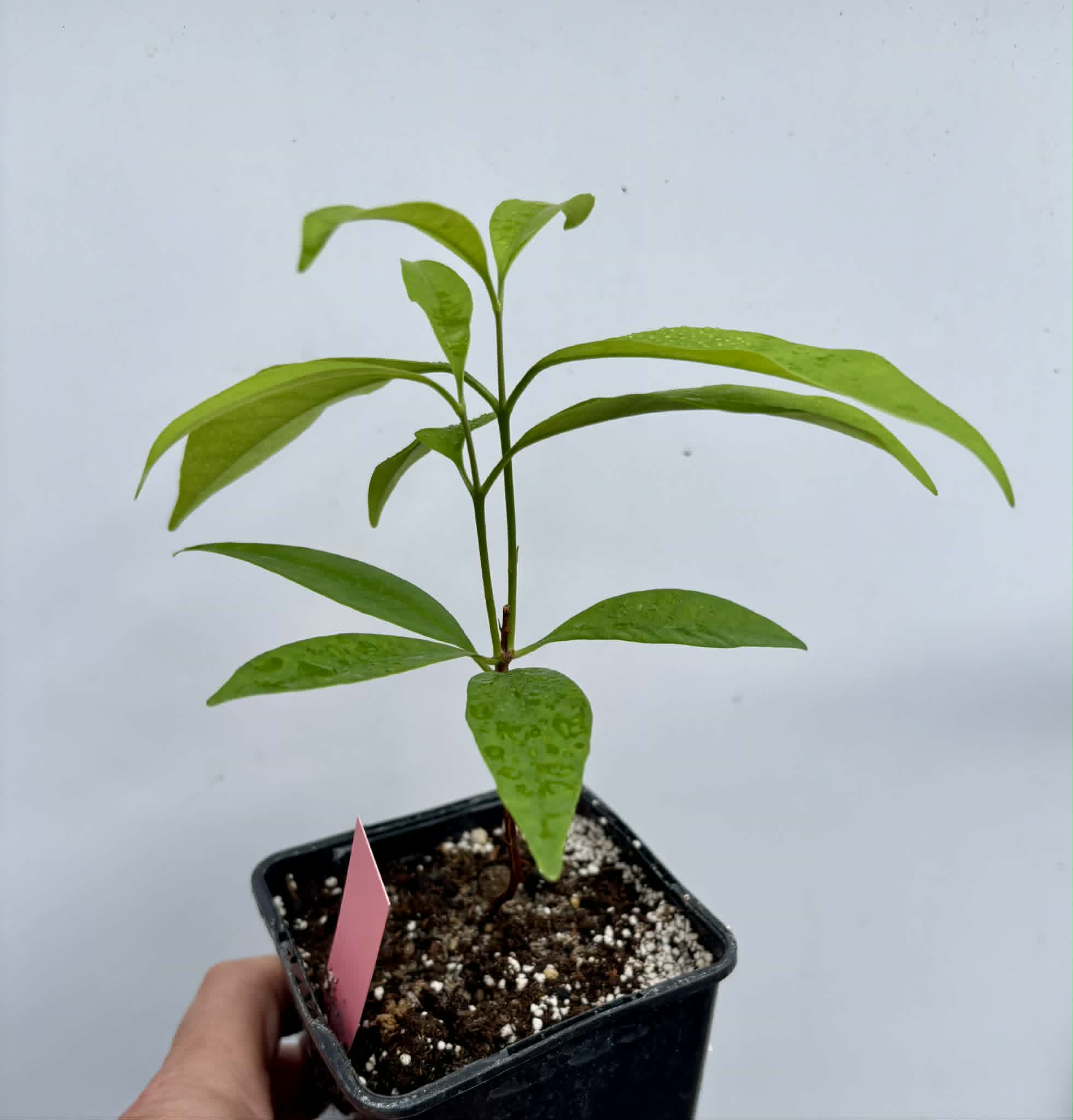
Grumixama-açu (Eugenia villae-novae) - 1 potted seedling / 1 getopfter Sämling
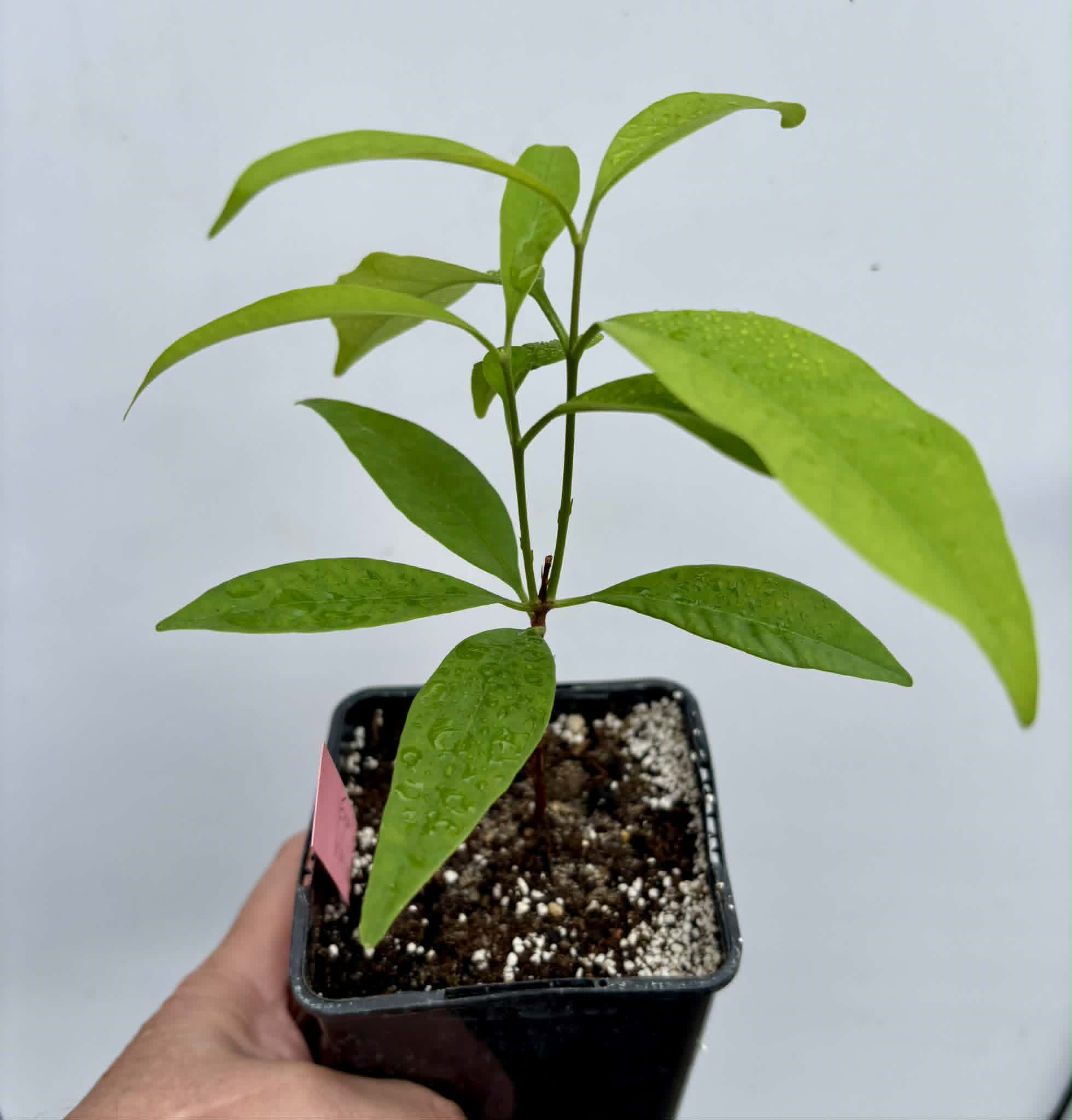
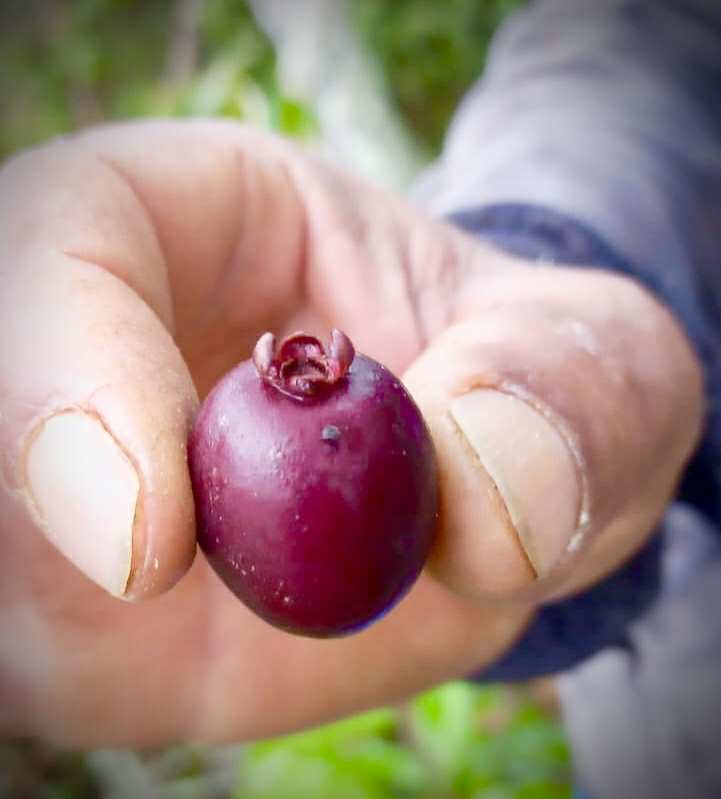
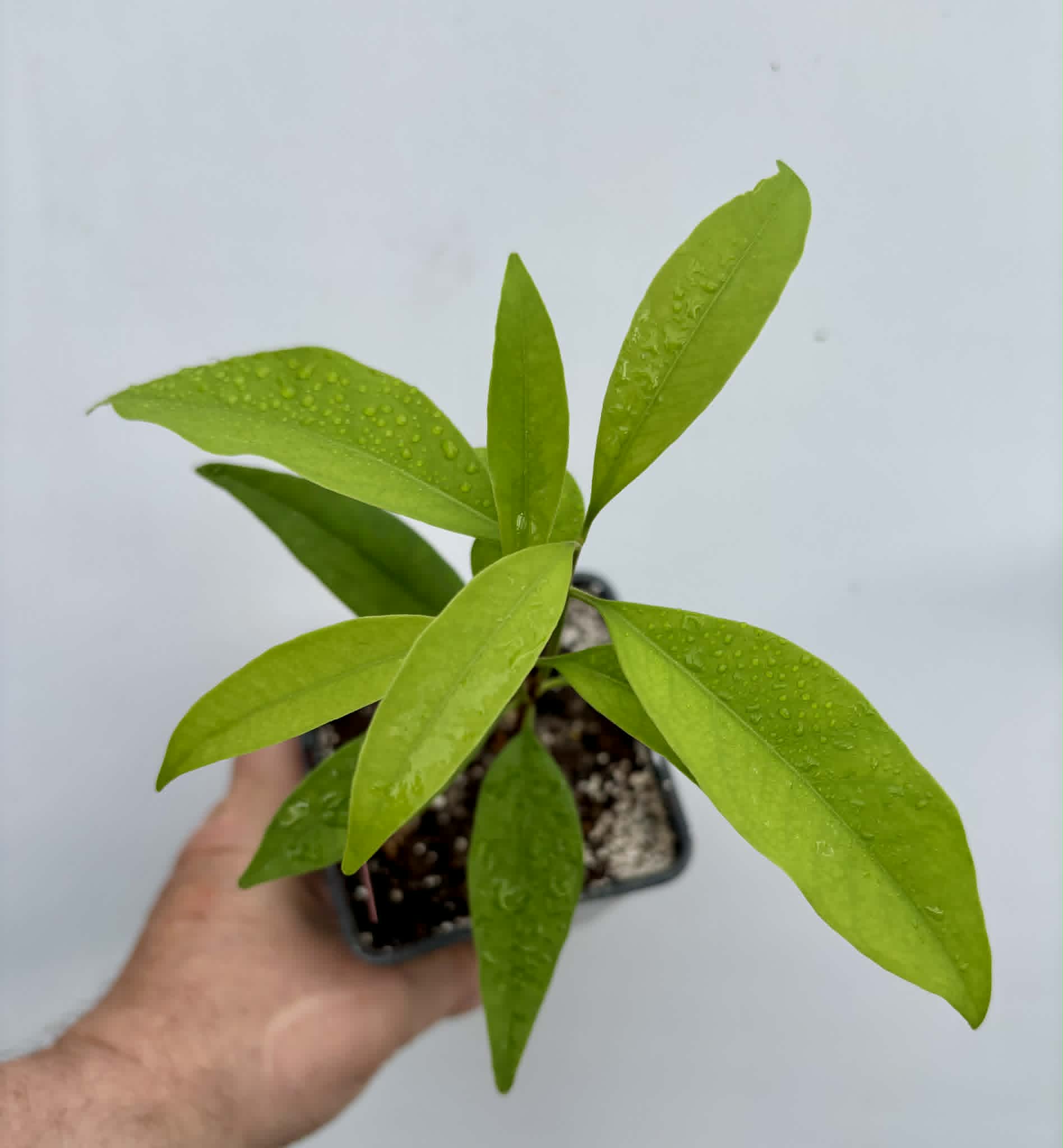
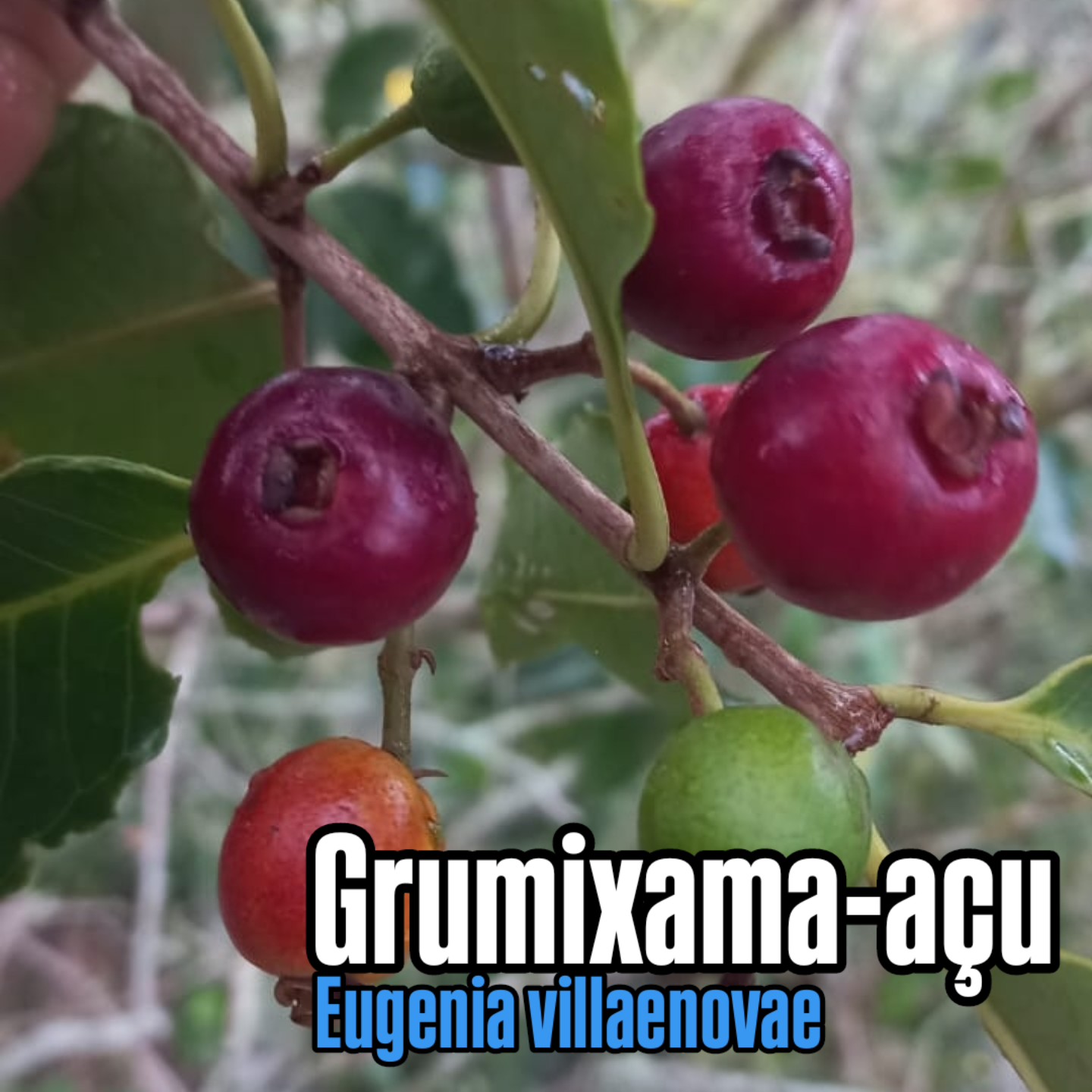
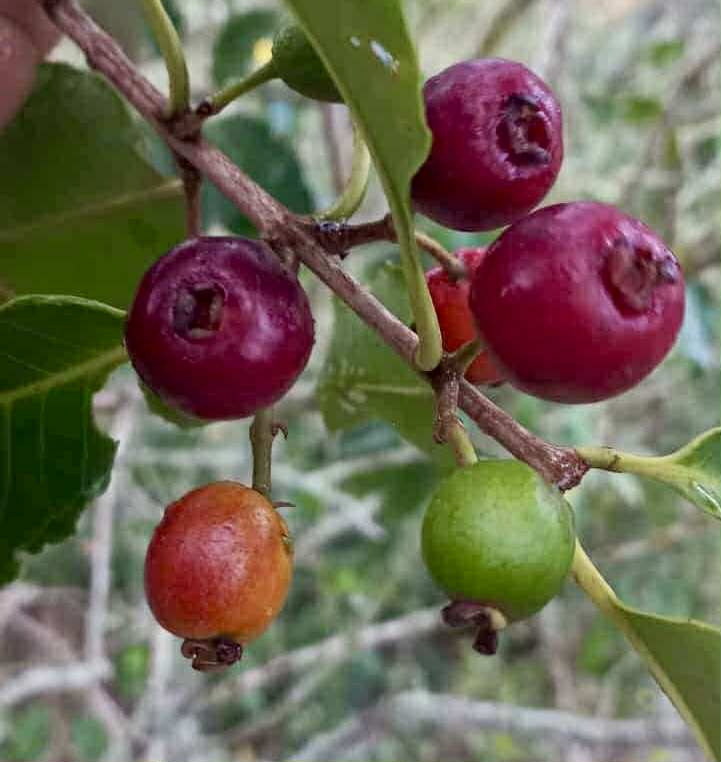
Eugenia villae-novae
Family / Familie: Myrtaceae
origin from / Herkunft: Brasil / Brasilien
Climate / Klima: temperate (10-30C / 50-84F) / gemäßigt (10-30C / 50-84F)
Use / Verwendung: edible fruits, juice, jam, ice cream, etc. / essbare Früchte, Säfte, Marmelade, Eis usw.
you buy / sie kaufen: 1 potted seedling / 1 getopfter Sämling
Delivery EU only
Grumixama-açu, Eugenia villae-novae
This rare Eugenia is critically endangered and originates from the Atlantic Rainforest of Rio de Janeiro.
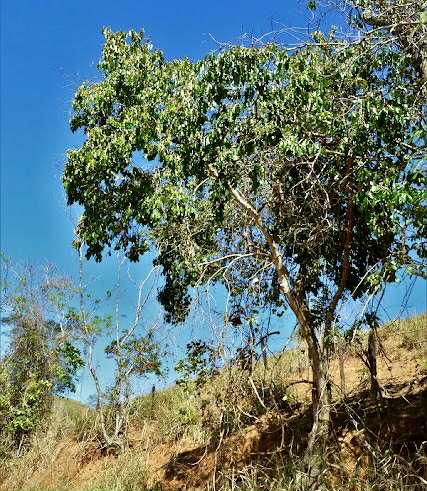
In the forest, this tree can grow up to 10 meters tall, but under cultivation, it remains under 4 meters.
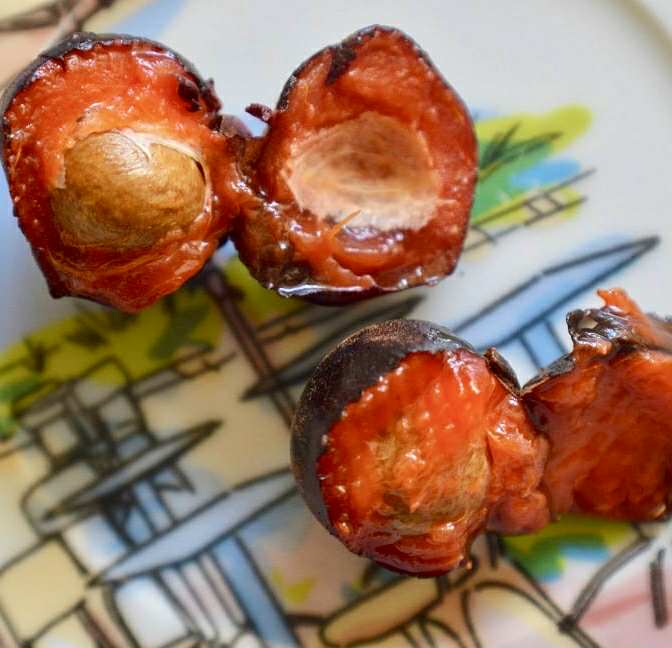
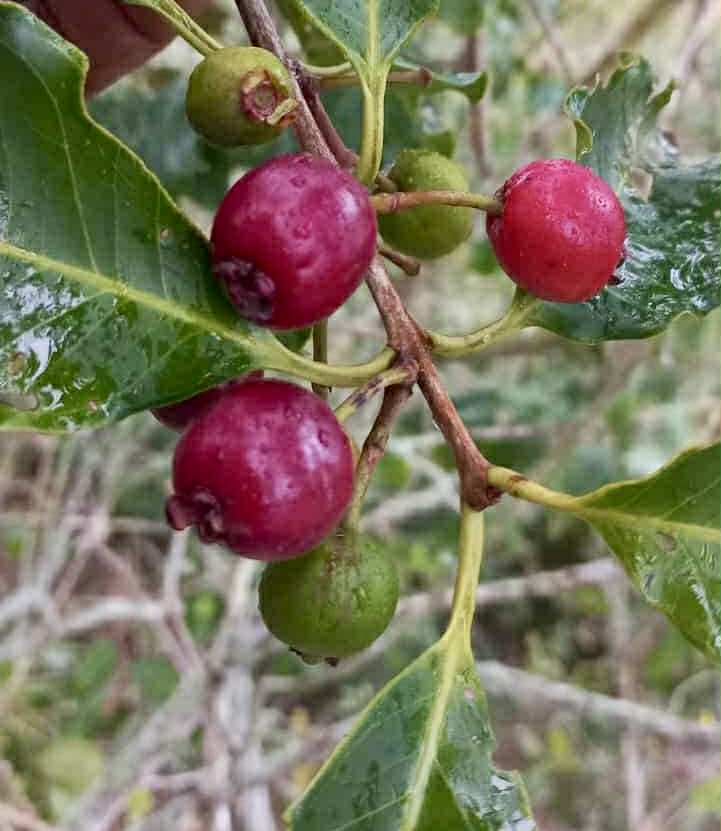
The fruits, with their orange flesh, taste like cherry, raisin, and papaya.
Some people leave these fruits in the sun for a day to remove the slight tannin flavor.
Others, however, love this very combination and eat the fruits straight away.
These fruits can be used to make some of the best jams and preserves.
This plant begins to flower in Brazil after about 4 years and can tolerate temperatures as low as -3 degrees Celsius for short periods.
The distinctive feature of this Eugenia is its strikingly large and characteristic leaves.
The species epithet "villae-novae" (sometimes incorrectly spelled villaenovae) means "new house or new town" and likely refers to the original discovery site in Brazil by the Danish botanist Hjalmar Kiærskou.
As with many rare fruit species, these fruits were subjected to a scientific study in Brazil.
The results were impressive.
The aim of this study was to determine the percentage composition and concentration of bioactive and volatile compounds in the edible parts of the fruits.
The fruits exhibited a high total carotenoid content.
The main carotenoid was lycopene.
The fruits also showed a high total anthocyanin content.
The most important phenolic compounds were gallic acid and isoquercetin.
The most important volatile compound was (E)-caryophyllene.
Carotenoids are converted into retinol (the active form of vitamin A) in the human body.
Retinol, in turn, can have benefits for eye health, improve immune system function, and promote the formation of bones and the central nervous system.
Furthermore, lycopene intake is associated with a reduction in pyruvate levels in the body, which may be linked to a reduced risk of prostate cancer in adult men.
Humans and other mammals cannot produce carotenoids themselves, which is why they must be obtained through food.
Research into the diversity of fruit varieties is therefore relevant, as it holds the potential to discover new carotenoid sources that can be made available to the public and consumed.
This plant thrives in a sunny to partially shaded location and grows relatively quickly.
Although it can tolerate colder temperatures for short periods, we recommend overwintering this Eugenia at a minimum of 10 degrees Celsius (50 degrees Fahrenheit).
Grumixama-açu, Eugenia villae-novae
Diese seltene Eugenia ist vom Aussterben bedroht und stammt aus dem Atlantischen Regenwald von Rio de Janeiro.
Dieser Baum kann im Wald bis zu 10 Meter hoch werden, unter Kulturbedingungen bleibt er aber unter 4 Meter.
Die Früchte mit orangenem Fruchtfleisch schmecken nach Kirsche mit Rosine und Papaya.
Manche lassen diese Früchte für einen Tag in der Sonne liegen um den leichten Tannin-Geschmack zu entfernen.
Andere hingegen lieben genau diese Mischung und essen die Früchte direkt.
Aus diesen Früchten kann man eine der besten Marmeladen oder Konfitüren herstellen.
Diese Pflanze beginnt in Brasilien nach ungefähr 4 Jahren an zu blühen und verträgt kurzfristig bis -3 Grad Celsius.
Das Besondere an dieser Eugenia sind die auffällig großen und typischen Blätter, die sie einmal bekommt.
Das Art-Epitheton "villae-novae" (manchmal wird es fälschigerweise auch villaenovae geschrieben) bedeutet soviel wie "neues Haus oder neue Stadt" und bezieht sich wahrscheinlich auf den damaligen Fundort in Brasilien des dänischen Botanikers Hjalmar Kiærskou.
Wie bei vielen, seltenen Obstarten, hat man diese Früchte in Brasilien einer wissenschaftlichen Studie unterzogen.
Dabei hat man beeindruckende Ergebnisse gewonnen.
Ziel dieser Studie war die Bestimmung der prozentualen Zusammensetzung sowie der Konzentration bioaktiver und flüchtiger Verbindungen in den essbaren Teilen der Früchte.
Die Früchte wiesen einen hohen Gesamtcarotinoidgehalt auf.
Das Hauptcarotinoid war Lycopin.
Die Früchte wiesen zudem einen hohen Gesamtgehalt an Anthocyanen auf.
Die wichtigsten phenolischen Verbindungen waren Gallussäureund Isoquercetin.
Die wichtigste flüchtige Verbindung war ( E )-Caryophyllen.
Carotinoide werden im menschlichen Körper zu Retinol umgewandelt (der aktiven Form von Vitamin A).
Retinol wiederum kann Vorteile für die Augengesundheit haben, die Funktion des Immunsystems verbessern und die Bildung von Knochen und des zentralen Nervensystems fördern.
Außerdem wird die Lycopin-Einnahme mit einer Senkung des Pyruvatspiegels im Körper assoziiert, was mit einem verringerten Risiko für Prostatakrebs bei erwachsenen Männern zusammenhängen kann.
Menschen und andere Säugetiere können Carotinoide nicht selbst herstellen, weshalb sie über die Nahrung aufgenommen werden müssen.
Die Erforschung der Artenvielfalt von Früchten ist daher relevant, da sie das Potenzial birgt, neue Carotinoidquellen zu entdecken, die der Bevölkerung zugänglich gemacht und von diesen Verbindungen konsumiert werden können.
Diese Pflanze liebt einen sonnigen bis halbschattigen Standort und wächst relativ schnell.
Auch wenn sie kurzfristig mehr Kälte verträgt, empfehlen wir diese Eugenia bei mindestens 10 Grad zu überwintern.
Login