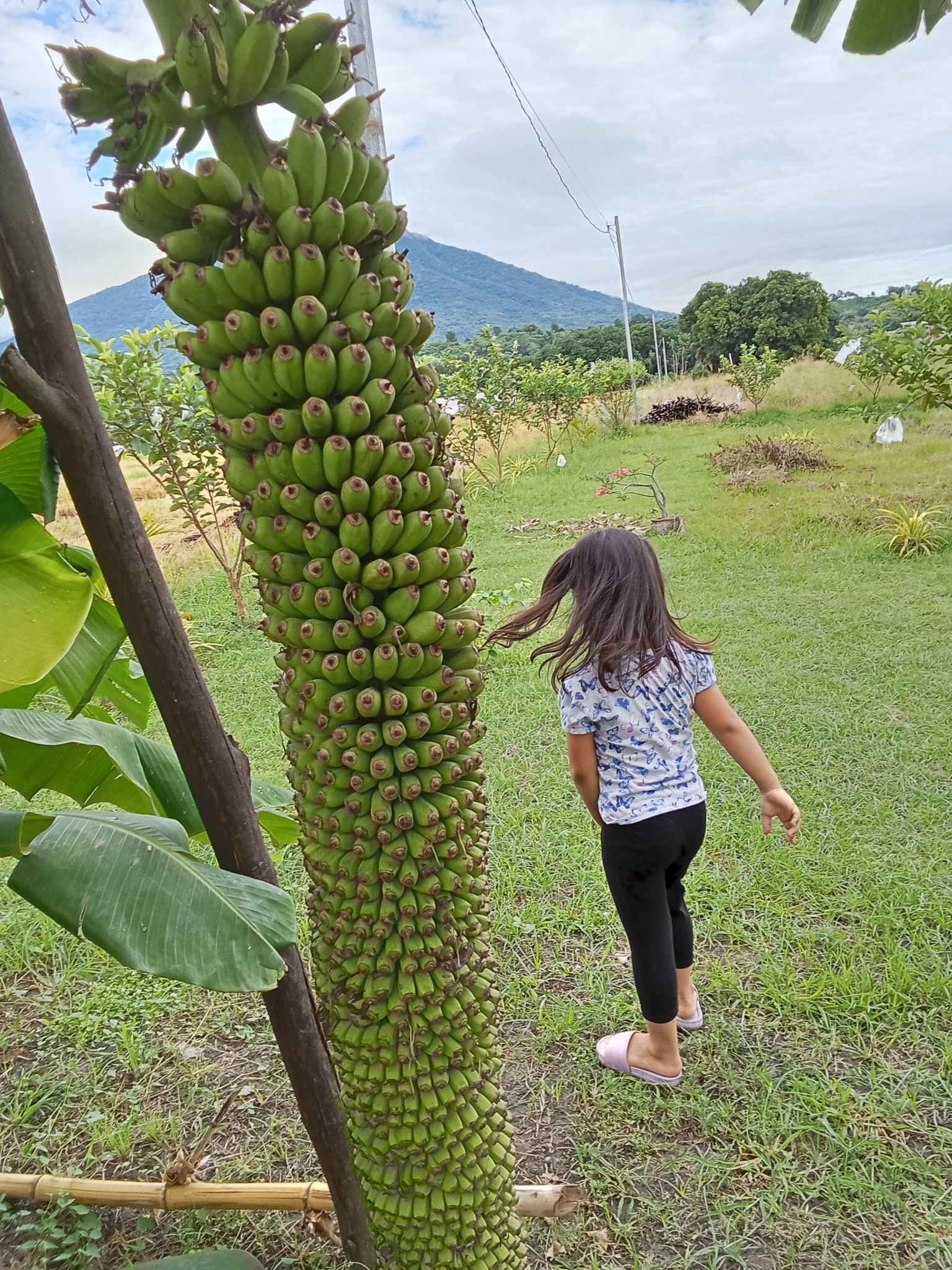
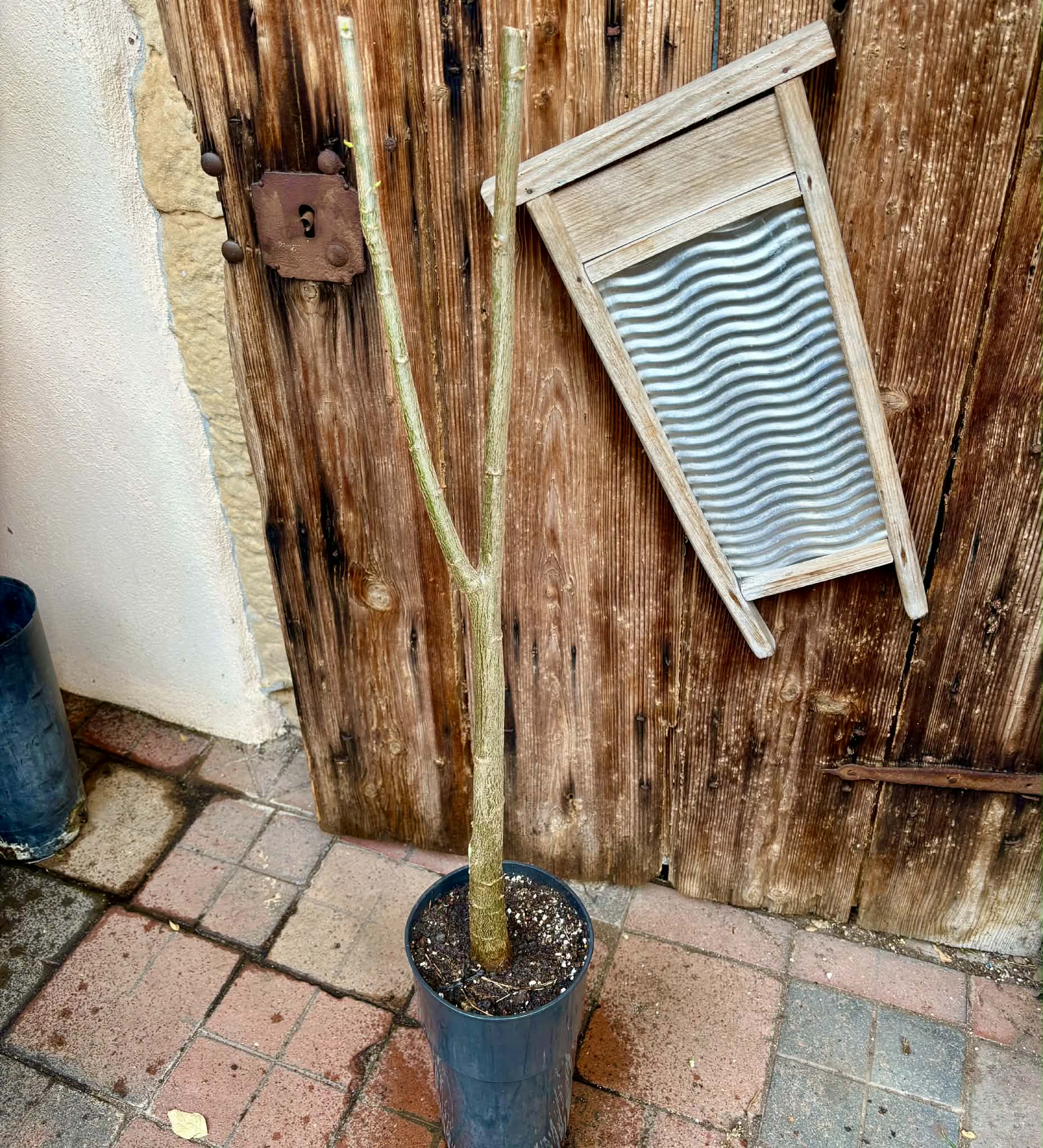
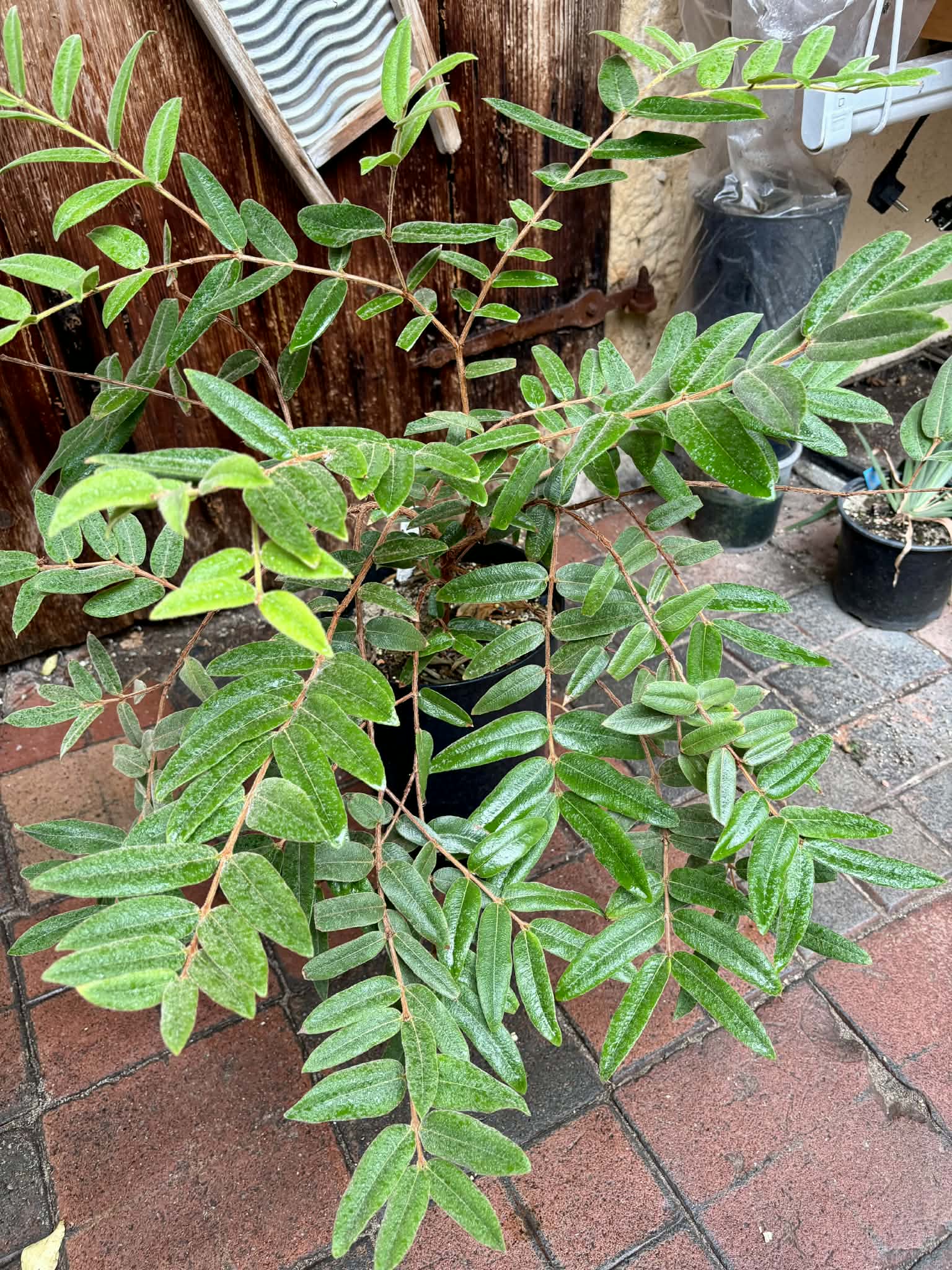
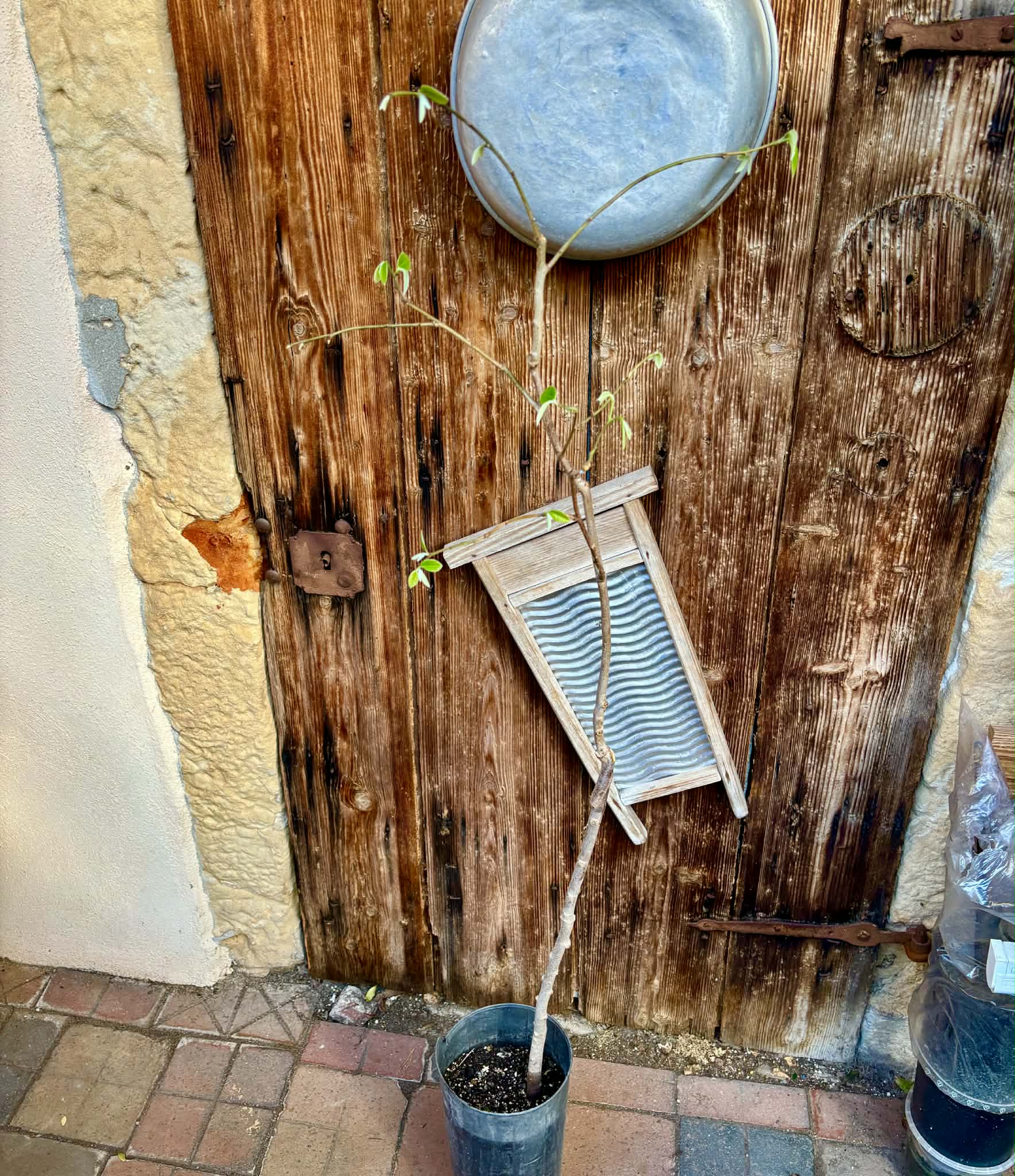
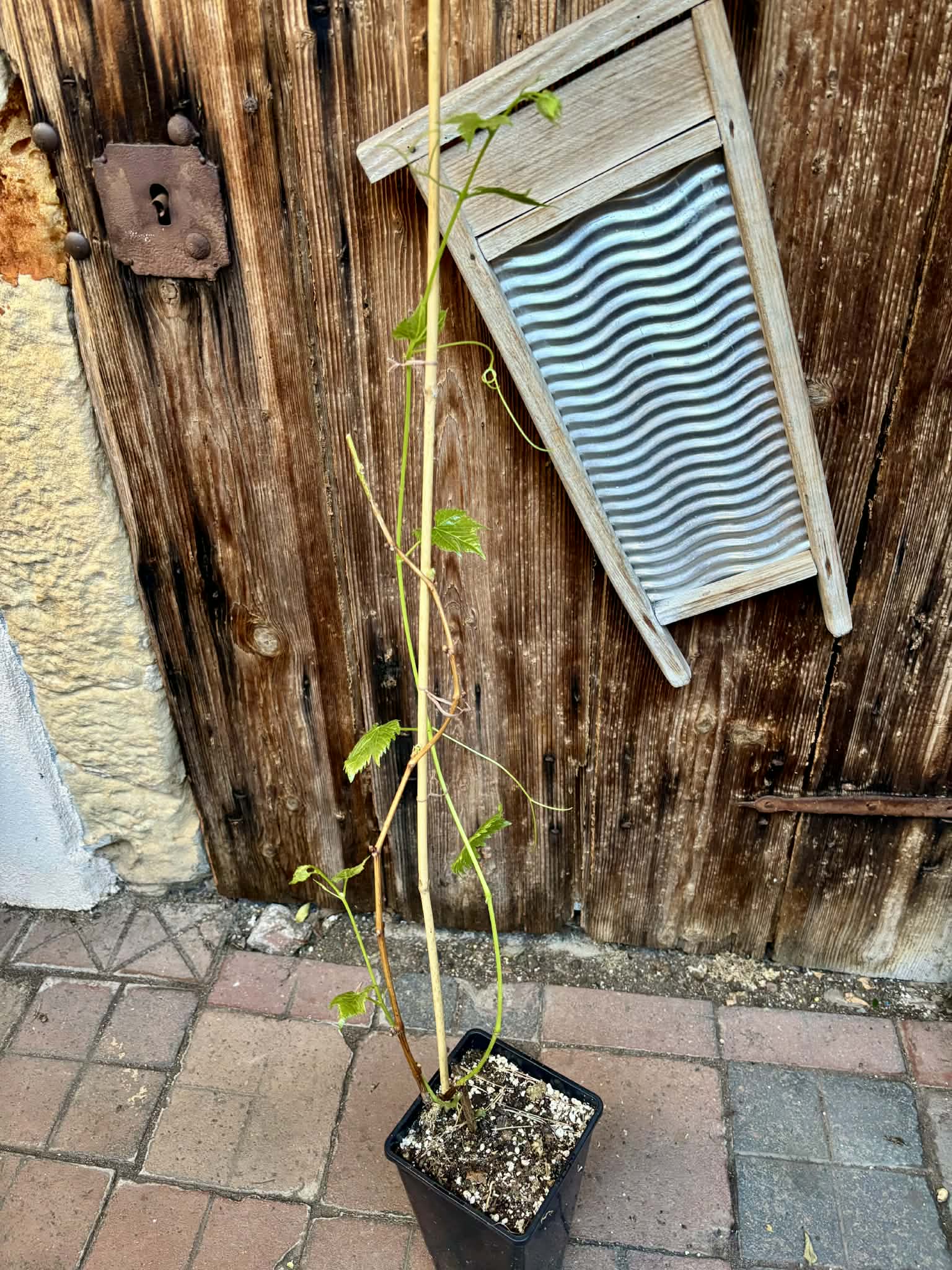
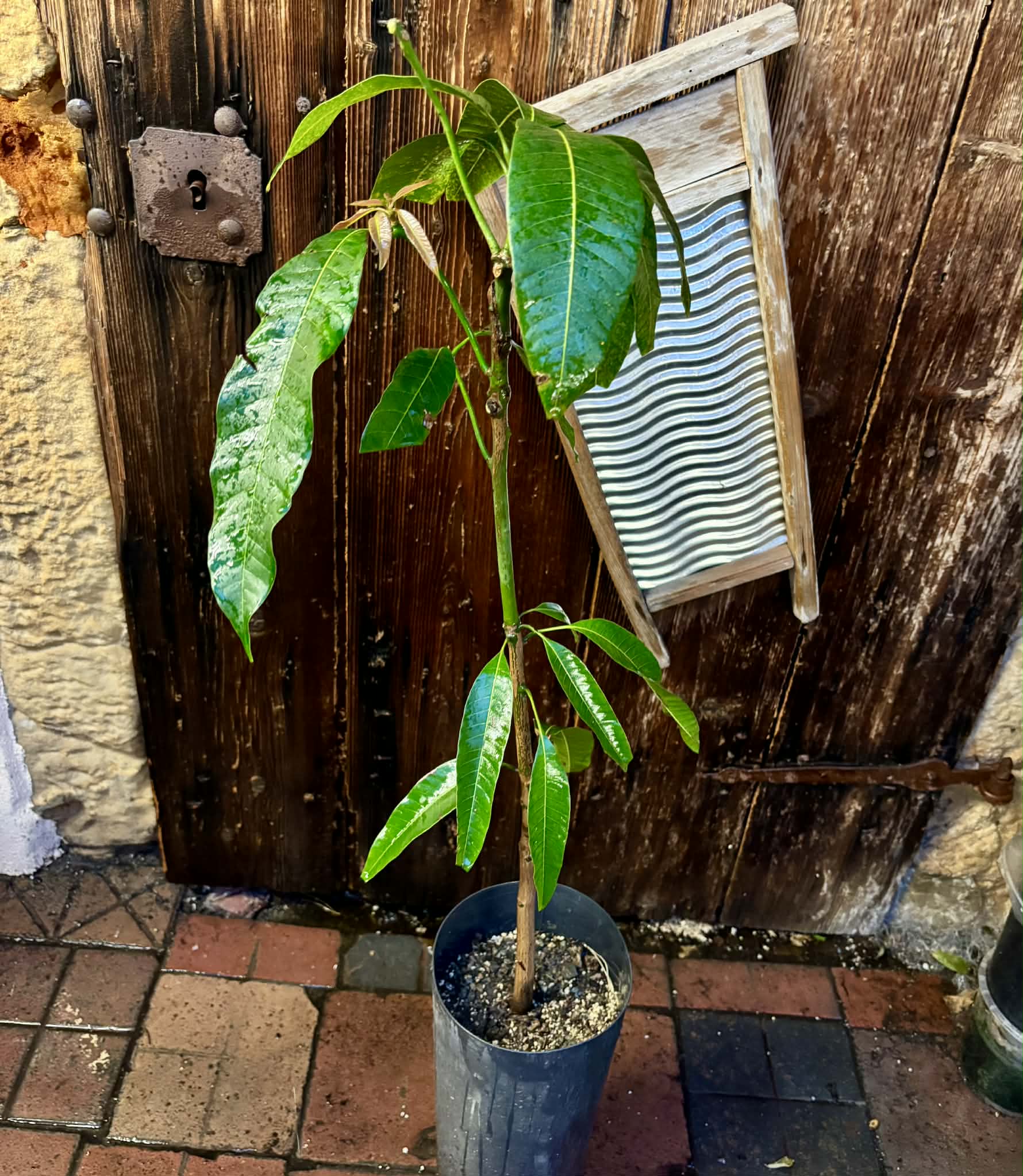
1000 Finger Banana (Musa chiliocarpa)
Family / Familie: Musaceaeorigin from / Herkunft: Asia / AsienClimate / Klima: temperate to warm (15-30C / 64-86F) / gemäßigt bis warm (15-30C / 64-86F)Use / Verwendung: edible fruits, juice, jam, ice cream, etc. / essbare Früchte, Säfte, Marmelade, Eis usw.you buy / sie kaufen: 1 potted plant / 1 getopfte PflanzeDelivery EU onlyThis plant will be cut back to approximately 120cm for transport. It will soon sprout new growth.The Thousand-Finger Banana (Musa chiliocarpa) is a variety known for its extremely long fruit clusters with hundreds to thousands of small, finger-sized fruits.This variety originates from Southeast Asia and is often cultivated for its ornamental value, with the fruits serving as decoration, but also being edible and sweet.The fruits are smaller than those of the Cavendish banana and have a milder sweetness, but are still readily eaten.Characteristics of the Thousand-Finger BananaAppearance: The fruit clusters can reach the ground and contain up to 1,000 small bananas, which is why it bears this name.The individual fruits are about finger-sized.Taste and Texture: Although it is used as an ornamental plant, the fruits are edible, have a soft texture, and a sweet taste, similar to regular bananas.The taste is described as sweet, but not excessively sweet, with possible floral or vanilla-like notes.Cultivation: It grows in tropical and subtropical climates and can reach an impressive height of up to 4 meters.The plant requires water and fertilizer for strong growth.Uses: The Thousand-Finger Banana is a curiosity for fruit lovers and gardeners.As an ornamental plant, it is attractive because of its unusual shape and the abundance of fruits.The fruits themselves can be eaten fresh, dried, or used in desserts.Please overwinter at a minimum temperature of 10 degrees Celsius.Diese Pflanze wird für den Transport auf c. 120cm gekürzt. Sie treibt dann bald wieder neu aus.Die Tausend-Finger-Banane (Musa chiliocarpa) ist eine Sorte, die für ihre extrem langen Fruchtstände mit Hunderten bis Tausenden von kleinen, fingergroßen Früchten bekannt ist. Diese Sorte stammt aus Südostasien und wird oft wegen ihres ornamentalen Werts angebaut, wobei die Früchte als Zierde dienen, aber auch essbar und süß sind. Die Früchte sind kleiner als bei der Cavendish-Banane und haben eine mildere Süße, werden aber dennoch gern gegessen. Merkmale der Tausend-Finger-BananeAussehen: Die Fruchtstände können bis zum Boden reichen und bis zu 1.000 kleine Bananen enthalten, weshalb sie diesen Namen trägt. Die einzelnen Früchte sind etwa fingergroß.Geschmack und Textur: Obwohl sie als Zierpflanze verwendet wird, sind die Früchte essbar, haben eine weiche Textur und einen süßen Geschmack, ähnlich wie normale Bananen. Der Geschmack wird als süß, aber nicht übermäßig süß beschrieben, mit möglichen floralen oder vanilleartigen Noten.Anbau: Sie wächst in tropischen und subtropischen Klimazonen und kann eine beeindruckende Höhe bis 4m erreichen. Die Pflanze benötigt Wasser und Dünger für ein starkes Wachstum.Verwendung: Die Tausend-Finger-Banane ist eine Kuriosität für Liebhaber von Obst und Gärtnern.Als Zierpflanze ist sie wegen ihrer ungewöhnlichen Form und der Fülle an Früchten attraktiv.Die Früchte selbst können frisch verzehrt, getrocknet oder für Desserts verwendet werden. Bitte bei mindestens 10 Grad überwintern.
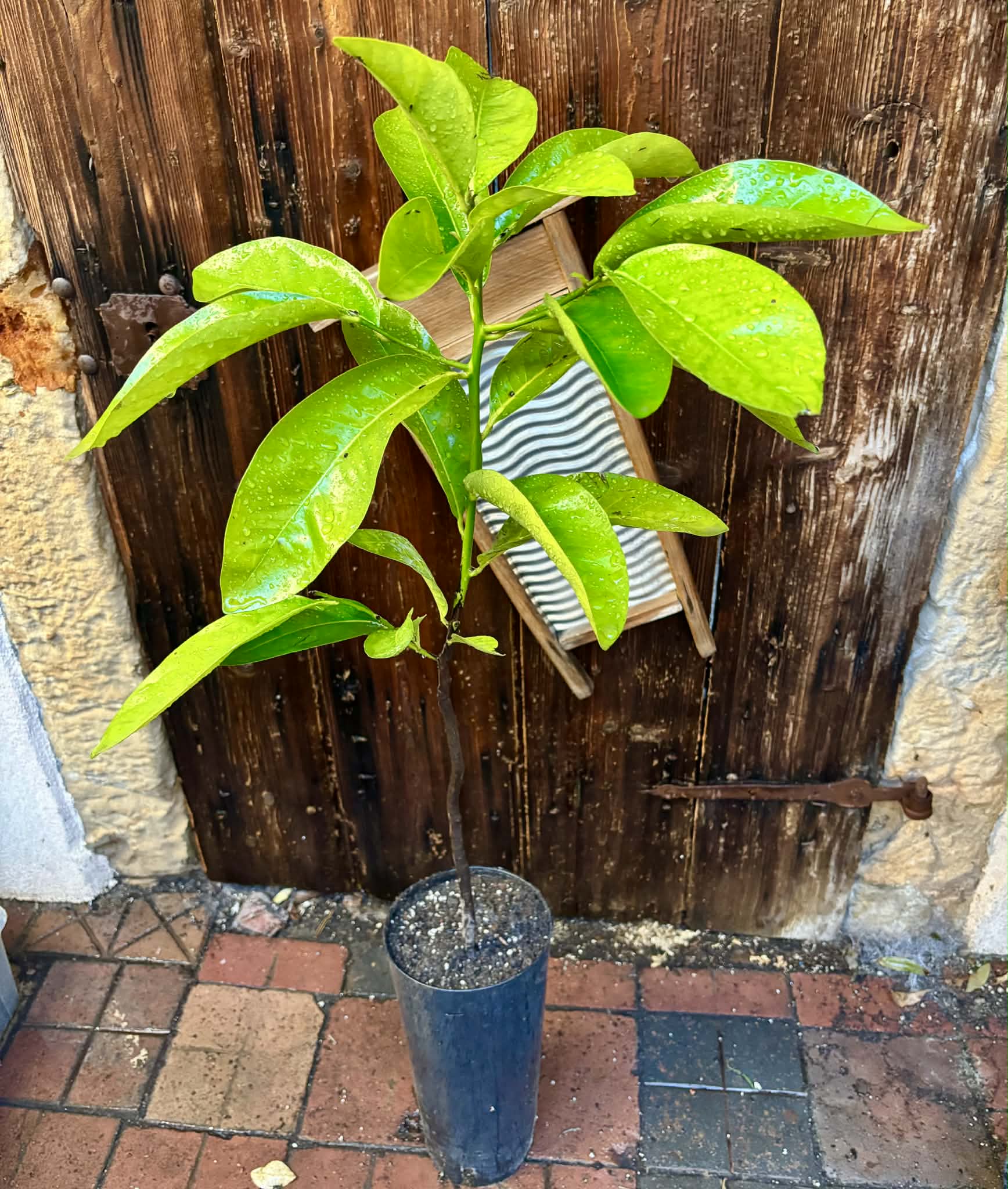
Diospyros nigra - Black Sapote Nr. 2
Family / Familie: Ebenaceaeorigin from / Herkunft: South America / SüdamerikaClimate / Klima: temperate to warm (10-30C / 50-86F) / gemäßigt bis warm (10-30C / 50-86F)Use / Verwendung: edible fruits, juice, jam, ice cream, etc. / essbare Früchte, Säfte, Marmelade, Eis usw.you buy / sie kaufen: 1 potted plant / 1 getopfte Pflanze
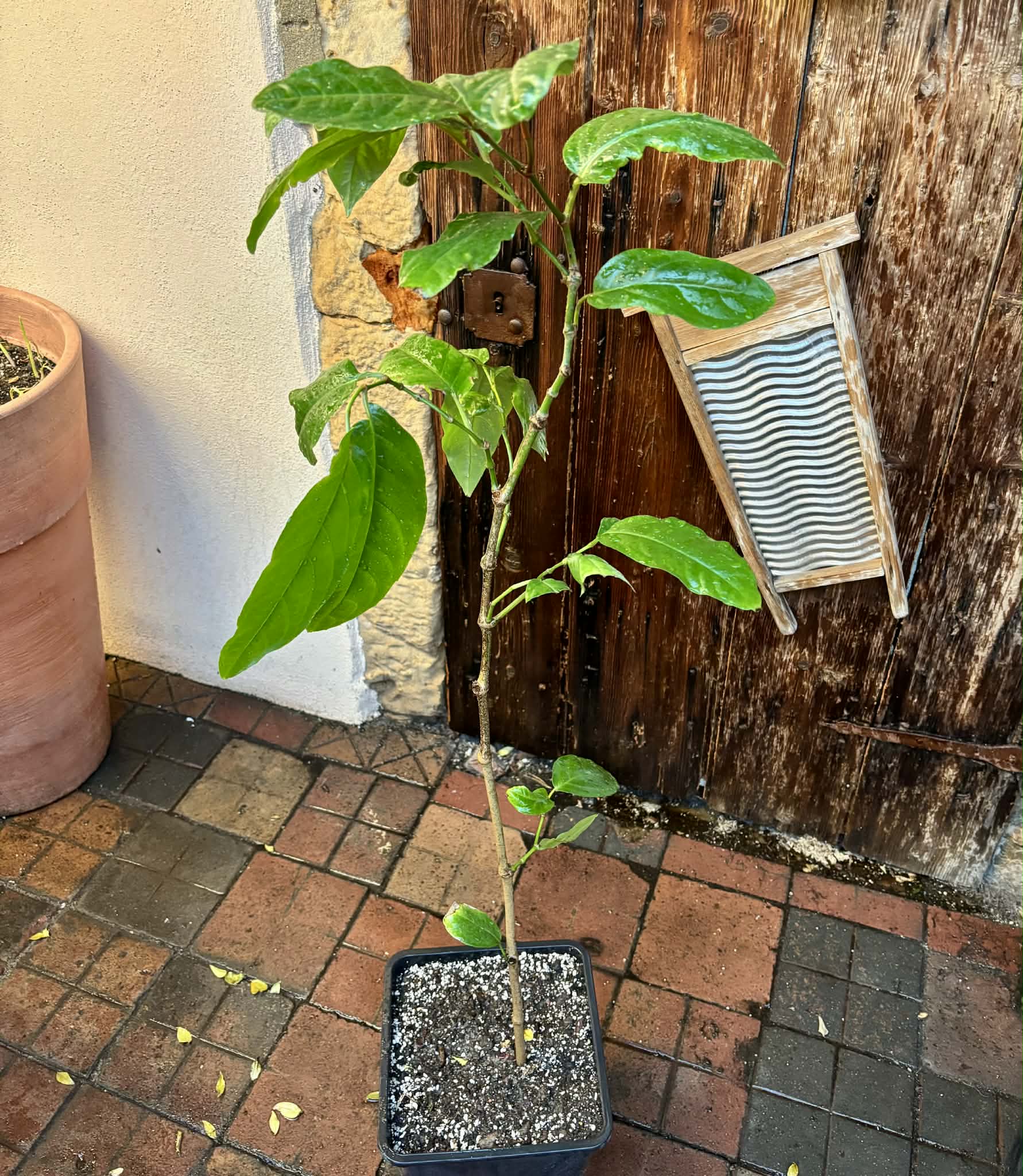
Delivery EU onlyThe plant has some damage to a few leaves from the winter and is currently sprouting new growth.You eat the fruit when it has a very dark skin and becomes soft.The pulp is particularly creamy and is very reminiscent of chocolate pudding. But it's not extremely sweet.You can also use the fruits to make a milkshake. Simply put the inside of the fruit (without seeds) into the blender and add milk. We find it extremely tasty. Some even use it as a spread.The fruits are also rich in vitamin C, calcium and phosphorus.The plant is about 1.20m tall.Please overwinter at at least 10 degrees (can also tolerate colder temperatures).Die Pflanze hat ein paar Blessuren an einigen Blättern vom Winter und treibt gerade neu aus. Die Frucht isst man wenn sie eine ganz dunkle Haut bekommt und weich wird.Das Fruchtfleisch ist dann besonders cremig und erinnert sehr an Schokoladenpudding. Aber ist dabei nicht so extrem süss. Man kann die Früchte auch zu einem Milchshake verarbeiten. Einfach das Fruchtinnere (ohne Kerne) in den Mixer geben und Milch dazu. Wir finden es äusserst lecker. Manche nehmen es sogar als Brotaufstrich. Die Früchte sind nebenbei noch reich an Vitamin C, Kalzium und Phosphor.Die Pflanze ist ungefähr 1,20m groß.Bitte bei mindestens 10 Grad überwintern (verträgt auch kälter).
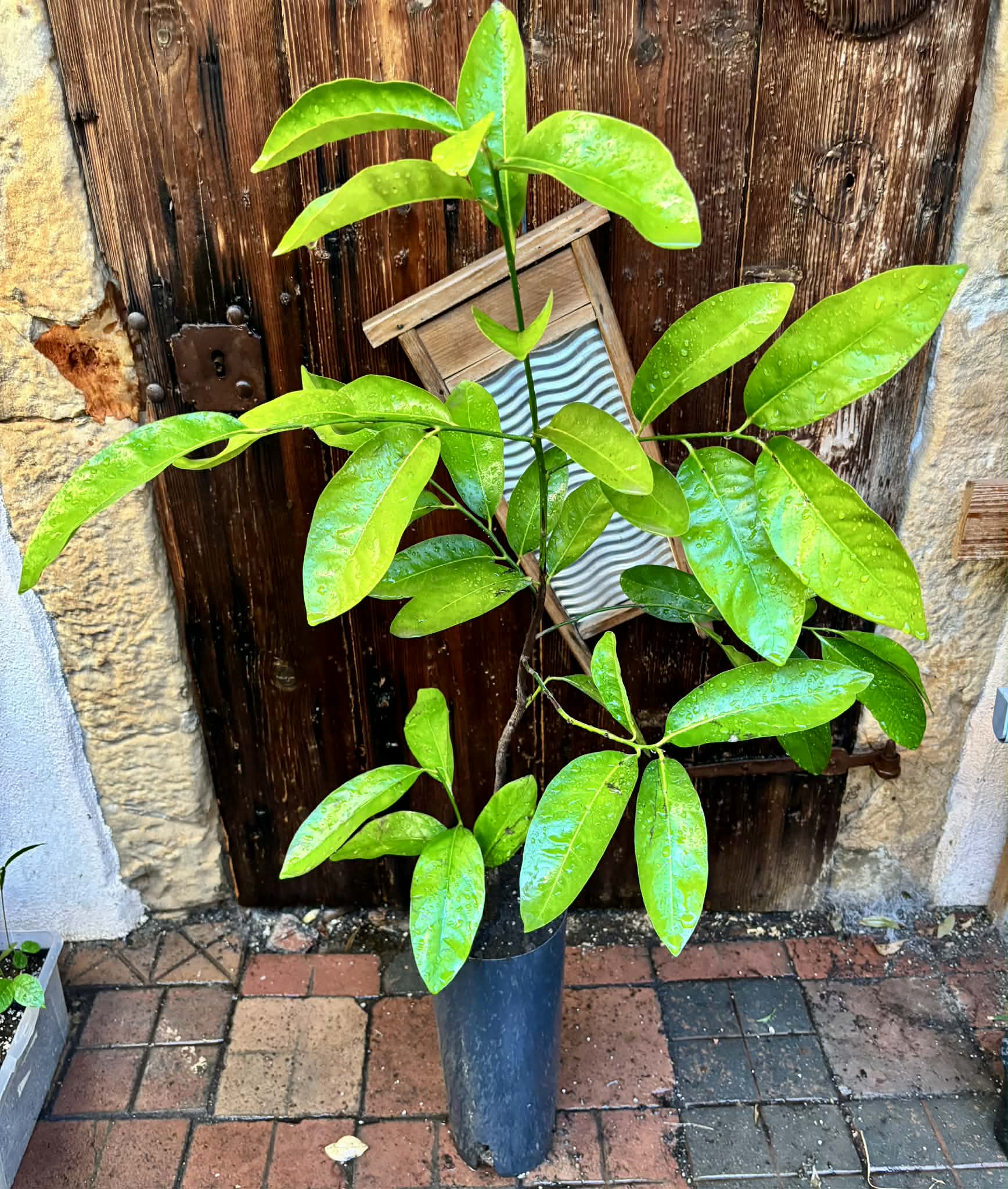
Diospyros nigra - Black Sapote Nr.1
Family / Familie: Ebenaceaeorigin from / Herkunft: South America / SüdamerikaClimate / Klima: temperate to warm (10-30C / 50-86F) / gemäßigt bis warm (10-30C / 50-86F)Use / Verwendung: edible fruits, juice, jam, ice cream, etc. / essbare Früchte, Säfte, Marmelade, Eis usw.you buy / sie kaufen: 1 potted plant / 1 getopfte Pflanze
Delivery EU onlyThe plant has some damage to a few leaves from the winter and is currently sprouting new growth.You eat the fruit when it has a very dark skin and becomes soft.The pulp is particularly creamy and is very reminiscent of chocolate pudding. But it's not extremely sweet.You can also use the fruits to make a milkshake. Simply put the inside of the fruit (without seeds) into the blender and add milk. We find it extremely tasty. Some even use it as a spread.The fruits are also rich in vitamin C, calcium and phosphorus.The plant is about 1.20m tall.Please overwinter at at least 10 degrees (can also tolerate colder temperatures).Die Pflanze hat ein paar Blessuren an einigen Blättern vom Winter und treibt gerade neu aus. Die Frucht isst man wenn sie eine ganz dunkle Haut bekommt und weich wird.Das Fruchtfleisch ist dann besonders cremig und erinnert sehr an Schokoladenpudding. Aber ist dabei nicht so extrem süss. Man kann die Früchte auch zu einem Milchshake verarbeiten. Einfach das Fruchtinnere (ohne Kerne) in den Mixer geben und Milch dazu. Wir finden es äusserst lecker. Manche nehmen es sogar als Brotaufstrich. Die Früchte sind nebenbei noch reich an Vitamin C, Kalzium und Phosphor.Die Pflanze ist ungefähr 1,20m groß.Bitte bei mindestens 10 Grad überwintern (verträgt auch kälter).
4 years old - Feijoa (Acca sellowiana)
Family / Familie: Myrtaceaeorigin from / Herkunft: New Zealand / NeuseelandClimate / Klima: temperate to warm (-10-25C / 14-77F) / gemäßigt bis warm (-10-25C / 14-77F)Use / Verwendung: edible fruits, juice, jam, ice cream, etc. / essbare Früchte, Säfte, Marmelade, Eis usw.you buy / sie kaufen: 1 potted plant / 1 getopfte Pflanze
Delivery EU onlyExotic Meets Hardiness: The Feijoa (Acca sellowiana)
Acca sellowiana, commonly known as Feijoa or Pineapple Guava, is an evergreen shrub from southern Brazil that perfectly combines elegance and utility. The highlight of the plant is the incomparable aroma of its fruit: a delicious blend of pineapple, strawberry, and a hint of mint. The fruits are harvested as soon as they drop from the tree and can be eaten fresh by scooping them out like a kiwi or processed into exquisite jellies. Even before the harvest, the Feijoa delights with its spectacular flowers featuring bright red stamens and fleshy white petals. A fascinating detail: the petals are also edible and have a surprisingly sweet taste with a hint of cinnamon—perfect as a garnish for desserts. The foliage is dark green on top and silvery-white on the underside, giving the plant a beautiful Mediterranean appearance. A major advantage for gardeners is its remarkable cold hardiness down to -10°C (14°F), allowing it to stay outdoors almost year-round in milder regions. The Feijoa is extremely robust, tolerates pruning well, and is excellent as a container plant for terraces, balconies, or conservatories. For a bountiful harvest, a sunny location is recommended, and for non-self-fertile varieties, proximity to a second plant for pollination is ideal.Exotik trifft Winterhärte: Die Feijoa (Acca sellowiana)
Acca sellowiana, besser bekannt als Feijoa oder Ananas-Guave, ist ein immergrüner Strauch aus dem südlichen Brasilien, der Eleganz und Nutzwert perfekt vereint. Das Highlight der Pflanze ist das unvergleichliche Aroma ihrer Früchte: Eine köstliche Mischung aus Ananas, Erdbeere und einem Hauch Minze. Die Früchte werden geerntet, sobald sie vom Baum fallen, und können wie eine Kiwi direkt aus der Schale gelöffelt oder zu exquisitem Gelee verarbeitet werden. Schon vor der Ernte begeistert die Feijoa durch ihre spektakulären Blüten mit leuchtend roten Staubfäden und fleischigen, weißen Blütenblättern. Besonders faszinierend: Die Blütenblätter sind ebenfalls essbar und schmecken überraschend süß mit einer zimtigen Note – perfekt als Dekoration für Desserts. Das Laub ist auf der Oberseite dunkelgrün und auf der Unterseite silbrig-weiß behaart, was der Pflanze ein mediterranes Aussehen verleiht. Ein entscheidender Vorteil für Gartenfreunde ist die beachtliche Frosthärte von bis zu -10 °C (kurzzeitig sogar mehr), wodurch sie in milden Regionen fast ganzjährig draußen stehen kann. Die Feijoa ist extrem robust, schnittverträglich und eignet sich hervorragend als Kübelpflanze für Terrasse, Balkon oder Wintergarten.
Longan (Dimocarpus longan)
Family / Familie: Sapindaceaeorigin from / Herkunft: Asia / AsienClimate / Klima: temperate to warm (10-30C / 50-86F) / gemäßigt bis warm (10-30C / 50-86F)Use / Verwendung: edible fruits, juice, jam, ice cream, etc. / essbare Früchte, Säfte, Marmelade, Eis usw.you buy / sie kaufen: 1 potted plant / 1 getopfte Pflanze
Delivery EU onlyEvery fruit lover knows the longan.Longan is a beautiful tree from Asia and the fruits are sweet and juicy.Please water less in winter and avoid drafts.Overwinter at a minimum of 10 degrees.Die Longan kennt jeder Fruchtliebhaber.Longan ist ein schöner Baum aus Asien und die Früchte sind süß und saftig.Bitte im Winter weniger gießen und Zugluft vermeiden.Überwintern bei mindestens 10 Grad.
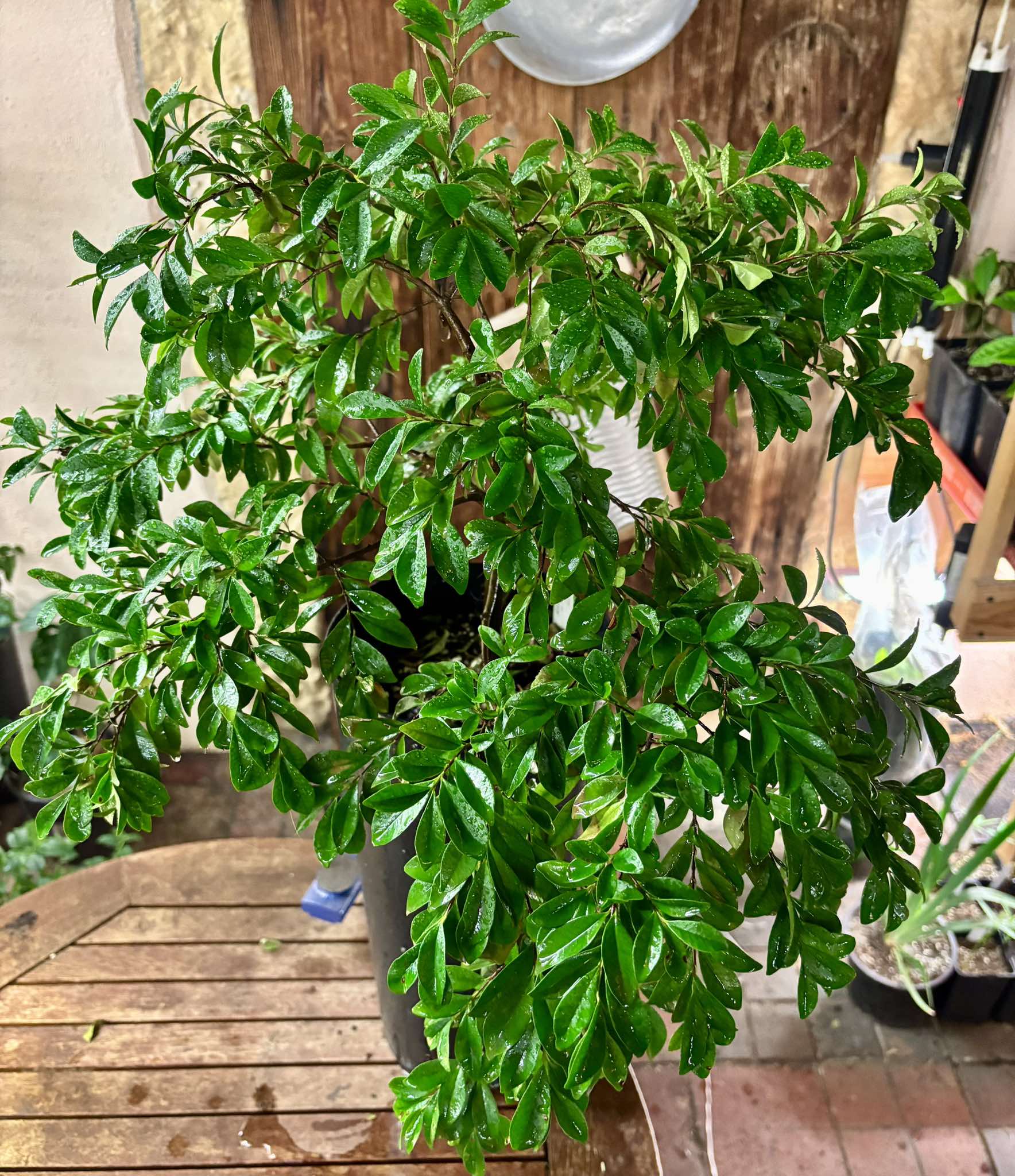
Cherry of Rio Grande (Eugenia involucrata)Family / Familie: Myrtaceaeorigin from / Herkunft: South America / SüdamerikaClimate / Klima: temperate to warm (10-30C / 50-86F) / gemäßigt bis warm (10-30C / 50-86F)Use / Verwendung: edible fruits, juice, jam, ice cream, etc. / essbare Früchte, Säfte, Marmelade, Eis usw.you buy / sie kaufen: 1 potted plant / 1 getopfte PflanzeDelivery EU onlyThe name "Rio Grande" indicates that this Eugenia originally comes from the southern Brazilian state of Rio Grande do Sul.This Eugenia has no special care requirements and will also bear fruit in pots.The fruits have a very good flavor and can be eaten out of hand.This Eugenia is one of the cold-resistant varieties.In America, they survived -6 degrees Celsius!Nevertheless, I would overwinter them at a minimum of 10 degrees Celsius.Der Name „Rio Grande“ weist darauf hin, dass diese Eugenie ursprünglich aus dem südbrasilianischen Bundesstaat Rio Grande do Sul stammt.Diese Eugenie stellt keine besonderen Ansprüche an die Pflege und trägt auch im Topf Früchte.Die Früchte haben ein sehr gutes Aroma und können direkt gegessen werden.Diese Eugenie gehört zu den kälteresistenten Sorten.In Amerika überlebte sie bis zu -6 Grad Celsius!Ich würde sie trotzdem bei mindestens 10 Grad Celsius überwintern.
Oak Leaf Papaya (Vasconcellea quercifolia)Family / Familie: Solanaceae
origin from / Herkunft: South America / SüdamerikaClimate / Klima: temperate to warm (5-25C / 41-77F) / gemäßigt bis warm (5-25C / 41-77F)Use / Verwendung: edible fruits, juice, jam, ice cream, etc. / essbare Früchte, Säfte, Marmelade, Eis usw.you buy / sie kaufen: 1 potted plant / 1 getopfte PflanzeDelivery Eu onlyThis plant was cut back for shipping reasons and is just beginning to sprout new growth in several places. This plant is already of flowering age.
The Oak Leaf Papaya is known for its decorative, oak-like leaves and small, yellow-to-orange fruits. In terms of taste, the flesh offers a mild, sweet flavor reminiscent of a blend between melon and apricot, which is much more subtle than that of the common tropical papaya.Regarding care, this variety is more resilient than its relatives because it is significantly more cold-tolerant. It thrives in a sunny, sheltered spot and should be kept in a cool but frost-free environment during the winter. Consistent watering is important, but you must avoid waterlogging at all costs, as the roots are highly prone to rotting. During the active growing season, the plant benefits from regular fertilization.Regarding the plant's biology, it is important to note that this species produces different sexes. There are purely male plants that only provide pollen and female plants that require a pollinator nearby to produce fruit. Additionally, hermaphroditic (bisexual) specimens occur, which are self-fertile and can produce fruit on their own. Since the sex can only be identified by the shape of the flowers once the plant matures, it is usually recommended to grow several plants together to ensure a successful harvest.
Please overwinter at a minimum temperature of 5 degrees Celsius.Diese Pflanze wurde aus versandtechnischen Gründen heruntergeschnitten und beginnt gerade an mehreren Stellen neu auszutreiben. Diese Pflanze ist bereits im blühfähigen Alter.Die Oak Leaf Papaya besticht durch ihre dekorativen, eichenähnlichen Blätter und ihre kleinen, gelb-orangen Früchte.Geschmacklich erinnert das Fleisch an eine milde Mischung aus Melone und Aprikose und ist deutlich weniger intensiv als das der tropischen Papaya.In der Haltung ist sie unkomplizierter als ihre Verwandten, da sie deutlich mehr Kälte verträgt. Ein sonniger, windgeschützter Platz ist ideal, wobei sie im Winter kühl, aber frostfrei stehen sollte. Wichtig ist eine gleichmäßige Bewässerung ohne Staunässe, da die Wurzeln sonst schnell faulen. Während der aktiven Wachstumszeit freut sie sich über regelmäßige Nährstoffgaben.Bezüglich der Fortpflanzung ist wichtig zu wissen, dass diese Art unterschiedliche Geschlechter ausbildet. Es gibt rein männliche Pflanzen, die nur Pollen spenden, und weibliche Pflanzen, die für die Fruchtbildung einen Bestäuber in der Nähe brauchen. Zudem kommen zwittrige (hermaphrodite) Exemplare vor, die sich selbst befruchten können. Da man das Geschlecht erst an der Form der Blüten erkennt, wenn die Pflanze älter ist, setzt man für eine sichere Ernte meist auf mehrere Pflanzen gleichzeitig.Bitte bei mindestens 5 Grad überwintern.
6 years old - Myrciaria caerulescens (Roxa - Blue Guaquiea)
Family / Familie: Myrtaceaeorigin from / Herkunft: Brasil / Brasilien Climate / Klima: temperate to warm (15-30C / 59-86F) / gemäßigt bis warm (15-30C / 59-86F)Use / Verwendung: edible fruits, juice, jam, ice cream, etc. / essbare Früchte, Säfte, Marmelade, Eis usw.you buy / sie kaufen: 1 potted plant / 1 getopfte PflanzeDelivery EU onlyThis plant flowered for the first time last year.It is now 6 years old.Myrciaria caerulescens – formerly known as Myrciaria sp. roxa or Blue Guaquiea – is a fascinating discovery among exotic fruit plants.In 2024, it finally received its scientific name.The taste of its fruit is said to even surpass the popular jaboticaba.The plant originates from the Caetité region in the Brazilian state of Bahia, which has a warm climate and a pronounced dry season.Fertilization: No fertilizer required or recommended.Light: A bright location without direct midday sun is ideal.Temperature: Overwinter at a minimum of 10°C (50°F).Growth: Slow growth initially; later a compact shrub, very well suited for container cultivation.Fruit: Excellent taste – even better than jaboticaba.History: From "Blue Guaquiea" to the officially described Myrciaria caerulescens – a plant with a history.Do not fertilize and avoid waterlogging.Diese Pflanze hat im letzten Jahr das erste Mal geblüht.Sie ist jetzt bereits 6 Jahre alt.Die Myrciaria caerulescens – früher bekannt als Myrciaria sp. roxa oder Blue Guaquiea – ist eine faszinierende Entdeckung unter den exotischen Fruchtpflanzen. Im Jahr 2024 erhielt sie endlich ihren wissenschaftlichen Namen. Der Geschmack ihrer Früchte soll die beliebte Jaboticaba sogar übertreffen.Die Heimat der Pflanze ist die Region Caetité im brasilianischen Bundesstaat Bahia, wo ein warmes Klima und eine ausgeprägte Trockenzeit herrschen. Düngung: Kein Dünger erforderlich oder empfohlenLicht: Ein heller Standort ohne direkte Mittagssonne ist ideal.Temperatur: Überwinterung bei mindestens 10 °C.Wachstum: Anfangs langsames Wachstum; später kompakter Strauch, sehr gut für die Kübelkultur geeignet.Frucht: Hervorragender Geschmack – noch besser als Jaboticaba.Geschichte: Vom "Blue Guaquiea" zum offiziell beschriebenen Myrciaria caerulescens – eine Pflanze mit Geschichte.Bitte diese Pflanze bei mindestens 10 Grad.Nicht düngen und Staunässe vermeiden.
10 years old - Eugenia uniflora var. Tutti Colore
Family / Familie: Myrtataceaeorigin from / Herkunft: Brasil / BrasilienClimate / Klima: temperate to warm (15-30C / 59-86F) / gemäßigt bis warm (15-30C / 59-86F)Use / Verwendung: edible fruits, juice, jam, ice cream, etc. / essbare Früchte, Säfte, Marmelade, Eis usw.you buy / sie kaufen: 1 small potted seedling / 1 kleiner, getopfter Sämling
Delivery EU only
Attention! This plant has been repotted from a large container to a smaller one for shipping.Upon receipt, this plant must be repotted into a larger container again!It is now 2 meters tall and has been bearing fruit for over 3 years.This plant bears fruit 3 times a year for us. Last year alone, it produced approximately 100 fruits.The more sun these fruits receive, the larger and sweeter they taste.The last fruits in winter, however, are significantly smaller and not as sweet or juicy.Eugenia uniflora var. Tutti ColoreThe fruits look similar to those of Eugenia uniflora, but the leaves are slightly different.This special variety of the Surinam cherry (Eugenia uniflora) lives up to its name:Tutti Colore means "all colors"—and that's exactly what it displays! Green, yellow, orange, red, and black fruits hang on the tree at the same time.A fascinating display of colors that is sure to delight!And these fruits taste fantastic. Very sweet with a slightly smoky aroma.The fruits ripen gradually and turn black when fully ripe.This staggered ripening makes the tree particularly decorative and consistently interesting.Bright and frost-free location at a minimum of 10°C (50°F).Achtung! Diese Pflanze wurde wegen dem kommenden Versand aus einem großen Kübel in einen kleinen Kübel umgetopft.Bei Erhalt muss diese Pflanze wieder in einen größeren Kübel getopft werden!Sie ist jetzt bereits 2m groß und trägt seit über 3 Jahren Früchte.Diese Pflanze trägt bei uns 3 x im Jahr. Allein im letzten Jahr waren es ca. 100 Früchte.Je mehr Sonne diese Früchte bekommen, desto größer und süßer schmecken sie.Die letzten Früchte im Winter dagegen sind wesentlich kleiner und nicht mehr so süß und saftig.Eugenia uniflora var. Tutti ColoreDie Früchte sehen ähnlich aus wie Eugenia uniflora aber die Blätter sehen etwas anders aus.Diese besondere Variante der Surinam-Kirsche (Eugenia uniflora) trägt ihren Namen nicht ohne Grund:Tutti Colore bedeutet „alle Farben“ – und genau das zeigt sie auch!Zur gleichen Zeit hängen grüne, gelbe, orangefarbene, rote und schwarze Früchte gleichzeitig am Baum.Ein faszinierendes Farbenspiel, das begeistert!Und diese Früchte schmecken fantastisch. Sehr süß und ein leicht rauchiges Aroma.Die Früchte reifen nach und nach und färben sich schwarz, wenn sie vollreif sind.Diese gestaffelte Reifung macht den Baum besonders dekorativ und dauerhaft interessant.Hell & frostfrei bei mindestens 10 °C
Cherimoya var. Fino de Jete (Annona cherimola)Family / Familie: Annonaceaeorigin from / Herkunft: South America / SüdamerikaClimate / Klima: temperate to warm (10-30C / 50-86F) / gemäßigt bis warm (10-30C / 50-86F)Use / Verwendung: edible fruits, juice, jam, ice cream, etc. / essbare Früchte, Säfte, Marmelade, Eis usw.you buy / sie kaufen: 1 potted plant / 1 getopfte PflanzeDelivery EU onlyAttention! We will repot the plant into a smaller pot before shipping so that we can send it in a 120cm box.Here you will receive a special cultivar of Cherimoya.This cultivar, Fino de Jete, was bred in Spain and produces fruit of excellent quality and flavor.This plant is grafted and ready to flower.It shed its leaves over the winter and is just now starting to sprout new growth.This Cherimoya can be grown successfully in a container and will also produce fruit in a pot.For information on pollinating the flowers, we recommend watching the videos online.Please overwinter in a bright location at a minimum temperature of 10°C (50°F).Achtung! Die Pflanze wird von uns vor dem Versand in einen kleineren Topf umgetopft, damit wir sie in einem 120ch großen Karton versenden können.Hier erhaltet ihr eine besondere Zuchtform der Cherimoya.Diese Zuchtform Fino de Jete wurde in Spanien gezüchtet und bringt Früchte von hervorragender Qualität und Geschmack.Diese Pflanze ist veredelt und blühfähig.Sie hat bei uns im Winter die Blätter abgeworfen und beginnt gerade überall neu auszutreiben.Diese Cherimoya kann gut im Kübel angebaut werden und früchtet auch im Kübel.Zur Bestäubung der Blüten empfehlen wir, sich die Videos im Web anzusehen.Bitte hell und bei mindestens 10 Grad überwintern.
Muscadine var. Noble (Vitis rotundifolia)
Family / Familie: Vitaceaeorigin from / Herkunft: USAClimate / Klima: cold to warm (-12-25C / 10-77F) / kalt bis warm (-12-25C / 10-77F)Use / Verwendung: edible fruits, juice, jam, ice cream, etc. / essbare Früchte, Säfte, Marmelade, Eis usw.you buy / sie kaufen: 1 potted plant / 1 getopfte Pflanze
Delivery EU onlyOnly one plant for sale.It took us several years to finally get this plant.It's the dark blue, almost black-fruited Noble variety.This variety is not patented/protected and can therefore be propagated and sold here under this name.Another advantage of this variety is that it's self-fertile.Many muscadine varieties require male and female plants – not the Noble variety – where one plant is sufficient.
Muscadine originates from the southern United States and has become famous there.Due to many breeding efforts, extremely tasty varieties are now available on the market.The fruits have a fantastic flavor and are reminiscent of jaboticaba with good grapes.
The fruits can grow between 1 and 4 cm in size – depending on the variety and conditions.The Vitis vinifera (noble grape) variety has more sugar and less fiber than the muscadine grape.The nutrient composition differs significantly. It contains mainly vitamin K, copper, and potassium and almost no riboflavin.
The health benefits of muscadine grapes are primarily due to the secondary plant substances they contain.Compared to other grapes, muscadine grapes contain a unique phytochemical composition and are a potential source of novel compounds with antitumor effects. Numerous in vitro studies have demonstrated that polyphenols from muscadine grapes inhibit the growth of cancer cells or cause them to self-destruct.Muscadine grapes are among the fruits with the highest antioxidant content.
In a mouse model, researchers demonstrated that the polyphenols from muscadine grapes fed to mice had a soothing effect on inflammation that leads to rheumatoid arthritis.Obese mice that were additionally fed phytochemicals extracted from muscadine grapes during a 15-week trial showed reduced levels of free fatty acids, triglycerides, and cholesterol.Compared to mice fed only a high-fat diet, the body weight of these mice on the high-fat diet and muscadine extracts decreased by 12%. The researchers conclude that muscadine extracts could help reduce the negative consequences of obesity.
Unlike other grape varieties, American muscadine grapes are relatively drought-resistant, which is why artificial irrigation is kept to a minimum.
The muscadine grape has defenses against a number of pests and diseases that the true grapevine, Vitis vinifera, lacks.It is particularly resistant to Pierce's disease and phylloxera.Crosses between Vitis vinifera and V. rotundifolia contain genes for resistance to powdery mildew and downy mildew.Vitis rotundifolia is sometimes used as a rootstock for Vitis vinifera noble grapes.Due to its high natural resistance to pests, pesticides are less frequently used in the cultivation of muscadine grapes, which is better for the environment.
Muscadine grapes prefer dry, sandy to stony soils.It is important that the soil is well-drained and that the location is sunny.The vines prefer warm, humid weather and winters that reach temperatures of -12 to -15°C (11 to 5°F).
Pruning and fertilizing can increase the yield.Irrigation is recommended during the first two years during drought periods; after that, the muscadine is drought-resistant and can draw the water it needs from the soil.The grapes grow individually and have loose berries.Harvest time depends on the growing area and is between August and October.
Propagation by cuttings is recommended.Please overwinter at temperatures of -10°C (14°F), or slightly warmer.Nur eine Pflanze zum VerkaufWir haben mehrere Jahre benötigt, bis wir endlich diese Pflanze bekommen haben.Es handelt sich hier um die dunkelblau fruchtende, fast schwarzfruchtige Zuchtsorte Noble.Diese Sorte ist nicht patentiert / geschützt und kann daher auch hier unter diesem Namen vermehrt und angeboten werden.Ein weiterer Vorteil dieser Art ist, dass sie selbstfruchtend ist.Viele Muscadine Sorten benötigen männliche und weibliche Pflanzen - nicht die Sorte Noble - hier reicht eine Pflanze.Muscadine stammt aus den Südstaaten der USA und hat es dort zu einer Berühmtheit geschafft.Aufgrund vieler Züchtungen sind dort mittlerweile extrem gut schmeckende Sorten auf dem Markt.Die Früchte haben einen fantastisch guten Geschmack und erinnern an Jaboticaba mit guter Weintraube.Die Früchte können zwischen 1 und 4cm groß werden - je nach Sorte und Bedingungen.Mit 1,5 mg pro 100 g enthalten Muscadinetrauben sehr viel Riboflavin (Vitamin B2). Dies entspricht 107 % des Tagesbedarfs.Die gesundheitlichen Wirkungen von Muscadinetrauben sind vor allem auf die enthaltenen sekundären Pflanzenstoffe zurückzuführen.Im Vergleich zu anderen Trauben enthalten Muscadine-Trauben eine einzigartige phytochemische Zusammensetzung und sind eine potenzielle Quelle für neuartige Wirkstoffe mit Antitumor-Wirkung. Zahlreiche in-vitro-Untersuchungen konnten nachweisen, dass Polyphenole aus Muscadine-Trauben Krebszellen in ihrem Wachstum hemmen oder diese dazu bringen, sich selbst zu zerstören.Die Muscadine-Trauben gehören zu den Früchten mit dem höchsten Gehalt an Antioxidantien.In einem Mäusemodell konnten Forscher nachweisen, dass die verfütterten Polyphenole aus Muscadine-Trauben einen lindernden Effekt auf Entzündungen hatten, die zu rheumatischer Arthritis führen.Fettleibige Mäuse, die innerhalb eines 15-wöchigen Versuchs zusätzlich aus Muscadine-Trauben extrahierte sekundäre Pflanzenstoffe zu fressen bekamen, wiesen einen reduzierten Gehalt an freien Fettsäuren, Triglyceriden und Cholesterin auf. Im Vergleich zu Mäusen, die nur eine fettreiche Diät erhielten, nahm das Körpergewicht dieser Mäuse mit fettreicher Diät und Muscadine-Extrakten um 12 % ab. Die Forscher schließen daraus, dass Muscadine-Extrakte dabei helfen könnten, die negativen Folgen von Übergewicht zu reduzieren.Im Gegensatz zu anderen Traubensorten sind die amerikanischen Muscadine-Trauben relativ dürreresistent, weshalb die künstliche Bewässerung auf ein Minimum beschränkt ist.Die Muscadine-Rebe weist Schutzmechanismen für eine Reihe von Schädlingen und Krankheiten auf, die der Echten Weinrebe Vitis vinifera fehlen. Sie ist insbesondere resistent gegen die Pierce-Krankheit und die Reblaus.Kreuzungen von V. vinifera und V. rotundifolia enthielten Gene für die Resistenz gegen Mehltau und falschen Mehltau. Teilweise ist Vitis rotundifolia als Unterlage für Edelreben der Sorte Vitis vinifera in Verwendung. Durch ihre hohe natürliche Resistenz gegen Schädlinge kommen beim Anbau der Muscadine-Traube nicht so häufig Pestizide zum Einsatz, was schonender für die Umwelt ist.Muscadine-Trauben mögen vorzugsweise trockene, sandige bis steinige Böden. Wichtig ist, dass der Boden wasserdurchlässig ist und es sich um einen sonnigen Standort handelt. Die Reben bevorzugen feuchtwarmes Wetter und höchstens -12 bis -15 °C kalten Winter.
Ein Pflanzenschnitt und eine Düngung können die Erntemenge erhöhen. Die Bewässerung innerhalb der ersten beiden Jahre ist bei Dürreperioden zu empfehlen, danach ist die Muscadine trockenresistent und kann das benötigte Wasser aus dem Boden ziehen.Die Trauben wachsen einzeln und lockerbeerig. Die Erntezeit hängt vom Anbaugebiet ab und ist zwischen August und Oktober.Eine Vermehrung wird über Stecklinge empfohlen.Überwintern bitte bis maximal -10 Grad, besser etwas wärmer.
Mango Palmer (Mangifera indica) - GRAFTED
Family / Familie: Anacardiaceaeorigin from / Herkunft: Asia / AsienClimate / Klima: temperate to warm (10-30C / 50-86F) / gemäßigt bis warm (10-30C / 50-86F)Taste / Geschmack: very good taste / sehr guter Geschmackyou buy / sie kaufen: 1 potted plant / 1 getopfte Pflanze
Delivery EU onlyThe Palmer Mango remains a rather small tree and is therefore suitable for growing in containers.It is genetically descended from the Haden Mango and has been bred in Florida since 1925.The flesh is very sweet and juicy and the fruits are purple in color.This mango variety is not as susceptible to anthracnose as other mangos.This tree is grafted on Gomera 3.Please overwinter this plant at a minimum of 10 degrees and avoid drafts in winter.In colder winters, please only water very little, but do not let it dry out.This tree is already capable of flowering.Die Palmer Mango bleibt ein eher kleiner Baum und ist daher als Kübelhaltung geeignet.Sie stammt genetisch von der Haden Mango ab und wurde seit 1925 in Florida gezüchtet.Das Fruchtfleisch ist sehr süß und saftig und die Früchte haben eine purpurne Farbe.Diese Mangosorte ist nicht so anfällig gegen Anthraknose wie andere Mangos.Dieser Baum ist auf Gomera 3 veredelt.Bitte diese Pflanze bei mindestens 10 Grad überwintern und im Winter Zugluft vermeiden.Bei kälteren Wintern bitte nur sehr wenig gießen, jedoch nicht austrocknen lassen.Dieser Baum ist bereits blühfähig.
rooted cutting - Long Pepper (Piper longum)
Family / Familie: Piperaceaeorigin from / Herkunft: Asia / AsienClimate / Klima: temperate to warm (15-30C / 60-86F) / gemäßigt bis warm ( 15-30C / 60-86F )Taste / Geschmack: Spice / Gewürzyou buy / sie kaufen: 1 potted plant / 1 getopfte Pflanze
Delivery EU onlyLong Pepper is a special variety of pepper, a tropical climbing plant known for its delicious peppercorns.Please leave this plant in a closed box or zip bag for at least 3 weeks so that the roots can develop faster.
Long Pepper is an ideal plant for pot cultivation, as it can thrive even in confined spaces.However, this tropical plant requires warm temperatures to thrive.
Care Instructions
Temperature: Overwinter at a minimum of +15°C (59°F).
Location: Bright and warm, ideal for a greenhouse or a sunny window spot.
Growth: Begins to grow rapidly once the plant develops its leaves.Long Pepper ist eine besondere Variante des Pfeffers, der tropischen Kletterpflanze, die bekannt ist für ihre köstlichen Pfefferfrüchte. Bitte diese Pflanze noch für mindestens 3 Wochen in einer geschlossenen Box oder Zipperbeutel lassen damit sich die Wurzeln schneller entwickeln können.Der Long Pepper ist eine ideale Pflanze für den Topfanbau, da er sich auch in begrenzten Räumen gut entwickeln kann. Die tropische Pflanze benötigt jedoch warme Temperaturen, um optimal zu gedeihen.
Pflegehinweise
Temperatur: Überwinterung bei mindestens +15 °C (59 °F).
Standort: Hell und warm, ideal für ein Gewächshaus oder einen sonnigen Fensterplatz.
Wachstum: Beginnt schnell zu wachsen, sobald die Pflanze ihre Blätter entwickelt.
Cherry of Anestor (Eugenia involucrata var minutifolia)Family / Familie: Myrtaceae origin from / Herkunft: Brasil / Brasilien Climate / Klima: temperate to warm (10-25C / 50-77F) / gemäßigt bis warm (10-25C / 50-77F) Taste / Geschmack: very good taste / sehr guter Geschmack you buy / sie kaufen: 1 potted plant / 1 getopfte PflanzeDelivery EU onlyUnique specimen. This plant was repotted from an 80cm tub into a 40cm pot for better shipping.This Eugenia bears the name of Anestor Mezzomo from Indianapolis.It is now approximately 9 years old and will likely begin to flower this year.The renowned collector Anestor Mezzomo discovered this Eugenia in the Brazilian state of Rio Grande do Sul.Sadly, he passed away far too soon in a car accident in 2017.Shortly before his death, he sent us some of these seeds, and this plant grew from one of them.It is now approximately 9 years old and has grown beautifully.The fruit has an excellent flavor, a good pulp-to-seed ratio, and is very juicy.This Eugenia is very easy to care for and requires no special attention.It can tolerate light frost for short periods.However, please overwinter it at a minimum temperature of 10°C (50°F).Einzelstück. Diese Pflanze wurde für einen besseren Versand aus einem 80cm großen Kübel in einen 40cm Topf umgetopft.Diese Eugenia trägt den Namen von Anestor Mezzomo aus Indianapolis.Sie ist jetzt ca. 9 Jahre alt und wird wahrscheinlich dieses Jahr mit blühen beginnen.Der bekannte Sammler Anestor Mezzomo hat diese Eugenia im brasilianischen Bundesstaat Rio Grande de Sul entdeckt.Leider ist er im Jahr 2017 bei einem Verkehrsunfall viel zu früh von uns gegangen.Kurz vorher hat er uns ein paar dieser Samen gesendet und aus einem dieser Samen ist diese Pflanze.Sie ist jetzt ca. 9 Jahre alt und wunderschön gewachsen.Der Geschmack der Früchte ist excellent und die Früchte haben ein gutes Fruchtfleisch-Samen Verhältnis und sind sehr saftig.In der Haltung ist diese Eugenia sehr einfach und stellt keine besonderen Ansprüche. Sie verträgt kurzfristig leichten Frost. Dennoch bitte bei mindestens 10 Grad überwintern.