
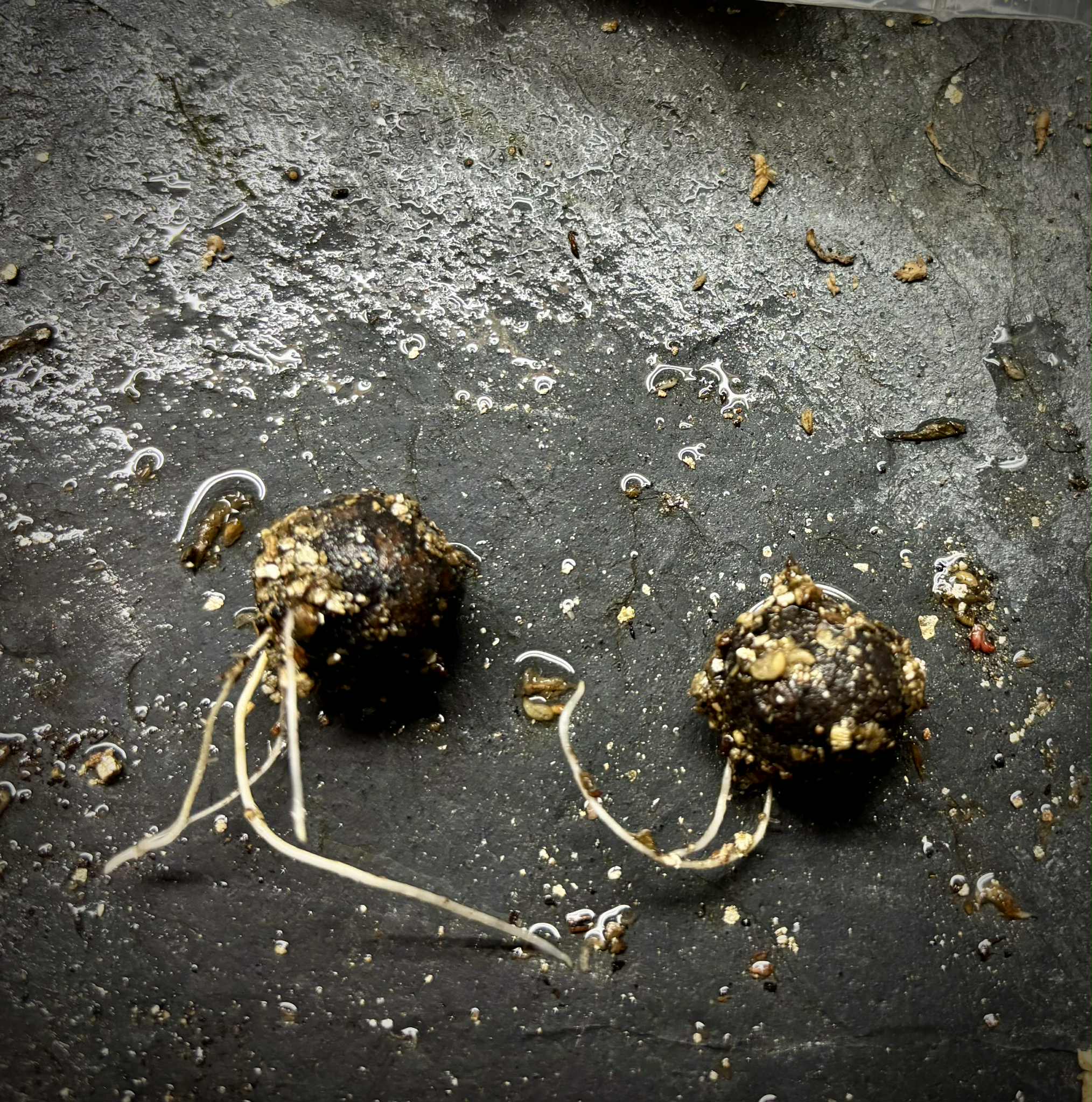
only 2 available - Guaya (Melicoccus oliviformis) - 1 germinated seed / 1 gekeimter Samen
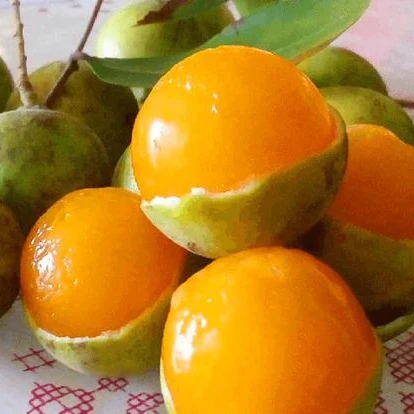
Guaya (Melicoccus oliviformis)
Family / Familie: Sapindaceae
origin from / Herkunft: Mexico / Mexiko
Climate / Klima: temperate to warm (15-30C / 64-86F) / gemäßigt bis warm (15-30C / 64-86F)
Use / Verwendung: edible fruits, juice, jam, ice cream, etc. / essbare Früchte, Säfte, Marmelade, Eis usw.
you buy / sie kaufen: 1 germinated seed / 1 gekeimter Samen
Delivery EU only
The fruits of Melicoccus oliviformis taste considerably better than those of the Mamoncillo (M. bijugatus).
The fruits grow in clusters.
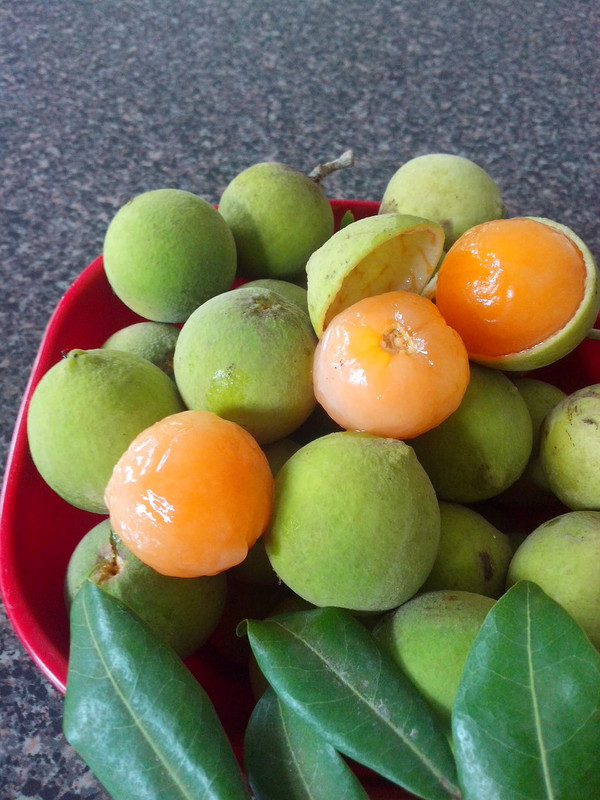
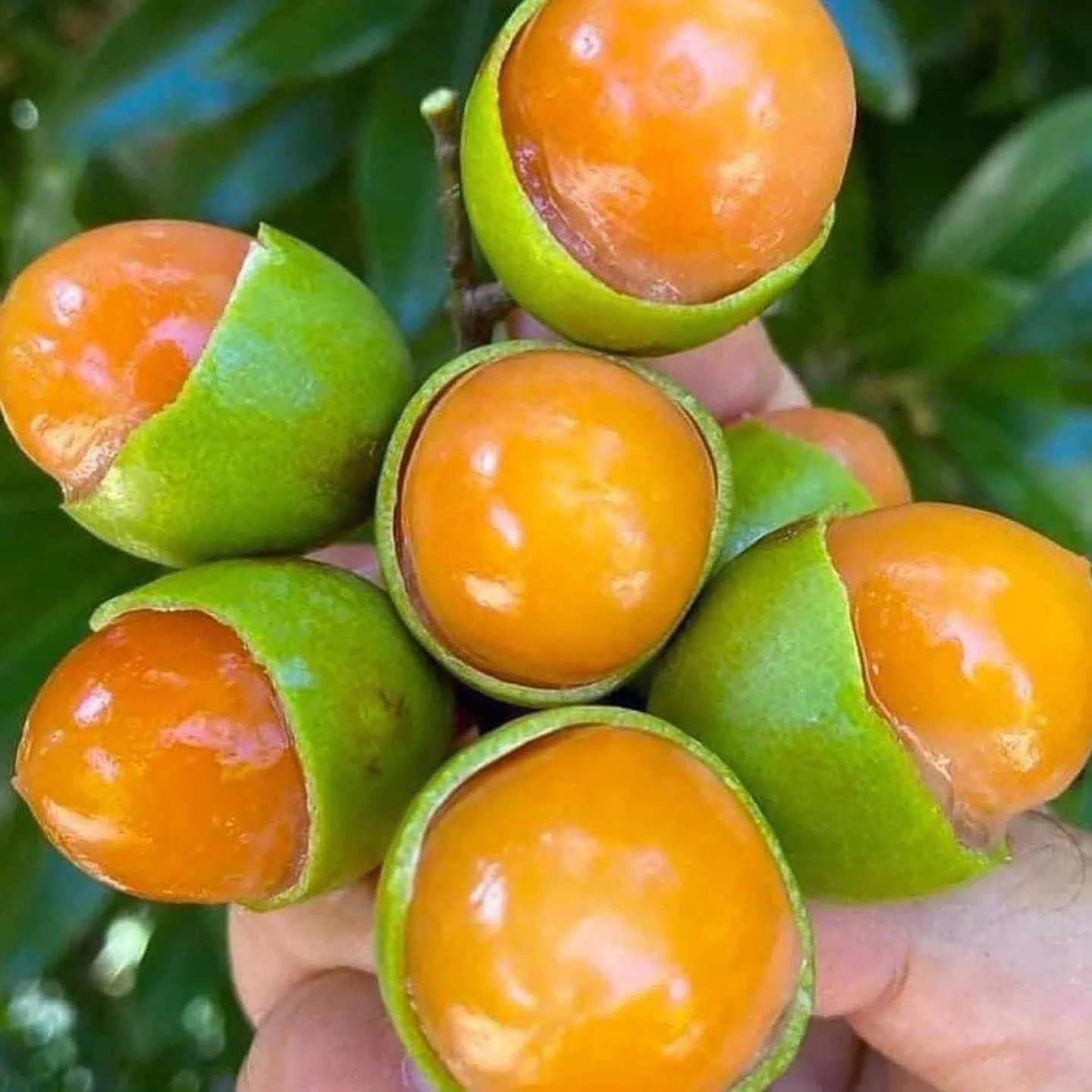
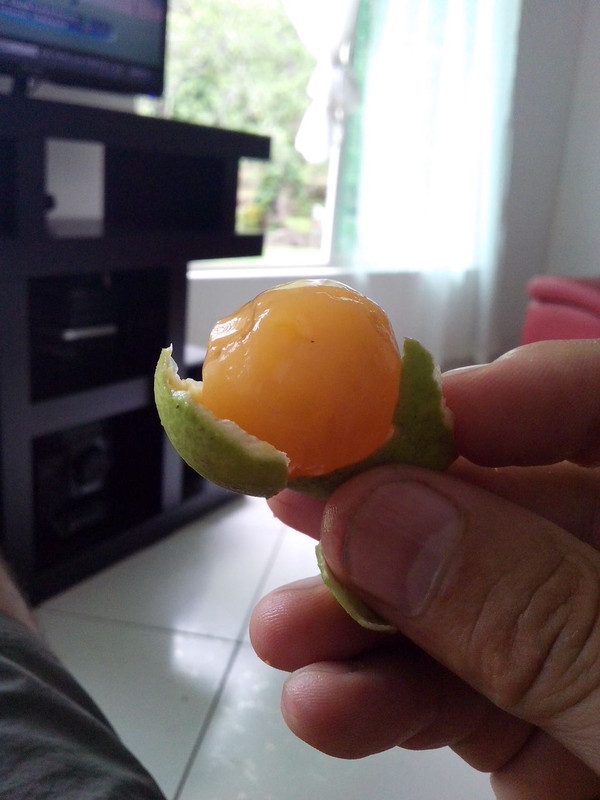
They have a thin, green, leathery to brittle skin that can be easily cracked.
Inside is a single, large, oval seed surrounded by a layer of juicy pulp.
The pulp is translucent yellow to orange and has a sweet-tart flavor with a distinct, refreshing lime note.
As a tropical tree, it is usually kept as a container plant in Central Europe.
The tree requires maximum sunlight and warmth.
A location with direct sunlight for at least 6-8 hours per day is advantageous.
The plant is not frost-hardy.
Ideal temperatures are consistently between 20°C and 28°C.
In winter, it is essential to move it to a bright, sheltered location where the temperature should not fall below 15°C.
Well-draining, nutrient-rich soil is important to prevent waterlogging (e.g., a mixture of coconut fiber, compost, and perlite).
During the growing season, the soil should be kept consistently moist.
The plant is relatively drought-tolerant, but regular watering is necessary for good fruit production.
Die Früchte der Melicoccus oliviformis schmecken um einiges besser als die der Mamoncillo (M. bijugatus).
Die Früchte wachsen in Trauben.
Sie haben eine dünne, grüne, ledrige bis spröde Schale, die leicht aufgebrochen werden kann.
Im Inneren befindet sich ein einziger, großer, ovaler Samen, der von einer Schicht saftigen Fruchtfleisches umgeben ist.
Das Fruchtfleisch ist glasig-gelb bis orange und schmeckt süß-säuerlich mit einer deutlichen, erfrischenden Limettennote.
Als tropischer Baum wird er in Mitteleuropa meist als Kübelpflanze gehalten.
Der Baum benötigt maximale Sonneneinstrahlung und Wärme.
Ein Standort mit direktem Sonnenlicht für mindestens 6-8 Stunden pro Tag ist vorteilhaft.
Die Pflanze ist nicht winterhart.
Ideale Temperaturen liegen konstant zwischen 20°C und 28°C.
Im Winter muss sie unbedingt in ein helles Winterquartier gebracht werden, wo die Temperatur nicht unter 15°C fallen sollte.
Eine gut drainierende, nährstoffreiche Erde ist wichtig, um Staunässe zu verhindern (z.B. eine Mischung aus Kokosfasern, Kompost und Perlit).
Während der Wachstumsphase sollte die Erde gleichmäßig feucht gehalten werden.
Die Pflanze ist relativ trockenheitstolerant, aber für eine gute Fruchtbildung ist regelmäßiges Gießen notwendig.