
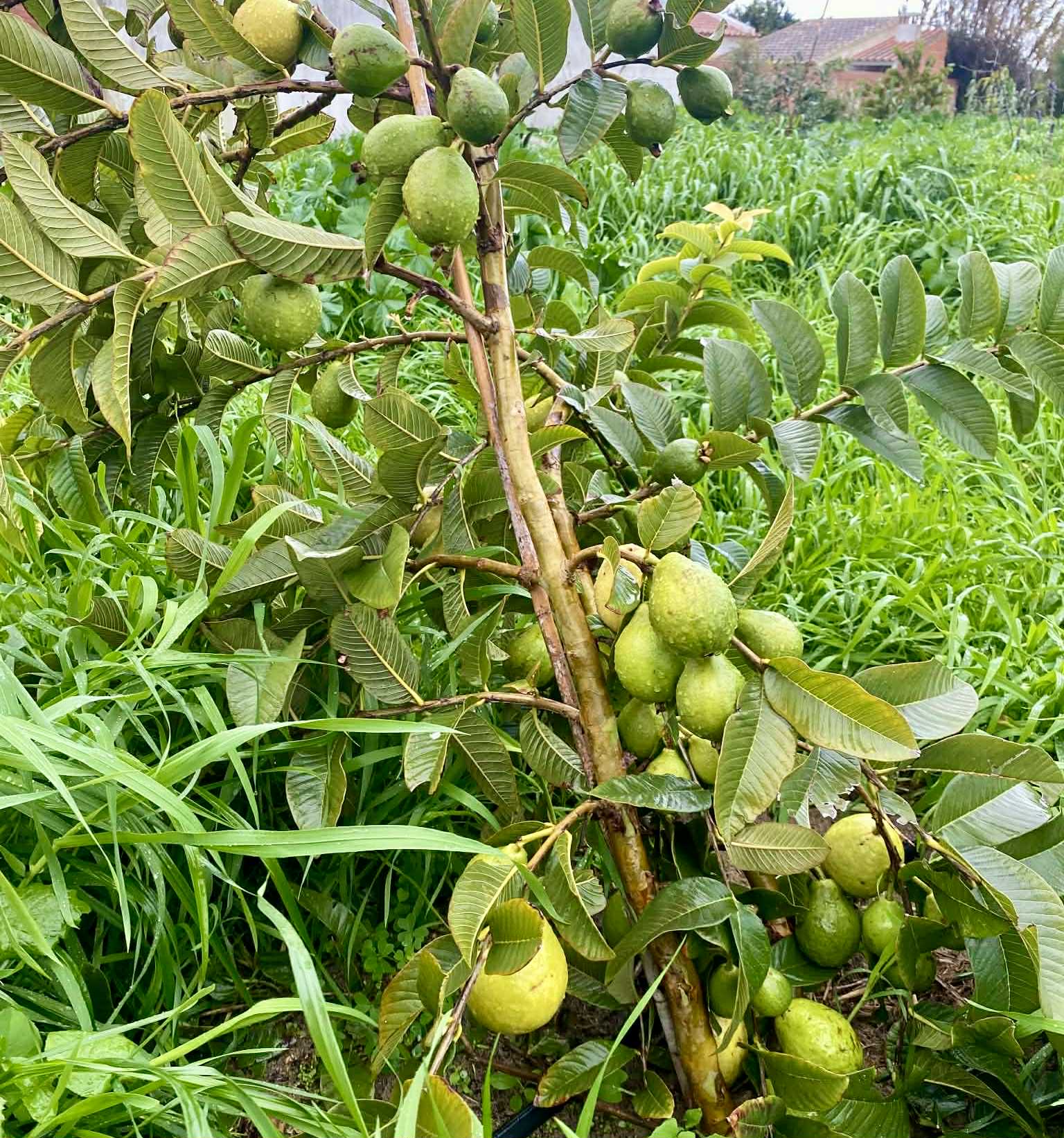
fruits after 2 years in Brasil - Psidium guajava "Paluma" - 5 fresh seeds / 5 frische Samen
Psidium guajava - Paluma
Family / Familie: Myrtaceae
origin from / Herkunft: Brasil / Brasilien
Climate / Klima: temperate to warm (10-25C / 50-77F) / gemäßigt bis warm (10-25C / 50-77F)
Use / Verwendung: edible fruits, juice, jam, ice cream, etc. / essbare Früchte, Säfte, Marmelade, Eis usw.
you buy / sie kaufen: 5 fresh seeds / 5 frische Samen
Delivery worldwide
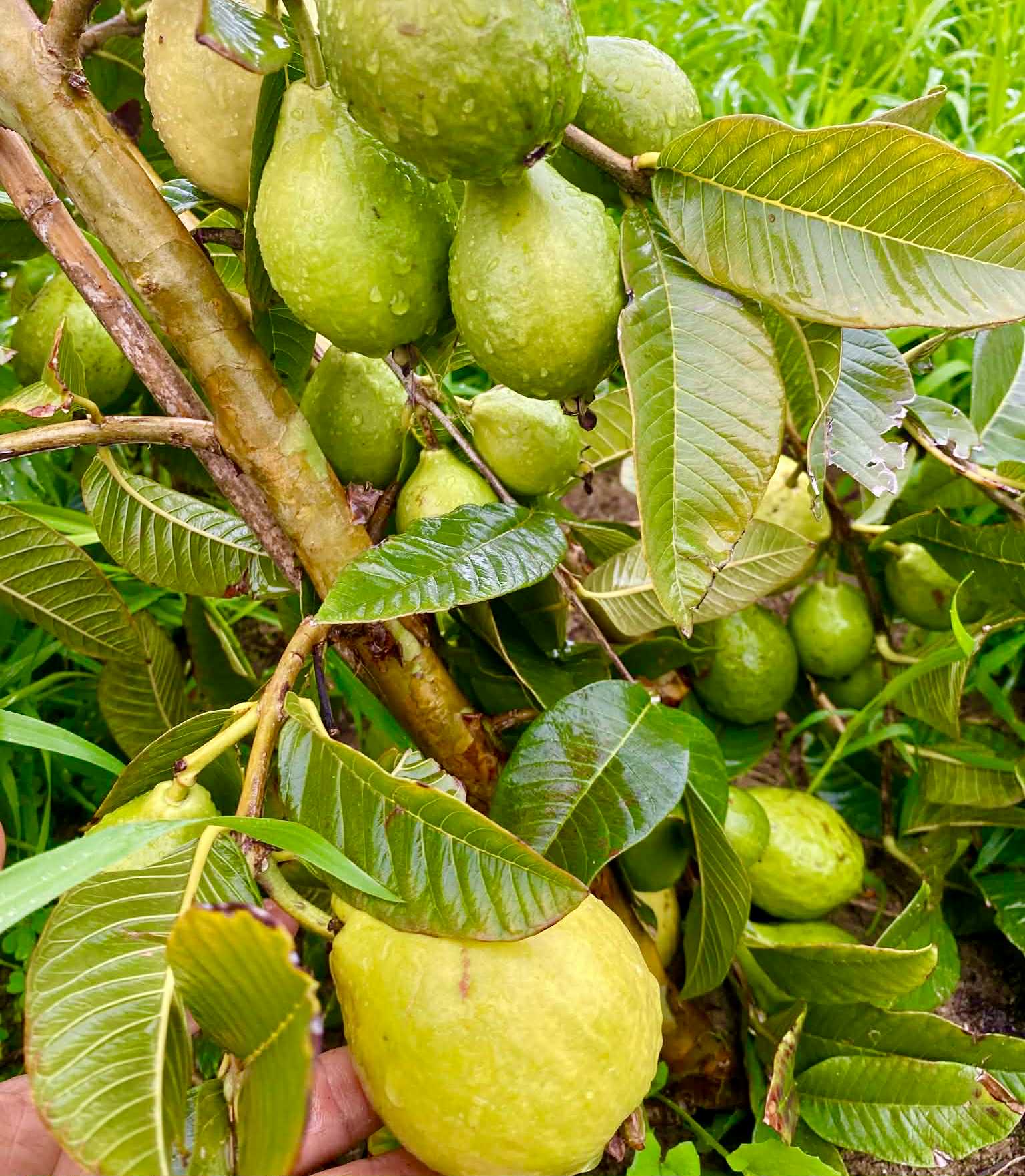
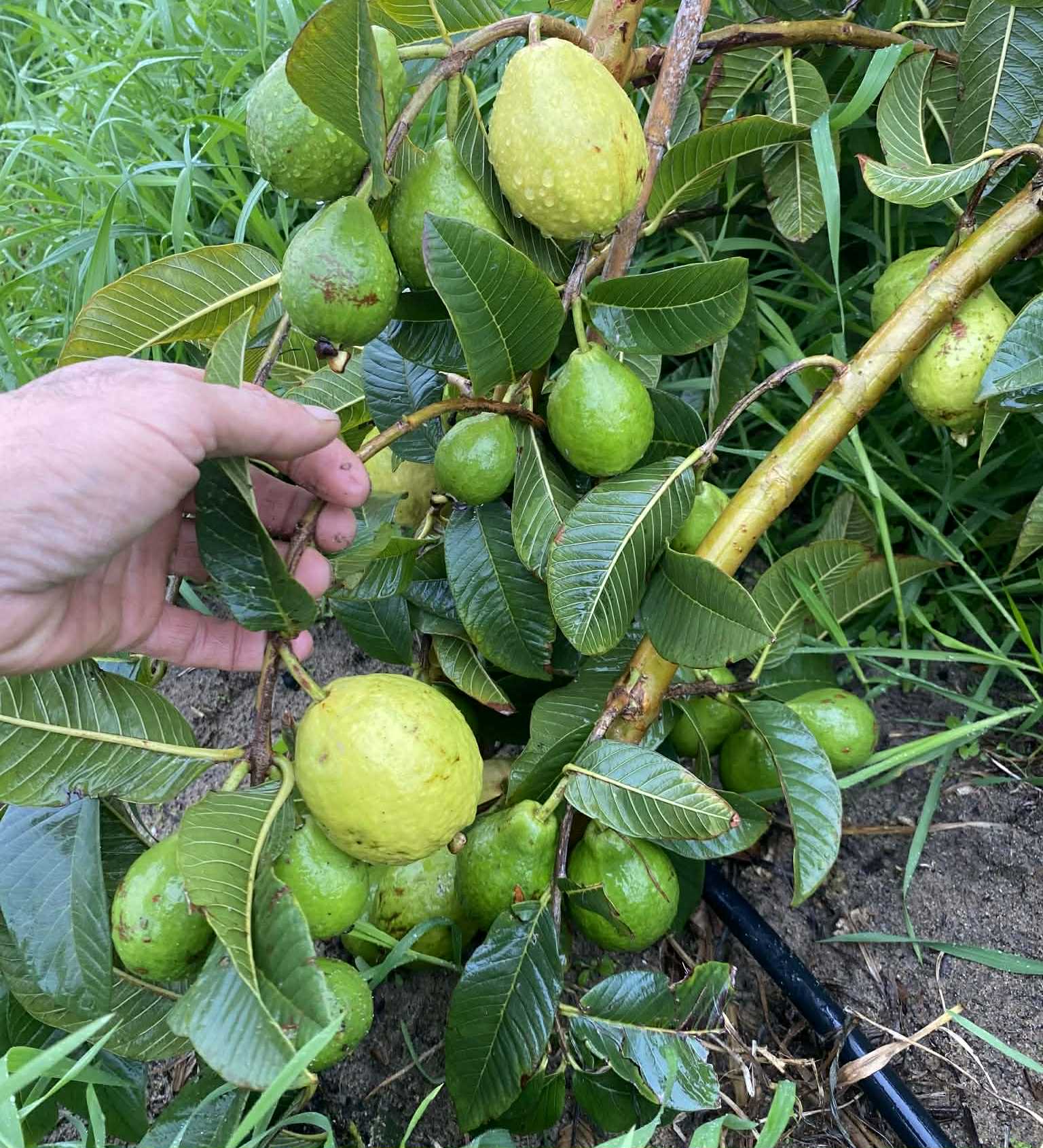
The plant images show a tree of the Paluma variety in Portugal, which is full of fruit 2.5 years after sowing.
The Paluma (also called Paloma) cultivar is a variety specifically developed for commercial cultivation.
These seeds are original seeds from this cultivar.
These plants are very fast-growing and produce abundant fruit in Brazil as early as their second year.
Origin: Brazil (developed by the IAC – Instituto Agronômico de Campinas).
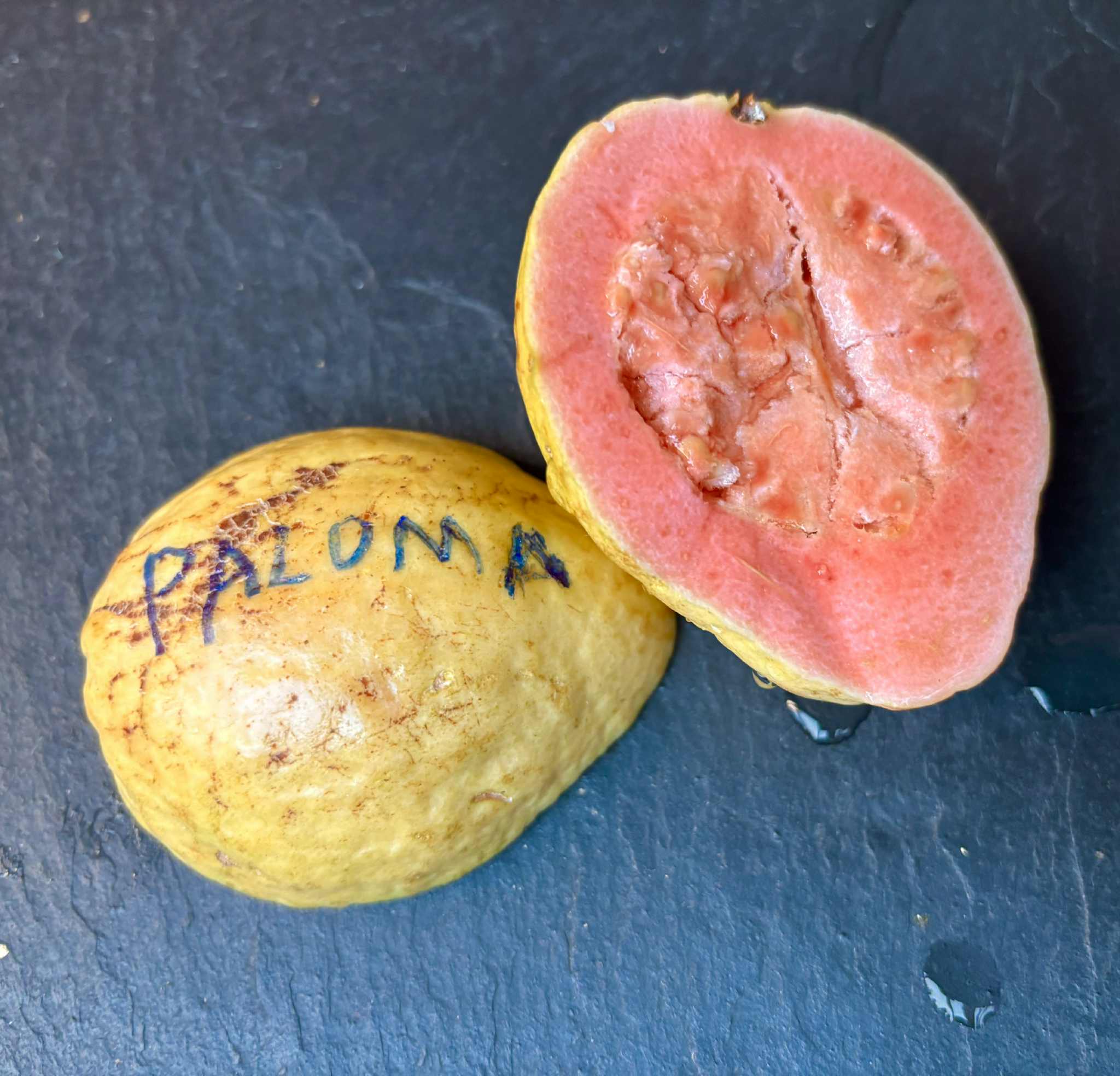
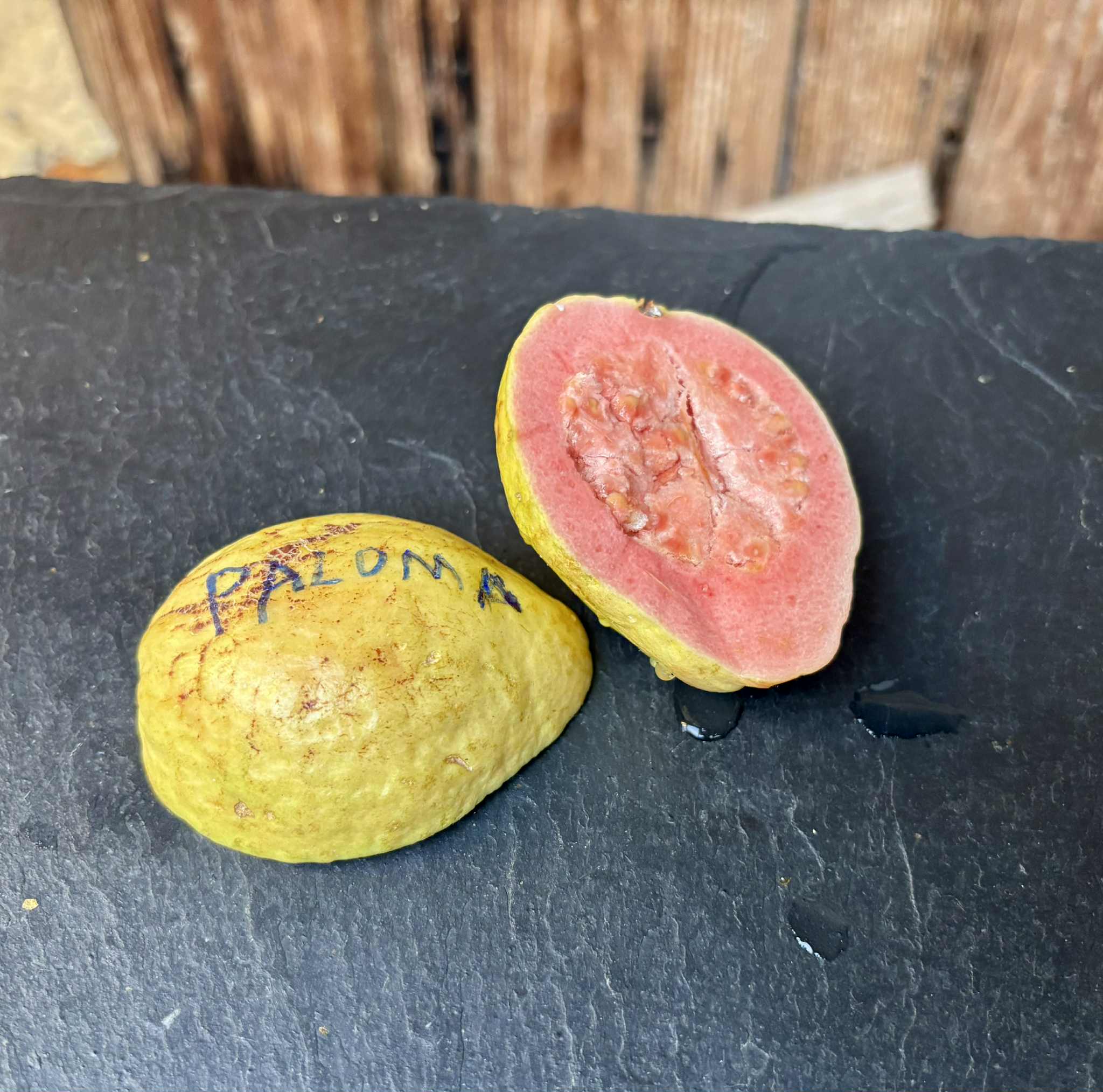
Flesh: The flesh is pink to red.
Taste & Uses: The fruits are very aromatic and sweet, and are excellent for making juices, jams, jellies, and confectionery.
Productivity: This variety is known for its high productivity and robust fruit, which is well-suited for transport.
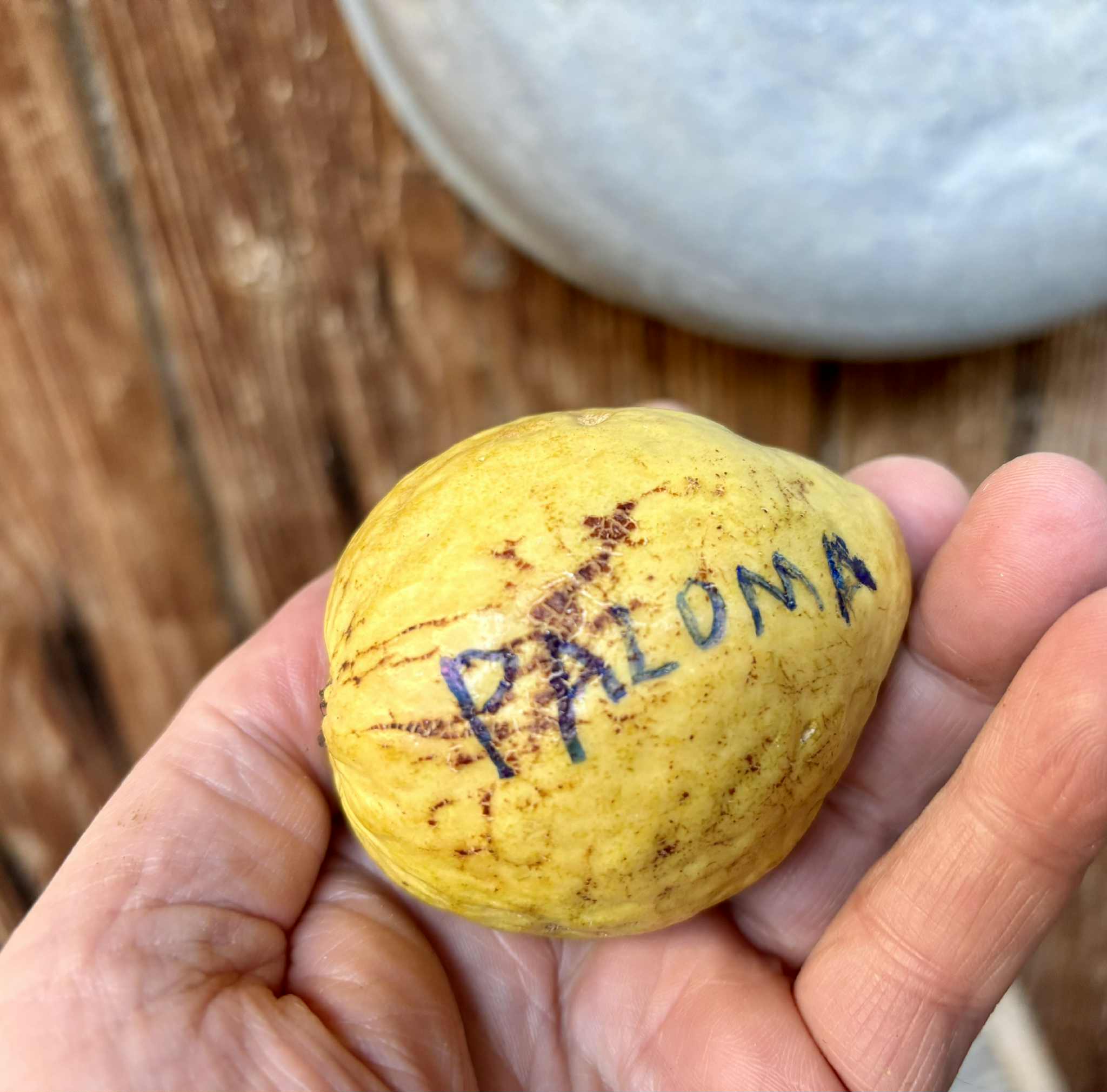
Skin: The skin is usually yellow when ripe, sometimes with a slightly greenish tinge.
Cultivation in Europe (partially as a container plant):
Location: Sunny to partially shaded.
Overwintering: Not frost-hardy, must be overwintered in a bright location at 10–15 °C (50–59 °F).
Requires well-draining soil, ideally with a high nutrient content.
Die Pflanzenbilder zeigen einen Baum der Paluma Variante in Portugal, der 2,5 Jahre nach der Aussaat voller Früchte hängt.
Die Zuchtsorte Paluma (auch Paloma genannt) ist eine Sorte, die speziell für den kommerziellen Anbau entwickelt wurde.
Diese Samen sind Original-Samen aus dieser Zucht.
Diese Pflanzen sind sehr schnellwachsend und tragen in Brasilien bereits im zweiten Jahr reichlich Früchte.
Herkunft: Brasilien (wurde vom IAC – Instituto Agronômico de Campinas entwickelt).
Fruchtfleisch: Das Fruchtfleisch ist rosa bis rot.
Geschmack & Verwendung: Die Früchte sind sehr aromatisch, süß und eignen sich hervorragend für die Herstellung von Säften, Marmeladen, Gelees und Süßwaren.
Produktivität: Die Sorte ist bekannt für ihre hohe Produktivität und robuste Früchte, die sich gut für den Transport eignen.
Schale: Die Schale ist im reifen Zustand meist gelb, manchmal mit einem leicht grünen Touch.
Anbau in Europa (teilweise als Kübelpflanze):
Standort: Sonnig bis halbschattig.
Überwinterung: Nicht winterhart, muss hell bei 10–15 °C überwintert werden.
Benötigt gut durchlässige Erde, idealerweise mit hohem Anteil an Nährstoffen.