
Garcinia mangosteen - Mangosteen / Mangostane - 1 potted plant / 1 getopfte Pflanze
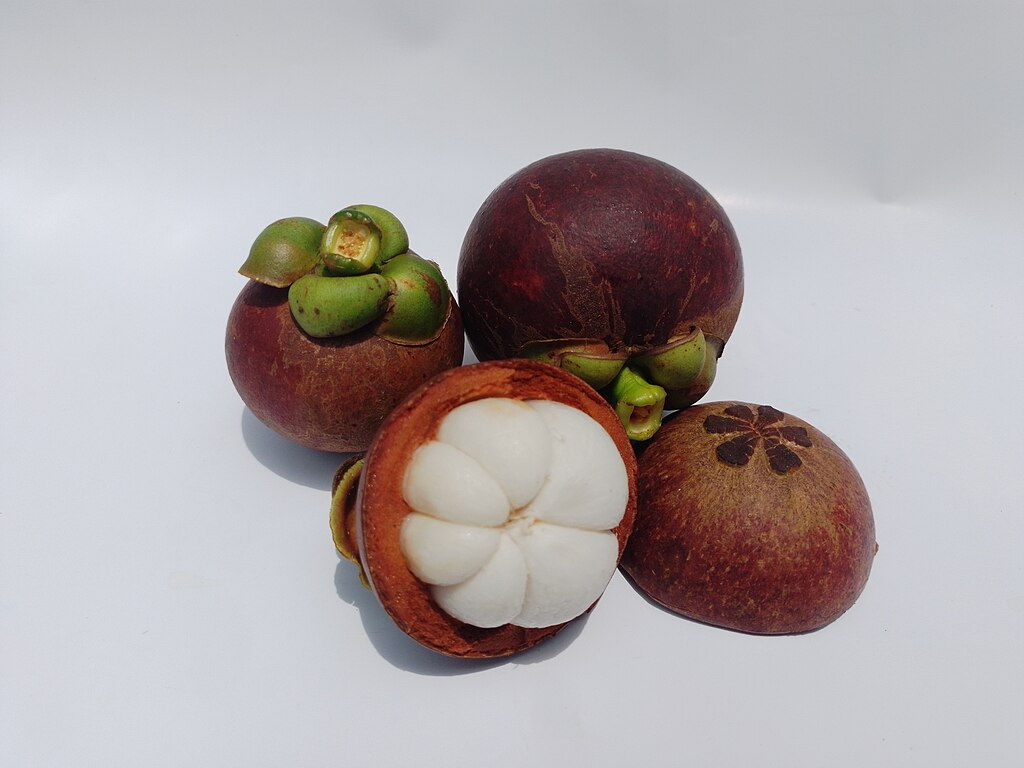
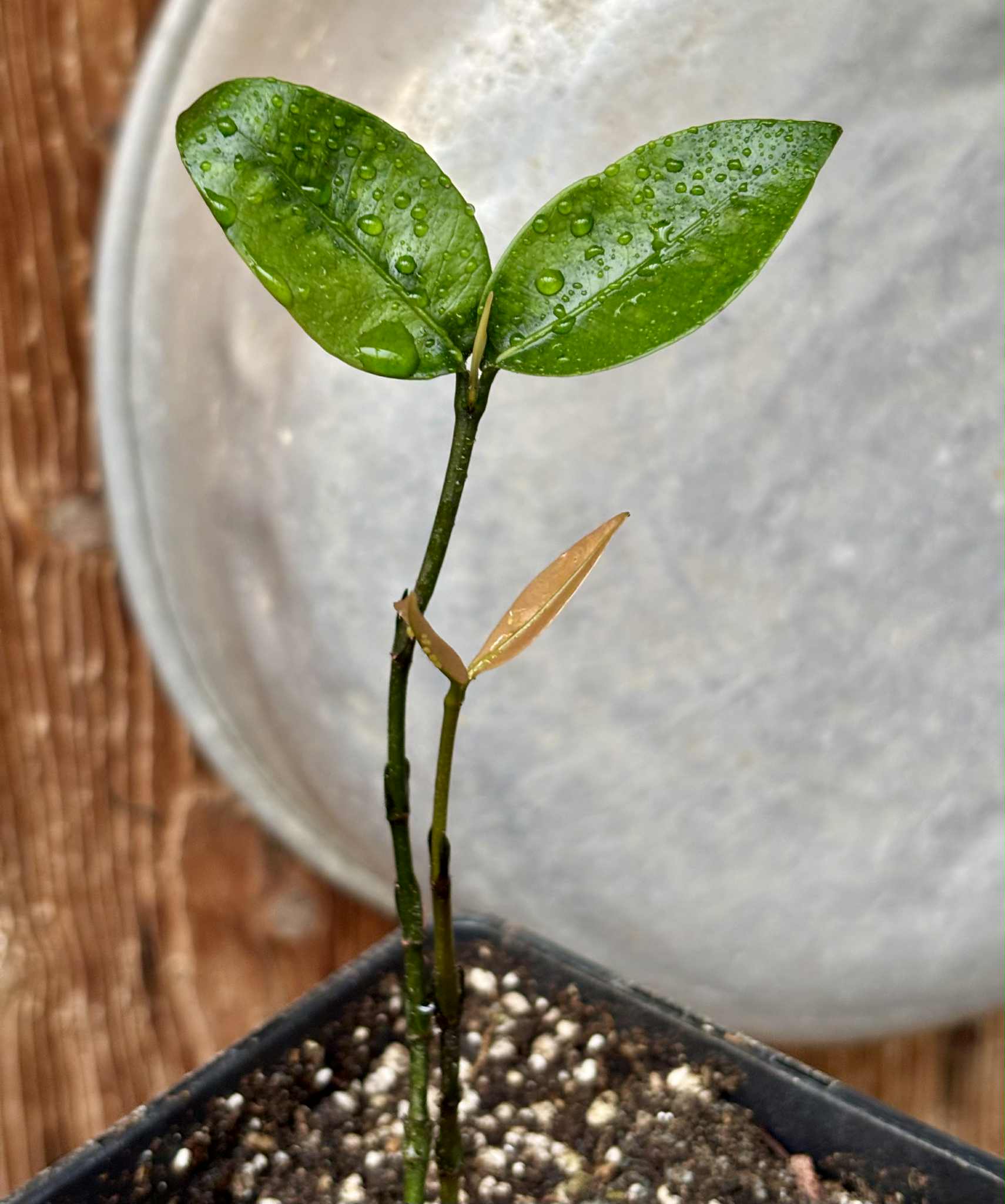

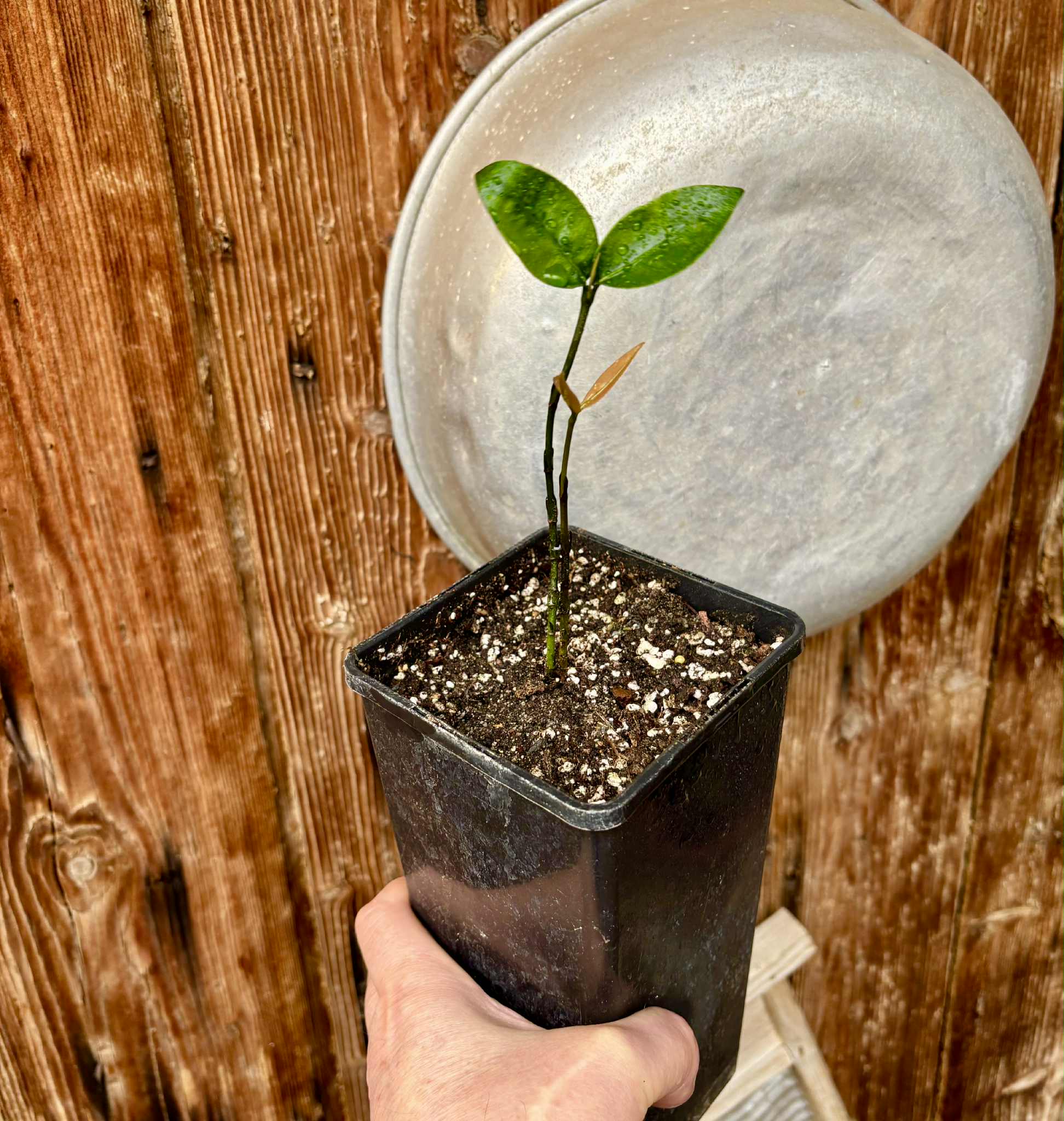

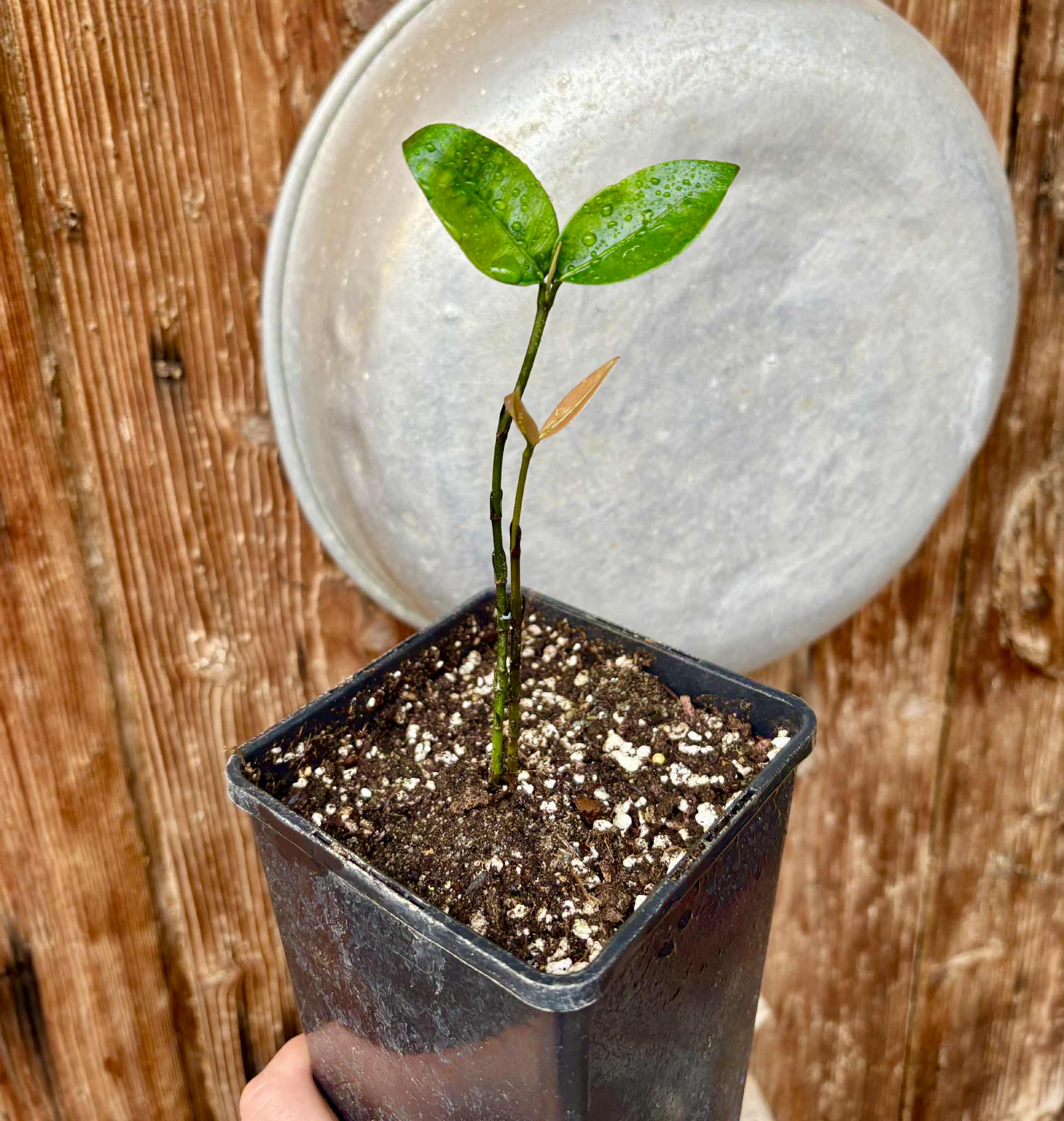
Garcinia mangosteen - Mangosteen / Mangostane
Family / Familie: Clusaceae
origin from / Herkunft: South East Asia / Südostasien
Climate / Klima: temperate to warm (15-30C / 59-86F) / gemäßigt bis warm (15-30C / 59-86F)
Use / Verwendung: edible fruits, juice, jam, ice cream, etc. / essbare Früchte, Säfte, Marmelade, Eis usw.
you buy / sie kaufen: 1 potted plant / 1 getopfte Pflanze
Delivery EU only
Garcinia mangostana (mangosteen), often called the "queen of fruits," is a demanding tropical plant with a unique flavor profile.
Taste & Fruit
Aroma: A complex, refreshing blend of sweet and tart. The flavor is often compared to a combination of peach, grape, strawberry, and pineapple, complemented by floral notes.
Texture: The snow-white flesh is juicy, soft, and almost creamy.
Edibility: Only the white segments inside the thick, purplish-red rind are edible.
Cultivation & Care: Cultivation in Central Europe is difficult due to its climatic requirements and is usually only possible in heated conservatories or greenhouses.
Location & Light:
Requires plenty of light (at least 6–8 hours daily).
Young plants prefer partial shade or filtered light, as they are sensitive to direct sunlight.
South-facing windows are ideal indoors, although direct midday sun in summer may need to be shaded.
Temperature & Humidity:
Constantly warm: 20–35 °C is ideal. Below 20 °C, growth slows significantly.
High humidity: Preferably above 80%. Indoors, regular misting or a humidifier is recommended.
Watering & Soil:
The soil should be rich in organic matter, well-draining, and slightly acidic (pH 5.5–6.5).
Keep consistently moist, but avoid waterlogging at all costs.
Growth: The tree grows slowly.
Die Garcinia mangostana (Mangostane), oft als „Königin der Früchte“ bezeichnet, ist eine anspruchsvolle tropische Pflanze mit einem einzigartigen Geschmacksprofil.
Geschmack & Frucht
Aroma: Eine komplexe, erfrischende Mischung aus süß und säuerlich. Der Geschmack wird oft mit einer Kombination aus Pfirsich, Weintraube, Erdbeere und Ananas verglichen, ergänzt durch florale Noten.
Textur: Das schneeweiße Fruchtfleisch ist saftig, weich und fast cremig
Verzehr: Nur die weißen Segmente im Inneren der dicken, purpurroten Schale sind essbar.
Haltung & Pflege
Die Kultivierung in Mitteleuropa ist aufgrund der Klimaansprüche schwierig und meist nur in beheizten Wintergärten oder Gewächshäusern möglich.
Standort & Licht:
Benötigt viel Licht (mind. 6–8 Stunden täglich).
Junge Pflanzen bevorzugen Halbschatten oder gefiltertes Licht, da sie empfindlich auf direkte Sonne reagieren.
Südfenster sind im Haus ideal, wobei direkte Mittagssonne im Sommer ggf. schattiert werden muss.
Temperatur & Feuchtigkeit:
Konstant warm: Ideal sind 20–35 °C. Unter 20 °C verlangsamt sich das Wachstum deutlich
Hohe Luftfeuchtigkeit: Bevorzugt über 80 %. In Innenräumen ist regelmäßiges Besprühen oder ein Luftbefeuchter ratsam.
Gießen & Erde:
Die Erde sollte reich an organischen Stoffen, durchlässig und leicht sauer sein (pH 5,5–6,5).
Stets feucht halten, aber Staunässe unbedingt vermeiden
Wachstum: Der Baum wächst langsam