
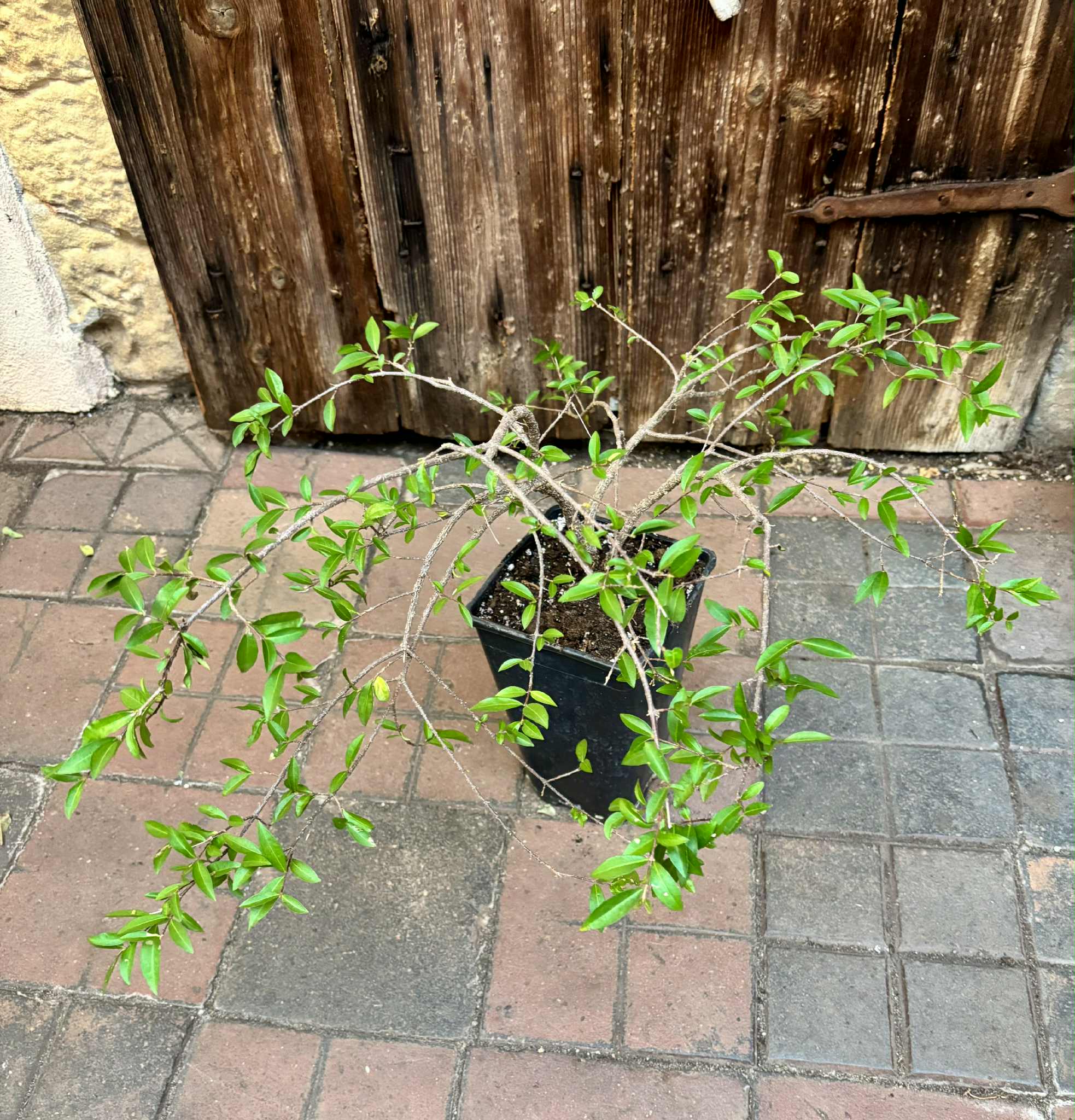
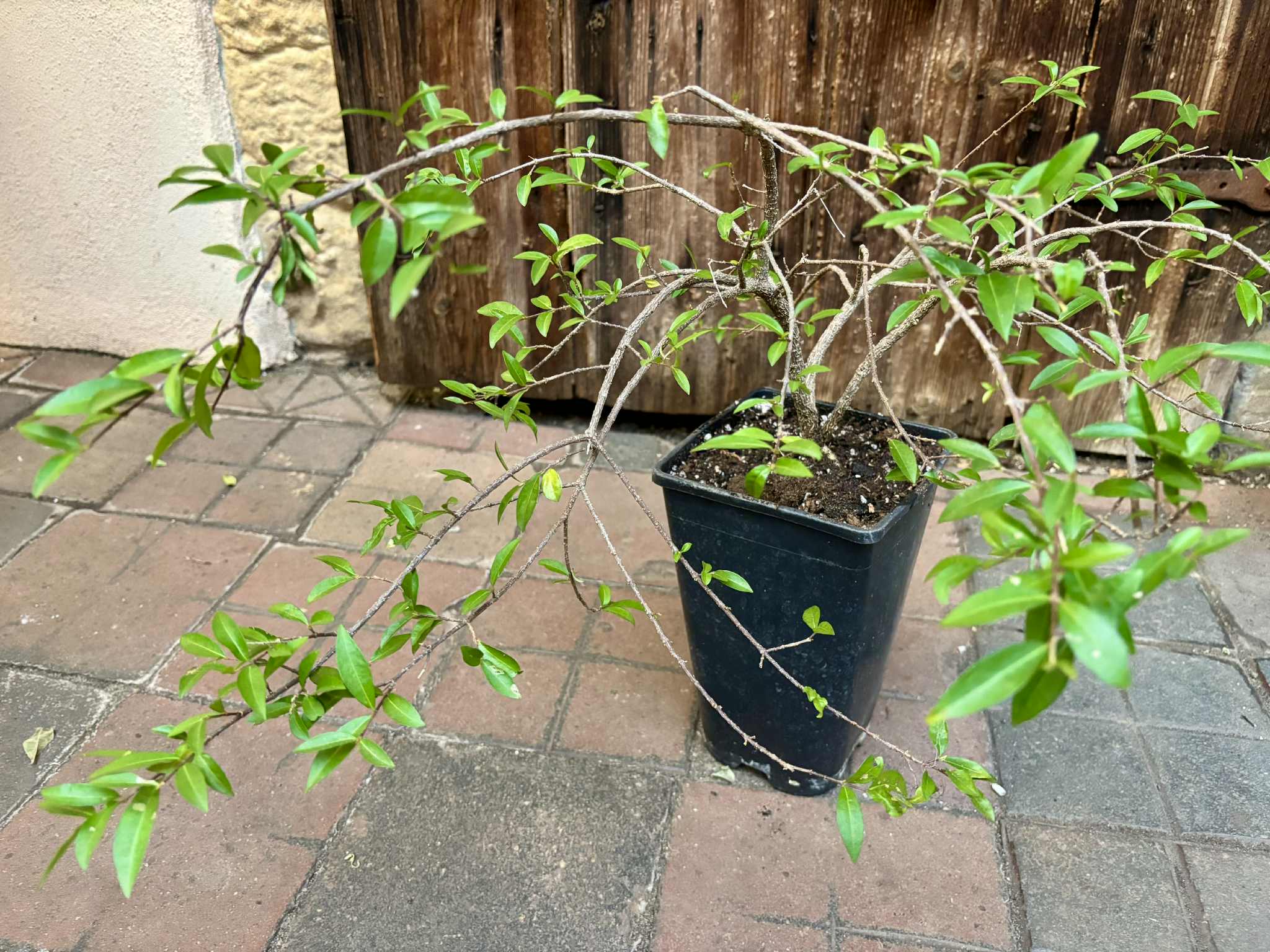
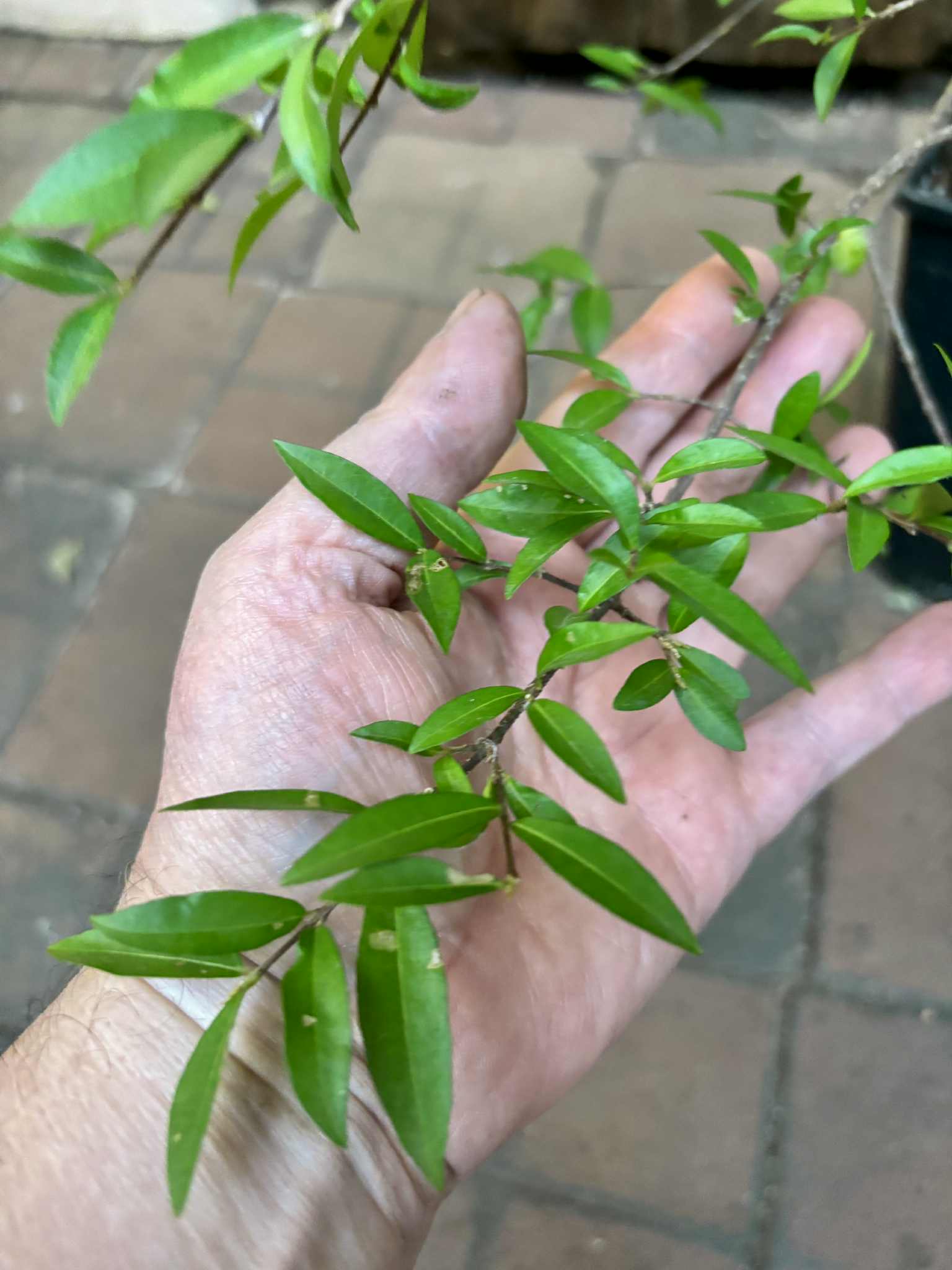
4 years old - Acerola (Malpighia glabra) - 1 potted plant / 1 getopfte Pflanze
Acerola (Malpighia glabra)
Family / Familie: Malpighiaceae
origin from / Herkunft: South America
Climate / Klima: temperate to warm (10-30C / 50-86F) / gemäßigt bis warm (10-30C / 50-86F)
Use / Verwendung: edible fruits, juice, jam, ice cream, etc. / essbare Früchte, Säfte, Marmelade, Eis usw.
you buy / sie kaufen: 1 potted plant / 1 getopfte Pflanze
Delivery EU only
This plant is already over four years old and is about to flower.
The acerola (Malpighia emarginata) is characterized by a sweet-tart, apple-like flavor and an exceptionally high vitamin C content.
Taste
The fruit has a distinctly sweet-tart flavor, often reminiscent of a mixture of cherry and apple.
Due to its high acidity, especially when harvested unripe (which is often the case for vitamin C production), it is rarely eaten raw but is frequently processed into juices, purees, or dietary supplements.
Health Benefits
The acerola is considered a superfood and is primarily known for its extremely high content of natural vitamin C—it contains up to 30 times more vitamin C than an orange.
Immune System: The high vitamin C content contributes to the normal function of the immune system and is particularly popular during cold and flu season.
Antioxidant effect: In addition to vitamin C, the fruit contains secondary plant compounds such as flavonoids and anthocyanins, which act as antioxidants and protect cells from free radicals.
Other nutrients: Acerola also provides B vitamins (B1, B2, B5, folic acid), vitamin A (beta-carotene), magnesium, potassium, calcium, and zinc.
Anti-inflammatory: Thanks to its properties, acerola can also help reduce inflammation in the body.
Cultivation and care (as a plant):
Acerola is a tropical, evergreen shrub or small tree that is sensitive to frost.
Location: The plant needs a bright, sunny, and warm location.
In colder climates like Germany, it is often kept as a container plant, which must be brought indoors in winter to protect it from frost.
Watering: The soil should be kept evenly moist; waterlogging, which can lead to root rot, must be avoided at all costs. Although it tolerates drought, it produces more fruit with regular watering.
Soil: The plant prefers well-drained soil.
Harvest: The plant can produce fruit several times a year. The fruit ripens quickly (often within 3-4 days) and must be harvested immediately, as it is highly perishable.
Please overwinter at a minimum temperature of 10°C (50°F).
Diese Pflanze ist bereits über 4 Jahre alt und steht kurz vor der Blüte.
Die Acerola (Malpighia emarginata) zeichnet sich durch einen süß-säuerlichen, apfelähnlichen Geschmack und einen außergewöhnlich hohen Vitamin-C-Gehalt aus.
Geschmack
Die Frucht hat einen ausgeprägt süß-säuerlichen Geschmack, der oft an eine Mischung aus Kirsche und Apfel erinnert.
Aufgrund ihres hohen Säuregehalts, insbesondere wenn sie unreif geerntet wird (was für die Vitamin-C-Produktion oft der Fall ist), wird sie selten roh verzehrt, sondern häufig zu Säften, Pürees oder Nahrungsergänzungsmitteln verarbeitet.
Gesundheitliche Vorteile
Die Acerola gilt als Superfood und ist vor allem für ihren extrem hohen Gehalt an natürlichem Vitamin C bekannt – sie enthält bis zu 30-mal mehr Vitamin C als eine Orange.
Immunsystem: Der hohe Vitamin-C-Gehalt trägt zur normalen Funktion des Immunsystems bei und ist besonders in Erkältungsphasen beliebt.
Antioxidative Wirkung: Neben Vitamin C enthält die Frucht sekundäre Pflanzenstoffe wie Flavonoide und Anthocyane, die als Antioxidantien wirken und die Zellen vor freien Radikalen schützen.
Weitere Nährstoffe: Die Acerola liefert auch B-Vitamine (B1, B2, B5, Folsäure), Vitamin A (Beta-Carotin), Magnesium, Kalium, Kalzium und Zink.
Entzündungshemmend: Dank ihrer Eigenschaften kann die Acerola auch die Linderung von Entzündungen im Körper unterstützen.
Haltung und Pflege (als Pflanze)
Die Acerola ist ein tropischer, immergrüner Strauch oder kleiner Baum, der frostempfindlich ist.
Standort: Die Pflanze benötigt einen hellen, sonnigen und warmen Standort.
In kälteren Klimazonen wie Deutschland wird sie oft als Kübelpflanze gehalten, die im Winter ins Haus geholt werden muss, um sie vor Frost zu schützen.
Bewässerung: Die Erde sollte gleichmäßig feucht gehalten werden; Staunässe, die zu Wurzelfäule führen kann, ist unbedingt zu vermeiden. Obwohl sie Trockenheit verträgt, trägt sie bei regelmäßiger Bewässerung mehr Früchte.
Boden: Die Pflanze bevorzugt gut durchlässigen Boden.
Ernte: Die Pflanze kann mehrmals im Jahr Früchte tragen, die schnell reifen (oft innerhalb von 3-4 Tagen) und dann sofort geerntet werden müssen, da sie leicht verderblich sind.
Bitte bei mindestens 10 Grad überwintern.