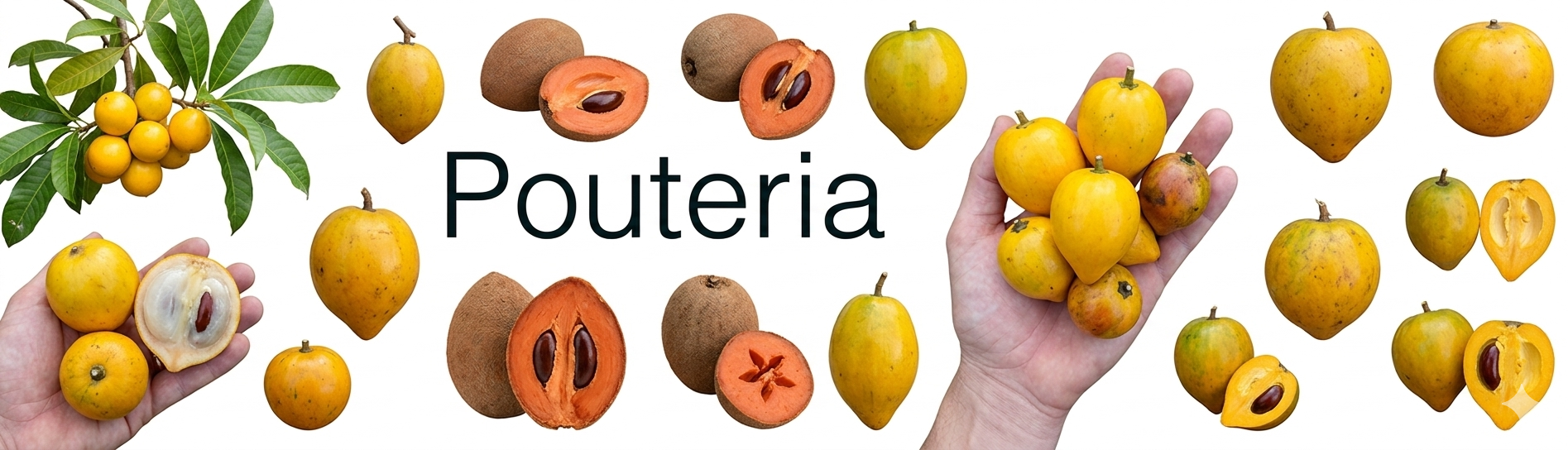
Discover the incredible variety of thePouteriafamily, known for creamy, custard-like fruits like Abiu, Canistel, and Mamey Sapote. These tropical treasures are a must-have for every rare fruit enthusiast. We offer high-qualityseeds and plantswith reliableshipping across Europe.
Entdecke die unglaubliche Vielfalt derPouteria-Familie, bekannt für cremige Früchte mit puddingartiger Textur wie Abiu, Canistel und Mamey Sapote. Diese tropischen Schätze sind ein Muss für jeden Liebhaber seltener Früchte. Wir bieten hochwertigeSamen und Pflanzenmit zuverlässigemVersand in ganz Europa.
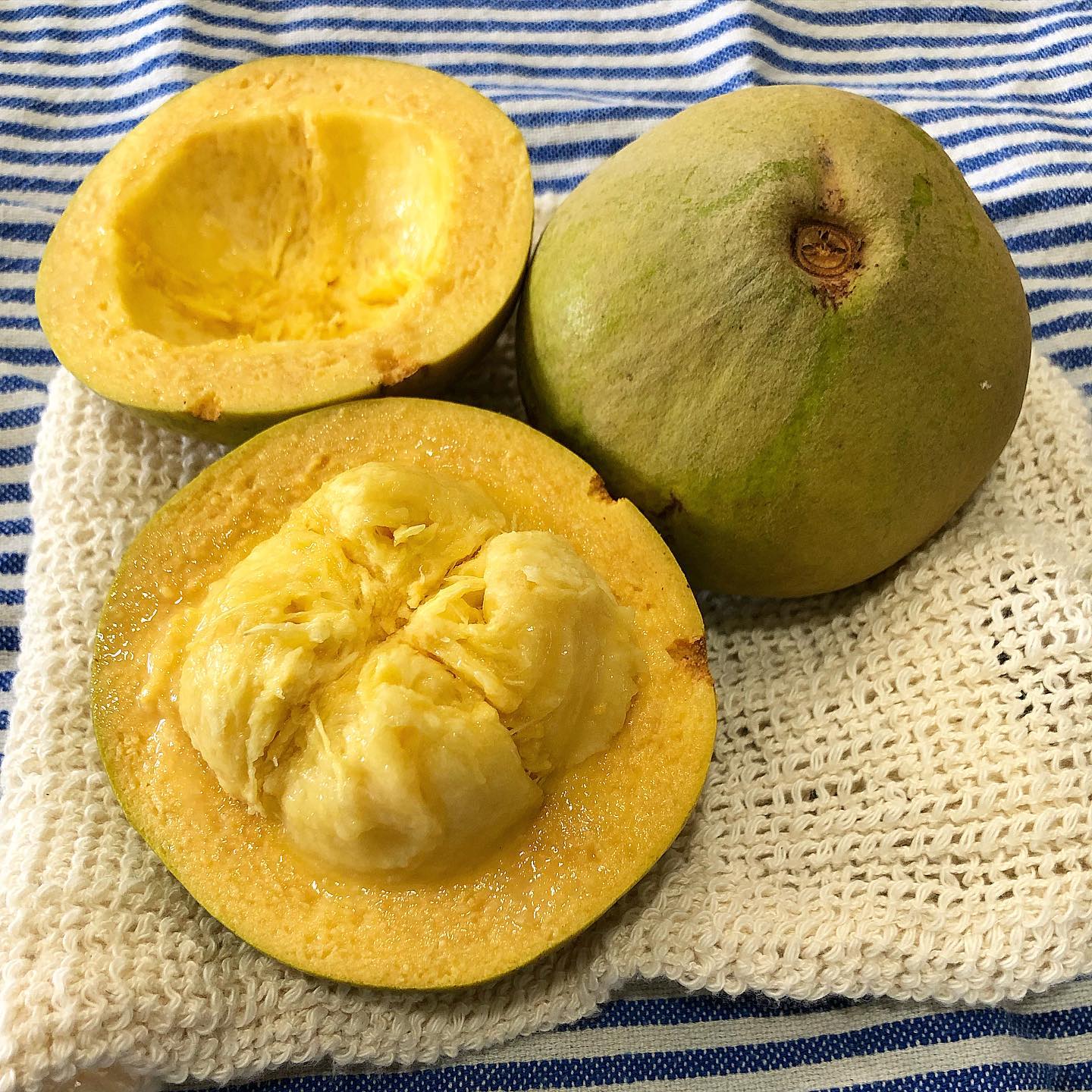
Pouteria macahensis var. ItacaréFamily / Familie: Sapotaceaeorigin from / Herkunft: Brasil / BrasilienClimate / Klima: temperate (15-30C / 59-84F) / gemäßigt (15-30C / 59-84F) Use / Verwendung: edible fruits, juice, jam, ice cream, etc. / essbare Früchte, Säfte, Marmelade, Eis usw.you buy / sie kaufen: 1 fresh seed / 1 frischer SamenDelivery worldwidePouteria macahensis var. Itacaré / Itacaré Golden SapotePouteria macahensis var. Itacaré is a very rare and exceptionally delicious wild fruit selection belonging to the Sapodilla family (Sapotaceae).Native to the lush coastal rainforests surrounding Itacaré in Bahia, Brazil (Mata Atlântica), this distinct local form stands out as a true culinary treasure.Visually, the variety impresses with rounded to slightly ovoid fruits encased in a smooth, vibrant golden-yellow skin, beautifully paired with leathery, rich green foliage.Cutting the fruit open reveals dense, creamy pulp of a pale yellow to custard-like hue surrounding a central seed.Flavor-wise, this selection is a standout among Sapotaceae: the melting, smooth pulp delivers an intensely sweet and balanced taste profile reminiscent of vanilla custard, crème brûlée, and sweet maple syrup.Thanks to its superior eating quality and attractive growth habit, it is considered a top-tier collection piece among rare fruit enthusiasts.In cultivation, Pouteria macahensis var. Itacaré performs wonderfully as an exclusive container specimen for conservatories or warm greenhouses.For optimal growth, it prefers a bright to semi-shaded location with high humidity, along with a rich, slightly acidic, well-draining substrate kept consistently moist.As a strictly tropical rainforest species, it cannot tolerate frost and must be overwintered in a bright, warm location at a minimum temperature of 12 to 15 °C (54 to 59 °F).Pouteria macahensis var. Itacaré / Gold-Sapotille aus ItacaréDie Pouteria macahensis var. Itacaré ist eine sehr seltene und ausgesprochen wohlschmeckende Wildfrucht-Varietät aus der Familie der Sapotengewächse (Sapotaceae).Herkunftsmäßig stammt diese besondere Lokalform aus den artenreichen Küstenregenwäldern rund um Itacaré im brasilianischen Bundesstaat Bahia (Mata Atlântica).Schon optisch beeindruckt die Sorte durch ihre rundlichen bis leicht eiförmigen Früchte mit einer glatten, leuchtend gelb-goldenen Schale und das auffällig ledrige, tiefgrüne Laub mit seinen eleganten Blattstielen.Beim Aufschneiden zeigt sich das dichte, cremige Fruchtfleisch von hellgelber bis fast weißlicher Farbe, das den zentralen Samen umschließt.Geschmacklich ist diese Variante ein absolutes Highlight unter den Sapoten: Das schmelzende Fruchtfleisch begeisterte durch eine intensiv süße, harmonische Note, die an feinen Vanillepudding, Crème Brûlée und süßen Ahornsirup erinnert.Dank ihrer hervorragenden Fruchtqualität und des edlen Wuchses gilt sie in Sammlerkreisen als eine der leckersten und begehrtesten lokalen Pouteria-Auslesen überhaupt.In Kultur lässt sich Pouteria macahensis var. Itacaré hervorragend als exklusive Kübelpflanze im Wintergarten oder im beheizten Gewächshaus halten.Für ein optimales Gedeihen bevorzugt sie einen hellen bis halbschattigen Standort bei hoher Luftfeuchtigkeit sowie ein humusreiches, leicht saures und gut durchlässiges Substrat, das stets feucht gehalten wird.Als tropische Regenwaldart verträgt sie keinerlei Frost und muss an einem hellen Ort warm bei mindestens 12 bis 15 Grad Celsius überwintert werden.
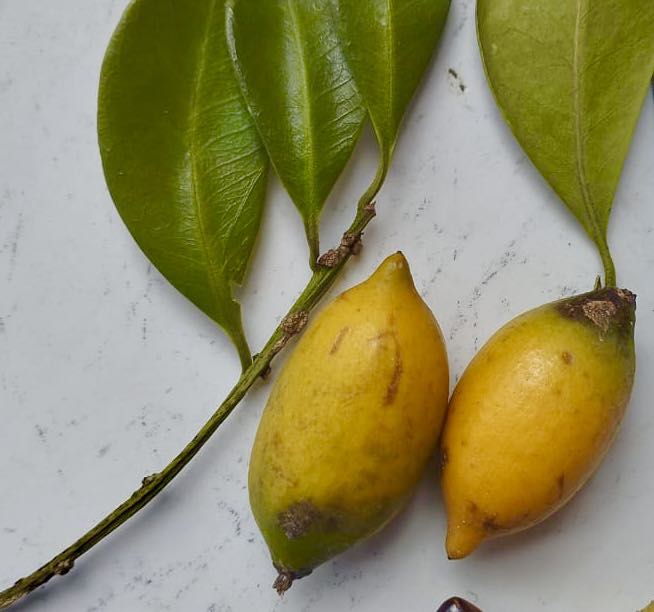
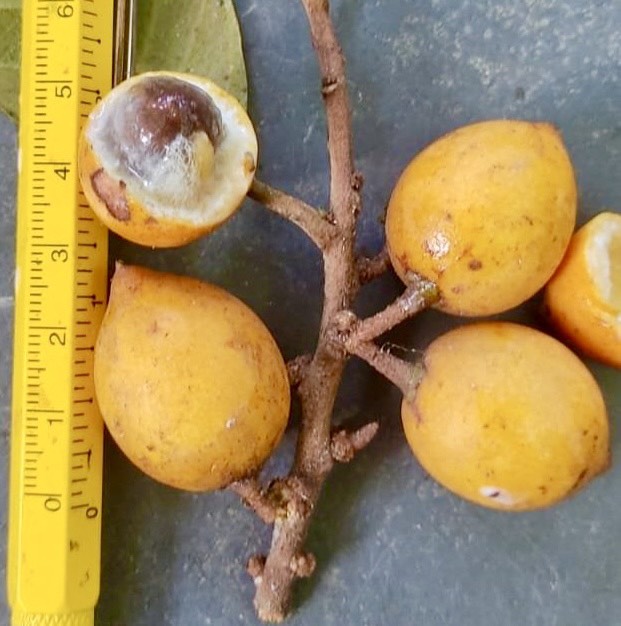
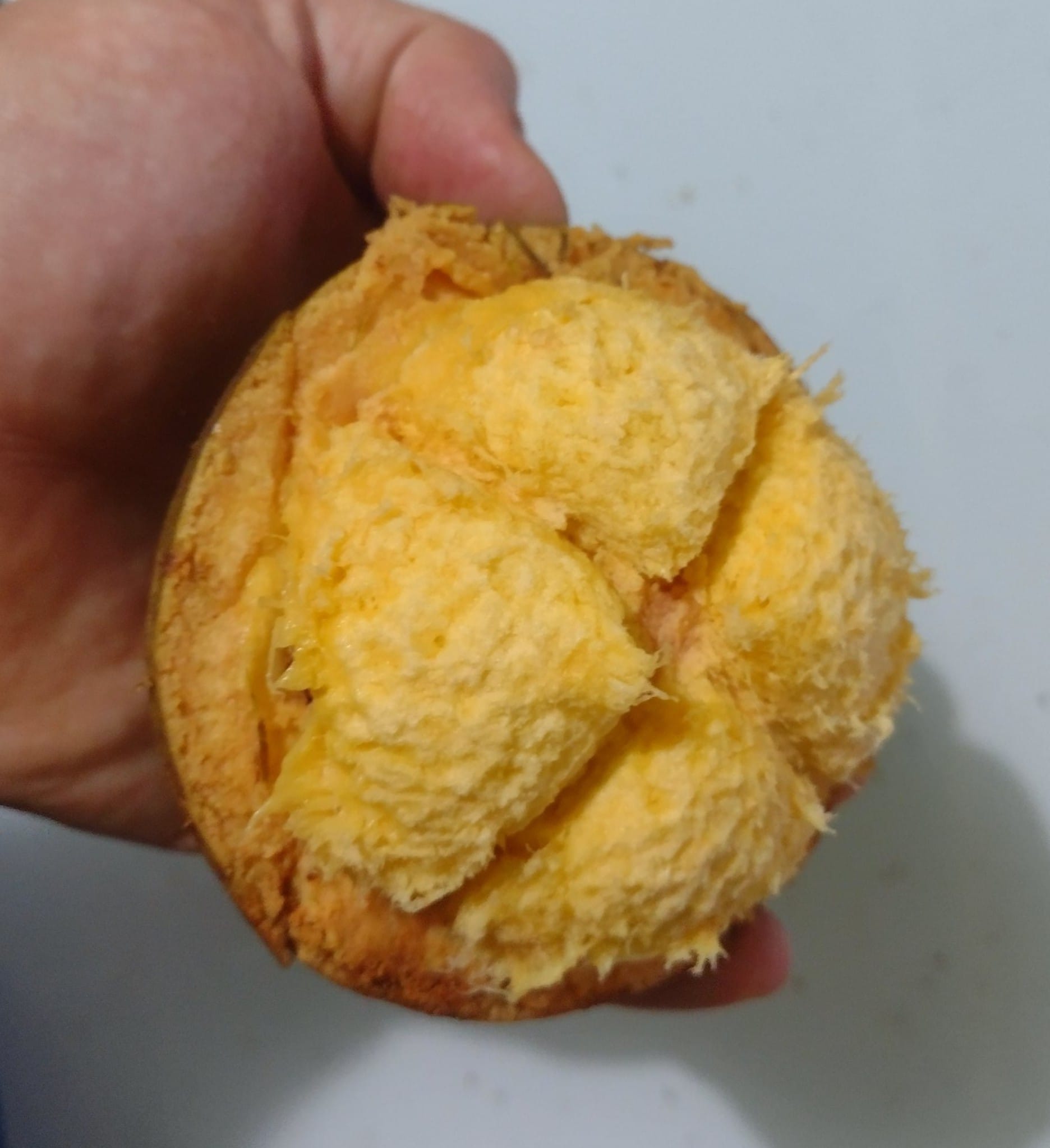
Pouteria butyrocarpa var. Sul da BahiaFamily / Familie: Sapotaceaeorigin from / Herkunft: Brasil / BrasilienClimate / Klima: temperate (15-30C / 59-84F) / gemäßigt (15-30C / 59-84F) Use / Verwendung: edible fruits, juice, jam, ice cream, etc. / essbare Früchte, Säfte, Marmelade, Eis usw.you buy / sie kaufen: 1 fresh seed / 1 frischer SamenDelivery worldwidePouteria butyrocarpa var. Sul da Bahia / Bahia Butter SapotePouteria butyrocarpa var. Sul da Bahia is an excellent, extremely rare wild fruit selection belonging to the Sapodilla family (Sapotaceae).Native to the humid Mata Atlântica coastal rainforests in southern Bahia, Brazil, this fascinating species represents a true culinary treasure among Neotropical exotics.Botanically, the epithet butyrocarpa (butter fruit) points directly to the distinct, rich texture of its flesh.The ovoid to elongated fruits mature in dense clusters along the branches, ripening into a warm golden-orange to terracotta hue.Opening the outer rind reveals bright yellow-orange, buttery-smooth pulp wrapping around the seed.On the palate, it offers a sensational dessert profile: the rich, melting flesh delights with an intensely sweet, aromatic flavor reminiscent of fine lucuma custard, sweet potato pie, rich caramel, and vanilla.Beyond its fruiting qualities, the plant displays large, leathery foliage with prominent venation, giving it a majestic tropical appearance.In cultivation, Pouteria butyrocarpa var. Sul da Bahia makes a highly exclusive centerpiece for warm conservatories or greenhouses.For optimal growth, it prefers a bright to semi-shaded location with high humidity, along with a rich, slightly acidic, well-draining substrate kept consistently moist.As a strictly tropical rainforest species, it cannot tolerate frost and must be overwintered in a bright, warm location at a minimum temperature of 12 to 15 °C (54 to 59 °F).Pouteria butyrocarpa var. Sul da Bahia / Bahia-Butter-SapoteDie Pouteria butyrocarpa var. Sul da Bahia ist eine exzellente, extrem seltene Wildfrucht-Varietät aus der Familie der Sapotengewächse (Sapotaceae).Beheimatet in den feuchten Küstenregenwäldern des Atlantischen Regenwaldes (Mata Atlântica) im Süden des brasilianischen Bundesstaates Bahia, zählt diese faszinierende Sapotacee zu den absolut wohlfeilsten Geschmackserlebnissen Südamerikas.Botanisch nimmt ihr Artname butyrocarpa (Butterfrucht) direkt Bezug auf die unvergleichliche Textur des Fruchtfleisches.Die eiförmigen bis länglichen Früchte reifen in dichten Clustern direkt an den Zweigen zu einem warmen Gelb-Orange bis Terrakotta-Farbton heran.Öffnet man die schützende Schale, offenbart sich ein leuchtend gelb-orangefarbenes, butterweiches und cremiges Fruchtfleisch, das den Samen umhüllt.Geschmacklich ist sie ein absolutes Highlight für Feinschmecker: Das reichhaltige, schmelzende Fruchtfleisch begeisterte durch eine intensiv süße, aromatische Note, die an feinen Lucuma-Pudding, Süßkartoffelcreme, Karamell und Vanille erinnert.Zusätzlich glänzt die Pflanze durch ihr prachtvolles, großes und ledriges Laub mit ausgeprägter Blattnervatur, was ihr eine extrem edle, tropische Anmutung verleiht.In Kultur erweist sich Pouteria butyrocarpa var. Sul da Bahia als spektakuläres Solitär-Sammlerstück für den Wintergarten oder das beheizte Gewächshaus.Für ein optimales Gedeihen bevorzugt sie einen hellen bis halbschattigen Standort bei hoher Luftfeuchtigkeit sowie ein humusreiches, leicht saures und gut durchlässiges Substrat, das stets feucht gehalten wird.Als tropische Regenwaldart ist sie frostempfindlich und muss an einem hellen Ort warm bei mindestens 12 bis 15 Grad Celsius überwintert werden.
Pouteria aff. macrocarpaFamily / Familie: Sapotaceaeorigin from / Herkunft: Brasil / BrasilienClimate / Klima: temperate (15-30C / 59-84F) / gemäßigt (15-30C / 59-84F) Use / Verwendung: edible fruits, juice, jam, ice cream, etc. / essbare Früchte, Säfte, Marmelade, Eis usw.you buy / sie kaufen: 1 fresh seed / 1 frischer SamenDelivery EU onlyPouteria aff. macrocarpa / Bahia Giant SapotePouteria aff. macrocarpa is an extremely rare and visually impressive wild fruit rarity belonging to the Sapodilla family (Sapotaceae).Discovered in the humid Mata Atlântica coastal rainforests of Bahia, Brazil, this close relative of Pouteria macrocarpa represents a true large-fruited highlight among Neotropical exotics.Its botanical epithet macrocarpa refers directly to its defining feature: it produces remarkably large, substantial fruits with a firm, brownish-yellow to reddish-brown rind.Opening the protective outer shell reveals dense, creamy pulp of a pale yellow to custard-like hue, wrapping around a large central seed.On the palate, the melting flesh delivers a deliciously sweet and complex dessert flavor reminiscent of a fine blend between canistel, ripe sapodilla, vanilla custard, and rich caramel.Beyond its culinary merits, the plant features stunning, glossy, leathery deep-green foliage, giving it an exceptionally stately and ornamental look.In cultivation, Pouteria aff. macrocarpa makes a prized collector centerpiece for warm conservatories and greenhouses.For optimal growth, it prefers a bright to semi-shaded location with high humidity, along with a rich, well-draining substrate kept consistently moist.As a strictly tropical rainforest species, it cannot tolerate frost and must be overwintered in a bright, warm location at a minimum temperature of 12 to 15 °C (54 to 59 °F).Pouteria aff. macrocarpa / Bahia-Riesen-SapotilleDie Pouteria aff. macrocarpa ist eine extrem seltene und spektakuläre Wildfrucht-Rarität aus der Familie der Sapotengewächse (Sapotaceae).Gefunden in den feuchten küstennahen Regenwäldern des Mata Atlântica im brasilianischen Bundesstaat Bahia, gehört diese nähere Verwandte von Pouteria macrocarpa zu den absoluten Großfrucht-Sensationen unter den neotropischen Exoten.Ihr botanischer Namenszusatz macrocarpa nimmt direkt Bezug auf ihr prägendstes Merkmal: Sie bildet erstaunlich große, stattliche Früchte mit einer festen, braun-gelblichen bis rotbraunen Schale aus.Öffnet man die schützende Hülle, offenbart sich ein dichtes, cremiges Fruchtfleisch von hellgelber bis cremefarbener Nuance, das den großen Samen umgibt.Geschmacklich verwöhnt das schmelzende Fruchtfleisch den Gaumen mit einem herrlich süßen, komplexen Dessert-Aroma, das an eine Mischung aus feiner Canistel, reifer Sapotille, Vanillecreme und Karamell erinnert.Neben den kulinarischen Qualitäten besticht die Pflanze durch ihr wunderschönes, glänzendes und ledriges Laub von tiefgrüner Farbe, was ihr ein äußerst edles Erscheinungsbild verleiht.In Kultur erweist sich Pouteria aff. macrocarpa als hochkarätiges Sammlerstück für den Wintergarten oder das beheizte Gewächshaus.Für ein optimales Gedeihen bevorzugt sie einen hellen bis halbschattigen Standort bei hoher Luftfeuchtigkeit sowie ein humusreiches, gut durchlässiges Substrat, das stets leicht feucht gehalten wird.Als rein tropische Regenwaldart ist sie frostempfindlich und muss an einem hellen Ort warm bei mindestens 12 bis 15 Grad Celsius überwintert werden.
Pouteria bangii Family / Familie: Sapotaceae origin from / Herkunft: Brasil / Brasilien Climate / Klima: temperate to warm (15-30C / 59-86F) / gemäßigt bis warm (15-30C / 59-86F)Use / Verwendung: edible fruits, juice, jam, ice cream, etc. / essbare Früchte, Säfte, Marmelade, Eis usw.you buy / sie kaufen: 1 potted plant / 1 getopfte PflanzeDelivery EU only
Pouteria bangii is a very rare fruit tree from the Sapotaceae family and comes from Bahia in Brazil.The tree has beautiful, typical Pouteria leaves.The small fruits are yellow and contain very sweet, juicy pulp.Please overwinter this Pouteria at a minimum of 10 degrees.Pouteria bangii ist ein sehr seltener Fruchtbaum aus der Familie der Sapotaceae und stammt aus Bahia in Brasilien.Der Baum bekommt wunderschöne, typische Pouteria Blätter.Die kleinen Früchte sind gelb und enthalten ein sehr süßes, saftiges Fruchtfleisch.Bitte diese Pouteria bei mindestens 10 Grad überwintern.
Pouteria sp Calice de Flor
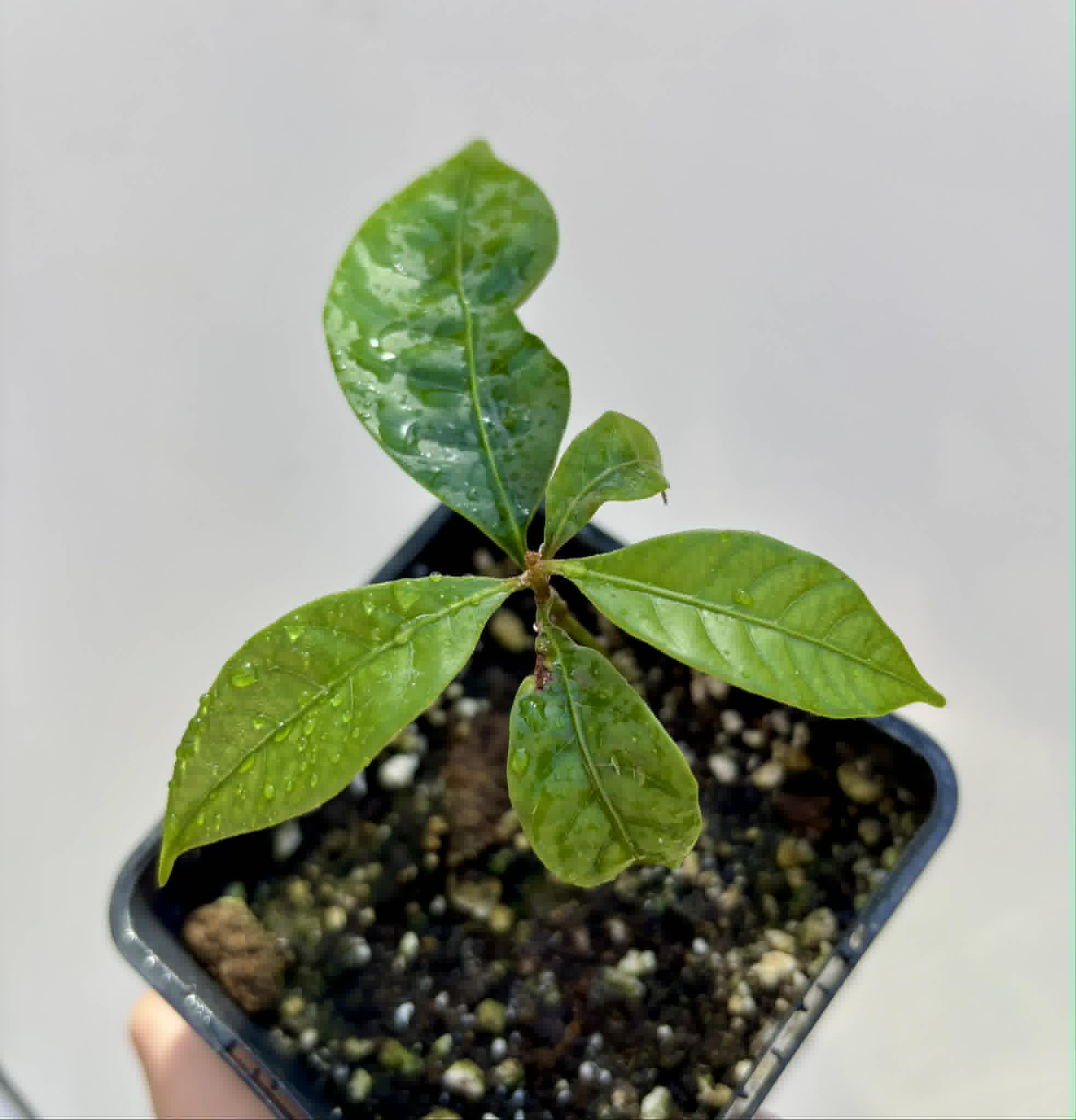
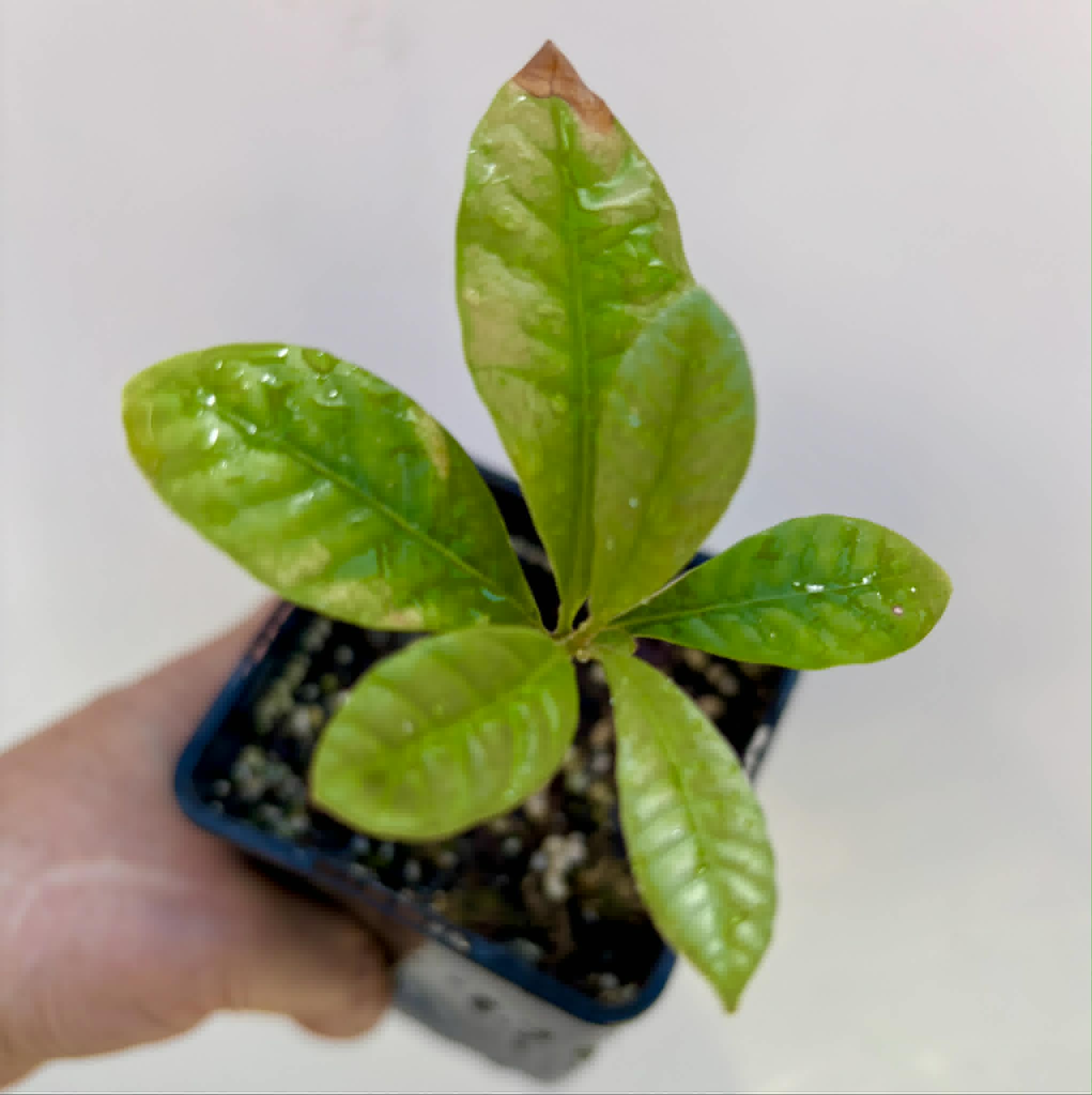
Family / Familie: Sapotaceaeorigin from / Herkunft: Brasil / Brasilien Climate / Klima: temperate to warm (15-30C / 59-86F) / gemäßigt bis warm (15-30C / 59-86F)Use / Verwendung: edible fruits, juice, jam, ice cream, etc. / essbare Früchte, Säfte, Marmelade, Eis usw.you buy / sie kaufen: 1 potted seedling / 1 getopfter Sämling
Delivery EU onlyThis sapote does not yet have a scientific name.It was found in Itacare (Bahia).The tree is medium-sized and has beautiful, large leaves.The fruits have little pulp but are very sweet.The taste is reminiscent of caramelized condensed milk.Well suited for pot cultivation.Please overwinter at a minimum of 15 degrees.Diese Sapote hat noch keinen wissenschaftlichen Namen.Sie wurde in Itacare (Bahia) gefunden.Der Baum wird mittelgroß und hat wunderschöne, große Blätter.Die Früchte haben wenig Fruchtfleisch aber sind sehr süß.Der Geschmack erinnert an karamellisierte Kondensmilch.Gut für Topfkultur geeignet.Überwintern bitte bei mindestens 15 Grad.
Pouteria macahensis
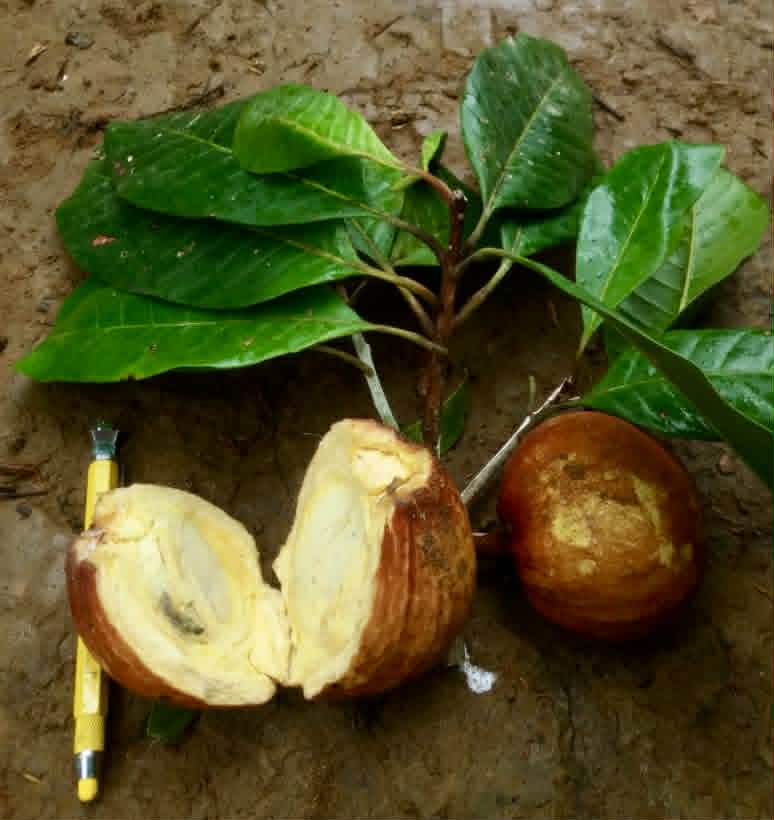
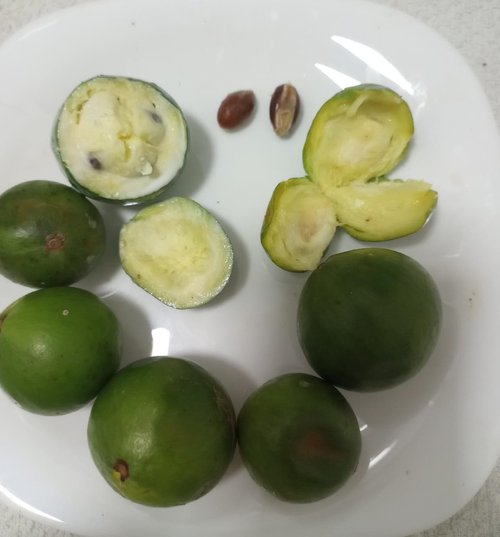
Family / Familie: Sapotaceaeorigin from / Herkunft: Brasil / BrasilienClimate / Klima: temperate to warm (15-30C / 59-86F) / gemäßigt bis warm (15-30C / 59-86F)Use / Verwendung: edible fruits, juice, jam, ice cream, etc. / essbare Früchte, Säfte, Marmelade, Eis usw.you buy / sie kaufen: 1 potted seedling / 1 getopfter SämlingDelivery EU onlyThis is one of the very rare sapotes from Brazil.The last two observations come from the Brazilian state of Espirito Santo.There the Mata Atlantica stretches to the Reserva Biologica de Sooretama.This species is on the IUCN list and is considered to be threatened with extinction.The tree is medium-sized with leaves typical of Pouteria.It grows near rivers and is fast-growing.The fruits have a velvety skin and edible flesh.Nothing is known about the taste of the fruits because it is too rare.Please overwinter this plant at a temperature of at least 15 degrees.Das ist eine der sehr seltenen Sapoten aus Brasilien.Die letzten beiden Beobachtungen stammen aus dem brasilianischen Bundesstaat Espirito Santo.Dort zieht sich der Mata Atlantica bis zum Reserva Biologica de Sooretama.Diese Art steht in der IUCN Liste und gilt als vom Aussterben bedroht.Der Baum ist mittelgroß mit Pouteria-typischen Blättern.Er wächst in Flußnähe und ist schnellwachsend.Die Früchte haben eine samtige Schale und essbares Fruchtfleisch.Über den Geschmack der Früchte ist nichts bekannt da er zu selten ist.Bitte diese Pflanze bei mindestens 15 Grad überwintern.
Pouteria aff egregia
Family / Familie: Sapotaceaeorigin from / Herkunft: Brasil / Brasilien Climate / Klima: temperate to warm (15-30C / 59-86F) / gemäßigt bis warm (15-30C / 59-86F)Use / Verwendung: edible fruits, juice, jam, ice cream, etc. / essbare Früchte, Säfte, Marmelade, Eis usw.you buy / sie kaufen: 1 potted seedling / 1 getopfter Sämling
Delivery EU onlyPouteria aff. egregia – Ultra-Rare Fruit from the UNA National Park in Bahia
Description:Pouteria aff. egregia is a true rarity among tropical fruit plants, discovered in the lush UNA National Park in Bahia, Brazil. This extraordinary Pouteria catches the eye with its beautiful, vibrant yellow fruits, making it a must-have for exotic plant enthusiasts.
Special Features:
Fruits: The fruits of this Pouteria are not only visually stunning but also a real treat for the taste buds. The flesh is incredibly sweet, juicy, and contains very little latex, making it perfect for eating fresh or processing into various delicious treats.
Uses: The fruits can be enjoyed fresh, but they are also excellent for making refreshing juices, creamy ice creams, and other delightful recipes.
Seeds: The seeds are freshly harvested and viable, allowing you the opportunity to grow this rare plant yourself, either in your garden or in a pot.
Rarity: This plant is a true botanical gem and a must-have for collectors of rare and exotic fruit plants.
Care Instructions:
For winter, keep this Pouteria at a minimum temperature of 15°C (59°F).
It prefers a warm, sunny location and is well-suited for both garden planting and container cultivation.
Pouteria aff. egregia – Ultra seltene Frucht aus dem UNA Nationalpark in Bahia
Beschreibung:Die Pouteria aff. egregia ist eine wahre Rarität unter den tropischen Fruchtpflanzen und wurde im üppigen UNA Nationalpark in Bahia, Brasilien, entdeckt. Diese außergewöhnliche Pouteria zieht mit ihren wunderschönen, leuchtend gelben Früchten die Aufmerksamkeit aller Liebhaber exotischer Pflanzen auf sich.
Besonderheiten:
Früchte: Die Früchte dieser Pouteria sind nicht nur optisch ein Genuss, sondern auch geschmacklich ein absolutes Highlight. Das Fruchtfleisch ist unglaublich süß, saftig und enthält nur wenig Latex – ideal für den direkten Verzehr oder die Weiterverarbeitung.
Verwendung: Die Früchte können frisch verzehrt werden, eignen sich aber auch hervorragend zur Herstellung von erfrischendem Saft, cremigem Eis und anderen köstlichen Leckereien.
Samen: Die Samen sind ganz frisch und keimfähig, sodass du die Möglichkeit hast, diese seltene Pflanze selbst zu kultivieren und in deinem Garten oder Topf zu züchten.
Seltenheit: Diese Pflanze ist eine wahre botanische Entdeckung und ein absolutes Muss für Sammler seltener und exotischer Fruchtpflanzen.
Pflegehinweis:
Diese Pouteria benötigt für den Winter eine Temperatur von mindestens 15°C.
Sie bevorzugt einen warmen, sonnigen Standort und eignet sich sowohl für den Garten als auch für die Topfkultur.
Pouteria gardneriFamily / Familie: Sapotaceaeorigin from / Herkunft: Brasil / BrasilienClimate / Klima: temperate to warm (10-30C / 50-86F) / gemäßigt bis warm (10-30C / 50-86F)Use / Verwendung: edible fruits, juice, jam, ice cream, etc. / essbare Früchte, Säfte, Marmelade, Eis usw.you buy / sie kaufen: 1 potted plant / 1 getopfte PflanzeDelivery EU onlyPouteria gardneri / Purple GuapevaPouteria gardneri, commonly known as Purple Guapeva or Aguai in its native regions, is an extraordinary evergreen fruit tree belonging to the Sapotaceae family.The native habitat of this botanical rarity spans the tropical and subtropical regions of South America, occurring particularly in the Cerrado biomes and forests of Brazil.In cultivation, it develops into a compact, well-branched shrub or small tree, showcasing elegant, elongated, deep green leaves with a leathery texture.The absolute highlight of this species is its fascinating fruit, which matures into a beautiful red-purple to dark purple color when fully ripe.The pulp features a pleasantly creamy, soft consistency and delivers an intensely sweet, highly aromatic flavor profile, with the tender skin often being edible as well.In its homeland, the purple fruit is highly valued by the local population and traditionally enjoyed fresh straight from the tree or processed into exquisite juices, ice creams, and sweet desserts.Due to its excellent tolerance to pruning and moderate growth rate, Pouteria gardneri is perfectly suited as an exclusive container plant for any ambitious exotic plant collector.As a thermophilic species native to warm South American regions, it cannot tolerate any frost and is strictly not winter-hardy in Central Europe.Overwintering must take place in a very bright, consistently warm location such as a heated sunroom or greenhouse, maintaining temperatures of ideally at least 12 to 15 degrees Celsius.Pouteria gardneri / Violette GuapevaDie Pouteria gardneri, im südamerikanischen Raum auch als Violette Guapeva oder Aguai bekannt, ist ein außergewöhnlicher, immergrüner Fruchtbaum aus der Familie der Sapotengewächse.Die ursprüngliche Heimat dieser absoluten Rarität liegt in den tropischen und subtropischen Regionen Südamerikas, wo sie insbesondere in den Cerrado-Gebieten und Wäldern Brasiliens vorkommt.In Kultur wächst sie als kompakter, gut verzweigter Strauch oder kleiner Baum heran und besticht durch ihre eleganten, länglichen, tiefgrünen Blätter mit ledriger Textur.Das absolute Highlight dieser Art sind die faszinierenden Früchte, die sich bei Vollreife wunderschön rot-violett bis dunkelviolett färben.Das Fruchtfleisch besitzt eine angenehm cremige, weiche Konsistenz und überzeugt durch einen intensiv süßen, hocharomatischen Geschmack, wobei bei dieser Art oft sogar die zarte Schale mitgegessen werden kann.In ihrer Heimat werden die violetten Früchte von der lokalen Bevölkerung hochengeschätzt und traditionell direkt frisch vom Baum genascht oder zu exquisiten Säften, Eiscremes und süßen Desserts verarbeitet.Aufgrund der guten Schnittverträglichkeit und des moderaten Wuchses eignet sich die Pouteria gardneri hervorragend als exklusive Kübelpflanze für jeden ambitionierten Exotensammler.Als thermophile Pflanze aus den warmen Regionen Südamerikas verträgt sie keinerlei Frost und ist in Mitteleuropa absolut nicht winterhart.Die Überwinterung muss zwingend an einem sehr hellen, konstant warmen Ort im beheizten Wintergarten oder Gewächshaus bei Temperaturen von idealerweise mindestens 12 bis 15 Grad erfolgen.
Green Sapote (Pouteria viridis)
Family / Familie: Sapotaceaeorigin from / Herkunft: South America / SüdamerikaClimate / Klima: temperate to warm (10-30C / 50-86F) / gemäßigt bis warm (10-30C / 50-86F)Use / Verwendung: juice, jam, ice cream, etc. / Säfte, Marmelade, Eis usw.you buy / sie kaufen: 1 germinated seed / 1 gekeimter Samen
Delivery worldwideThe Gourmet Gem of Central America: Green Sapote (Pouteria viridis)The Green Sapote is an extraordinary and rare fruit from the highlands of Central America, famous for its exquisite aroma.Unlike its relative, the Mamey Sapote, this species often retains its characteristic olive-green to brownish skin even when ripe.The interior reveals a beautiful orange-red pulp that has a buttery-smooth, almost creamy consistency.In terms of flavor, the Green Sapote is reminiscent of a delicious blend of sweet pumpkin, brown sugar, and a subtle hint of almond or caramel.Due to its origin in cooler mountain regions, it is more adaptable to lower temperatures than many purely tropical sapote varieties.In cultivation, it develops into a stately, decorative tree with large, glossy leaves that commands an impressive presence in a winter garden.The plant prefers a sunny location and a deep, well-draining substrate to ensure healthy root development.Regular watering is important, though waterlogging must be strictly avoided to maintain the tree's vitality.For collectors of rare useful plants, the Green Sapote represents one of the highest-quality additions, as its fruits are hardly ever found in commercial trade.Overwintering should be bright and frost-free, with temperatures of at least 10 degrees Celsius (50 degrees Fahrenheit) being ideal to promote continuous growth.Das Gourmet-Juwel Zentralamerikas: Green Sapote (Pouteria viridis)Die Green Sapote ist eine außergewöhnliche und seltene Frucht aus den Hochlagen Zentralamerikas, die für ihr exquisites Aroma berühmt ist.Im Gegensatz zu ihrer Verwandten, der Mamey Sapote, behält diese Art ihre charakteristische olivgrüne bis bräunliche Schale oft auch im reifen Zustand bei.Das Innere offenbart ein wunderschönes, orange-rotes Fruchtfleisch, das eine butterweiche, fast cremige Konsistenz besitzt.Geschmacklich erinnert die Green Sapote an eine köstliche Mischung aus süßem Kürbis, braunem Zucker und einer feinen Note von Mandel oder Karamell.Aufgrund ihrer Herkunft aus kühleren Bergregionen ist sie anpassungsfähiger gegenüber niedrigeren Temperaturen als viele rein tropische Sapotengewächse.In der Kultur entwickelt sie sich zu einem stattlichen, dekorativen Baum mit großen, glänzenden Blättern, der eine beeindruckende Präsenz im Wintergarten zeigt.Die Pflanze bevorzugt einen sonnigen Standort und ein tiefgründiges, gut durchlässiges Substrat, um eine gesunde Wurzelentwicklung zu gewährleisten.Eine regelmäßige Wasserversorgung ist wichtig, wobei Staunässe unbedingt vermieden werden sollte, um die Vitalität des Baumes zu erhalten.Für Sammler seltener Nutzpflanzen stellt die Green Sapote eine der hochwertigsten Ergänzungen dar, da ihre Früchte im kommerziellen Handel kaum zu finden sind.Die Überwinterung sollte hell und frostfrei erfolgen, wobei Temperaturen von mindestens 10 Grad Celsius ideal sind, um einen kontinuierlichen Wuchs zu fördern.
Abiu (Pouteria caimito)Family / Familie: Sapotaceae origin from / Herkunft: South America / Südamerika Climate / Klima: warm (15-30C / 60-77F) / warm (15-30C / 60-77F) Use / Verwendung: edible fruits, juice, jam, ice cream, etc. / essbare Früchte, Säfte, Marmelade, Eis usw.you buy / sie kaufen: 1 potted plant / 1 getopfte Pflanze Delivery EU onlyAbiu is a tropical fruit from the sapote family.The pulp is jelly-like, sweet and reminiscent of the taste of Caimito with a little caramel.The fruit is very good to eat fresh or to make into ice cream.Abiu fruits have a lot of calcium, phosphorus, vitamin A and vitamin C.The plant is grown in a similar way to cocoa.It loves it warm and humid.In the Amazon, they bloom for the first time after three years and several times a year.You can find flowers and ripe fruit on one tree at the same time.The trees will later have between 100 and 1000 fruits hanging on them.Please overwinter at a temperature of at least 15 degrees.Abiu ist eine tropische Frucht aus der Familie der Sapoten. Das Fruchtfleisch ist geleeartig, süß und erinnert an den Geschmack von Caimito mit etwas Karamell. Die Frucht lässt sich sehr gut frisch essen oder zu Eis zu verarbeiten. Abiu-Früchte haben viel Kalzium, Phosphor, Vitamin A und Vitamin C. Die Haltung der Pflanze ist ähnlich dem Kakao. Sie liebt es warm und feucht. Im Amazonas blühen sie nach drei Jahren das erste mal und mehrfach im Jahr. An einem Baum kann man Blüten und gleichzeitig reife Früchte finden. An diesen Bäumen hängen später zwischen 100 und 1000 Früchten. Bitte bei mindestens 15 Grad überwintern.
Pouteria sp Ajara Family / Familie: Sapotaceae origin from / Herkunft: Brasil / Brasilien Climate / Klima: temperate to warm (15-25C / 60-77F) / gemäßigt bis warm (15-25C / 60-77F) Taste / Geschmack: good taste / guter Geschmack you buy / sie kaufen: 1 potted plant / 1 getopfte PflanzeDelivery EU onlyHere we have a small seedling from a completely unknown and interesting Pouteria for you. Pouteria sp. Ajara comes from the Solimões River floodplain of Manaus, the capital of the Amazon in Brazil. This means that this Pouteria survives floods without any problems. The fruit of Pouteria Ajara is known for its strong taste and smell. The taste has a pleasant acidity with a slight note of pomelo. The tree only grows to a height of 4 to a maximum of 8 meters and is therefore suitable for pot cultivation. Overwinter at at least 10 degrees (better 15).Hier haben wir einen kleinen Sämling einer völlig unbekannten und interessanten Pouteria für euch. Pouteria sp. Ajara stammt aus dem Überschwemmungsgebiet des Solimões-Flusses von Manaus, der Hauptstadt des Amazonas in Brasilien. Das bedeutet, dass diese Pouteria Überschwemmungen ohne Probleme überlebt. Die Frucht der Pouteria Ajara ist für ihren starken Geschmack und Geruch bekannt. Der Geschmack hat eine angenehme Säure mit einer leichten Note von Pomelo. Der Baum wird nur 4 bis max. 8 Meter und ist deshalb für eine Topfkultur geeignet. Überwintern bei mindestens 10 Grad (besser 15).
Green Sapote (Pouteria viridis)
Family / Familie: Sapotaceaeorigin from / Herkunft: South America / SüdamerikaClimate / Klima: temperate to warm (10-30C / 50-86F) / gemäßigt bis warm (10-30C / 50-86F)Use / Verwendung: juice, jam, ice cream, etc. / Säfte, Marmelade, Eis usw.you buy / sie kaufen: 1 fresh seed / 1 frischer Samen
Delivery worldwideThe Gourmet Gem of Central America: Green Sapote (Pouteria viridis)The Green Sapote is an extraordinary and rare fruit from the highlands of Central America, famous for its exquisite aroma.Unlike its relative, the Mamey Sapote, this species often retains its characteristic olive-green to brownish skin even when ripe.The interior reveals a beautiful orange-red pulp that has a buttery-smooth, almost creamy consistency.In terms of flavor, the Green Sapote is reminiscent of a delicious blend of sweet pumpkin, brown sugar, and a subtle hint of almond or caramel.Due to its origin in cooler mountain regions, it is more adaptable to lower temperatures than many purely tropical sapote varieties.In cultivation, it develops into a stately, decorative tree with large, glossy leaves that commands an impressive presence in a winter garden.The plant prefers a sunny location and a deep, well-draining substrate to ensure healthy root development.Regular watering is important, though waterlogging must be strictly avoided to maintain the tree's vitality.For collectors of rare useful plants, the Green Sapote represents one of the highest-quality additions, as its fruits are hardly ever found in commercial trade.Overwintering should be bright and frost-free, with temperatures of at least 10 degrees Celsius (50 degrees Fahrenheit) being ideal to promote continuous growth.Das Gourmet-Juwel Zentralamerikas: Green Sapote (Pouteria viridis)Die Green Sapote ist eine außergewöhnliche und seltene Frucht aus den Hochlagen Zentralamerikas, die für ihr exquisites Aroma berühmt ist.Im Gegensatz zu ihrer Verwandten, der Mamey Sapote, behält diese Art ihre charakteristische olivgrüne bis bräunliche Schale oft auch im reifen Zustand bei.Das Innere offenbart ein wunderschönes, orange-rotes Fruchtfleisch, das eine butterweiche, fast cremige Konsistenz besitzt.Geschmacklich erinnert die Green Sapote an eine köstliche Mischung aus süßem Kürbis, braunem Zucker und einer feinen Note von Mandel oder Karamell.Aufgrund ihrer Herkunft aus kühleren Bergregionen ist sie anpassungsfähiger gegenüber niedrigeren Temperaturen als viele rein tropische Sapotengewächse.In der Kultur entwickelt sie sich zu einem stattlichen, dekorativen Baum mit großen, glänzenden Blättern, der eine beeindruckende Präsenz im Wintergarten zeigt.Die Pflanze bevorzugt einen sonnigen Standort und ein tiefgründiges, gut durchlässiges Substrat, um eine gesunde Wurzelentwicklung zu gewährleisten.Eine regelmäßige Wasserversorgung ist wichtig, wobei Staunässe unbedingt vermieden werden sollte, um die Vitalität des Baumes zu erhalten.Für Sammler seltener Nutzpflanzen stellt die Green Sapote eine der hochwertigsten Ergänzungen dar, da ihre Früchte im kommerziellen Handel kaum zu finden sind.Die Überwinterung sollte hell und frostfrei erfolgen, wobei Temperaturen von mindestens 10 Grad Celsius ideal sind, um einen kontinuierlichen Wuchs zu fördern.
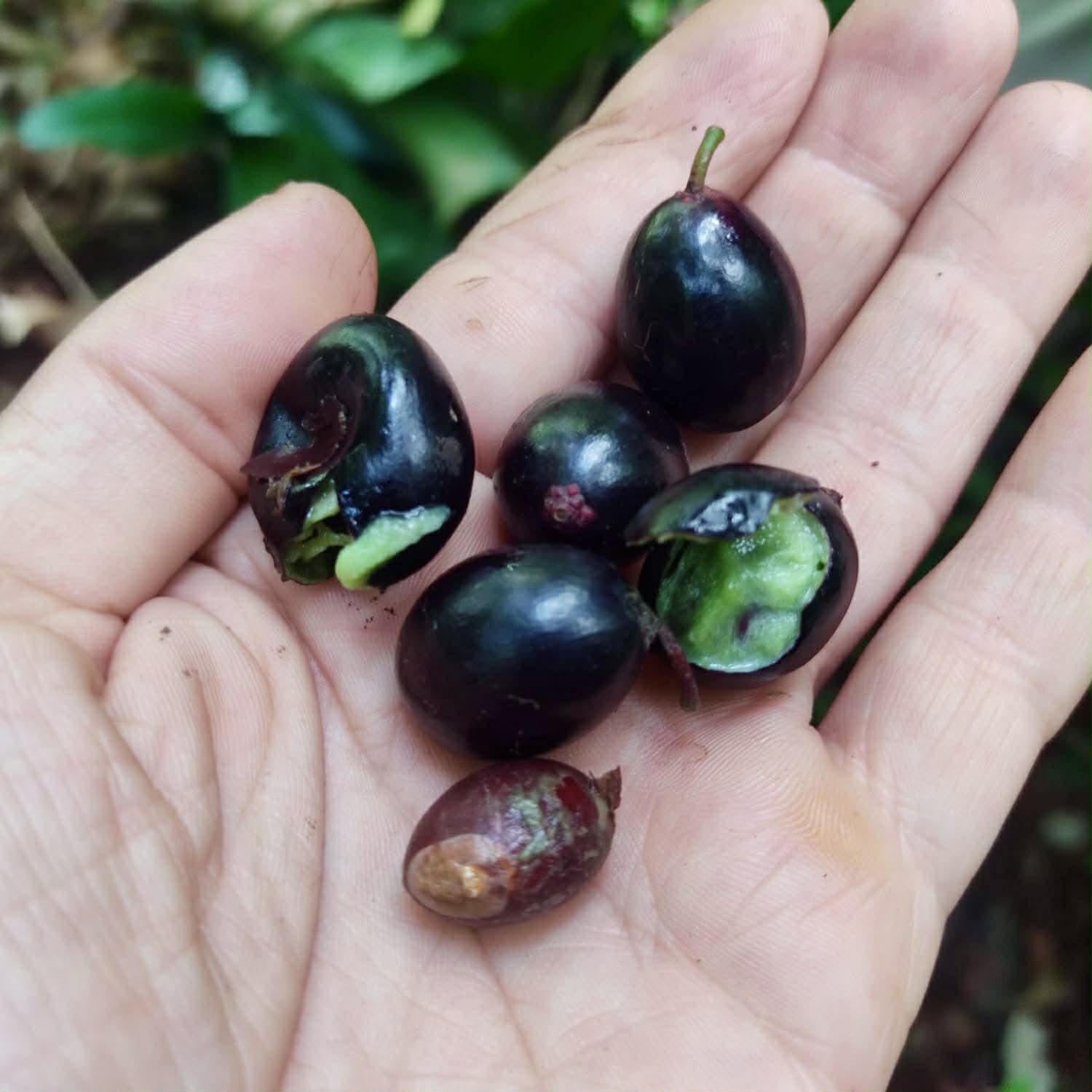
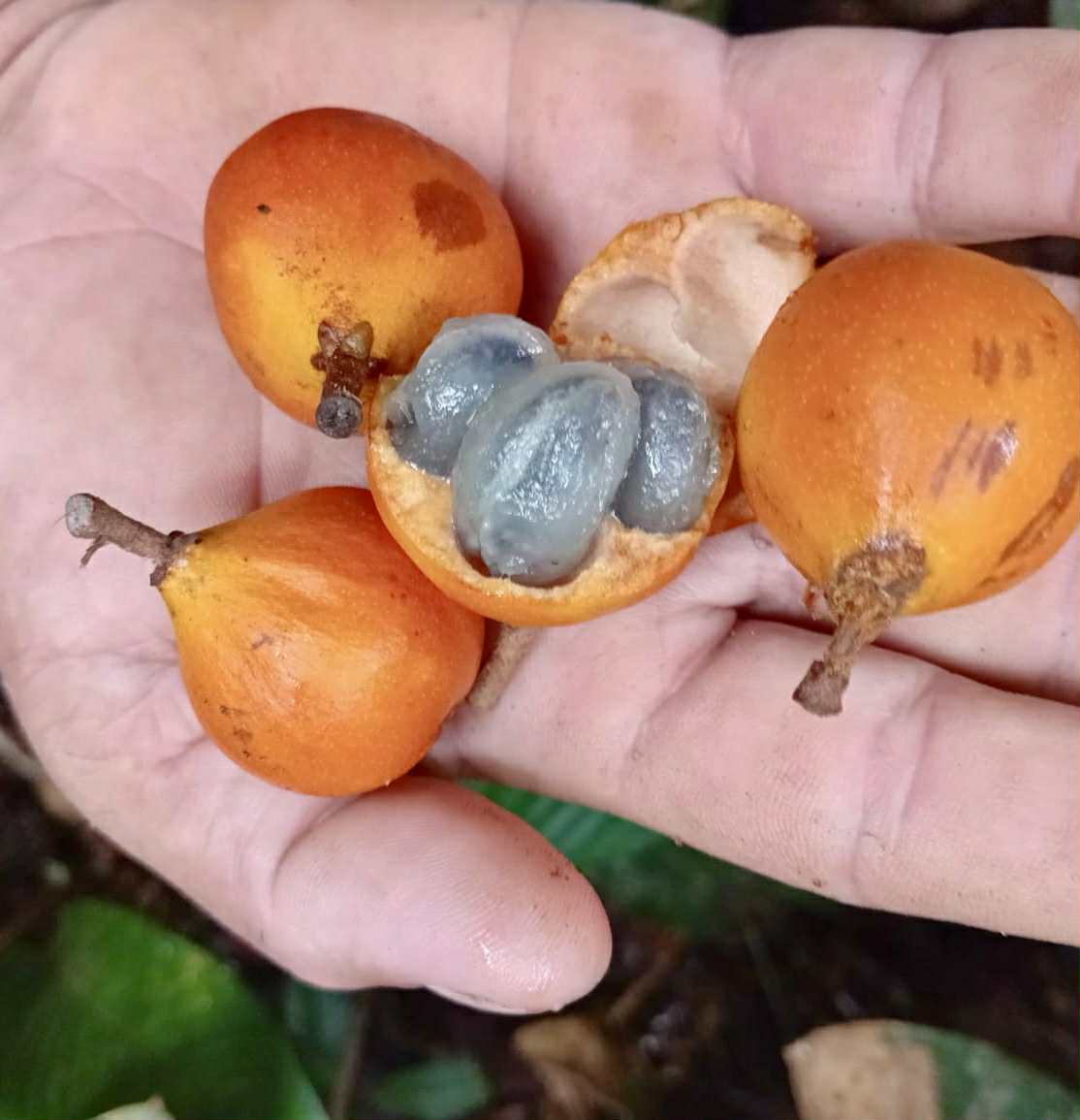
Pouteria sp. BapebaFamily / Familie: Myrtaceae origin from / Herkunft: Brasil / BrasilienClimate / Klima: temperate to warm (15-30C / 59-86F) / gemäßigt bis warm (15-30C / 59-86F)Use / Verwendung: edible fruits, juice, jam, ice cream, etc. / essbare Früchte, Säfte, Marmelade, Eis usw.you buy / sie kaufen: 1 germinated seed / 1 gekeimter SamenDelivery worldwidePouteria sp. "Bapeba" is a fascinating wild form of the Sapotaceae family from the pristine Atlantic Rainforest of Bahia.The affiliation with the genus Pouteria is clearly recognizable by the specific shape of the seed. The tree bears fruits that develop a glossy, deep purple to almost black skin when fully ripe. The pulp surprises with a juicy, pale green to greenish tint and a creamy consistency. It is considered incredibly sweet and aromatic, making this wild species a culinary highlight. Each fruit is an authentic testament to the overwhelming biodiversity of Bahia. It is excellent for long-term container cultivation and enriches any conservatory with a botanical gem. To ensure healthy growth and abundant flowering, the plant should be overwintered in a bright location at a minimum temperature of 10°C (50°F).
Pouteria sp. „Bapeba“ ist eine faszinierende Wildform der Sapotengewächse aus dem unberührten Mata Atlântica von Bahia.Die Zugehörigkeit zur Gattung Pouteria ist deutlich an der spezifischen Form des Samens zu erkennen. Der Baum trägt Früchte, die bei voller Reife eine glänzende, dunkelviolette bis fast schwarze Schale entwickeln. Das Fruchtfleisch überrascht mit einer saftigen, hellgrünen Tönung und einer cremigen Konsistenz. Es gilt als sehr süß und aromatisch, was diese Wildart zu einem kulinarischen Highlight macht. Jede Frucht ist ein authentisches Zeugnis der überwältigenden Biodiversität Bahias. Sie eignet sich hervorragend für die dauerhafte Kultur im Kübel und bereichert jeden Wintergarten um ein botanisches Juwel. Für ein gesundes Wachstum und eine reiche Blüte sollte die Überwinterung an einem hellen Standort bei Temperaturen von mindestens 10 Grad Celsius erfolgen.
Pouteria bangii Family / Familie: Sapotaceae origin from / Herkunft: Brasil / Brasilien Climate / Klima: temperate to warm (15-30C / 59-86F) / gemäßigt bis warm (15-30C / 59-86F)Use / Verwendung: edible fruits, juice, jam, ice cream, etc. / essbare Früchte, Säfte, Marmelade, Eis usw.you buy / sie kaufen: 1 potted plant / 1 getopfte PflanzeDelivery EU only
Pouteria bangii is a very rare fruit tree from the Sapotaceae family and comes from Bahia in Brazil.The tree has beautiful, typical Pouteria leaves.The small fruits are yellow and contain very sweet, juicy pulp.Please overwinter this Pouteria at a minimum of 10 degrees.Pouteria bangii ist ein sehr seltener Fruchtbaum aus der Familie der Sapotaceae und stammt aus Bahia in Brasilien.Der Baum bekommt wunderschöne, typische Pouteria Blätter.Die kleinen Früchte sind gelb und enthalten ein sehr süßes, saftiges Fruchtfleisch.Bitte diese Pouteria bei mindestens 10 Grad überwintern.
Pouteria glomerata
Family / Familie: Sapotaceaeorigin from / Herkunft: Mexico / MexikoClimate / Klima: temperate to warm (10-30C / 50-86F) / gemäßigt bis warm (10-30C / 50-86F)Use / Verwendung: edible fruits, juice, jam, ice cream, etc. / essbare Früchte, Säfte, Marmelade, Eis usw.you buy / sie kaufen: 1 germinated seed / 1 gekeimter Samen
Delivery worldwideThe taste of this pouteria is fantastic with a hint of cinnamon..It grows relatively quickly and can be overwintered at at least 10 degrees.Huge beautiful leaves and great fruits.The name "Pouteria hypoglauca" is a synonym and is also sometimes used for this Pouteria.Der Geschmack dieser Pouteria ist fantastisch mit einem Hauch von Zimt.Sie wächst relativ schnell und kann bei mindestens 10 Grad überwintert werden.Riesige wunderschöne Blätter und tolle Früchte.Der Name "Pouteria hypoglauca" ist ein Synonym und wird auch manchmal für diese Pouteria verwendet.
Abiu (Pouteria caimito)Family / Familie: Sapotaceae origin from / Herkunft: South America / Südamerika Climate / Klima: warm (15-30C / 60-77F) / warm (15-30C / 60-77F) Use / Verwendung: edible fruits, juice, jam, ice cream, etc. / essbare Früchte, Säfte, Marmelade, Eis usw.you buy / sie kaufen: 1 potted plant / 1 getopfte Pflanze Delivery EU onlyAbiu is a tropical fruit from the sapote family.The pulp is jelly-like, sweet and reminiscent of the taste of Caimito with a little caramel.The fruit is very good to eat fresh or to make into ice cream.Abiu fruits have a lot of calcium, phosphorus, vitamin A and vitamin C.The plant is grown in a similar way to cocoa.It loves it warm and humid.In the Amazon, they bloom for the first time after three years and several times a year.You can find flowers and ripe fruit on one tree at the same time.The trees will later have between 100 and 1000 fruits hanging on them.Please overwinter at a temperature of at least 15 degrees.Abiu ist eine tropische Frucht aus der Familie der Sapoten. Das Fruchtfleisch ist geleeartig, süß und erinnert an den Geschmack von Caimito mit etwas Karamell. Die Frucht lässt sich sehr gut frisch essen oder zu Eis zu verarbeiten. Abiu-Früchte haben viel Kalzium, Phosphor, Vitamin A und Vitamin C. Die Haltung der Pflanze ist ähnlich dem Kakao. Sie liebt es warm und feucht. Im Amazonas blühen sie nach drei Jahren das erste mal und mehrfach im Jahr. An einem Baum kann man Blüten und gleichzeitig reife Früchte finden. An diesen Bäumen hängen später zwischen 100 und 1000 Früchten. Bitte bei mindestens 15 Grad überwintern.
Abiu (Pouteria caimito)Family / Familie: Sapotaceae origin from / Herkunft: South America / Südamerika Climate / Klima: warm (15-30C / 60-77F) / warm (15-30C / 60-77F) Use / Verwendung: edible fruits, juice, jam, ice cream, etc. / essbare Früchte, Säfte, Marmelade, Eis usw.you buy / sie kaufen: 1 potted plant / 1 getopfte Pflanze Delivery EU onlyAbiu is a tropical fruit from the sapote family.The pulp is jelly-like, sweet and reminiscent of the taste of Caimito with a little caramel.The fruit is very good to eat fresh or to make into ice cream.Abiu fruits have a lot of calcium, phosphorus, vitamin A and vitamin C.The plant is grown in a similar way to cocoa.It loves it warm and humid.In the Amazon, they bloom for the first time after three years and several times a year.You can find flowers and ripe fruit on one tree at the same time.The trees will later have between 100 and 1000 fruits hanging on them.Please overwinter at a temperature of at least 15 degrees.Abiu ist eine tropische Frucht aus der Familie der Sapoten. Das Fruchtfleisch ist geleeartig, süß und erinnert an den Geschmack von Caimito mit etwas Karamell. Die Frucht lässt sich sehr gut frisch essen oder zu Eis zu verarbeiten. Abiu-Früchte haben viel Kalzium, Phosphor, Vitamin A und Vitamin C. Die Haltung der Pflanze ist ähnlich dem Kakao. Sie liebt es warm und feucht. Im Amazonas blühen sie nach drei Jahren das erste mal und mehrfach im Jahr. An einem Baum kann man Blüten und gleichzeitig reife Früchte finden. An diesen Bäumen hängen später zwischen 100 und 1000 Früchten. Bitte bei mindestens 15 Grad überwintern.
Abiu (Pouteria caimito)Family / Familie: Sapotaceae origin from / Herkunft: South America / Südamerika Climate / Klima: warm (15-30C / 60-77F) / warm (15-30C / 60-77F) Use / Verwendung: edible fruits, juice, jam, ice cream, etc. / essbare Früchte, Säfte, Marmelade, Eis usw.you buy / sie kaufen: 1 potted plant / 1 getopfte Pflanze Delivery EU onlyAbiu is a tropical fruit from the sapote family.The pulp is jelly-like, sweet and reminiscent of the taste of Caimito with a little caramel.The fruit is very good to eat fresh or to make into ice cream.Abiu fruits have a lot of calcium, phosphorus, vitamin A and vitamin C.The plant is grown in a similar way to cocoa.It loves it warm and humid.In the Amazon, they bloom for the first time after three years and several times a year.You can find flowers and ripe fruit on one tree at the same time.The trees will later have between 100 and 1000 fruits hanging on them.Please overwinter at a temperature of at least 15 degrees.Abiu ist eine tropische Frucht aus der Familie der Sapoten. Das Fruchtfleisch ist geleeartig, süß und erinnert an den Geschmack von Caimito mit etwas Karamell. Die Frucht lässt sich sehr gut frisch essen oder zu Eis zu verarbeiten. Abiu-Früchte haben viel Kalzium, Phosphor, Vitamin A und Vitamin C. Die Haltung der Pflanze ist ähnlich dem Kakao. Sie liebt es warm und feucht. Im Amazonas blühen sie nach drei Jahren das erste mal und mehrfach im Jahr. An einem Baum kann man Blüten und gleichzeitig reife Früchte finden. An diesen Bäumen hängen später zwischen 100 und 1000 Früchten. Bitte bei mindestens 15 Grad überwintern.
Abiu (Pouteria caimito)Family / Familie: Sapotaceae origin from / Herkunft: South America / Südamerika Climate / Klima: warm (15-30C / 60-77F) / warm (15-30C / 60-77F) Use / Verwendung: edible fruits, juice, jam, ice cream, etc. / essbare Früchte, Säfte, Marmelade, Eis usw.you buy / sie kaufen: 1 potted plant / 1 getopfte Pflanze Delivery EU onlyAbiu is a tropical fruit from the sapote family.The pulp is jelly-like, sweet and reminiscent of the taste of Caimito with a little caramel.The fruit is very good to eat fresh or to make into ice cream.Abiu fruits have a lot of calcium, phosphorus, vitamin A and vitamin C.The plant is grown in a similar way to cocoa.It loves it warm and humid.In the Amazon, they bloom for the first time after three years and several times a year.You can find flowers and ripe fruit on one tree at the same time.The trees will later have between 100 and 1000 fruits hanging on them.Please overwinter at a temperature of at least 15 degrees.Abiu ist eine tropische Frucht aus der Familie der Sapoten. Das Fruchtfleisch ist geleeartig, süß und erinnert an den Geschmack von Caimito mit etwas Karamell. Die Frucht lässt sich sehr gut frisch essen oder zu Eis zu verarbeiten. Abiu-Früchte haben viel Kalzium, Phosphor, Vitamin A und Vitamin C. Die Haltung der Pflanze ist ähnlich dem Kakao. Sie liebt es warm und feucht. Im Amazonas blühen sie nach drei Jahren das erste mal und mehrfach im Jahr. An einem Baum kann man Blüten und gleichzeitig reife Früchte finden. An diesen Bäumen hängen später zwischen 100 und 1000 Früchten. Bitte bei mindestens 15 Grad überwintern.
Pouteria glomerata
Family / Familie: Sapotaceaeorigin from / Herkunft: Mexico / MexikoClimate / Klima: temperate to warm (10-30C / 50-86F) / gemäßigt bis warm (10-30C / 50-86F)Use / Verwendung: edible fruits, juice, jam, ice cream, etc. / essbare Früchte, Säfte, Marmelade, Eis usw.you buy / sie kaufen: 1 potted seedling / 1 getopfter Sämling
Delivery EU onlyThe shoot is already poking out of the ground and the first leaves will appear soon.The taste of this pouteria is fantastic with a hint of cinnamon..It grows relatively quickly and can be overwintered at at least 10 degrees.Huge beautiful leaves and great fruits.The name "Pouteria hypoglauca" is a synonym and is also sometimes used for this Pouteria.Der Trieb schaut schon aus der Erde und bald kommen die ersten Blätter.Der Geschmack dieser Pouteria ist fantastisch mit einem Hauch von Zimt.Sie wächst relativ schnell und kann bei mindestens 10 Grad überwintert werden.Riesige wunderschöne Blätter und tolle Früchte.Der Name "Pouteria hypoglauca" ist ein Synonym und wird auch manchmal für diese Pouteria verwendet.
Pouteria sp Ajara Family / Familie: Sapotaceae origin from / Herkunft: Brasil / Brasilien Climate / Klima: temperate to warm (15-25C / 60-77F) / gemäßigt bis warm (15-25C / 60-77F) Taste / Geschmack: good taste / guter Geschmack you buy / sie kaufen: 1 potted plant / 1 getopfte PflanzeDelivery EU onlyHere we have a small seedling from a completely unknown and interesting Pouteria for you. Pouteria sp. Ajara comes from the Solimões River floodplain of Manaus, the capital of the Amazon in Brazil. This means that this Pouteria survives floods without any problems. The fruit of Pouteria Ajara is known for its strong taste and smell. The taste has a pleasant acidity with a slight note of pomelo. The tree only grows to a height of 4 to a maximum of 8 meters and is therefore suitable for pot cultivation. Overwinter at at least 10 degrees (better 15).Hier haben wir einen kleinen Sämling einer völlig unbekannten und interessanten Pouteria für euch. Pouteria sp. Ajara stammt aus dem Überschwemmungsgebiet des Solimões-Flusses von Manaus, der Hauptstadt des Amazonas in Brasilien. Das bedeutet, dass diese Pouteria Überschwemmungen ohne Probleme überlebt. Die Frucht der Pouteria Ajara ist für ihren starken Geschmack und Geruch bekannt. Der Geschmack hat eine angenehme Säure mit einer leichten Note von Pomelo. Der Baum wird nur 4 bis max. 8 Meter und ist deshalb für eine Topfkultur geeignet. Überwintern bei mindestens 10 Grad (besser 15).
Abiu (Pouteria caimito)Family / Familie: Sapotaceae origin from / Herkunft: South America / Südamerika Climate / Klima: warm (15-30C / 60-77F) / warm (15-30C / 60-77F) Use / Verwendung: edible fruits, juice, jam, ice cream, etc. / essbare Früchte, Säfte, Marmelade, Eis usw.you buy / sie kaufen: 1 potted plant / 1 getopfte Pflanze Delivery EU onlyAbiu is a tropical fruit from the sapote family.The pulp is jelly-like, sweet and reminiscent of the taste of Caimito with a little caramel.The fruit is very good to eat fresh or to make into ice cream.Abiu fruits have a lot of calcium, phosphorus, vitamin A and vitamin C.The plant is grown in a similar way to cocoa.It loves it warm and humid.In the Amazon, they bloom for the first time after three years and several times a year.You can find flowers and ripe fruit on one tree at the same time.The trees will later have between 100 and 1000 fruits hanging on them.Please overwinter at a temperature of at least 15 degrees.Abiu ist eine tropische Frucht aus der Familie der Sapoten. Das Fruchtfleisch ist geleeartig, süß und erinnert an den Geschmack von Caimito mit etwas Karamell. Die Frucht lässt sich sehr gut frisch essen oder zu Eis zu verarbeiten. Abiu-Früchte haben viel Kalzium, Phosphor, Vitamin A und Vitamin C. Die Haltung der Pflanze ist ähnlich dem Kakao. Sie liebt es warm und feucht. Im Amazonas blühen sie nach drei Jahren das erste mal und mehrfach im Jahr. An einem Baum kann man Blüten und gleichzeitig reife Früchte finden. An diesen Bäumen hängen später zwischen 100 und 1000 Früchten. Bitte bei mindestens 15 Grad überwintern.
Pouteria sp AlaranjadaFamily / Familie: Sapotaceaeorigin from / Herkunft: Brazil / BrasilienClimate / Klima: temperate to warm (15-30C / 59-86F) / gemäßigt bis warm (15-30C / 59-86F)Use / Verwendung: edible fruits, juice, jam, ice cream, etc. / essbare Früchte, Säfte, Marmelade, Eis usw.you buy / sie kaufen: 1 fresh seed / 1 frischer Samen
Delivery worldwideLook at the color of this Pouteria. What a beauty!This Pouteria was discovered in the Amazon region of the Brazilian state of Rondônia, on the border with Bolivia.The fruit segments are arranged in a circle, similar to a Diospyros.The flesh around the seed is incredibly sweet.Please overwinter this plant at a minimum temperature of 15 degrees Celsius.Schaut euch die Farbe dieser Pouteria an. Was für eine Schönheit.Diese Pouteria wurde im Amazonas des brasilianischen Bundesstaates Rondonia, an der Grenze zu Bolivien entdeckt.Die Fruchtsegmente sind wie bei einer Diospyros kreisförmig angeordnet.Das Fruchtfleisch rings um den Samen ist zuckersüß.Bitte diese Pflanze bei mindestens 15 Grad überwintern.
Pouteria glomerata
Family / Familie: Sapotaceaeorigin from / Herkunft: Mexico / MexikoClimate / Klima: temperate to warm (10-30C / 50-86F) / gemäßigt bis warm (10-30C / 50-86F)Use / Verwendung: edible fruits, juice, jam, ice cream, etc. / essbare Früchte, Säfte, Marmelade, Eis usw.you buy / sie kaufen: 1 fresh seed / 1 frischer Samen
Delivery worldwideThe taste of this pouteria is fantastic with a hint of cinnamon..It grows relatively quickly and can be overwintered at at least 10 degrees.Huge beautiful leaves and great fruits.The name "Pouteria hypoglauca" is a synonym and is also sometimes used for this Pouteria.Der Geschmack dieser Pouteria ist fantastisch mit einem Hauch von Zimt.Sie wächst relativ schnell und kann bei mindestens 10 Grad überwintert werden.Riesige wunderschöne Blätter und tolle Früchte.Der Name "Pouteria hypoglauca" ist ein Synonym und wird auch manchmal für diese Pouteria verwendet.