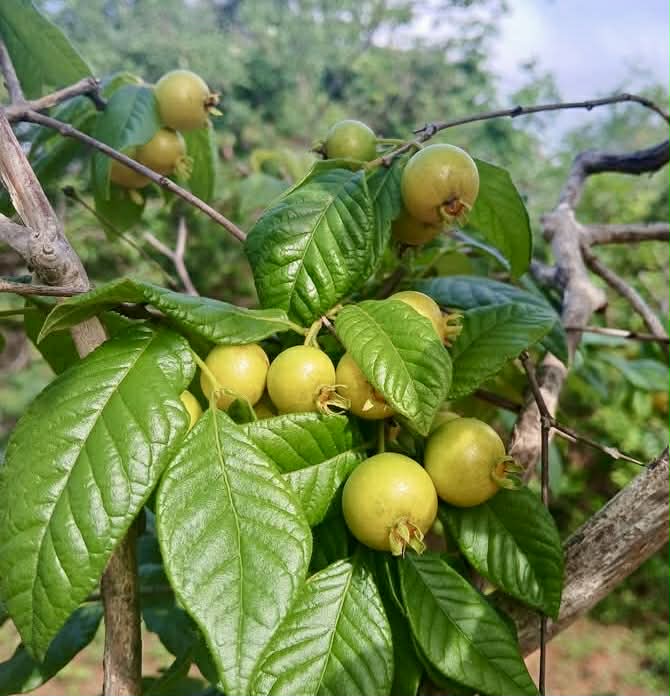
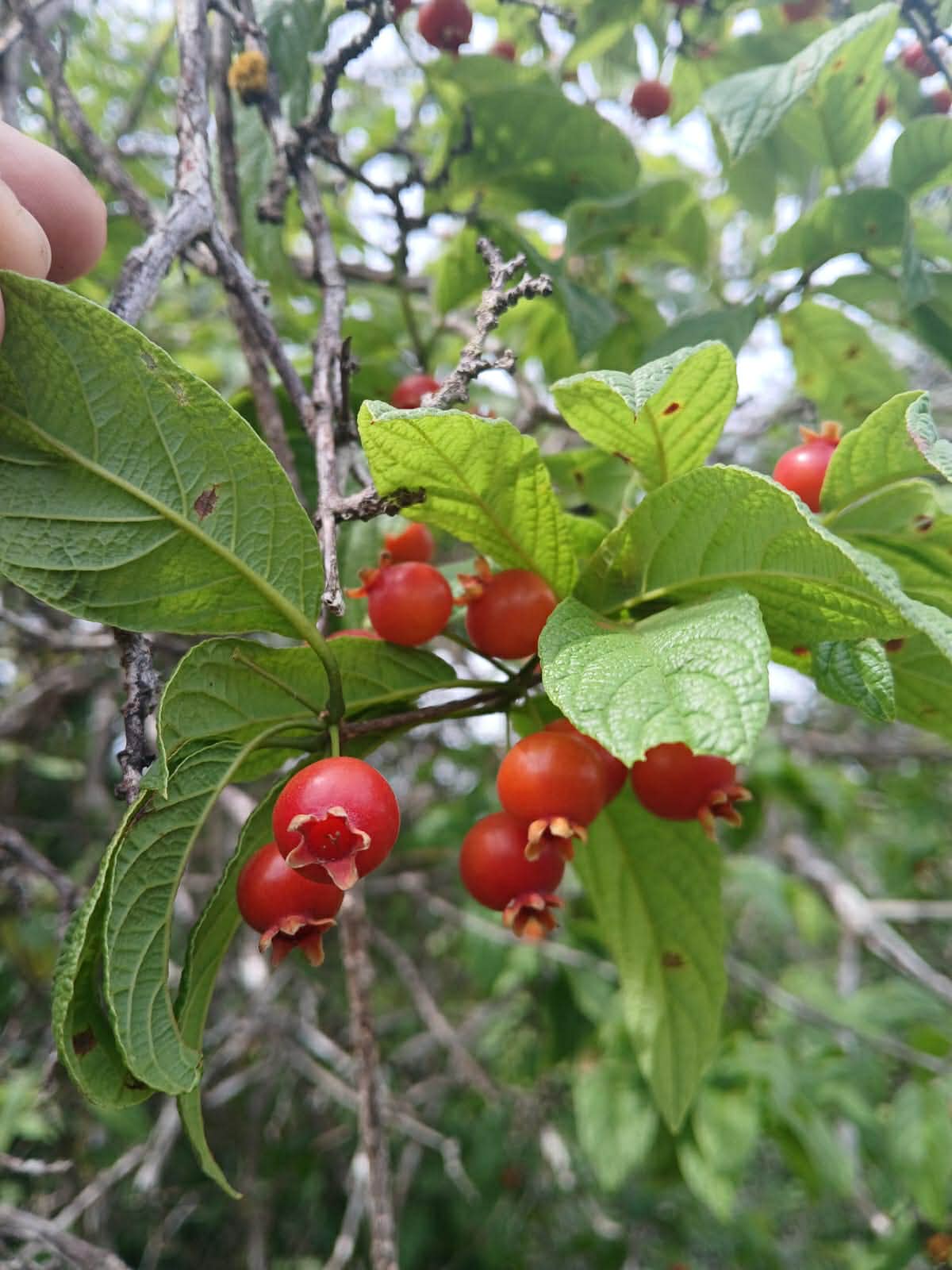
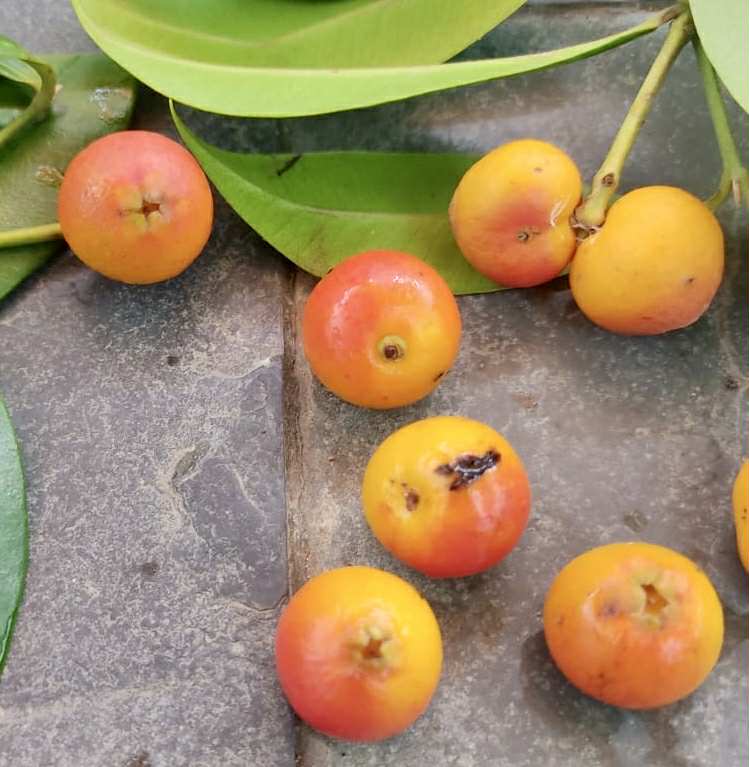
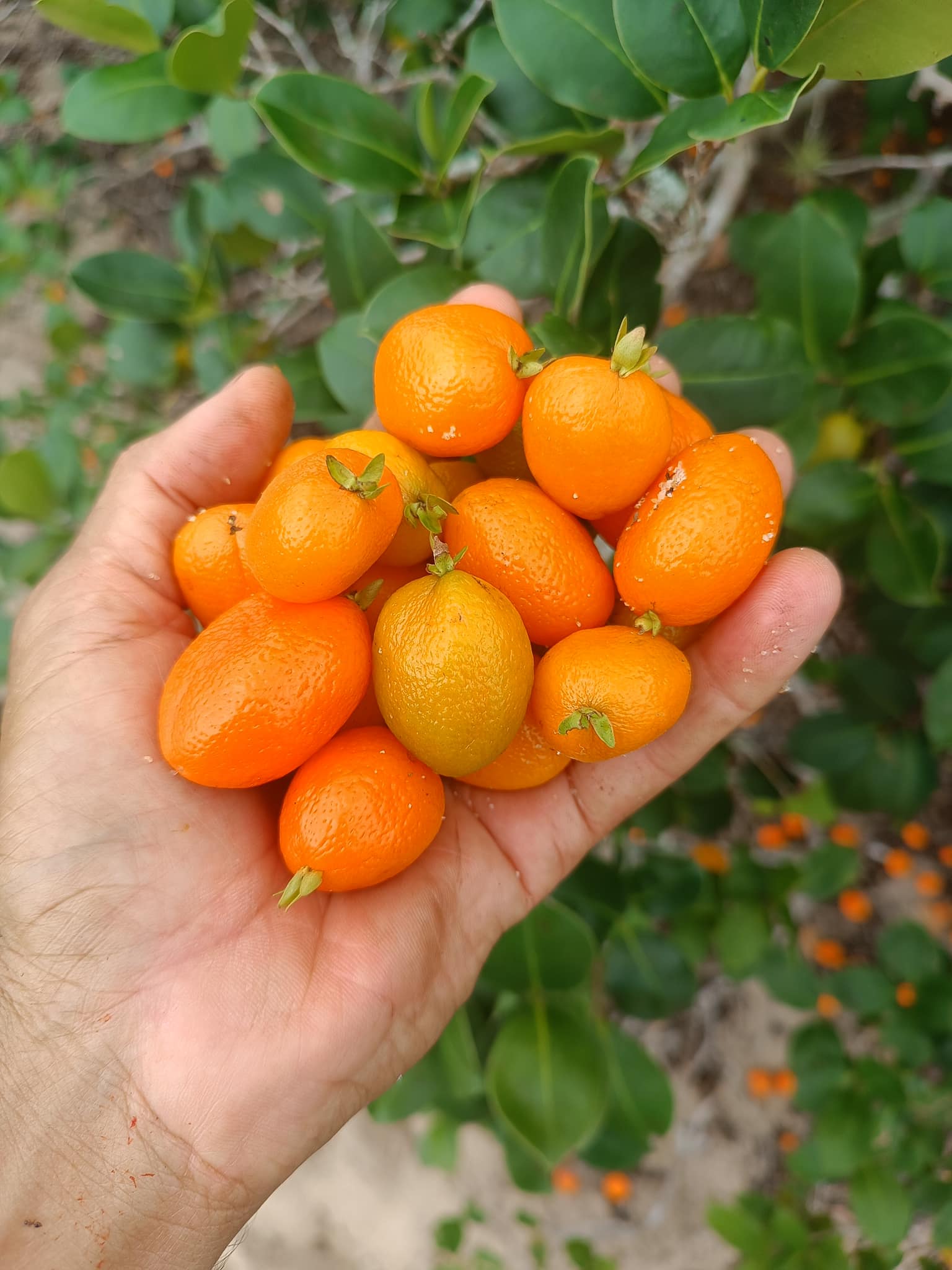
Eugenia sp ItayubaFamily / Familie: Myrtaceaeorigin from / Herkunft: Brasil / BrasilienClimate / Klima: temperate (15-30C / 59-84F) / gemäßigt (15-30C / 59-84F) Use / Verwendung: edible fruits, juice, jam, ice cream, etc. / essbare Früchte, Säfte, Marmelade, Eis usw.you buy / sie kaufen: 1 fresh seed / 1 frischer SamenDelivery worldwideThis Eugenia sp. Itayuba could make history in the future.The bright yellow fruits are large, juicy, and tasty.This Eugenia was discovered in the municipality of Itayuba in Minas Gerais.Itayuba comes from the Tupi language and means "river of stones falling from the heights."The tree is medium-sized and, like most Eugenias, is also suitable for pot cultivation.We recommend avoiding waterlogging in the first year and growing it in partial shade.Please overwinter this rare Eugenia at a minimum temperature of 15 degrees Celsius.Diese Eugenia sp Itayuba könnte in Zukunft Geschichte schreiben.Die leuchtend gelben Früchte sind groß, saftig und schmackhaft.Entdeckt wurde diese Eugenia in der Gemeinde Itayuba in Minas Gerais.Itayuba stammt aus der Tupi Sprache und bedeudet: "von der Höhe hinabfallender Fluss der Steine".Der Baum hat eine mittlere Größe und eignet sich wie die meisten Eugenia auch für eine Topfkultur.Wir empfehlen im ersten Jahr Staunässe zu vermeiden und sie halbschattig zu ziehen.Diese seltene Eugenia bitte bei mindestens 15 Grad überwintern.
Passiflora edmundoi
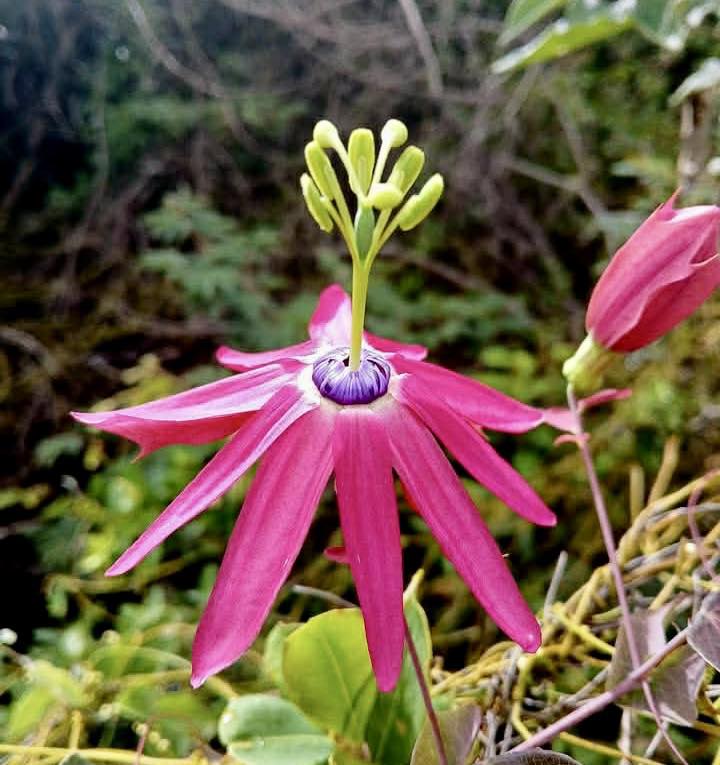
Family / Familie: Passifloraceaeorigin from / Herkunft: South America / SüdamerikaClimate / Klima: temperate to warm (10-30C / 60-86F) / gemäßigt bis warm (10-30C / 60-86F)Use / Verwendung: edible fruits, juice, jam, ice cream, etc. / essbare Früchte, Säfte, Marmelade, Eis usw.you buy / sie kaufen: 1 potted plant / 1 getopfte PflanzeDelivery EU onlyExotic Jewel from Brazil: Passiflora edmundoiWith Passiflora edmundoi, we present one of the most spectacular wild species from the passionflower family. This beauty impresses not only with its stunning, vibrant pink-violet flowers but is a true gem for any plant collection. A special highlight is the decorative foliage, which often features a fascinating reddish to bronze tint. The fruits of this species are small, elongated, and ripen into a deep green color. In terms of taste, Passiflora edmundoi offers a unique experience, as its pulp possesses a pleasant, mild sweetness. Compared to the well-known passion fruit, the flavor is less acidic and stands out with a fine, subtle note. Thanks to its moderate growth, this climbing plant is excellently suited for container cultivation with a suitable trellis. In a sunny location, it develops its full floral splendor and the characteristic coloring of its leaves. To ensure healthy growth and successful overwintering, the plant should be kept in a bright spot at a minimum of 10°C (50°F).Exotisches Juwel aus Brasilien: Passiflora edmundoiMit der Passiflora edmundoi präsentieren wir euch eine der spektakulärsten Wildarten aus der Familie der Passionsblumen. Diese Schönheit besticht nicht nur durch ihre atemberaubenden, leuchtend pink-violetten Blüten, sondern ist eine Zierde für jede Pflanzensammlung. Ein besonderes Highlight ist das dekorative Laub, das oft eine faszinierende rötliche bis bronzefarbene Tönung aufweist. Die Früchte dieser Art sind klein, von länglicher Form und reifen in einem kräftigen Grün ab. Geschmacklich bietet die Passiflora edmundoi ein besonderes Erlebnis, da ihr Fruchtfleisch eine angenehme, milde Süße besitzt. Im Vergleich zur bekannten Maracuja ist das Aroma weniger säurebetont und besticht durch eine feine, subtile Note. Dank ihres moderaten Wuchses eignet sich diese Kletterpflanze hervorragend für die Kultur im Kübel mit einer entsprechenden Rankhilfe. An einem sonnigen Standort entwickelt sie ihre volle Blütenpracht und die charakteristische Färbung der Blätter. Für ein gesundes Wachstum und eine erfolgreiche Überwinterung sollte die Pflanze an einem hellen Ort bei mindestens 10 Grad Celsius stehen.
Eugenia rotundifolia var. CamamuFamily / Familie: Myrtaceaeorigin from / Herkunft: Bahia (Brasil)Climate / Klima: temperate (15-30C / 59-84F) / gemäßigt (15-30C / 59-84F) Use / Verwendung: edible fruits, juice, jam, ice cream, etc. / essbare Früchte, Säfte, Marmelade, Eis usw.you buy / sie kaufen: 1 potted seedling / 1 getopfter SämlingDelivery worldwideEugenia rotundifolia var. Camamu is a very rare Eugenia from the Mata Atlantica in the state of Bahia, Brazil.This Eugenia produces fruits that ripen from yellow to dark purple.The fruits have a very good flavor and are suitable for direct consumption or further processing.We recommend avoiding waterlogging in the first year and growing it in partial shade.Please overwinter this rare Eugenia at a minimum temperature of 15 degrees Celsius.Die Eugenia rotundifolia var. Camamu ist eine sehr seltene Eugenia aus dem Mata Atlantica im Bundesstaat Bahia, Brasilien.Diese Eugenia produziert Früchte die von gelb nach dunkelviolett ausreifen.Die Früchte haben einen sehr guten Geschmack und eignen sich zum Direktverzehr oder Weiterverarbeitung.Wir empfehlen im ersten Jahr Staunässe zu vermeiden und sie halbschattig zu ziehen.Diese seltene Eugenia bitte bei mindestens 15 Grad überwintern.
Noni Variegated (Morinda citrifolia)
Family / Familie: Rubiaceaeorigin from / Herkunft: Südostasien / AustralienClimate / Klima: temperate to warm (15-30C / 59-86F) / gemäßigt bis warm (15-30C / 59-86F)Use / Verwendung: - / -you buy / sie kaufen: 1 potted bigger plant / 1 getopfte größere Pflanze
Delivery EU onlyMorinda citrifolia 'Variegata' – The Golden Healer with Spectacular FoliageThe plant offered here is now about half a year old and is beginning to form the first variegata leaves.This variegated form of the Noni plant is easily among the most striking tropical foliage plants available. With its massive, uniquely shaped, and beautifully variegated leaves, it is both a botanical showpiece and a plant steeped in traditional healing uses.
Known as Noni, Indian Mulberry, or the Cheese Fruit, Morinda citrifolia has been used in traditional medicine across the tropics for centuries. The variegated variety is particularly rare and sought after by collectors for its decorative beauty and ethnobotanical significance.
While the fresh fruit is not typically consumed raw due to its strong taste, it is highly valued for its medicinal properties. One traditional method involves placing ripe fruits in a sealed transparent container or bag, exposing them to the sun for several days. This process produces a golden, acidic juice, of which one spoonful is taken daily. The leaves and roots are also widely used in natural remedies.
This plant thrives in warm, humid environments with plenty of sunlight. It grows vigorously when well cared for and can develop impressively large leaves. Be sure to keep it at a minimum of 15°C (59°F) during the colder months, as it is very sensitive to cold.Morinda citrifolia 'Variegata' – Die goldene Heilerpflanze mit spektakularem Laub
Die hier angebotene Pflanze ist jetzt ungefähr ein halbes Jahr alt und beginnt die ersten variegata Blätter zu bilden.Diese variegierte Form der Noni-Pflanze zählt zu den eindrucksvollsten Blattpflanzen tropischer Herkunft. Mit ihren riesigen, auffällig panaschierten Blättern ist sie nicht nur eine medizinisch hochgeschätzte Heilpflanze, sondern auch ein visuelles Highlight in jeder Sammlung.
Morinda citrifolia – auch als Noni, Indian Mulberry oder Käsefrucht bekannt – stammt aus dem tropischen Raum und wird seit Jahrhunderten in der traditionellen Heilkunde verwendet. Die Variegata-Form ist eine echte Seltenheit und verbindet den gesundheitlichen Nutzen der Pflanze mit einem außergewöhnlich zierwertigen Erscheinungsbild.
Die weißen, höckrigen Früchte sind im rohen Zustand geschmacklich gewöhnungsbedürftig, werden jedoch vielfältig medizinisch genutzt. Besonders beliebt ist der sogenannte Noni-Saft: Dazu werden reife Früchte in einem verschlossenen Glas- oder Kunststoffbehälter für mehrere Tage in die Sonne gestellt, wobei ein goldfarbener, säuerlicher Saft entsteht. Traditionell wird davon täglich ein Löffel eingenommen. Auch Blätter und Wurzeln finden Anwendung in pflanzlichen Heilmitteln.
Diese Pflanze liebt Wärme, Sonne und eine hohe Luftfeuchtigkeit. Bei guter Pflege wächst sie kräftig und kann beeindruckende Blattgrößen erreichen. Bitte unbedingt bei mindestens 15 °C überwintern, da sie sehr kälteempfindlich ist.
Myrcia sp Trancoso
Family / Familie: Myrtaceaeorigin from / Herkunft: Brasil / BrasilienClimate / Klima: temperate to warm (15-30C / 59-86F) / gemäßigt bis warm (15-30C / 59-86F)Use / Verwendung: edible fruits, juice, jam, ice cream, etc. / essbare Früchte, Säfte, Marmelade, Eis usw.you buy / sie kaufen: 1 potted seedling / 1 getopfter Sämling
Delivery EU onlySome specimens of the Myrcia genus are true treasures.Like this Myrcia sp. Trancoso.Leaves reminiscent of a Myrciaria—except these leaves are larger—and the fruits have an excellent flavor.These fruits taste like jaboticaba and are very delicious.The Brazilian collector Helton Muniz also says that some Myrcia fruits taste even better than jaboticaba.This Myrcia was discovered in the UNA National Park in Bahia, Brazil.This Myrcia can be grown well in pots and will also flower and fruit in tubs.Place in partial shade during the first year and avoid waterlogging.Please overwinter at a temperature of at least 15 degrees Celsius.Manche Exemplare der Gattung Myrcia sind wahre Schätze.Wie diese Myrcia sp Trancoso.Blätter die an eine Myrciaria erinnern - nur das diese Blätter größer sind und Früchte mit einem hervorragenden Geschmack.Diese Früchte schmecken wie Jaboticaba und sind sehr lecker.Auch der brasilianische Sammler Helton Muniz sagt, dass einige Myrcia Früchte noch besser schmecken sollen als Jaboticaba.Entdeckt wurde diese Myrcia im UNA Nationalpark in Bahia, Brasilien.Diese Myrcia kann gut im Topf angebaut werden und blüht bzw. fruchtet auch im Kübel.Im ersten Jahr halbschattig stellen und Staunässe vermeiden.Bitte bei mindestens 15 Grad überwintern.
Neomitranthes obscura
Family / Familie: Myrtaceae origin from / Herkunft: Brasil / Brasilien Climate / Klima: temperate to warm (10-30C / 50-84F) / gemäßigt bis warm (10-30C / 50-84F) Use / Verwendung: edible fruits, juice, jam, ice cream, etc. / essbare Früchte, Säfte, Marmelade, Eis usw.you buy / sie kaufen: 1 potted seedling / 1 getopfter Sämling
Delivery EU onlyThe fruits of Neomitranthes obscura, also known in Brazil by the common name "Cambuí-preto," are traditionally used by the local population as a popular food source.The fruits are aromatic and juicy, and their taste is generally described as pleasant.In traditional use, they are also used to produce essential oils, which underscores their aromatic properties.Neomitranthes obscura is a plant species endemic to Brazil. Its natural range extends across the Brazilian Atlantic Forest (Mata Atlântica), where it is primarily found in the sandy areas of the Restinga vegetation, for example, in the Restinga de Jurubatiba National Park.The following points should be considered for cultivation and care, especially as an ornamental or container plant in more temperate climates:The plant prefers a bright to full sun location that is protected from wind.A south-facing balcony, conservatory, or greenhouse is ideal.Neomitranthes obscura is not frost-tolerant and cannot withstand temperatures below 10°C (50°F).It must be kept in a bright, frost-free location during the winter months.During overwintering, watering should be reduced so that the root ball does not dry out completely.A humidity level of approximately 60% promotes healthy foliage in winter.The plant thrives best in a well-draining, humus-rich, and slightly acidic substrate (pH 5.5 to 6.5).Die Früchte von Neomitranthes obscura, die in Brasilien auch unter den Trivialnamen „Cambuí-preto“ bekannt sind, werden von der lokalen Bevölkerung traditionell auch als beliebtes Nahrungsmittel genutzt. Die Früchte sind aromatisch und saftig, ihr Geschmack wird generell als angenehm beschrieben.In der traditionellen Nutzung werden sie auch zur Herstellung von ätherischen Ölen verwendet, was ihre aromatische Eigenschaft unterstreicht.Neomitranthes obscura ist eine in Brasilien endemische Pflanzenart. Ihr natürliches Verbreitungsgebiet erstreckt sich über den brasilianischen Atlantikwald (Mata Atlântica), wo sie vor allem in den Sandbänken der Restinga-Vegetation, beispielsweise im Nationalpark Restinga de Jurubatiba, verbreitet ist. Für die Haltung und Pflege, insbesondere als Zier- oder Kübelpflanze in gemäßigteren Klimazonen, sind folgende Punkte zu beachten:Die Pflanze bevorzugt einen hellen bis vollsonnigen, windgeschützten Standort. Ein Südbalkon, Wintergarten oder Gewächshaus sind ideal.Neomitranthes obscura ist nicht winterhart und verträgt keine Temperaturen unter 10°C. Sie muss in den Wintermonaten an einem hellen, frostfreien Ort untergebracht werden. Während der Überwinterung sollte die Bewässerung reduziert werden, sodass der Wurzelballen nicht vollständig austrocknet. Eine Luftfeuchtigkeit von etwa 60% fördert ein gesundes Blattwerk im Winter.Die Pflanze gedeiht am besten in einem gut durchlässigen, humusreichen und leicht sauren Substrat (pH-Wert von 5,5 bis 6,5).
Siphoneugena sp CamacanFamily / Familie: Myrtaceaeorigin from / Herkunft: Brasil / BrasilienClimate / Klima: temperate (10-30C / 50-84F) / gemäßigt (10-30C / 50-84F) Use / Verwendung: edible fruits, juice, jam, ice cream, etc. / essbare Früchte, Säfte, Marmelade, Eis usw.you buy / sie kaufen: 1 fresh seed / 1 frischer SamenDelivery worldwideSiphoneugena is a very rare genus within the Myrtaceae family.A total of 13 different species of Siphoneugena are known.This one is probably the 14th of this species.It was discovered in the Mata Atlantica of Camamu in the Brazilian state of Bahia.These fruits have a fantastic flavor reminiscent of jaboticaba.Please overwinter this plant at a minimum temperature of 10 degrees Celsius (50 degrees Fahrenheit).
Siphoneugena ist eine sehr seltene Gattung innerhalb der Myrtaceae Familie.Insgesamt sind 13 verschiedene Arten der Siphoneugena bekannt.Diese hier ist wahrscheinlich die 14. dieser Art.Sie wurde im Mata Atlantica von Camamu im brasilianischen Bundesstaat Bahia entdeckt.Diese Früchte haben einen fantastisch guten Geschmack und erinnern an Jaboticaba.Bitte diese Pflanze bei mindestens 10 Grad überwintern.
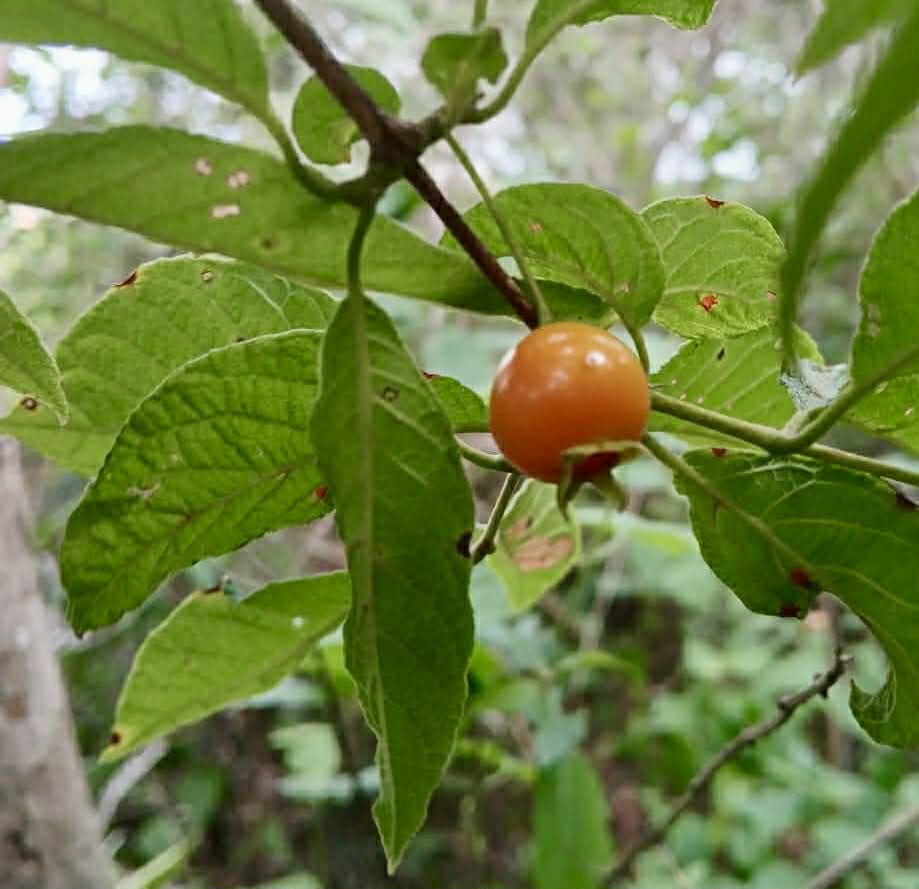
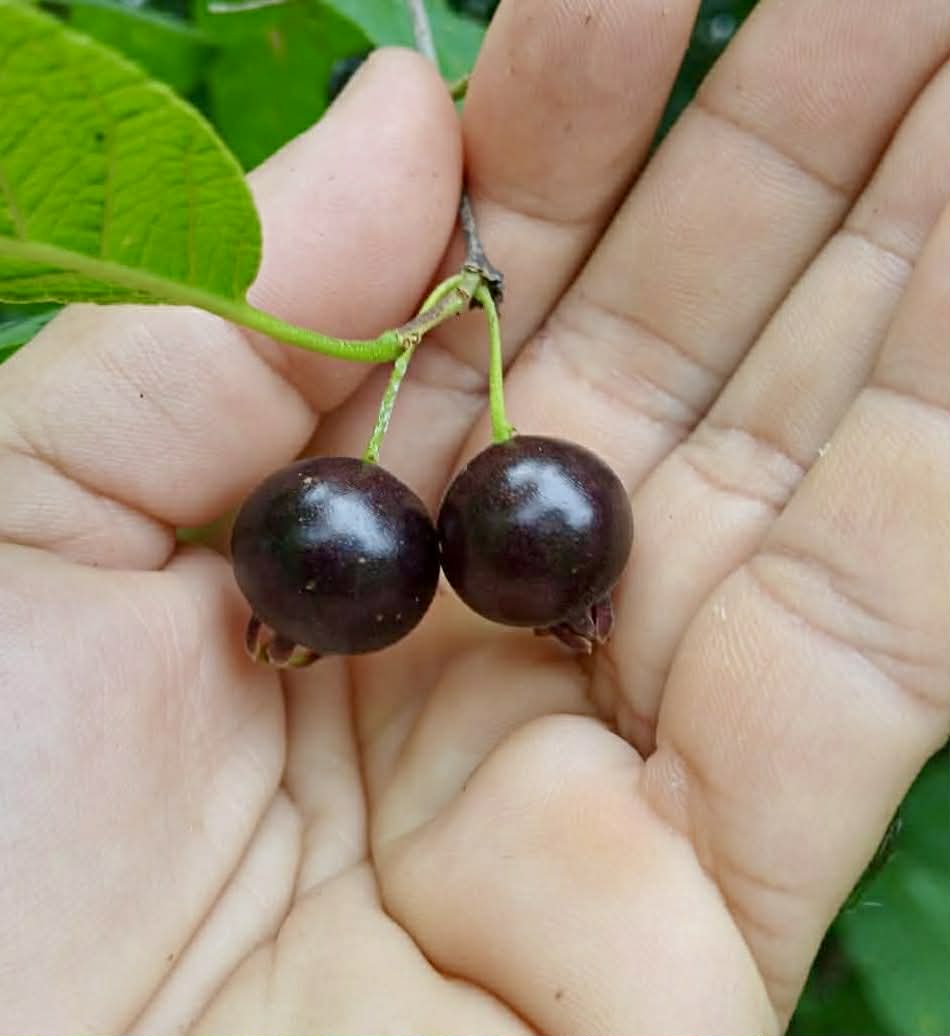
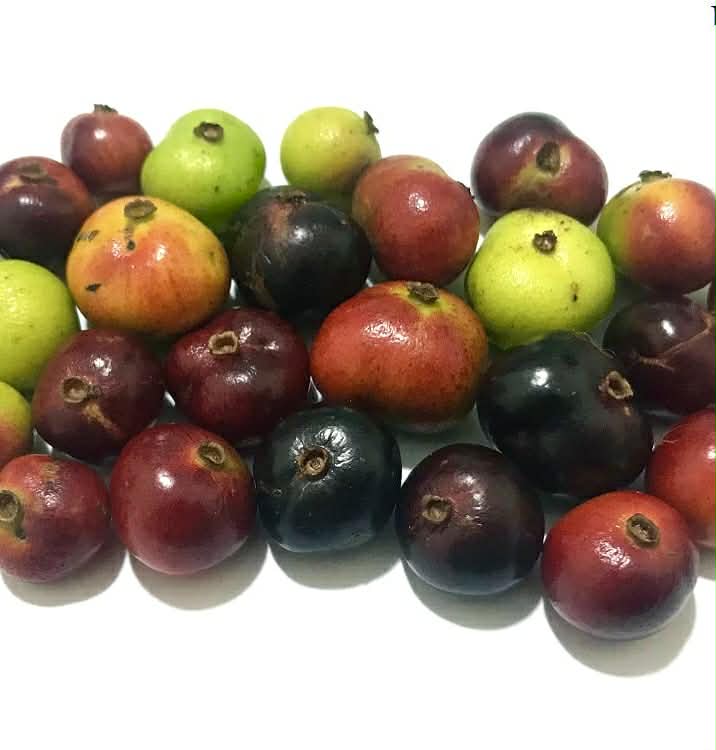
Campomanesia aromatica var. OrangeFamily / Familie: Myrtaceaeorigin from / Herkunft: Brasil / BrasilienClimate / Klima: temperate to warm (10-30C / 50-84F) / gemäßigt bis warm (10-30C / 50-84F) Use / Verwendung: edible fruits, juice, jam, ice cream, etc. / essbare Früchte, Säfte, Marmelade, Eis usw.you buy / sie kaufen: 1 fresh seed / 1 frischer SamenDelivery worldwideColorful Rarity from Caetité: Campomanesia aromatica "Orange"We are thrilled to introduce a very special selection of Campomanesia aromatica, sourced directly from the Caetité region in the heart of Bahia. What makes this location truly unique is its incredible natural variability: the fruits appear in a spectrum ranging from yellow and orange to red and deep black – a visual diversity reminiscent of European cherry plums.
This listing is for the orange variety.Beyond its stunning appearance, this wild species stands out for its very pleasant, aromatic flavor. The succulent pulp offers the characteristic refreshing notes and fine sweetness that Guabirobas are famous for. The trees remain relatively small in their natural habitat, making them—along with their decorative foliage—perfect candidates for container or conservatory cultivation.Campomanesia aromatica is known for being hardy and adaptable. It prefers a sunny to partially shaded location and should be overwintered at temperatures of at least 10°C (50°F).
Farbenfrohe Rarität aus Caetité: Campomanesia aromatica „Orange“Wir freuen uns, euch eine ganz besondere Selektion der Campomanesia aromatica direkt aus der Region Caetité im Hinterland von Bahia vorstellen zu dürfen. Das Besondere an diesem Standort ist die enorme natürliche Variabilität: Die Früchte treten dort in einem Farbspektrum auf, das von Gelb über Orange und Rot bis hin zu einem tiefen Schwarz reicht – eine optische Vielfalt, die fast an unsere heimischen Kirschpflaumen erinnert.
Hier bieten wir euch die Variante in orange an.Neben der attraktiven Optik überzeugt diese Wildart vor allem durch ihren sehr angenehmen, aromatischen Geschmack. Das saftige Fruchtfleisch besitzt die für Guabirobas typische, erfrischende Note und eine feine Süße.Die Bäume bleiben in ihrer natürlichen Umgebung relativ klein, was sie zusammen mit ihrem dekorativen Laub zu perfekten Kandidaten für die Kübelhaltung oder den Wintergarten macht.
Die Campomanesia aromatica gilt als robust und anpassungsfähig. Sie bevorzugt einen sonnigen bis halbschattigen Standort und sollte bei Temperaturen von mindestens 10 Grad Celsius überwintert werden.
Campomanesia aromatica var. BlackFamily / Familie: Myrtaceaeorigin from / Herkunft: Brasil / BrasilienClimate / Klima: temperate to warm (10-30C / 50-84F) / gemäßigt bis warm (10-30C / 50-84F) Use / Verwendung: edible fruits, juice, jam, ice cream, etc. / essbare Früchte, Säfte, Marmelade, Eis usw.you buy / sie kaufen: 1 fresh seed / 1 frischer SamenDelivery worldwideColorful Rarity from Caetité: Campomanesia aromatica "Black"We are thrilled to introduce a very special selection of Campomanesia aromatica, sourced directly from the Caetité region in the heart of Bahia. What makes this location truly unique is its incredible natural variability: the fruits appear in a spectrum ranging from yellow and orange to red and deep black – a visual diversity reminiscent of European cherry plums.
This listing is for the black variety.Beyond its stunning appearance, this wild species stands out for its very pleasant, aromatic flavor. The succulent pulp offers the characteristic refreshing notes and fine sweetness that Guabirobas are famous for. The trees remain relatively small in their natural habitat, making them—along with their decorative foliage—perfect candidates for container or conservatory cultivation.Campomanesia aromatica is known for being hardy and adaptable. It prefers a sunny to partially shaded location and should be overwintered at temperatures of at least 10°C (50°F).
Farbenfrohe Rarität aus Caetité: Campomanesia aromatica „Schwarz“Wir freuen uns, euch eine ganz besondere Selektion der Campomanesia aromatica direkt aus der Region Caetité im Hinterland von Bahia vorstellen zu dürfen. Das Besondere an diesem Standort ist die enorme natürliche Variabilität: Die Früchte treten dort in einem Farbspektrum auf, das von Gelb über Orange und Rot bis hin zu einem tiefen Schwarz reicht – eine optische Vielfalt, die fast an unsere heimischen Kirschpflaumen erinnert.
Hier bieten wir euch die Variante in schwarz an.Neben der attraktiven Optik überzeugt diese Wildart vor allem durch ihren sehr angenehmen, aromatischen Geschmack. Das saftige Fruchtfleisch besitzt die für Guabirobas typische, erfrischende Note und eine feine Süße.Die Bäume bleiben in ihrer natürlichen Umgebung relativ klein, was sie zusammen mit ihrem dekorativen Laub zu perfekten Kandidaten für die Kübelhaltung oder den Wintergarten macht.
Die Campomanesia aromatica gilt als robust und anpassungsfähig. Sie bevorzugt einen sonnigen bis halbschattigen Standort und sollte bei Temperaturen von mindestens 10 Grad Celsius überwintert werden.
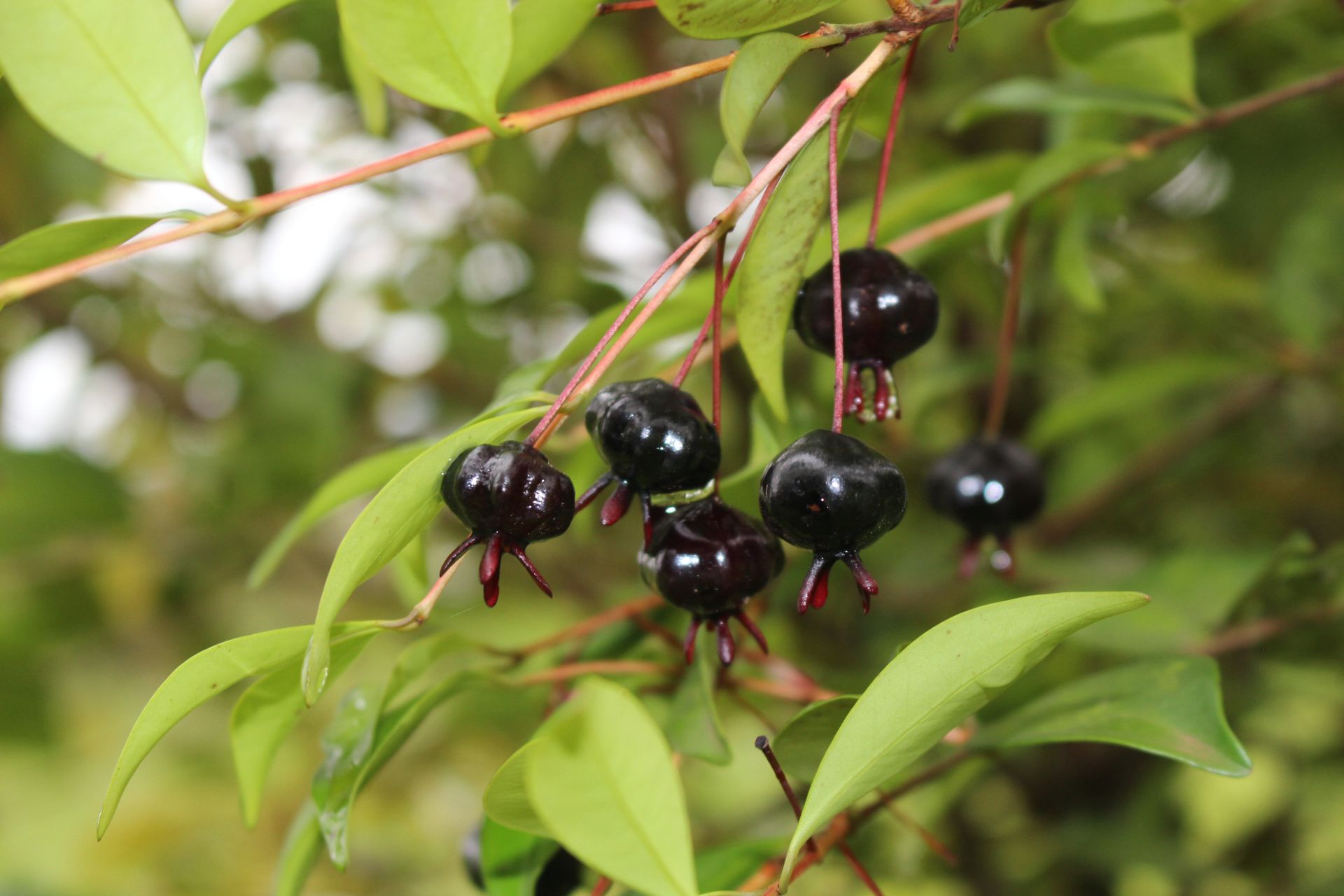
Eugenia sp. SantuárioFamily / Familie: Myrtaceae origin from / Herkunft: Brasil / BrasilienClimate / Klima: temperate to warm (10-30C / 50-86F) / gemäßigt bis warm (10-30C / 50-86F)Use / Verwendung: edible fruits, juice, jam, ice cream, etc. / essbare Früchte, Säfte, Marmelade, Eis usw.you buy / sie kaufen: 1 fresh seed / 1 frischer SamenDelivery worldwideBotanical Gem from Bahia: Eugenia sp. SantuárioWe are thrilled to introduce Eugenia sp. Santuário, another top-tier rarity sourced from the biodiverse coastal rainforests (Mata Atlântica) of Bahia.Known among connoisseurs for its excellent fruit quality and elegant growth, this species is a prized addition to any collection of rare Myrtaceae.
A striking feature of this species is the dramatic color transformation during ripening; the fruits turn from a deep dark blue to a glossy black once they reach peak maturity. In terms of flavor, Eugenia sp. Santuário stands out with a very sweet and aromatic profile, making it one of the most sought-after wild fruits in its native region. These fruits are not only a visual highlight on the tree but also offer a premium tasting experience.
The plant displays attractive growth with lanceolate, glossy green leaves, making it a perfect fit for conservatory or container cultivation. Originating from the tropical regions of Bahia, it is a heat-loving species and should be overwintered at a minimum temperature of 10°C (50°F) to ensure vigorous health.
Botanisches Juwel aus Bahia: Eugenia sp. SantuárioMit der Eugenia sp. Santuário dürfen wir euch eine weitere hochkarätige Rarität aus den artenreichen Küstenregenwäldern (Mata Atlântica) in Bahia vorstellen. Diese Eugenia-Art ist unter Kennern für ihre exzellente Fruchtqualität und ihre elegante Erscheinung bekannt und stellt eine wertvolle Bereicherung für jede Sammlung seltener Myrtengewächse dar.
Ein markantes Merkmal dieser Art ist der beeindruckende Farbumschlag während der Reife: Die Früchte färben sich von einem tiefen Dunkelblau bis hin zu einem glänzenden Schwarz, sobald sie ihr volles Aroma erreicht haben. Geschmacklich überzeugt die Eugenia sp. Santuário durch ein sehr süßes, aromatisches Profil, das sie zu einer der begehrtesten Wildfrüchte ihrer Region macht. Die Früchte sind nicht nur ein optischer Blickfang am Baum, sondern bieten auch ein erstklassiges Geschmackserlebnis.
Die Pflanze zeigt einen attraktiven Wuchs mit lanzettlichen, glänzend grünen Blättern und fügt sich wunderbar in die Kultur im Wintergarten oder im Kübel ein. Da sie aus den tropischen Regionen Bahias stammt, ist sie wärmeliebend und sollte für ein gesundes Gedeihen dauerhaft bei mindestens 10 Grad Celsius überwintert werden.
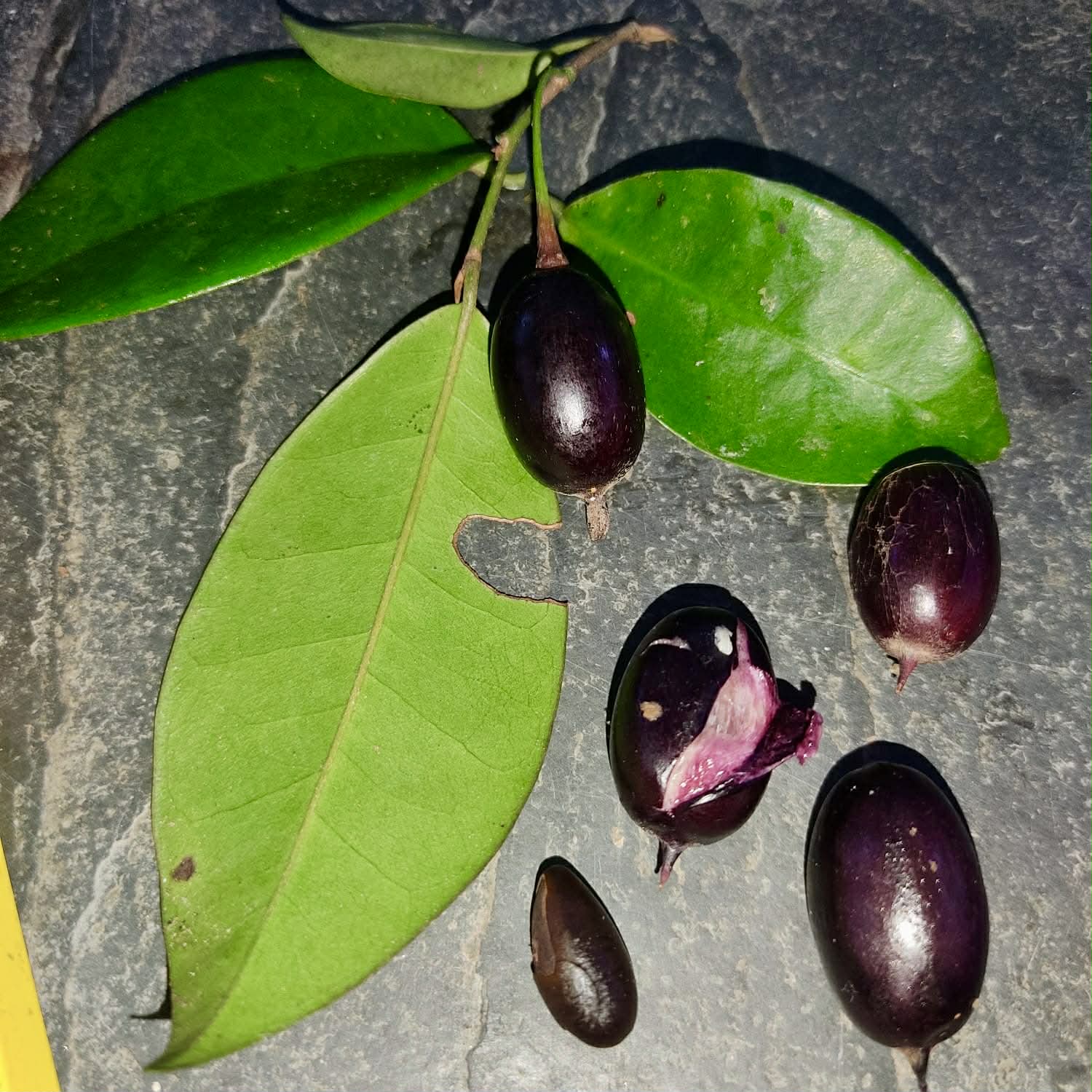
Chrysophyllum sp. SabiáFamily / Familie: Myrtaceae origin from / Herkunft: Brasil / BrasilienClimate / Klima: temperate to warm (15-30C / 59-86F) / gemäßigt bis warm (15-30C / 59-86F)Use / Verwendung: edible fruits, juice, jam, ice cream, etc. / essbare Früchte, Säfte, Marmelade, Eis usw.you buy / sie kaufen: 1 fresh seed / 1 frischer SamenDelivery worldwideChrysophyllum sp. "Sabiá" is an excellent wild species from the Sapotaceae family, native to the Brazilian Atlantic Rainforest of Bahia.This botanical rarity impresses with its glossy, deep purple to almost black fruits. Beneath the smooth skin lies a juicy, pale green to greenish pulp that visually resembles a ripe avocado but captivates with intense sweetness. The fruits are very tasty and offer an exquisite aroma, typical of the highest quality representatives of the genus Chrysophyllum. The affiliation with the Sapotaceae family is clearly recognizable by the specific shape of the seed. This wild species is perfect for lovers of rare useful plants who value extraordinary appearance and excellent taste. The tree can be wonderfully cultivated in containers, making it an enrichment for any conservatory or summer terrace. For optimal development, the plant requires a bright location and frost-free overwintering at a minimum of 10°C (50°F).
Chrysophyllum sp. „Sabiá“ ist eine exzellente Wildart aus der Familie der Sapotengewächse, beheimatet im brasilianischen Mata Atlântica von Bahia.Diese botanische Rarität beeindruckt durch ihre glänzenden, tiefvioletten bis fast schwarzen Früchte.Unter der glatten Schale verbirgt sich ein saftiges, hellgrünes bis grünliches Fruchtfleisch, das optisch an eine reife Avocado erinnert, geschmacklich aber durch eine intensive Süße besticht.Die Früchte sind sehr schmackhaft und bieten ein exquisites Aroma, das typisch für die hochwertigsten Vertreter der Gattung Chrysophyllum ist. Die Zugehörigkeit zur Familie der Sapotaceae ist deutlich an der spezifischen Form des Samens zu erkennen. Diese Wildart ist perfekt für Liebhaber seltener Nutzpflanzen geeignet, die Wert auf außergewöhnliche Optik und hervorragenden Geschmack legen. Der Baum lässt sich wunderbar im Kübel kultivieren und ist somit eine Bereicherung für jeden Wintergarten oder die sommerliche Terrasse. Für eine optimale Entwicklung benötigt die Pflanze einen hellen Standort und eine frostfreie Überwinterung bei mindestens 10 Grad Celsius.
Currupixá (Micropholis crassipedicellata)
Family / Familie: Sapotaceaeorigin from / Herkunft: Brasil / Brasilien Climate / Klima: temperate to warm (15-30C / 59-86F) / gemäßigt bis warm (15-30C / 59-86F)Use / Verwendung: edible fruits, juice, jam, ice cream, etc. / essbare Früchte, Säfte, Marmelade, Eis usw.you buy / sie kaufen: 1 fresh seed / 1 frischer Samen
Delivery worldwideHere we have another small botanical treasure.This Micropholis is valued primarily for its valuable wood.This wood is called Currupixá and is a precious wood.It is less well known that these few remaining trees also produce excellent and very delicious fruit.The fruit has a fantastic flavor, reminiscent of mango, sweet condensed milk, and abiu.This plant loves partial shade and also tolerates flooding.An absolute highlight for collectors of super exotic fruit trees.Please overwinter at a minimum temperature of 15 degrees Celsius.
Hier haben wir einen weiteren kleinen botanischen Schatz.Diese Micropholis wird vor allem wegen des wertvollen Holzes geschätzt.Dieses Holz trägt den Namen Currupixá und ein wertvolles Edelholz.Das diese wenigen, verbliebenen Bäume auch hervorragende und sehr köstliche Früchte produzieren ist weniger bekannt.Die Früchte haben einen fantastischen Geschmack, der an Mango, süßer Kondensmilch und Abiu erinnern soll.Diese Pflanze liebt Halbschatten und verträgt auch Überschwemmungen.Für Sammler super exotischer Fruchtbäume ein absolutes Highlight.Überwintern bitte bei mindestens 15 Grad.
Campomanesia aromatica var. YellowFamily / Familie: Myrtaceaeorigin from / Herkunft: Brasil / BrasilienClimate / Klima: temperate to warm (10-30C / 50-84F) / gemäßigt bis warm (10-30C / 50-84F) Use / Verwendung: edible fruits, juice, jam, ice cream, etc. / essbare Früchte, Säfte, Marmelade, Eis usw.you buy / sie kaufen: 1 fresh seed / 1 frischer SamenDelivery worldwideColorful Rarity from Caetité: Campomanesia aromatica "Yellow"We are thrilled to introduce a very special selection of Campomanesia aromatica, sourced directly from the Caetité region in the heart of Bahia. What makes this location truly unique is its incredible natural variability: the fruits appear in a spectrum ranging from yellow and orange to red and deep black – a visual diversity reminiscent of European cherry plums.
This listing is for the yellow variety.Beyond its stunning appearance, this wild species stands out for its very pleasant, aromatic flavor. The succulent pulp offers the characteristic refreshing notes and fine sweetness that Guabirobas are famous for. The trees remain relatively small in their natural habitat, making them—along with their decorative foliage—perfect candidates for container or conservatory cultivation.Campomanesia aromatica is known for being hardy and adaptable. It prefers a sunny to partially shaded location and should be overwintered at temperatures of at least 10°C (50°F).
Farbenfrohe Rarität aus Caetité: Campomanesia aromatica „Gelb“Wir freuen uns, euch eine ganz besondere Selektion der Campomanesia aromatica direkt aus der Region Caetité im Hinterland von Bahia vorstellen zu dürfen. Das Besondere an diesem Standort ist die enorme natürliche Variabilität: Die Früchte treten dort in einem Farbspektrum auf, das von Gelb über Orange und Rot bis hin zu einem tiefen Schwarz reicht – eine optische Vielfalt, die fast an unsere heimischen Kirschpflaumen erinnert.
Hier bieten wir euch die Variante in gelb an.Neben der attraktiven Optik überzeugt diese Wildart vor allem durch ihren sehr angenehmen, aromatischen Geschmack. Das saftige Fruchtfleisch besitzt die für Guabirobas typische, erfrischende Note und eine feine Süße.Die Bäume bleiben in ihrer natürlichen Umgebung relativ klein, was sie zusammen mit ihrem dekorativen Laub zu perfekten Kandidaten für die Kübelhaltung oder den Wintergarten macht.
Die Campomanesia aromatica gilt als robust und anpassungsfähig. Sie bevorzugt einen sonnigen bis halbschattigen Standort und sollte bei Temperaturen von mindestens 10 Grad Celsius überwintert werden.
Campomanesia aromatica var. RedFamily / Familie: Myrtaceaeorigin from / Herkunft: Brasil / BrasilienClimate / Klima: temperate to warm (10-30C / 50-84F) / gemäßigt bis warm (10-30C / 50-84F) Use / Verwendung: edible fruits, juice, jam, ice cream, etc. / essbare Früchte, Säfte, Marmelade, Eis usw.you buy / sie kaufen: 1 fresh seed / 1 frischer SamenDelivery worldwideColorful Rarity from Caetité: Campomanesia aromatica "Red"We are thrilled to introduce a very special selection of Campomanesia aromatica, sourced directly from the Caetité region in the heart of Bahia. What makes this location truly unique is its incredible natural variability: the fruits appear in a spectrum ranging from yellow and orange to red and deep black – a visual diversity reminiscent of European cherry plums.
This listing is for the red variety.Beyond its stunning appearance, this wild species stands out for its very pleasant, aromatic flavor. The succulent pulp offers the characteristic refreshing notes and fine sweetness that Guabirobas are famous for. The trees remain relatively small in their natural habitat, making them—along with their decorative foliage—perfect candidates for container or conservatory cultivation.Campomanesia aromatica is known for being hardy and adaptable. It prefers a sunny to partially shaded location and should be overwintered at temperatures of at least 10°C (50°F).
Farbenfrohe Rarität aus Caetité: Campomanesia aromatica „Rot“Wir freuen uns, euch eine ganz besondere Selektion der Campomanesia aromatica direkt aus der Region Caetité im Hinterland von Bahia vorstellen zu dürfen. Das Besondere an diesem Standort ist die enorme natürliche Variabilität: Die Früchte treten dort in einem Farbspektrum auf, das von Gelb über Orange und Rot bis hin zu einem tiefen Schwarz reicht – eine optische Vielfalt, die fast an unsere heimischen Kirschpflaumen erinnert.
Hier bieten wir euch die Variante in rot an.Neben der attraktiven Optik überzeugt diese Wildart vor allem durch ihren sehr angenehmen, aromatischen Geschmack. Das saftige Fruchtfleisch besitzt die für Guabirobas typische, erfrischende Note und eine feine Süße.Die Bäume bleiben in ihrer natürlichen Umgebung relativ klein, was sie zusammen mit ihrem dekorativen Laub zu perfekten Kandidaten für die Kübelhaltung oder den Wintergarten macht.
Die Campomanesia aromatica gilt als robust und anpassungsfähig. Sie bevorzugt einen sonnigen bis halbschattigen Standort und sollte bei Temperaturen von mindestens 10 Grad Celsius überwintert werden.
Uvaia do Visconde (Eugenia beaurepairiana)
Family / Familie: Myrtaceaeorigin from / Herkunft: South America / SüdamerikaClimate / Klima: temperate to warm (10-25C / 55-77F) / gemäßigt bis warm (10-25C / 55-77F)Taste / Geschmack: very good taste / sehr guter Geschmackyou buy / sie kaufen: 1 potted seedling / 1 getopfter Sämling
Delivery EU only
Eugenia beaurepairiana – A Hidden Gem of the Mata Atlântica
When Marco de Lacerda, the author of Frutas no Brasil, describes Eugenia beaurepairiana as tasting far superior to Eugenia pyriformis, it’s not just an opinion—it’s a statement of extraordinary quality. For those familiar with the delicious taste of Eugenia pyriformis, that’s saying a lot. Eugenia beaurepairiana takes the experience of eating Eugenia fruits to a whole new level, making it an unforgettable tropical delight.
Named in honor of Generalleutnant Henrique de Beaurepaire-Rohan (1812-1894), a pioneer who explored the regions south of Rio de Janeiro, this Eugenia hails from the remaining Mata Atlântica in the coastal areas of São Paulo, Rio de Janeiro, and Santa Catarina. It’s a fruit with a history—and a flavor—that truly stands out.
Fruit Features:
Size & Flavor: The fruits of Eugenia beaurepairiana are impressive, growing up to 4 cm in diameter. With their perfect balance of sweet, juicy flesh and minimal acidity, they’re a true taste sensation. The sweet, aromatic fruit is incredibly easy to enjoy, and the ratio of flesh to seed is ideal—making each bite a delightful experience.
Exclusivity: Historically, this fruit was considered a delicacy and was once reserved for high society. Its exquisite flavor and rare beauty make it a prized find for collectors and food enthusiasts alike.
Texture: The flesh is succulent and incredibly juicy, bursting with sweetness. It’s a fruit that’s simply perfect for eating straight from the hand or incorporating into exotic recipes.
Growing & Care Instructions:
Size: Eugenia beaurepairiana grows to about 5 meters in height, making it a manageable size for most gardens or patios.
Climate & Temperature: This plant thrives in warmer climates and should be overwintered at no less than 10°C to ensure it remains healthy.
Location: Like many Eugenias, it appreciates a sunny and sheltered location for optimal fruit production and growth.
Why You’ll Love Eugenia beaurepairiana:Not only does this Eugenia produce some of the best-tasting fruits in the Eugenia family, but it also brings an air of elegance to your garden. Its beautiful, aromatic fruits will transport you to the tropical rainforests of Brazil, and its historical significance makes it a wonderful conversation starter among plant collectors. For those seeking rare and delectable fruits, this plant is truly one of the best.Eugenia beaurepairiana – Ein verborgener Schatz der Mata Atlântica
Wenn Marco de Lacerda, der Autor des Buches Frutas no Brasil, beschreibt, dass Eugenia beaurepairiana deutlich besser schmeckt als Eugenia pyriformis, ist das nicht nur eine Meinung – es ist eine wahre Aussage über außergewöhnliche Qualität. Für all jene, die die köstliche Eugenia pyriformis kennen, sagt das viel. Eugenia beaurepairiana hebt das Genusserlebnis von Eugenia-Früchten auf ein völlig neues Level und macht den Genuss zu einem unvergesslichen Erlebnis.
Diese Eugenia wurde zu Ehren des Generalleutnants Henrique de Beaurepaire-Rohan (1812-1894) benannt, der damals die Regionen südlich von Rio de Janeiro erkundete. Sie stammt aus dem verbliebenen Mata Atlântica in den Küstenregionen von São Paulo, Rio de Janeiro und Santa Catarina – eine Frucht mit Geschichte und einem Geschmack, der wirklich heraussticht.
Fruchtdetails:
Größe & Geschmack: Die Früchte von Eugenia beaurepairiana sind beeindruckend und erreichen einen Durchmesser von bis zu 4 cm. Mit ihrer perfekten Balance aus süßem, saftigem Fruchtfleisch und minimaler Säure sind sie eine wahre Geschmacksexplosion. Der süße, aromatische Geschmack macht sie zu einem unvergesslichen Genuss, und das Verhältnis von Fruchtfleisch zu Samen ist ideal. Es macht einfach Freude, diese Früchte direkt aus der Hand zu essen.
Exklusivität: Historisch gesehen war diese Frucht ein echtes Delikatesse-Produkt und war einst der High Society vorbehalten. Ihr exquisiter Geschmack und ihre seltene Schönheit machen sie zu einer begehrten Pflanze für Sammler und Liebhaber tropischer Früchte.
Textur: Das Fruchtfleisch ist saftig und äußerst zart, voller Süße. Diese Frucht ist perfekt dafür geeignet, direkt aus der Hand gegessen oder in exotische Rezepte integriert zu werden.
Anbau & Pflegehinweise:
Größe: Eugenia beaurepairiana wächst bis zu einer Höhe von etwa 5 Metern, was sie für die meisten Gärten oder auch als Kübelpflanze ideal macht.
Klima & Temperatur: Diese Pflanze gedeiht in wärmeren Klimazonen und sollte im Winter bei mindestens 10°C überwintert werden, um gesund zu bleiben.
Standort: Wie viele Eugenien bevorzugt sie einen sonnigen, geschützten Standort, um eine optimale Fruchtproduktion und Wachstum zu gewährleisten.
Warum Sie Eugenia beaurepairiana lieben werden:Diese Eugenia produziert nicht nur einige der besten Früchte innerhalb der Eugenia-Familie, sondern bringt auch einen Hauch von Eleganz in Ihren Garten. Ihre schönen, aromatischen Früchte entführen Sie direkt in die tropischen Regenwälder Brasiliens, und ihre historische Bedeutung macht sie zu einem tollen Gesprächsthema unter Pflanzenliebhabern. Wer auf der Suche nach seltenen und köstlichen Früchten ist, findet in dieser Pflanze einen echten Schatz.
Plinia sp. de Talo
Family / Familie: Myrtaceaeorigin from / Herkunft: Brasil / BrasilienClimate / Klima: temperate to warm (10-30C / 50-86F) / gemäßigt bis warm (10-30C / 50-86F)Use / Verwendung: edible fruits, juice, jam, ice cream, etc. / essbare Früchte, Säfte, Marmelade, Eis usw.you buy / sie kaufen: 1 potted seedling / 1 getopfter Sämling
Delivery EU onlyThis jaboticaba originates from the Mata Atlantica in Bahia, Brazil.The fruits are black, and the flesh is soft and very juicy.The flavor is delicious and typical of jaboticaba.The leaves of this jaboticaba are larger than those of a P. cauliflora.The plant prefers a sunny to partially shaded location.In the first year after planting, a partially shaded spot is ideal to protect the delicate, young leaves.The soil should be slightly acidic and well-drained to prevent waterlogging.The plant requires regular watering but does not tolerate soggy soil.The root ball should be kept consistently moist.Ideally, it should be overwintered at a minimum temperature of 10°C (50°F).Diese Jaboticaba stammt aus dem Mata Atlantica in Bahia Brasilien.Die Früchte sind schwarz und das Fruchtfleisch ist weich und sehr saftig. Der Geschmack ist sehr lecker und schmeckt typisch nach Jaboticaba.Die Blätter dieser Jaboticaba sind größer als bei einer P. cauliflora.Die Pflanze bevorzugt einen sonnigen bis halbschattigen Standort. Im ersten Jahr nach dem Einpflanzen ist ein halbschattiger Platz optimal, um die empfindlichen, jungen Blätter zu schützen.Der Boden sollte leicht sauer sein und eine gute Drainage aufweisen, um Staunässe unbedingt zu vermeiden. Die Pflanze benötigt regelmäßige Bewässerung, verträgt aber keine nassen Füße. Der Wurzelballen sollte gleichmäßig feucht gehalten werden.Sie sollte idealerweise bei einer Mindesttemperatur von 10°C überwintert werden.
Myrcia sp linda
Family / Familie: Myrtaceaeorigin from / Herkunft: Brasil / BrasilienClimate / Klima: temperate to warm (15-30C / 59-86F) / gemäßigt bis warm (15-30C / 59-86F)Use / Verwendung: edible fruits, juice, jam, ice cream, etc. / essbare Früchte, Säfte, Marmelade, Eis usw.you buy / sie kaufen: 1 potted seedling / 1 getopfter Sämling
Delivery EU onlyThe genus Myrcia has many different species and a few, as yet unidentified, species.Like this Myrcia sp. Linda.Linda means "beautiful," and this Myrcia is just that.Beautiful and extraordinarily large fruits.These fruits taste very good and are delicious.The Brazilian collector Helton Muniz says that some Myrcia fruits taste even better than Jaboticaba.This Myrcia was found in Bahia, Brazil.This Myrcia can be grown well in pots and will also flower and fruit in tubs.In the first year, place in partial shade and avoid waterlogging.Please overwinter at a minimum temperature of 15 degrees Celsius.Die Gattung Myrcia shat viele verschiedene Arten und einige wenige, bisher noch nicht identifizierte Arten.Wie diese Myrcia sp Linda.Linda bedeudet "schön" und das ist diese Myrcia auch.Wunderschöne und außerordentlich große Früchte.Diese Früchte schmecken sehr gut und sind lecker.Der brasilianische Sammler Helton Muniz sagt, dass einige Myrcia Früchte noch besser schmecken sollen als Jaboticaba.Gefunden wurde diese Myrcia in Bahia, Brasilien.Diese Myrcia kann gut im Topf angebaut werden und blüht bzw. fruchtet auch im Kübel.Im ersten Jahr halbschattig stellen und Staunässe vermeiden.Bitte bei mindestens 15 Grad überwintern.
Eugenia sp Itayuba - Hybrid Typ BFamily / Familie: Myrtaceaeorigin from / Herkunft: Brasil / BrasilienClimate / Klima: temperate (15-30C / 59-84F) / gemäßigt (15-30C / 59-84F) Use / Verwendung: edible fruits, juice, jam, ice cream, etc. / essbare Früchte, Säfte, Marmelade, Eis usw.you buy / sie kaufen: 1 potted seedling / 1 getopfter SämlingDelivery EU onlyThis Eugenia sp. Itayuba is a hybrid of two unknown Eugenia species. Here you will receive type B.We can be curious to see what fruits each hybrid will produce.The bright yellow fruits are large, juicy, and tasty.This Eugenia was discovered in the municipality of Itayuba in Minas Gerais.Itayuba comes from the Tupi language and means "river of stones falling from the heights."The tree is medium-sized and, like most Eugenias, is also suitable for pot cultivation.We recommend avoiding waterlogging in the first year and growing it in partial shade.Please overwinter this rare Eugenia at a minimum temperature of 15 degrees Celsius.Diese Eugenia sp Itayuba ist ein Hybrid aus zwei unbekannten Eugenia. Hier bekommt ihr Typ B.Wir können gespannt sein, welche Früchte jeder Hybrid bilden wird.Die leuchtend gelben Früchte sind groß, saftig und schmackhaft.Entdeckt wurde diese Eugenia in der Gemeinde Itayuba in Minas Gerais.Itayuba stammt aus der Tupi Sprache und bedeudet: "von der Höhe hinabfallender Fluss der Steine".Der Baum hat eine mittlere Größe und eignet sich wie die meisten Eugenia auch für eine Topfkultur.Wir empfehlen im ersten Jahr Staunässe zu vermeiden und sie halbschattig zu ziehen.Diese seltene Eugenia bitte bei mindestens 15 Grad überwintern.
Eugenia dichroma - Pitanga Fanta
Family / Familie: Myrtaceaeorigin from / Herkunft: South America / SüdamerikaClimate / Klima: temperate to warm (10-25C / 50-77F) / gemäßigt bis warm (10-25C / 50-77F)Use / Verwendung: edible fruits, juice, jam, ice cream, etc. / essbare Früchte, Säfte, Marmelade, Eis usw.you buy / sie kaufen: 1 potted seedling / 1 getopfter Sämling
Delivery EU onlyThe Eugenia with the funny name.It is called Pitanga Fanta because the juice made from it is very similar to this drink.This Eugenia is endemic to the coastal Restinga forest biome. The most significant occurrence is in the state of Espírito Santo and north of Rio de Janeiro and can also occur in some areas of northeastern Brazil.It is fast-growing and bears fruit after about 3 years in Brazil.The fruits are elongated, with a thin peel surrounding a very tasty, orange liquid pulp.However, the shell and the thin membrane surrounding the seed are slightly bitter. Therefore, only the pulp is eaten or made into juice.You can get 2 liters of juice concentrate from 3 kg of fruit.100ml of this juice concentrate is used for one liter of juice.Please overwinter this plant at at least 10 degrees.Die Eugenia mit dem lustigen Namen.Man nennt sie Pitanga Fanta weil der aus ihr hergestellte Saft diesem Getränk sehr ähnelt. Diese Eugenia ist endemisch im Restinga-Waldbiom an der Küste. Das bedeutendste Vorkommen liegt im Bundesstaat Espírito Santo und nördlich von Rio de Janeiro und kann auch in einigen Gebieten im Nordosten Brasiliens vorkommen.Sie ist schnellwachsend und fruchtet in Brasilien bereits nach ca. 3 Jahren.Die Früchte sind länglich, mit einer dünnen Schale, die ein sehr schmackhaftes, orangefarbenes flüssiges Fruchtfleisch umgibt.Die Schale und die dünne Membrane um den Samen sind jedoch leicht bitter. Daher wird nur das Fruchtfleisch gegessen oder zu Saft verarbeitet.Aus 3 kg Früchten kann man 2 Liter Saftkonzentrat gewinnen.Von diesem Saftkonzentrat nutzt man 100ml für einen Liter Saft.Bitte diese Pflanze bei mindestens 10 Grad überwintern.
Eugenia mansoi
Family / Familie: Myrtaceaeorigin from / Herkunft: Brasil / BrasilienClimate / Klima: temperate to warm (10-25C / 50-77F) / gemäßigt bis warm (10-25C / 50-77F)Use / Verwendung: edible fruits, juice, jam, ice cream, etc. / essbare Früchte, Säfte, Marmelade, Eis usw.you buy / sie kaufen: 1 potted seedling / 1 getopfter Sämling
Delivery EU onlyThis Eugenia was discovered this year by the Brazilian collector Helton Muniz.Externally, it is reminiscent of Eugenia itaguahiensis or Eugenia blastantha.However, it is an independent, new Eugenia with an astonishing flower.These are white-pink!The fruits are very good to eat straight from the hand and have a sweet, pleasant taste.Please overwinter at a minimum of 10 degrees.Diese Eugenia wurde in diesem Jahr von dem brasilianischen Sammler Helton Muniz entdeckt.Äußerlich erinnern sie an Eugenia itaguahiensis oder Eugenia blastantha.Es handelt sich jedoch um eine eigenständige, neue Eugenia mit einer erstaunenswerten Blüte.Diese sind weiß-rosa!Die Früchte kann man sehr gut aus der Hand essen und haben einen süßen, angenehmen Geschmack.Überwintern bitte bei mindestens 10 Grad.
Cymbopetalum brasiliensis Family / Familie: Annonaceae origin from / Herkunft: Brasil / Brasilien Climate / Klima: temperate to warm (15-30C / 59-86F) / gemäßigt bis warm (15-30C / 59-86F)Use / Verwendung: edible fruits, juice, jam, ice cream, etc. / essbare Früchte, Säfte, Marmelade, Eis usw.you buy / sie kaufen: 1 potted seedling / 1 getopfter Sämling Delivery EU onlyA beautiful tree from the river valleys of BrazilCymbopedalum brasiliensis, also known as Cymbopedalum brasiliense, belongs to the Annonaceae family and is a beautiful tree found along riverbanks in Brazil.The red fruits are particularly striking, standing out against the tree and prized for their sweet, aromatic flavor.Delicious and aromatic fruitsFruits: The small, red fruits are edible, slightly sweet, and aromatic – ideal for eating fresh or as an ingredient in desserts and jams.Taste: The fruit has a subtly sweet note reminiscent of tropical fruits, offering a true taste sensation.Growth and CareGrowth habit: This tree grows as a medium-sized tree but is also excellent for container cultivation.Location: Prefers a somewhat warmer and more humid environment, ideal for tropical and subtropical gardens.Soil: Loose, well-drained soil that is kept consistently moist.Temperature: Cymbopetalum brasiliensis should overwinter at a minimum of 15°C (59°F) as it is a heat-loving plant.Care: Regular watering and occasional fertilization promote growth and fruit production.Ein schöner Baum aus den Flusstälern BrasiliensCymbopetalum brasiliensis, auch bekannt als Cymbopedalum brasiliense, gehört zur Familie der Annonaceae und ist ein wunderschöner Baum, der an Flussufern in Brasilien anzutreffen ist. Besonders auffällig sind die roten Früchte, die sich von der Pflanze abheben und für ihren süßen, aromatischen Geschmack geschätzt werden.Leckere und aromatische FrüchteFrüchte: Die kleinen, roten Früchte sind essbar, leicht süß und aromatisch – ideal für den direkten Verzehr oder als Zutat in Desserts und MarmeladenGeschmack: Die Frucht hat eine dezent süße Note, die an tropische Früchte erinnert und ein wahres Geschmackserlebnis bietetWuchs und PflegeWuchsform: Dieser Baum wächst als mittelgroßer Baum, lässt sich aber auch hervorragend in Kübelhaltung kultivierenStandort: Bevorzugt eine etwas wärmere und feuchtere Umgebung, ideal für tropische und subtropische GärtenBoden: Lockerer, gut durchlässiger Boden, der regelmäßig feucht gehalten wirdTemperatur: Cymbopetalum brasiliensis sollte bei mindestens 15 °C überwintern, da es sich um eine wärmeliebende Pflanze handeltPflege: Regelmäßiges Gießen und gelegentliches Düngen fördern das Wachstum und die Fruchtbildung
Garcinia macrophylla
Family / Familie: Clusaceaeorigin from / Herkunft: South America / SüdamerikaClimate / Klima: temperate to warm (10-25C / 50-77F) / gemäßigt bis warm (10-25C / 50-77F)Use / Verwendung: edible fruits, juice, jam, ice cream, etc. / essbare Früchte, Säfte, Marmelade, Eis usw.you buy / sie kaufen: 1 potted seedling / 1 getopfter Sämling
Delivery EU onlyGarcinia macrophylla – A Tropical Beauty with Giant Leaves
As its name suggests, Garcinia macrophylla is known for its remarkably large leaves, giving it a striking, tropical presence. Native to the northern rainforests of Brazil, this rare species is one of the more visually impressive members of the Garcinia family.
Compact Growth with a Tropical FlairThis species remains a relatively small tree, especially in its early years, growing slowly but steadily. Garcinia macrophylla is well-suited for growers who appreciate a patient journey with a rewarding outcome. Surprisingly, it shows a high degree of adaptability to different soil types and climates.
Cold Tolerance Unusual for a Tropical TreeMature specimens can withstand brief drops to -2°C (28°F), a rare trait for a tropical fruit tree. However, for optimal health and long-term success, it should be overwintered at no less than 10°C (50°F).
Delicious Fruit with Bacuri-Like FlavorIn its native habitat, this tree begins fruiting after 4 to 5 years. The soft, yellowish-white pulp of the fruit is highly regarded and is said to taste similar to Bacuri (Platonia insignis) – fruity, aromatic, and prized in Brazilian cuisine.
Growing TipsGarcinia macrophylla thrives in bright, warm, and sheltered environments. It prefers consistent moisture without waterlogging and performs well in both loamy and sandy soils. While early growth is slow, the plant rewards patience with unique beauty and flavorful fruit.
NoteA rare and valuable species for collectors and anyone passionate about tropical fruit trees with exceptional foliage and flavor potential.Garcinia macrophylla – Tropische Schönheit mit riesigen Blättern
Wie der Name bereits verrät, beeindruckt Garcinia macrophylla mit außergewöhnlich großen Blättern, die ihr ein imposantes, tropisches Erscheinungsbild verleihen. Diese selten kultivierte Art stammt aus den nördlichen Regenwäldern Brasiliens und zählt zu den faszinierendsten Vertretern der Garcinia-Familie.
Kompakter Wuchs mit tropischem FlairGarcinia macrophylla bleibt ein relativ kleiner Baum, der in den ersten Jahren langsames, stabiles Wachstum zeigt .Ideal für Liebhaber tropischer Pflanzen, die Geduld und Belohnung gleichermaßen schätzen. Trotz ihrer tropischen Herkunft zeigt sich diese Art erstaunlich anpassungsfähig gegenüber verschiedenen Böden und Klimazonen.
Kurzzeitig frosttolerant – robuste TropenpflanzeAusgewachsene Exemplare können kurzzeitig Temperaturen bis zu -2 °C überstehen – eine seltene Eigenschaft unter tropischen Fruchtbäumen. Dennoch sollte sie dauerhaft nicht unter 10 °C überwintert werden.
Fruchtgenuss mit Bacuri-AromaNach etwa 4 bis 5 Jahren beginnt Garcinia macrophylla in ihrem natürlichen Verbreitungsgebiet zu fruchten. Das gelblich-weiße Fruchtfleisch erinnert geschmacklich an Bacuri (Platonia insignis) – aromatisch, fruchtig und sehr geschätzt in der brasilianischen Küche.
PflegehinweiseEin heller, geschützter Standort und ausreichend Wärme sind entscheidend. Die Pflanze bevorzugt gleichmäßige Feuchtigkeit, ohne Staunässe, und gedeiht sowohl in humosen als auch in sandig-lehmigen Substraten. In der Jugendphase lohnt sich Geduld – die Entwicklung zur fruchttragenden Pflanze ist eine lohnende Reise.
HinweisEin Muss für Liebhaber tropischer Arten mit außergewöhnlicher Optik und kulinarischem Potenzial.
Myrciaria cuspidata YELLOW
Family / Familie: Myrtaceaeorigin from / Herkunft: Brasil / BrasilienClimate / Klima: temperate to warm (10-30C / 50-84F) / gemäßigt bis warm (10-30C / 50-84F) Use / Verwendung: edible fruits, juice, jam, ice cream, etc. / essbare Früchte, Säfte, Marmelade, Eis usw.you buy / sie kaufen: 1 potted plant / 1 getopfte PflanzeDelivery EU onlyThe Myrciaria cuspidata is available with different colored fruits.Here you can get the yellow-fruited variety.This Myrciaria likes to grow near the beach and tolerates sand in the soil.The plant does not grow very large and is therefore well suited to being kept in a pot.It can be placed in full sun and when it flowers everything is white.It then bears masses of small, delicious, sweet fruits.In Brazil it bears from the third year onwards.Please overwinter at a temperature of at least 10 degrees.Die Myrciaria cuspidata gibt es mit verschiedenfarbigen Früchten.Hier bekommt ihr die gelbfruchtige Sorte.Diese Myrciaria wächst gern in Strandnähe und verträgt Sand in der Erde.Die Pflanze wird nicht sehr groß und ist daher gut für eine Haltung im Kübel geeignet.Sie kann vollsonnig stehen und wenn sie blüht ist alles weiß.Dann trägt sie massenhaft kleine, leckere, süße Früchte.In Brasilien trägt sie ab dem dritten Jahr.Bitte bei mindestens 10 Grad überwintern.
Cabeludinha do Brejo (Neomitranthes glomerata)
Family / Familie: Myrtaceae origin from / Herkunft: Brasil / Brasilien Climate / Klima: temperate to warm (10-30C / 50-84F) / gemäßigt bis warm (10-30C / 50-84F) Use / Verwendung: edible fruits, juice, jam, ice cream, etc. / essbare Früchte, Säfte, Marmelade, Eis usw.you buy / sie kaufen: 1 potted seedling / 1 getopfter Sämling
Delivery EU onlyNeomitranthes glomerata is a rare, evergreen tree from the myrtle family (Myrtaceae), originally from the coastal regions of Brazil (Mata Atlântica).The fruits are roundish and ripen from yellow to orange to dark purple.They often grow directly on the trunk or on older branches (cauliflory).The flesh is juicy and has a sweet-tart flavor reminiscent of a mixture of apricot and citrus fruits.The fruits are usually eaten fresh directly from the tree or processed into jellies and juices.The plant prefers bright, indirect light.When young, it should be protected from direct midday sun to prevent leaf burn.A spot in a conservatory or near a bright window is ideal.The soil should be well-draining and slightly acidic.A mixture of high-quality potting soil with sand or perlite is recommended. The plant loves moisture but cannot tolerate waterlogging.The soil should be kept consistently moist; allowing the top layer of soil to dry out briefly is fine, but complete drying out should be avoided.As a tropical plant, it is not frost-hardy.Ideally, temperatures should not fall below 10–15 °C (50–59 °F).It can be kept outdoors in the summer but must be brought indoors in good time in the autumn.Die Neomitranthes glomerata ist ein seltener, immergrüner Baum aus der Familie der Myrtengewächse (Myrtaceae), der ursprünglich aus den Küstenregionen Brasiliens (Mata Atlântica) stammt.Die Früchte sind rundlich und reifen von gelb, orangefarben zu dunkelviolett.Sie wachsen oft direkt am Stamm oder an älteren Ästen (Kauliflorie).Das Fruchtfleisch ist saftig und hat ein süß-säuerliches Aroma, das an eine Mischung aus Aprikose und Zitrusfrüchten erinnert. Die Früchte werden meist frisch direkt vom Baum verzehrt oder zu Gelees und Säften verarbeitet. Die Pflanze bevorzugt helles, indirektes Licht. In jungen Jahren sollte sie vor direkter Mittagssonne geschützt werden, um Blattverbrennungen zu vermeiden. Ein Platz im Wintergarten oder in der Nähe eines hellen Fensters ist ideal.Der Boden sollte gut durchlässig und leicht sauer sein. Eine Mischung aus hochwertiger Kübelpflanzenerde mit Sand oder Perlit ist empfehlenswert.Die Pflanze liebt Feuchtigkeit, verträgt aber keine Staunässe. Die Erde sollte gleichmäßig feucht gehalten werden; kurzes Antrocknen der obersten Erdschicht ist in Ordnung, aber ein komplettes Austrocknen sollte vermieden werden.Als tropische Pflanze ist sie nicht frosthart. Die Temperaturen sollten idealerweise nicht unter 10–15 °C fallen. Im Sommer kann sie im Freien stehen, muss aber im Herbst rechtzeitig eingeräumt werden.