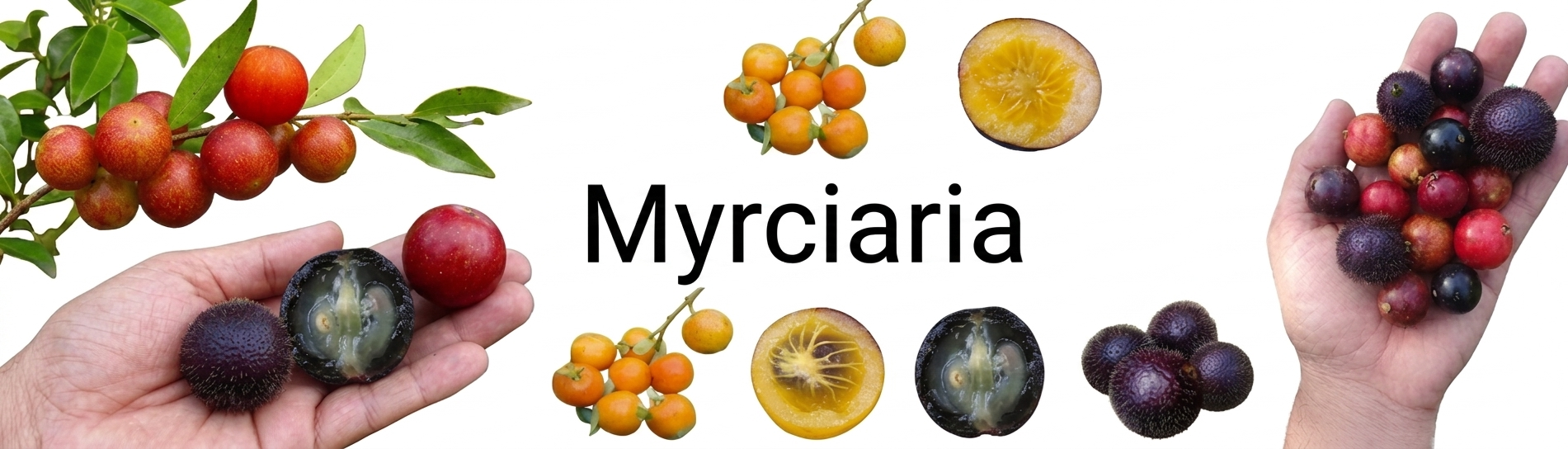
Closely related to Plinia, the Myrciaria genus offers stunning botanical rarities with delicious, nutrient-rich berries. Explore our selection of high-quality plants and fresh seeds, perfect for your tropical collection. Professional shipping throughout Europe guaranteed.
Eng verwandt mit der Plinia bietet die Gattung Myrciaria beeindruckende botanische Raritäten mit köstlichen, nährstoffreichen Beeren. Entdecke unsere Auswahl an hochwertigen Pflanzen und frischen Samen für deine tropische Sammlung. Professioneller Versand in ganz Europa garantiert.
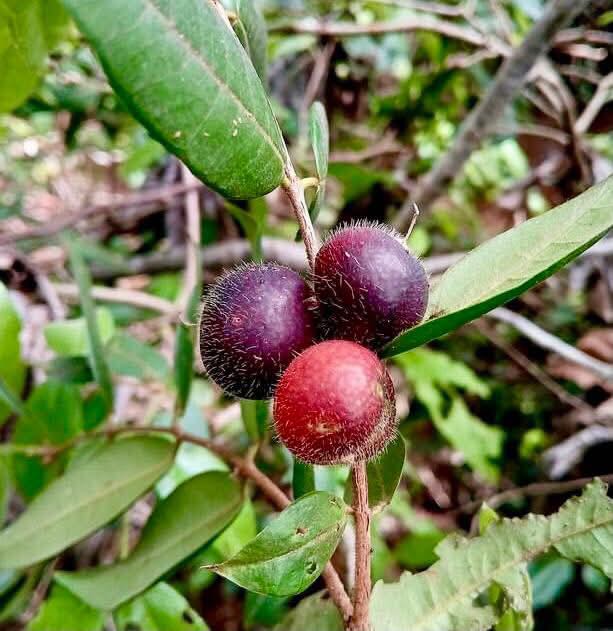
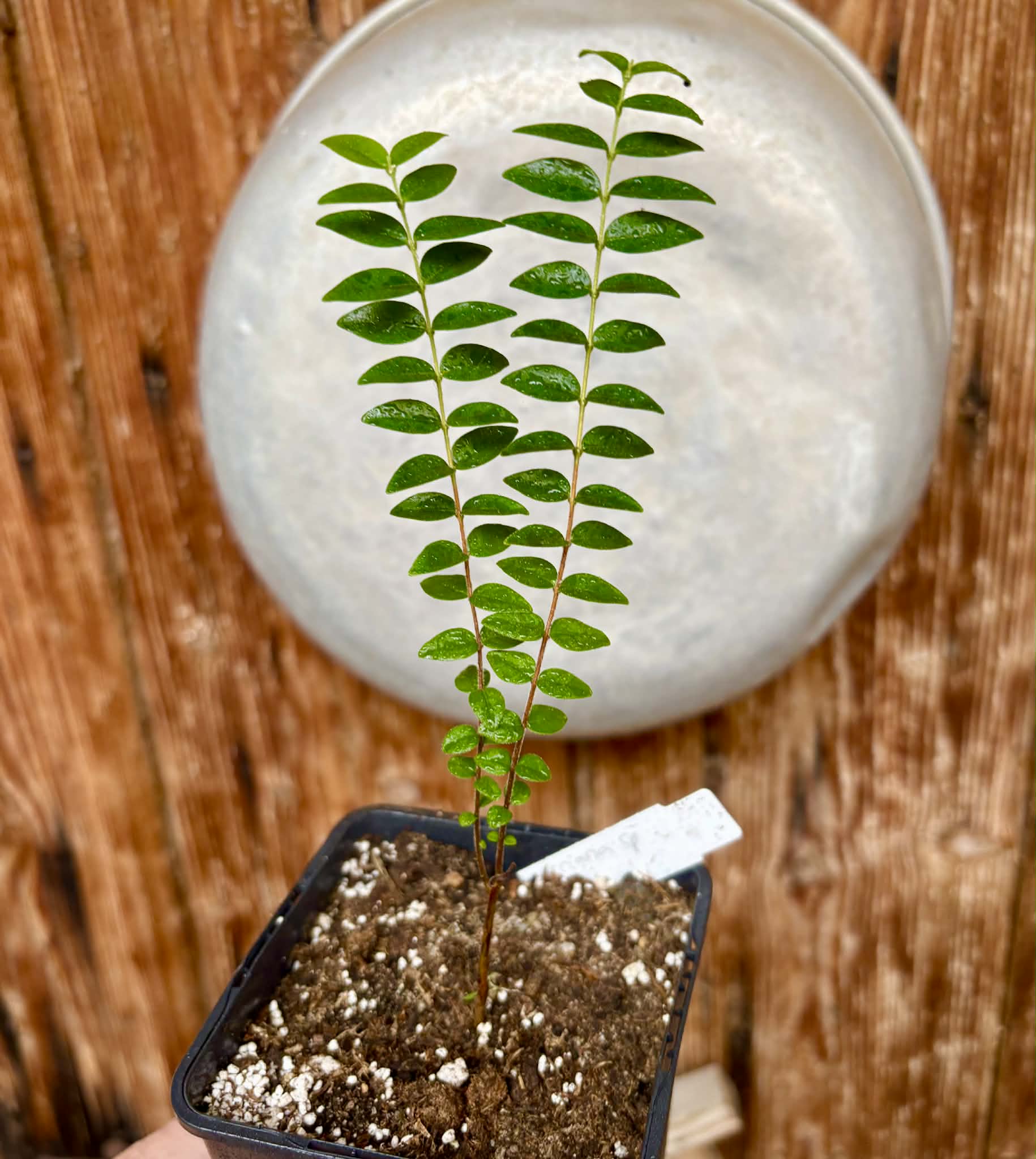
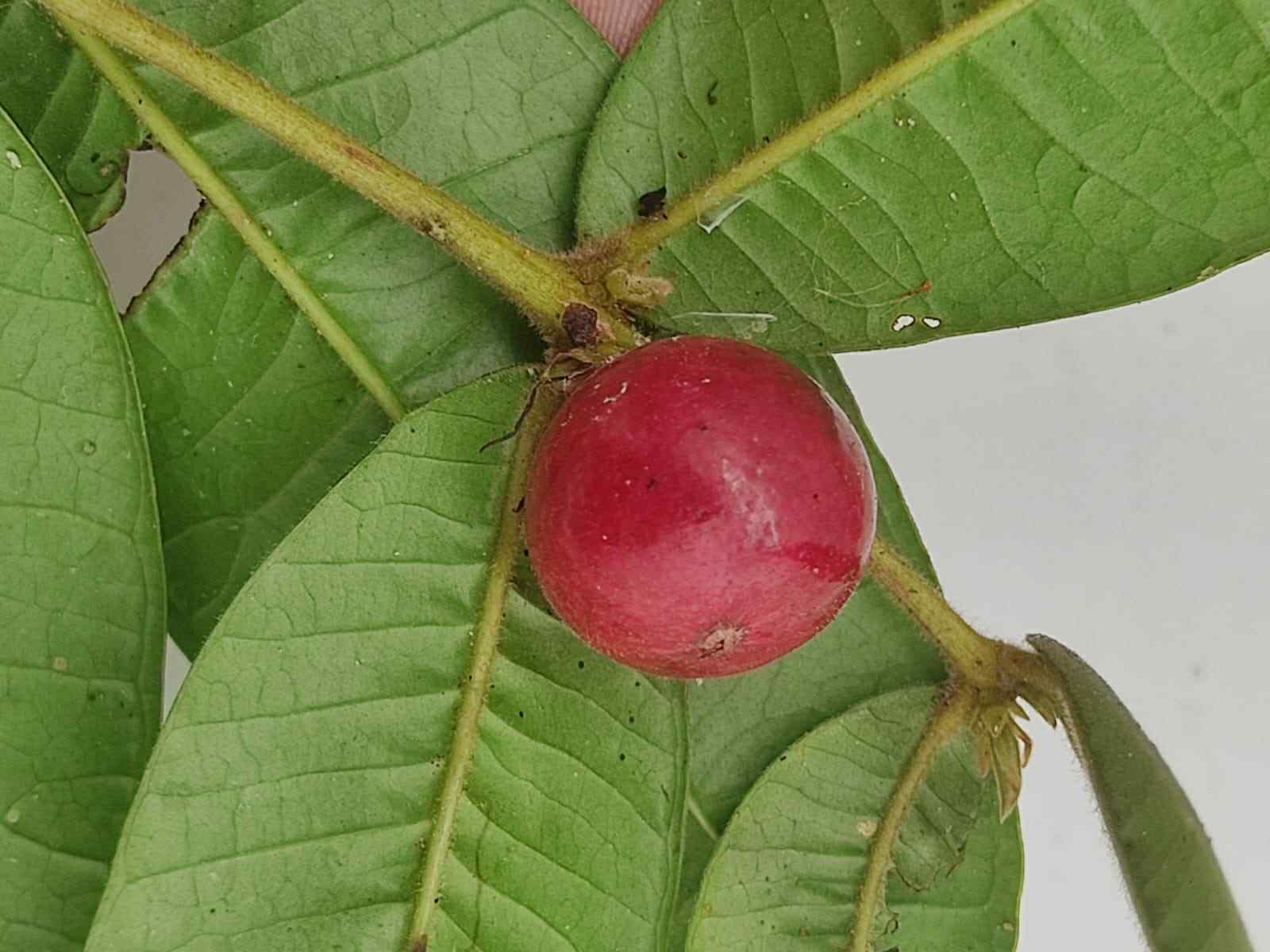
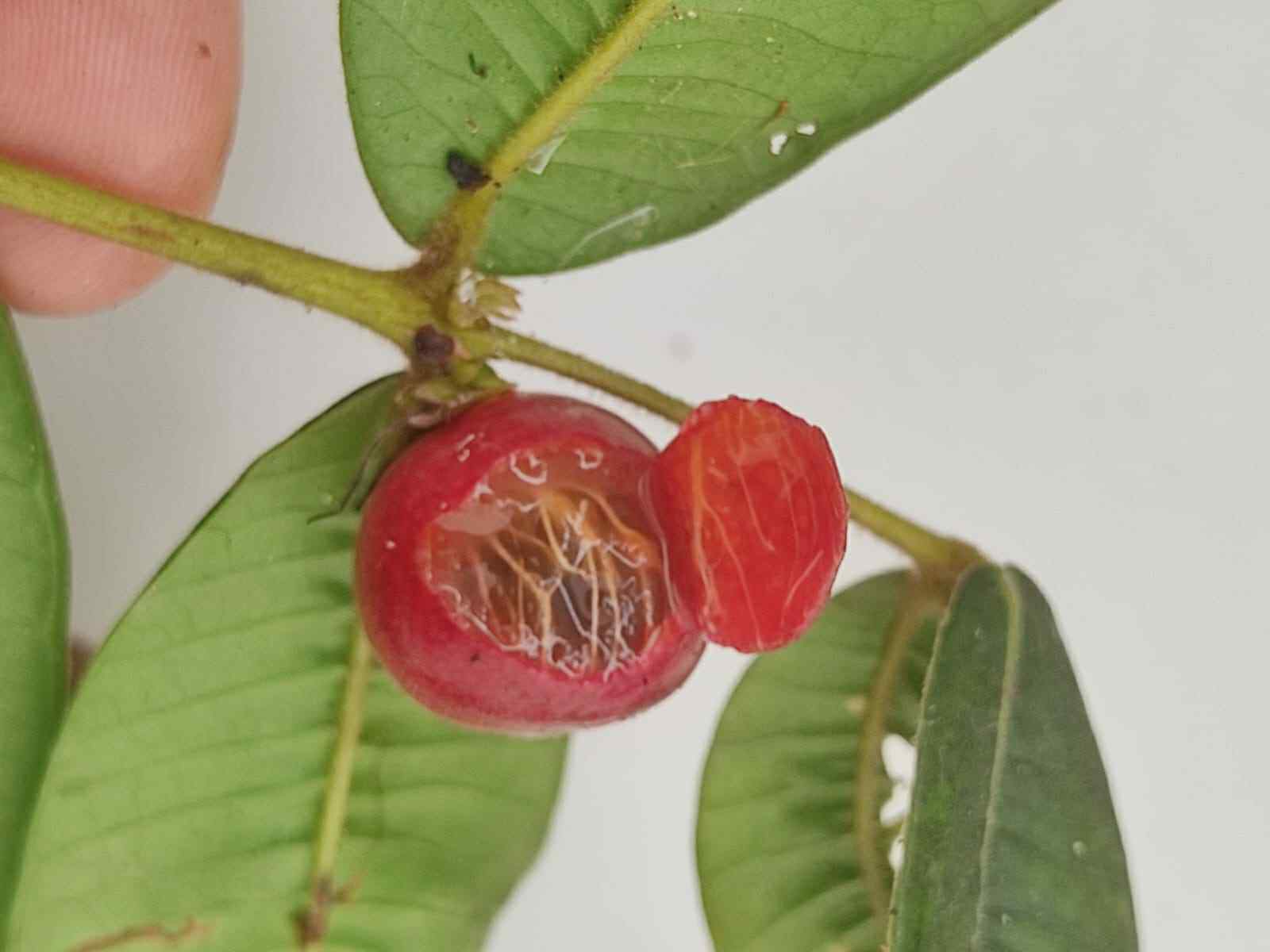
Myrciaria sp JaboticabaFamily / Familie: Myrtaceaeorigin from / Herkunft: Brasil / BrasilienClimate / Klima: temperate to warm (10-30C / 50-84F) / gemäßigt bis warm (10-30C / 50-84F) Taste / Geschmack: very good taste / very guter Geschmackyou buy / sie kaufen: 1 potted plant / 1 getopfte PflanzeDelivery EU only
Myrciaria sp. Jaboticaba“The Wow-Fruit – Two Flavors, One Sensation”
🍇 A New Legend Is Born
If you’ve tasted your way through the Myrciaria genus, you already know:These fruits can be insanely delicious.We once had the chance to eat fresh Myrciaria glazioviana, and it completely blew us away.So. Much. Flavor. In such a tiny fruit. Unbelievable.
And then you read accounts from other collectors claiming that Myrciaria guaquiea, M. strigipes, or M. caerulescens taste even better.
Wait—how is that even possible?We don’t know, but it’s true. And now comes something that changes everything.
🌟 The Ultimate Flavor Bomb
Imagine biting into a perfectly ripe Jaboticaba: sweet, tangy, refreshing.Now imagine tasting the lush tropical depth of a guaquiea at the same time.
Sounds impossible? It’s not.This mysterious Myrciaria sp. combines the best of both worlds – all in one fruit.
We're talking 10 out of 10.Top tier. Flavor apex.A fruit that makes even experienced collectors pause and say:“This… is the one.”
🌍 A Jungle Discovery
This Myrciaria sp. was discovered by chance during an expedition in the heart of the Mata Atlântica rainforest in Bahia, Brazil.
For context: The state of Bahia is larger than Germany, Austria, Switzerland, and the Netherlands combined.Finding a new, incredibly flavorful fruit tree there?Almost impossible. But it happened.
🌱 Fast-Growing & Low-Maintenance
We received fresh seeds from this species in early spring – and were stunned.They germinated fast, grew vigorously, and proved to be less demanding than many of their relatives.
Key features:
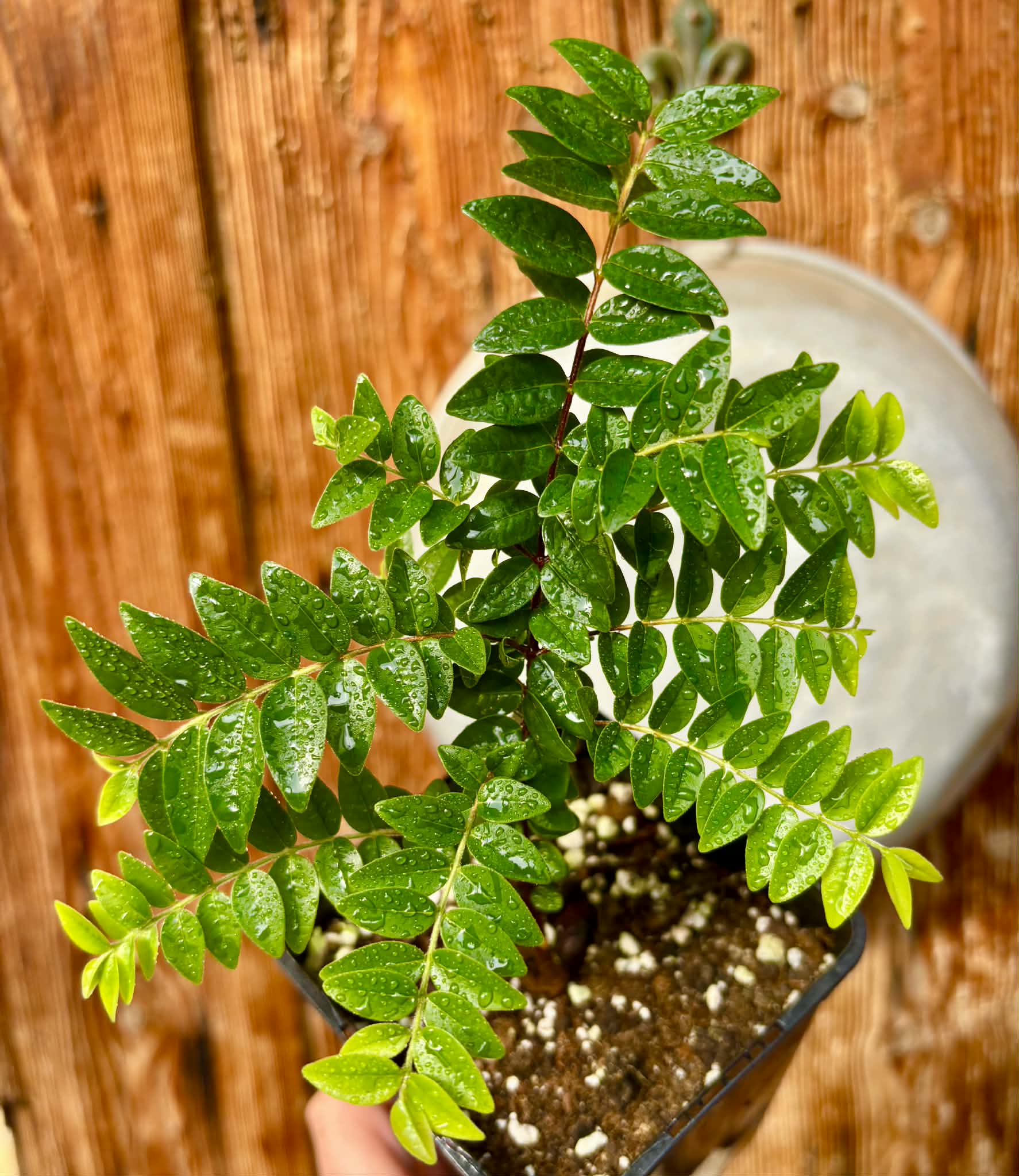
Leaves resemble classic Jaboticaba – dark green, glossy, elegant
Strong, healthy growth
Surprisingly robust and adaptable
Care Tips:
Light: Bright to semi-shaded
Soil: Well-draining, slightly acidic is ideal
Watering: Keep moist, but avoid waterlogging
Winter care: Keep above 10 °C (50 °F) – ideal for greenhouses or indoors
✨ Final Verdict: Almost Too Good to Be True
This Myrciaria sp. Jaboticaba isn't just another rare tropical plant –it’s a flavor revelation. The perfect fusion of top-tier Myrciaria varieties.Fast-growing, beautiful, and outrageously delicious.
🍃 Bring home this one-of-a-kind jungle treasure – a dream come true for flavor hunters and tropical fruit lovers.
Myrciaria sp. Jaboticaba„Die Frucht mit dem Wow-Effekt – zwei Geschmäcker, ein Erlebnis“
🍇 Die Legende lebt – und wird neu geschrieben
Dass es innerhalb der Gattung Myrciaria geschmackliche Highlights gibt, ist längst kein Geheimnis mehr.Wer je eine vollreife Myrciaria glazioviana probieren durfte, kennt diesen Moment:Ein kleines Früchtchen, das den Gaumen explodieren lässt – so viel Aroma, so viel Intensität, so verdammt lecker.
Und dann hört man von Sammlern, dass Sorten wie Myrciaria guaquiea, M. strigipes oder M. caerulescens angeblich noch besser schmecken.Was? Geht das überhaupt? – Ja. Und wie.
🌟 Die Superfrucht unter den Jaboticabas
Jetzt stellen Sie sich vor:Sie essen eine perfekt gereifte Jaboticaba – süß, fruchtig, leicht säuerlich, unverkennbar.Und gleichzeitig spüren Sie das volle, intensive Aroma einer Guaquiea – tropisch, rund, umwerfend.
Zwei Aromen – vereint in nur einer Frucht.Genau das bietet diese Myrciaria sp. Jaboticaba. Eine Frucht, die nach Meinung vieler Sammler mit 10 von 10 Punkten ganz oben auf dem Genuss-Olymp steht.Ein „Lecker-Schlecker“ der Extraklasse. Kein Scherz – das ist die Eisbergspitze der Myrciaria-Gattung.
🌍 Entdeckung im grünen Ozean
Diese außergewöhnliche Art wurde erst letztes Jahr zufällig im atlantischen Regenwald (Mata Atlântica) von Bahia entdeckt – bei einer botanischen Exkursion.Zur Einordnung: Der brasilianische Bundesstaat Bahia ist größer als Deutschland, Österreich, die Schweiz und die Niederlande zusammen.Dort eine neue, unvergleichlich schmackhafte Myrciaria zu finden?Ein echter Glücksfall – ein botanischer Lottogewinn.
🌱 Vital & unkompliziert
Im Frühjahr erhielten wir einige frische Samen – und wurden sofort überrascht:Die Pflanzen keimten schnell, wuchsen zügig und zeigten sich deutlich robuster als viele andere Arten.
Merkmale:
Blätter erinnern an klassische Jaboticabas, glänzend grün, elegant
Wuchs: Schnell und vital
Pflegeleicht im Vergleich zu anderen seltenen Myrciarias
Pflegehinweis:
Standort: hell bis halbschattig
Erde: locker, durchlässig, gerne leicht sauer
Gießen: regelmäßig, aber keine Staunässe
Überwinterung: Bei mindestens 10 °C – ideal im Wintergarten oder beheizten Gewächshaus
✨ Fazit: Mehr geht (fast) nicht
Diese Myrciaria sp. Jaboticaba ist mehr als nur eine neue Frucht.Sie ist die Symbiose der besten Aromen dieser Gattung.Ein Hochgenuss für Sammler, Genießer und Liebhaber tropischer Raritäten.Schnellwachsend, exotisch, unglaublich lecker – und dazu noch eine echte Rarität.
Myrciaria aff plinioides
Family / Familie: Myrtaceaeorigin from / Herkunft: Brasil / BrasilienClimate / Klima: temperate to warm (15-30C / 59-86F) / gemäßigt bis warm (15-30C / 59-86F)Use / Verwendung: edible fruits, juice, jam, ice cream, etc. / essbare Früchte, Säfte, Marmelade, Eis usw.you buy / sie kaufen: 1 potted seedling / 1 getopfter Sämling
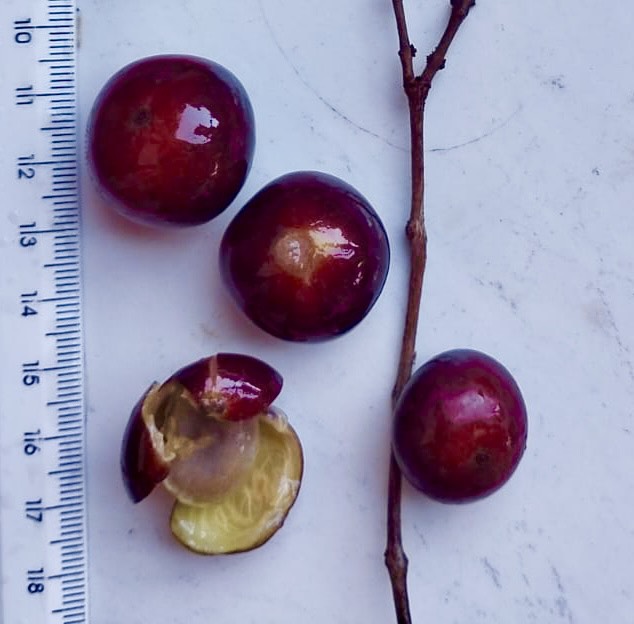
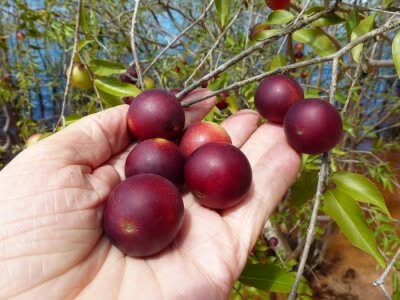
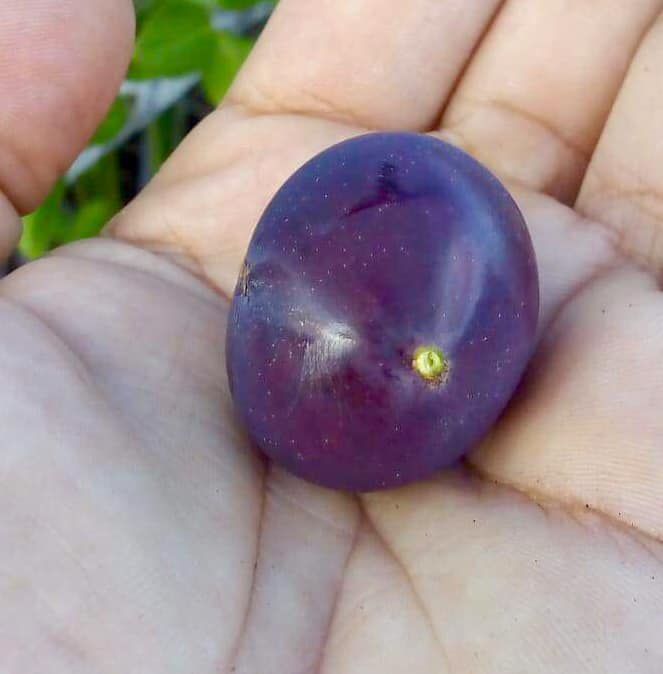
Delivery EU onlyThis beautiful Myrciaria was discovered in the Mata Atlantica of Bahia, Brazil.It looks very similar to Myrciaria plinioides.However, this species only grows in southern Brazil, which is about 3,000 km away.The fruits are a beautiful, dark blue color and about 1 to 2 cm in diameter.The flesh is very juicy and has a wonderful flavor.The taste is said to be reminiscent of jaboticaba.We recommend growing the plant in partial shade during its first year and avoiding waterlogging.Please overwinter this plant at a minimum temperature of 15 degrees Celsius.Diese wunderschöne Myrciaria wurde im Mata Atlantica von Bahia in Brasilien entdeckt.Sie sieht der Myrciaria plinioides sehr ähnlich. Diese wächst aber nur in Südbrasilien und das ist ca. 3000 km entfernt.Die Früchte haben eine schöne, dunkelblaue Farbe und sind ca. 1 bis 2cm im Durchmesser.Das Fruchtfleisch ist sehr saftig und hat einen wunderbaren Geschmack.Der Geschmack soll an Jaboticaba erinnern.Wir empfehlen im ersten Jahr die Pflanze halbschattig zu ziehen und Staunässe zu vermeiden.Diese Pflanze bitte bei mindestens 15 Grad überwintern.
Myrciaria cuspidata BLACK
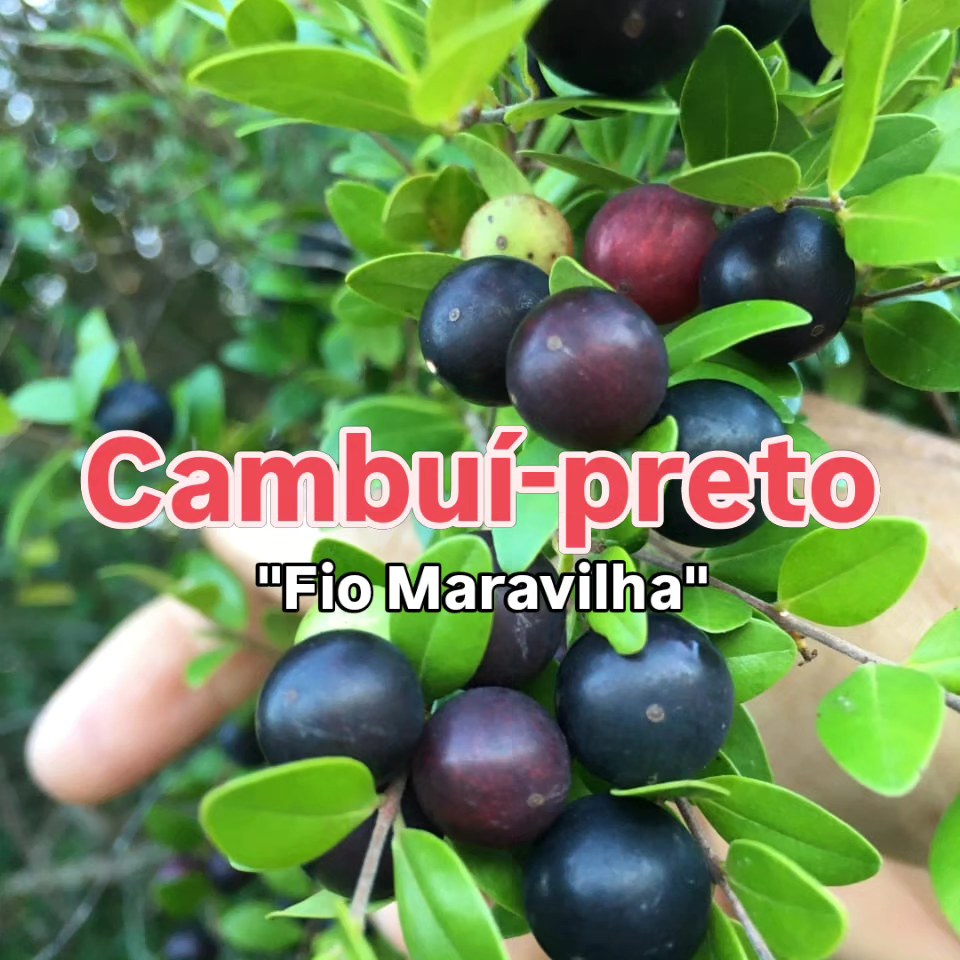
Family / Familie: Myrtaceaeorigin from / Herkunft: Brasil / BrasilienClimate / Klima: temperate (10-25C / 50-77F) / gemäßigt (10-25C / 50-77F)Taste / Geschmack: very good taste / sehr guter Geschmackyou buy / sie kaufen: 1 potted seedling / 1 getopfter SämlingDelivery EU onlyThe Myrciaria cuspidata is available with different colored fruits.Here you can get the black-fruited variety.This Myrciaria likes to grow near the beach and tolerates sand in the soil.The plant does not grow very large and is therefore well suited to being kept in a pot.It can be placed in full sun and when it flowers everything is white.It then bears masses of small, delicious, sweet fruits.In Brazil it bears from the third year onwards.Please overwinter at a temperature of at least 10 degrees.Die Myrciaria cuspidata gibt es mit verschiedenfarbigen Früchten.Hier bekommt ihr die schwarzfruchtige Sorte.Diese Myrciaria wächst gern in Strandnähe und verträgt Sand in der Erde.Die Pflanze wird nicht sehr groß und ist daher gut für eine Haltung im Kübel geeignet.Sie kann vollsonnig stehen und wenn sie blüht ist alles weiß.Dann trägt sie massenhaft kleine, leckere, süße Früchte.In Brasilien trägt sie ab dem dritten Jahr.Bitte bei mindestens 10 Grad überwintern.
Myrciaria sp Cabeludinha preta (Blue Glomerata)
Family / Familie: Myrtaceaeorigin from / Herkunft: Brasil / Brasilien Climate / Klima: temperate to warm (15-30C / 59-86F) / gemäßigt bis warm (15-30C / 59-86F)Use / Verwendung: edible fruits, juice, jam, ice cream, etc. / essbare Früchte, Säfte, Marmelade, Eis usw.you buy / sie kaufen: 1 pottet seedling / 1 getopfter SämlingDelivery EU onlyThis Myrciaria does not yet have a scientific name and was found near the Myrciaria caerulescens.The leaves are similar to the leaves of the Blue Guaquiea but the fruits are completely different.The fruits have a sour-sweet taste.The tree stays small and can survive long dry periods.It grows slowly in the first two years.The location in Bahia is warm and there is a long dry period every year.The soil is iron-rich and has a lot of quartz sand in its composition.Please overwinter this Myrciaria at a minimum of 15 degrees.Diese Myrciaria hat noch keinen wissenschaftlichen Namen und wurde in der Nähe der Myrciaria caerulescens gefunden.Die Blätter ähneln den Blättern der Blue Guaquiea aber die Früchte sind völlig unterschiedlich.Die saftigen Früchte haben einen angenehmen sauer-süßen Geschmack.Der Baum bleibt klein und kann längere Trockenzeiten überstehen.Er wächst in den ersten zwei Jahren langsam.Am Standort in Bahia ist es warm und es gibt jährlich eine längere Trockenzeit.Die Erde ist eisenhaltig und hat viel Quarzsand in der Zusammensetzung.Diese Myrciaria bitte bei mindestens 15 Grad überwintern.
Myrciaria sp Pastora
Family / Familie: Myrtaceaeorigin from / Herkunft: Brasil / BrasilienClimate / Klima: temperate to warm (10-30C / 50-84F) / gemäßigt bis warm (10-30C / 50-84F) Use / Verwendung: edible fruits, juice, jam, ice cream, etc. / essbare Früchte, Säfte, Marmelade, Eis usw.you buy / sie kaufen: 1 potted seedling / 1 getopfter Sämling
Delivery EU onlyMyrciaria sp. Pastora – The Extraordinary Discovery with Giant Red Fruits
In October 2023, an exceptional Myrciaria species was discovered, never seen before! This new find is named Myrciaria sp. Pastora, with "Pastora" meaning shepherdess, symbolizing the plant as a true "guardian" of the Myrciaria genus.
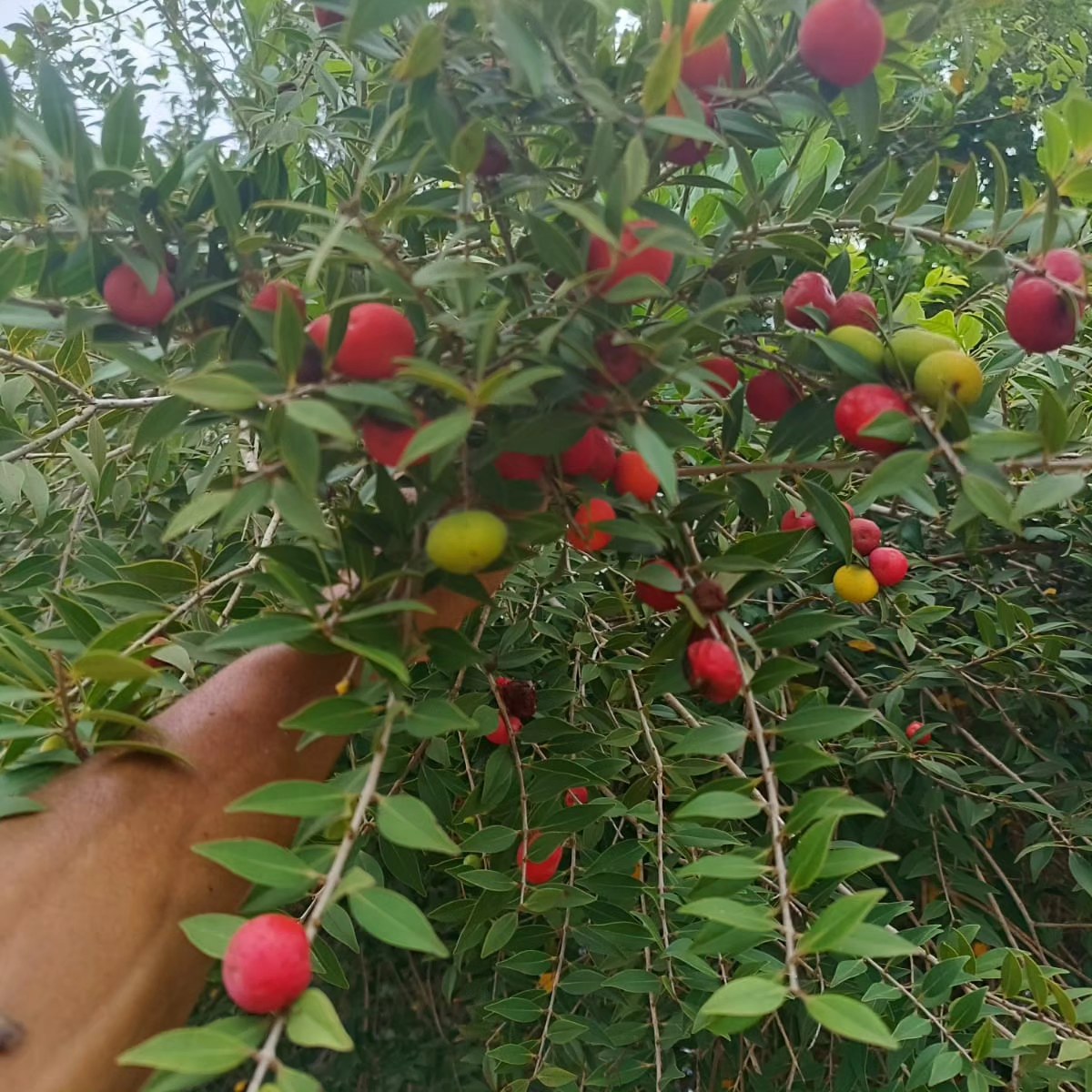
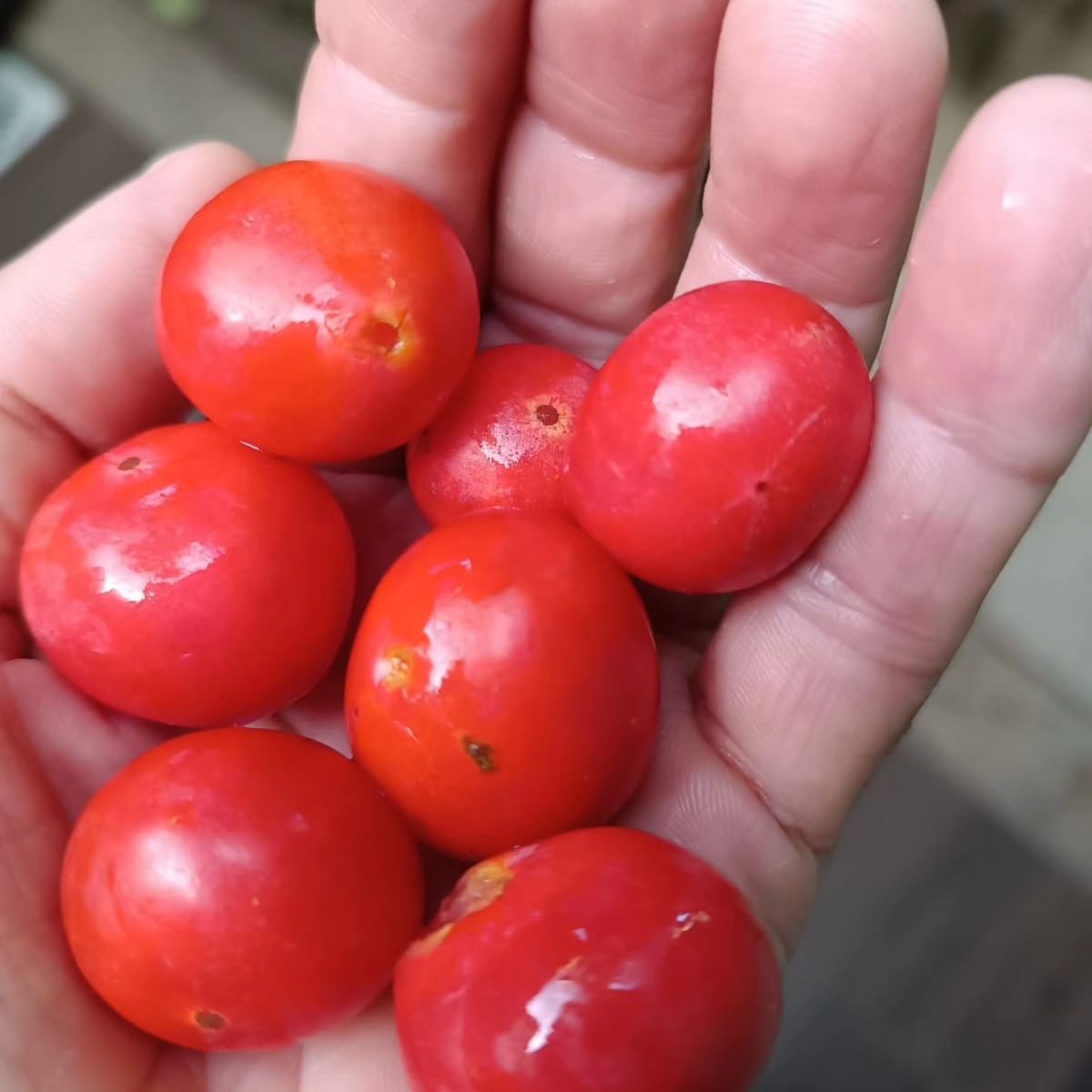
Red Fruits – A Rarity Among MyrciariasFor those familiar with Myrciaria, it’s known that only a few species bear red fruits, and those fruits are typically small. The most famous and valuable of these red-fruited Myrciarias is Myrciaria glomerata, considered the holy grail among collectors. But now, this giant, red-fruited Myrciaria has been discovered, with fruits that are twice the size of those from Myrciaria glomerata. The fruits are sweet, sour, and intensely aromatic – a truly unique taste experience.
Origin & Growing ConditionsThis newly discovered plant was found in the Restinga of São João da Barra, in the northern part of the Brazilian state of Rio de Janeiro. The soil consists mostly of sandy earth, typical of Restinga regions, which are coastal areas that lie between the beach and inland. Another exciting detail: a small 60 cm plant was also found, already full of fruits, indicating that this plant is likely to bear fruit quickly.
Overwintering & CareMyrciaria sp. Pastora thrives in warm climates and should be overwintered at no less than 10°C (50°F). It requires well-draining soil and can grow well in sunny or partially shaded areas.
Conclusion: One of the Greatest Discoveries of the Last YearThis new Myrciaria sp. Pastora is one of the most remarkable discoveries in the plant world over the past year. With its giant red fruits, exceptional flavor, and fascinating origin, it is a true highlight for collectors and a rare plant worth discovering.
Myrciaria sp. Pastora – Die außergewöhnliche Entdeckung mit riesigen roten Früchten
Im Oktober 2023 wurde eine außergewöhnliche Myrciaria-Art entdeckt, die bisher noch nie gesehen wurde! Diese Neuheit trägt den Namen Myrciaria sp. Pastora, wobei „Pastora“ Schäferin bedeutet – eine Anspielung auf die Rolle dieser Pflanze als wahre „Hüterin“ der Myrciaria-Gattung.
Rote Früchte – Eine Seltenheit unter den MyrciariasWer sich mit Myrciaria auskennt, weiß, dass es nur wenige Arten mit roten Früchten gibt. Und unter diesen sind die Früchte meist klein. Die bekannteste und teuerste unter den rotfruchtigen Arten ist die Myrciaria glomerata, die unter Sammlern als heiliger Gral gilt. Doch nun wurde diese riesige, rotfruchtige Myrciaria entdeckt, die doppelt so große Früchte trägt wie die Myrciaria glomerata. Die Früchte sind süß, sauer und ausgesprochen aromatisch – ein Geschmackserlebnis der besonderen Art.
Herkunft & WachstumsbedingungenDiese neu entdeckte Pflanze wurde in der Restinga von São João da Barra, im nördlichen Teil des brasilianischen Bundesstaates Rio de Janeiro, gefunden. Der Boden besteht aus einer Mischung aus sandiger Erde, die typisch für die Restinga-Gebiete ist – eine Region, die in Brasilien als Übergangszone zwischen Strand und Festland bekannt ist. Ein weiteres aufregendes Detail: Eine kleine Pflanze von nur 60 cm wurde ebenfalls entdeckt und war bereits voller Früchte, was darauf hinweist, dass diese Pflanze schnell fruchten wird.
Überwinterung & PflegeMyrciaria sp. Pastora bevorzugt warmes Klima und sollte bei mindestens 10 °C überwintern, um gesund zu bleiben. Die Pflanze benötigt einen gut durchlässigen Boden und kann in sonnigen oder halbschattigen Bereichen gedeihen.
Fazit: Eine der größten Entdeckungen des letzten JahresDiese neue Myrciaria sp. Pastora ist eine der großartigsten Entdeckungen in der Pflanzenwelt des letzten Jahres. Mit ihren riesigen roten Früchten, ihrem außergewöhnlichen Geschmack und ihrer faszinierenden Herkunft ist sie ein echtes Highlight für Sammler!
Myrciaria sp Ibirapitanga
Family / Familie: Myrtaceaeorigin from / Herkunft: Brasil / BrasilienClimate / Klima: temperate to warm (15-30C / 59-86F) / gemäßigt bis warm (15-30C / 59-86F)Use / Verwendung: edible fruits, juice, jam, ice cream, etc. / essbare Früchte, Säfte, Marmelade, Eis usw.you buy / sie kaufen: 1 potted seedling / 1 getopfter Sämling
Delivery EU onlyThis beautiful Myrciaria was discovered in Ibirapitanga, Bahia.Ibirapitanga means "red wood" in the Tupi language.The municipality is known for its cacao cultivation.This Myrciaria tree is medium-sized.The leaves of this Myrciaria grow larger than those of previously known Myrciaria.The taste of these fruits is described as exceptionally delicious and is said to taste similar to a Jaboticaba.Nothing is known about its growth and care as this is a completely new discovery.We recommend the same conditions as for cacao—warm and humid.Please do not overwinter this plant below 15 degrees Celsius.Diese wunderschöne Myrciaria wurde in Ibirapitanga in Bahia entdeckt.Ibirapitanga bedeutet in der Tupi-Sprache "rotes Holz". Die Gemeinde ist bekannt für ihren Kakao-Anbau.Der Baum dieser Myrciaria ist mittelgroß.Die Blätter dieser Myrciaria werden größer als bei den bisher bekannten Myrciaria.Der Geschmack dieser Früchte wird als außerordentlich köstlich beschrieben und soll ähnlich wie eine Jaboticaba schmecken.Über Wachstum und Pflege ist bisher nichts bekannt da es sich um eine absolute Neuentdeckung handelt.Wir empfehlen gleiche Bedingungen wie bei Kakao - also warm und feucht.Diese Pflanze bitte nicht unter 15 Grad überwintern.
Myrciaria sp Ibirapitanga
Family / Familie: Myrtaceaeorigin from / Herkunft: Brasil / BrasilienClimate / Klima: temperate to warm (15-30C / 59-86F) / gemäßigt bis warm (15-30C / 59-86F)Use / Verwendung: edible fruits, juice, jam, ice cream, etc. / essbare Früchte, Säfte, Marmelade, Eis usw.you buy / sie kaufen: 1 potted seedling / 1 getopfter Sämling
Delivery EU onlyThis beautiful Myrciaria was discovered in Ibirapitanga, Bahia.Ibirapitanga means "red wood" in the Tupi language.The municipality is known for its cacao cultivation.This Myrciaria tree is medium-sized.The leaves of this Myrciaria grow larger than those of previously known Myrciaria.The taste of these fruits is described as exceptionally delicious and is said to taste similar to a Jaboticaba.Nothing is known about its growth and care as this is a completely new discovery.We recommend the same conditions as for cacao—warm and humid.Please do not overwinter this plant below 15 degrees Celsius.Diese wunderschöne Myrciaria wurde in Ibirapitanga in Bahia entdeckt.Ibirapitanga bedeutet in der Tupi-Sprache "rotes Holz". Die Gemeinde ist bekannt für ihren Kakao-Anbau.Der Baum dieser Myrciaria ist mittelgroß.Die Blätter dieser Myrciaria werden größer als bei den bisher bekannten Myrciaria.Der Geschmack dieser Früchte wird als außerordentlich köstlich beschrieben und soll ähnlich wie eine Jaboticaba schmecken.Über Wachstum und Pflege ist bisher nichts bekannt da es sich um eine absolute Neuentdeckung handelt.Wir empfehlen gleiche Bedingungen wie bei Kakao - also warm und feucht.Diese Pflanze bitte nicht unter 15 Grad überwintern.
Myrciaria sp Pyrangi
Family / Familie: Myrtaceaeorigin from / Herkunft: Brasil / BrasilienClimate / Klima: temperate to warm (15-30C / 59-86F) / gemäßigt bis warm (15-30C / 59-86F)Use / Verwendung: edible fruits, juice, jam, ice cream, etc. / essbare Früchte, Säfte, Marmelade, Eis usw.you buy / sie kaufen: 1 germinated seed / 1 gekeimter Samen
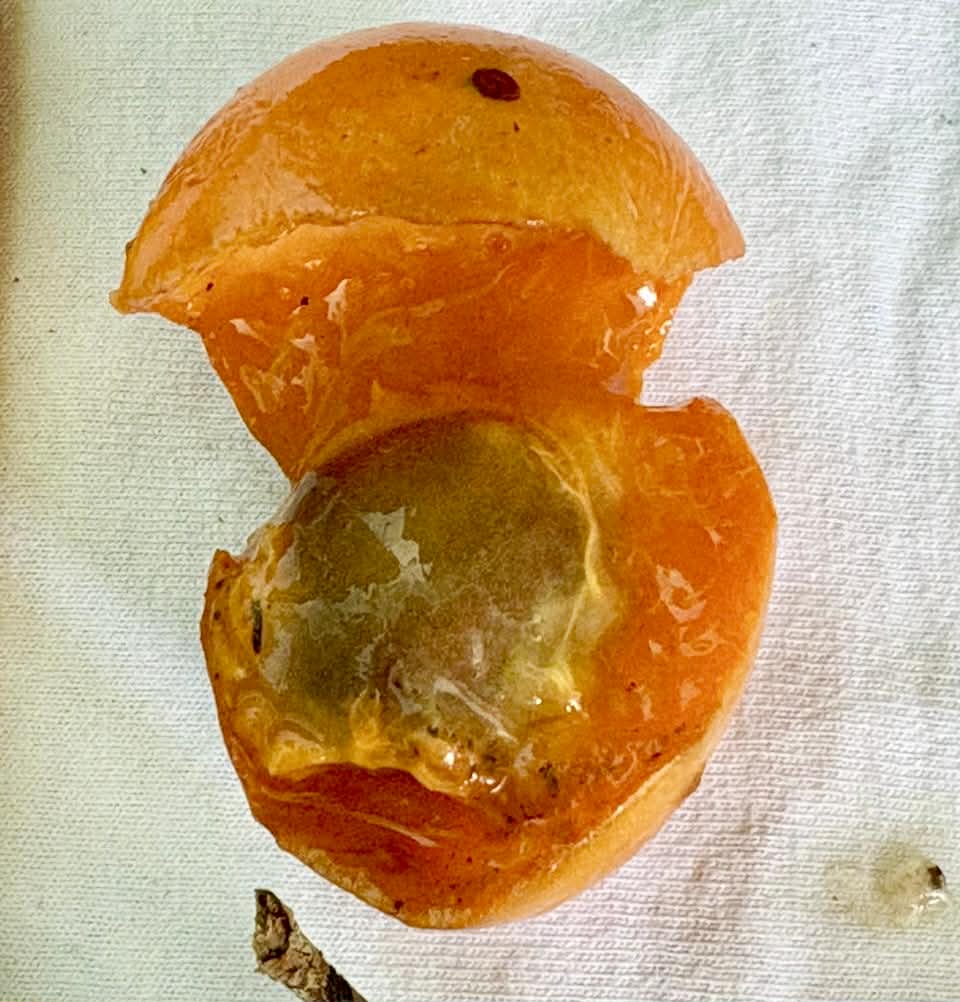
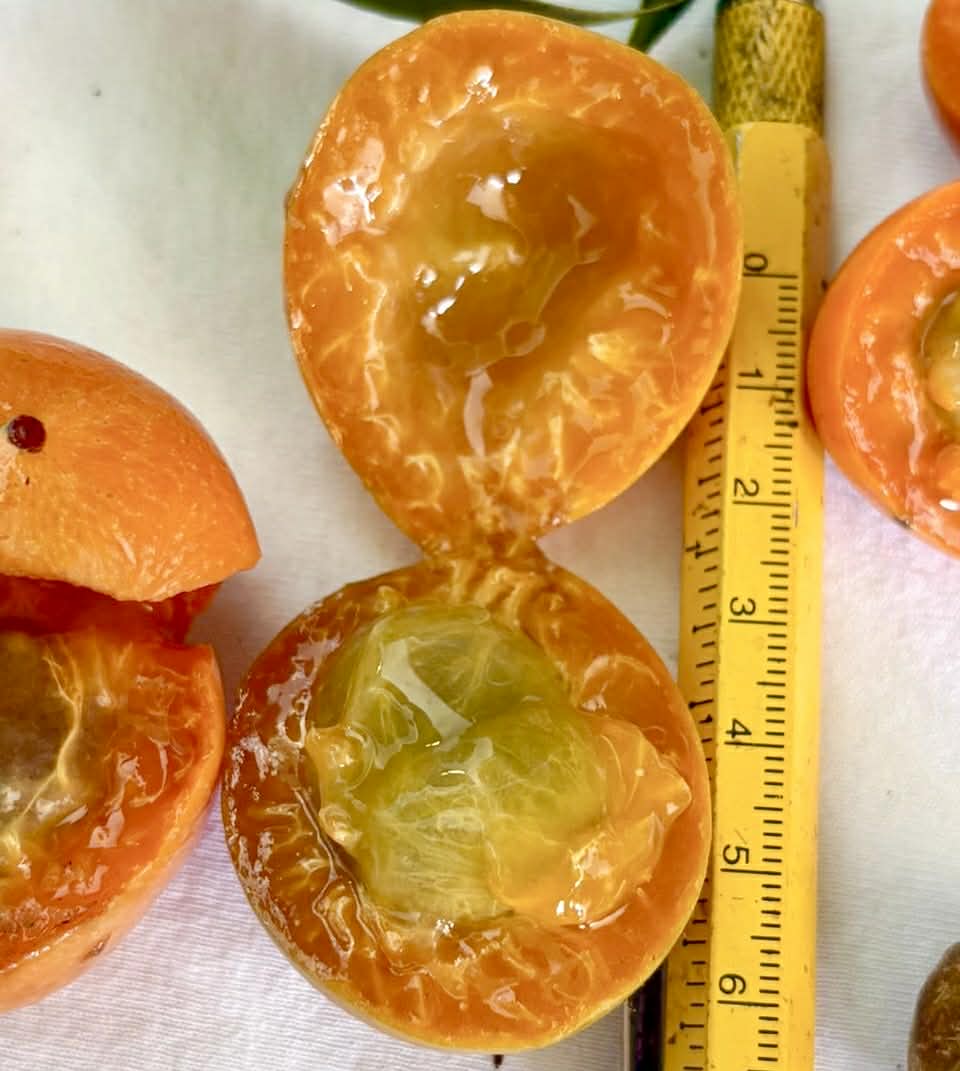
Delivery worldwideMyrciaria sp. Pyrangi / Bahia Giant Orange JaboticabaMyrciaria sp. Pyrangi is an undescribed, top-tier wild fruit discovery belonging to the Myrtle family (Myrtaceae).Discovered in the humid Mata Atlântica coastal rainforests of Bahia, Brazil, this rare Myrciaria stands out immediately due to the extraordinary size of its berries.For a species within the genus Myrciaria, it produces exceptionally large fruits, making it a major highlight for serious rare fruit collectors.When fully mature, the impressive fruits glow in a vibrant, warm orange to salmon-red hue, creating a striking contrast against the dark green foliage.Beneath the thick, protective rind lies a generous layer of juicy, bright orange pulp wrapping around translucent seed-sacs.In terms of flavor, it ranks among the absolute best: the succulent pulp delivers an intensely sweet, rich, and refreshing taste profile packed with tropical fruit notes.In cultivation, Myrciaria sp. Pyrangi performs exceptionally well as a premium container specimen for conservatories, warm greenhouses, or protected summer patios.For optimal growth, it prefers a sunny to semi-shaded location along with a slightly acidic, nutrient-rich substrate kept consistently moist.As a tropical to subtropical species, it cannot tolerate frost and must be overwintered in a bright, warm location at a minimum temperature of 10 to 12 °C (50 to 54 °F).Myrciaria sp. Pyrangi / Bahia-Riesen-Orange-JaboticabaDie Myrciaria sp. Pyrangi ist eine unbeschriebene, extrem hochkarätige Wildfrucht-Neuentdeckung aus der Familie der Myrtengewächse (Myrtaceae).Entdeckt in den feuchten Küstenregenwäldern des Mata Atlântica im brasilianischen Bundesstaat Bahia, sticht diese seltene Myrciaria vor allem durch die schiere Dimension ihrer Früchte hervor.Für eine Art aus der Gattung Myrciaria erreicht sie eine beachtliche Fruchtgröße, was sie zu einer echten Botanik-Sensation für Sammler exklusiver Myrtaceen macht.Bei voller Reife leuchten die prächtigen Früchte in einem intensiven, warmen Orange bis Lachsrot und heben sich wundervoll vom tiefgrünen Laub ab.Unter der dicken, schützenden Schale offenbart sich eine reiche Schicht aus saftigem, orangefarbenem Fruchtfleisch, welches das glasige Gewebe um die Samen umschließt.Geschmacklich spielt die Sorte in der obersten Liga: Das spritzige Fruchtfleisch begeistert durch ein extrem aromatisches, intensiv süßes und erfrischendes Geschmackserlebnis mit feinen tropischen Noten.In Kultur lässt sich Myrciaria sp. Pyrangi hervorragend als hochwertige Kübelpflanze im Wintergarten, im beheizten Gewächshaus oder auf der sommerlichen Terrasse pflegen.Für ein optimales Gedeihen bevorzugt sie einen sonnigen bis halbschattigen Standort sowie ein leicht saures, nährstoffreiches Substrat, das stets gleichmäßig feucht gehalten wird.Als tropische bis subtropische Waldart ist sie frostempfindlich und sollte an einem hellen Ort bei mindestens 10 bis 12 Grad Celsius überwintert werden.
Camu Camu (Myrciaria dubia)
Family / Familie: Myrtaceaeorigin from / Herkunft: Brasil / BrasilienClimate / Klima: temperate to warm (15-30C / 59-86F) / gemäßigt bis warm (15-30C / 59-86F)Use / Verwendung: edible fruits, juice, jam, ice cream, etc. / essbare Früchte, Säfte, Marmelade, Eis usw.you buy / sie kaufen: 1 fresh seed / 1 frischer Samen
Delivery worldwide
Pre-order – delivery of these fresh seeds will take place in the third week of October.Myrciaria dubia / Camu Camu (Amazonian Vitamin C Berry)Myrciaria dubia, globally known as Camu Camu, is a highly specialized botanical species belonging to the Myrtle family (Myrtaceae).Native to the seasonally flooded riverbanks and Amazonian blackwater swamp forests, it is famous for possessing one of the highest recorded natural concentrations of Vitamin C in the plant kingdom.Botanically, it forms a densely branched, evergreen shrub featuring lanceolate leaves and dark crimson to deep purple spherical berries.Due to its unique natural habitat, its cultivation requirements differ fundamentally from most other Myrtaceae, making it a rewarding challenge for advanced collectors.As an obligate wetland species, Camu Camu cannot tolerate drying out; the root ball must remain consistently wet to saturated at all times and thrives under conditions that would cause root rot in other fruit trees.Furthermore, the plant strictly demands a strongly acidic substrate (pH 4.0 to 5.5) and must be irrigated exclusively with soft, lime-free rainwater or reverse osmosis water to prevent nutrient chlorosis.For successful cultivation, it requires a very bright, warm location with elevated humidity paired with an acidic, organic-rich, water-retentive medium.As an ultra-tropical rainforest species, Camu Camu is cold-sensitive and must be overwintered in a bright, warm space at a minimum temperature of 15 to 18 °C (59 to 64 °F).Vorbestellung - die Lieferung dieser frischen Samen erfolgt dritte Oktoberwoche.Myrciaria dubia / Camu Camu (Amazonische Vitamin-C-Beere)Die Myrciaria dubia, weltweit bekannt als Camu Camu, ist eine botanisch hochspezialisierte Nutzpflanze aus der Familie der Myrtengewächse (Myrtaceae).Beheimatet in den flussnahen Überschwemmungsgebieten und Sumpfwäldern des Amazonasbeckens, berühmt ist die Art für ihren extrem hohen Vitamin-C-Gehalt, der den von Zitrusfrüchten um ein Vielfaches übersteigt.Botanisch wächst Camu Camu als dicht verzweigter, immergrüner Strauch mit feinen, lanzenförmigen Blättern und dunkelroten bis tiefpurpurnen Beeren.Aufgrund ihrer natürlichen Herkunft stellt die Kultur im Vergleich zu anderen Myrtengewächsen ganz spezifische Anforderungen an die Pflege, weshalb sie eine Pflanze für erfahrene Spezialisten darstellt.Als echte Sumpf- und Auenpflanze reagiert sie extrem empfindlich auf Trockenheit; der Wurzelballen darf zu keinem Zeitpunkt austrocknen und verträgt als eine der wenigen Nutzpflanzen auch dauerhaft feuchte bis nasse Substratbedingungen.Zudem benötigt die Art zwingend ein stark saures Substrat (pH 4,0 bis 5,5) und muss ausschließlich mit kalkfreiem Regen- oder Osmosewasser gegossen werden, um Nährstoffblockaden wie Eisenmangel zu vermeiden.Für die erfolgreiche Kultur erfordert sie einen sehr hellen, warmen Standort mit hoher Luftfeuchtigkeit sowie ein saurem, humoses und feuchtigkeitsspendendes Substrat.Als rein tropische Regenwaldart ist Camu Camu absolut frostempfindlich und muss an einem hellen Ort warm bei mindestens 15 bis 18 Grad Celsius überwintert werden.
Myrciaria sp Pastora
Family / Familie: Myrtaceaeorigin from / Herkunft: Brasil / BrasilienClimate / Klima: temperate to warm (10-30C / 50-86F) / gemäßigt bis warm (10-30C / 50-86F)Use / Verwendung: edible fruits, juice, jam, ice cream, etc. / essbare Früchte, Säfte, Marmelade, Eis usw.you buy / sie kaufen: 2 seedlings in one pot / 2 Sämlinge in einem Topf
Delivery EU only
In October 2023, an exceptional Myrciaria species was discovered, never seen before! This new find is named Myrciaria sp. Pastora, with "Pastora" meaning shepherdess, symbolizing the plant as a true "guardian" of the Myrciaria genus.
Red Fruits – A Rarity Among MyrciariasFor those familiar with Myrciaria, it’s known that only a few species bear red fruits, and those fruits are typically small. The most famous and valuable of these red-fruited Myrciarias is Myrciaria glomerata, considered the holy grail among collectors. But now, this giant, red-fruited Myrciaria has been discovered, with fruits that are twice the size of those from Myrciaria glomerata. The fruits are sweet, sour, and intensely aromatic – a truly unique taste experience.
Origin & Growing ConditionsThis newly discovered plant was found in the Restinga of São João da Barra, in the northern part of the Brazilian state of Rio de Janeiro. The soil consists mostly of sandy earth, typical of Restinga regions, which are coastal areas that lie between the beach and inland. Another exciting detail: a small 60 cm plant was also found, already full of fruits, indicating that this plant is likely to bear fruit quickly.
Overwintering & CareMyrciaria sp. Pastora thrives in warm climates and should be overwintered at no less than 10°C (50°F). It requires well-draining soil and can grow well in sunny or partially shaded areas.
Conclusion: One of the Greatest Discoveries of the Last YearThis new Myrciaria sp. Pastora is one of the most remarkable discoveries in the plant world over the past year. With its giant red fruits, exceptional flavor, and fascinating origin, it is a true highlight for collectors and a rare plant worth discovering.
Im Oktober 2023 wurde eine außergewöhnliche Myrciaria-Art entdeckt, die bisher noch nie gesehen wurde! Diese Neuheit trägt den Namen Myrciaria sp. Pastora, wobei „Pastora“ Schäferin bedeutet – eine Anspielung auf die Rolle dieser Pflanze als wahre „Hüterin“ der Myrciaria-Gattung.
Rote Früchte – Eine Seltenheit unter den MyrciariasWer sich mit Myrciaria auskennt, weiß, dass es nur wenige Arten mit roten Früchten gibt. Und unter diesen sind die Früchte meist klein. Die bekannteste und teuerste unter den rotfruchtigen Arten ist die Myrciaria glomerata, die unter Sammlern als heiliger Gral gilt. Doch nun wurde diese riesige, rotfruchtige Myrciaria entdeckt, die doppelt so große Früchte trägt wie die Myrciaria glomerata. Die Früchte sind süß, sauer und ausgesprochen aromatisch – ein Geschmackserlebnis der besonderen Art.
Herkunft & WachstumsbedingungenDiese neu entdeckte Pflanze wurde in der Restinga von São João da Barra, im nördlichen Teil des brasilianischen Bundesstaates Rio de Janeiro, gefunden. Der Boden besteht aus einer Mischung aus sandiger Erde, die typisch für die Restinga-Gebiete ist – eine Region, die in Brasilien als Übergangszone zwischen Strand und Festland bekannt ist. Ein weiteres aufregendes Detail: Eine kleine Pflanze von nur 60 cm wurde ebenfalls entdeckt und war bereits voller Früchte, was darauf hinweist, dass diese Pflanze schnell fruchten wird.
Überwinterung & PflegeMyrciaria sp. Pastora bevorzugt warmes Klima und sollte bei mindestens 10 °C überwintern, um gesund zu bleiben. Die Pflanze benötigt einen gut durchlässigen Boden und kann in sonnigen oder halbschattigen Bereichen gedeihen.
Fazit: Eine der größten Entdeckungen des letzten JahresDiese neue Myrciaria sp. Pastora ist eine der großartigsten Entdeckungen in der Pflanzenwelt des letzten Jahres. Mit ihren riesigen roten Früchten, ihrem außergewöhnlichen Geschmack und ihrer faszinierenden Herkunft ist sie ein echtes Highlight für Sammler!
Myrciaria sp Pastora
Family / Familie: Myrtaceaeorigin from / Herkunft: Brasil / BrasilienClimate / Klima: temperate to warm (10-30C / 50-86F) / gemäßigt bis warm (10-30C / 50-86F)Use / Verwendung: edible fruits, juice, jam, ice cream, etc. / essbare Früchte, Säfte, Marmelade, Eis usw.you buy / sie kaufen: 2 seedlings in one pot / 2 Sämlinge in einem Topf
Delivery EU only
In October 2023, an exceptional Myrciaria species was discovered, never seen before! This new find is named Myrciaria sp. Pastora, with "Pastora" meaning shepherdess, symbolizing the plant as a true "guardian" of the Myrciaria genus.
Red Fruits – A Rarity Among MyrciariasFor those familiar with Myrciaria, it’s known that only a few species bear red fruits, and those fruits are typically small. The most famous and valuable of these red-fruited Myrciarias is Myrciaria glomerata, considered the holy grail among collectors. But now, this giant, red-fruited Myrciaria has been discovered, with fruits that are twice the size of those from Myrciaria glomerata. The fruits are sweet, sour, and intensely aromatic – a truly unique taste experience.
Origin & Growing ConditionsThis newly discovered plant was found in the Restinga of São João da Barra, in the northern part of the Brazilian state of Rio de Janeiro. The soil consists mostly of sandy earth, typical of Restinga regions, which are coastal areas that lie between the beach and inland. Another exciting detail: a small 60 cm plant was also found, already full of fruits, indicating that this plant is likely to bear fruit quickly.
Overwintering & CareMyrciaria sp. Pastora thrives in warm climates and should be overwintered at no less than 10°C (50°F). It requires well-draining soil and can grow well in sunny or partially shaded areas.
Conclusion: One of the Greatest Discoveries of the Last YearThis new Myrciaria sp. Pastora is one of the most remarkable discoveries in the plant world over the past year. With its giant red fruits, exceptional flavor, and fascinating origin, it is a true highlight for collectors and a rare plant worth discovering.
Im Oktober 2023 wurde eine außergewöhnliche Myrciaria-Art entdeckt, die bisher noch nie gesehen wurde! Diese Neuheit trägt den Namen Myrciaria sp. Pastora, wobei „Pastora“ Schäferin bedeutet – eine Anspielung auf die Rolle dieser Pflanze als wahre „Hüterin“ der Myrciaria-Gattung.
Rote Früchte – Eine Seltenheit unter den MyrciariasWer sich mit Myrciaria auskennt, weiß, dass es nur wenige Arten mit roten Früchten gibt. Und unter diesen sind die Früchte meist klein. Die bekannteste und teuerste unter den rotfruchtigen Arten ist die Myrciaria glomerata, die unter Sammlern als heiliger Gral gilt. Doch nun wurde diese riesige, rotfruchtige Myrciaria entdeckt, die doppelt so große Früchte trägt wie die Myrciaria glomerata. Die Früchte sind süß, sauer und ausgesprochen aromatisch – ein Geschmackserlebnis der besonderen Art.
Herkunft & WachstumsbedingungenDiese neu entdeckte Pflanze wurde in der Restinga von São João da Barra, im nördlichen Teil des brasilianischen Bundesstaates Rio de Janeiro, gefunden. Der Boden besteht aus einer Mischung aus sandiger Erde, die typisch für die Restinga-Gebiete ist – eine Region, die in Brasilien als Übergangszone zwischen Strand und Festland bekannt ist. Ein weiteres aufregendes Detail: Eine kleine Pflanze von nur 60 cm wurde ebenfalls entdeckt und war bereits voller Früchte, was darauf hinweist, dass diese Pflanze schnell fruchten wird.
Überwinterung & PflegeMyrciaria sp. Pastora bevorzugt warmes Klima und sollte bei mindestens 10 °C überwintern, um gesund zu bleiben. Die Pflanze benötigt einen gut durchlässigen Boden und kann in sonnigen oder halbschattigen Bereichen gedeihen.
Fazit: Eine der größten Entdeckungen des letzten JahresDiese neue Myrciaria sp. Pastora ist eine der großartigsten Entdeckungen in der Pflanzenwelt des letzten Jahres. Mit ihren riesigen roten Früchten, ihrem außergewöhnlichen Geschmack und ihrer faszinierenden Herkunft ist sie ein echtes Highlight für Sammler!
Myrciaria caerulescens (Roxa - Blue Guaquiea)
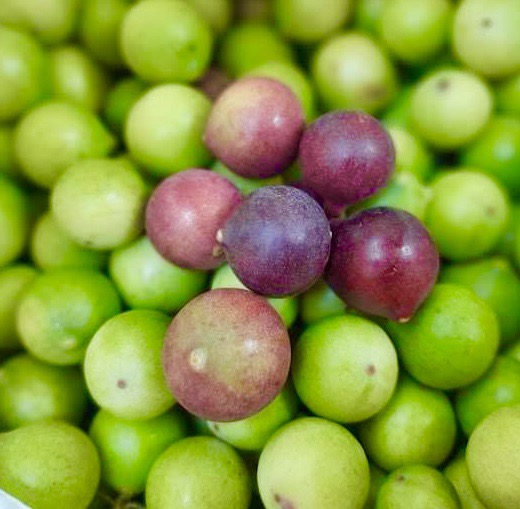
Family / Familie: Myrtaceaeorigin from / Herkunft: Brasil / Brasilien Climate / Klima: temperate to warm (15-30C / 59-86F) / gemäßigt bis warm (15-30C / 59-86F)Use / Verwendung: edible fruits, juice, jam, ice cream, etc. / essbare Früchte, Säfte, Marmelade, Eis usw.you buy / sie kaufen: 1 potted seedling / 1 getopfter SämlingDelivery EU onlyThis plant is already accustomed to soil and is beginning to push out new leaves!Myrciaria caerulescens – formerly known as Myrciaria sp. roxa or Blue Guaquiea – is a fascinating discovery among exotic fruit plants.In 2024, it finally received its scientific name.The flavor of its fruits is said to even surpass the popular Jaboticaba.Origin and LocationThe plant is native to the Caetité region in the Brazilian state of Bahia, where a warm climate and a pronounced dry season prevail.The soil there is rich in iron and contains a lot of quartz sand.Cultivation and CareFertilization: No fertilizer required or recommended.Light: A bright location without direct midday sun is ideal.Temperature: Overwinter at least 15°C.Growth: Slow growth initially; later, a compact shrub, very suitable for container cultivation.Special CharacteristicsFruit: Excellent flavor – even better than Jaboticaba.Please overwinter this plant at least 10°C.Diese Pflanze ist bereits an Erde gewöhnt und beginnt neue Blätter zu schieben!Die Myrciaria caerulescens – früher bekannt als Myrciaria sp. roxa oder Blue Guaquiea – ist eine faszinierende Entdeckung unter den exotischen Fruchtpflanzen. Im Jahr 2024 erhielt sie endlich ihren wissenschaftlichen Namen. Der Geschmack ihrer Früchte soll die beliebte Jaboticaba sogar übertreffen.Herkunft und StandortDie Heimat der Pflanze ist die Region Caetité im brasilianischen Bundesstaat Bahia, wo ein warmes Klima und eine ausgeprägte Trockenzeit herrschen. Der Boden dort ist eisenhaltig und enthält viel Quarzsand.Kultur und PflegeDüngung: Kein Dünger erforderlich oder empfohlen.Licht: Ein heller Standort ohne direkte Mittagssonne ist ideal.Temperatur: Überwinterung bei mindestens 15 °C.Wachstum: Anfangs langsames Wachstum; später kompakter Strauch, sehr gut für die Kübelkultur geeignet.Besondere EigenschaftenFrucht: Hervorragender Geschmack – noch besser als Jaboticaba.Bitte diese Pflanze bei mindestens 10 Grad überwintern.
Myrciaria caerulescens (Roxa - Blue Guaquiea)
Family / Familie: Myrtaceaeorigin from / Herkunft: Brasil / Brasilien Climate / Klima: temperate to warm (15-30C / 59-86F) / gemäßigt bis warm (15-30C / 59-86F)Use / Verwendung: edible fruits, juice, jam, ice cream, etc. / essbare Früchte, Säfte, Marmelade, Eis usw.you buy / sie kaufen: 1 potted seedling / 1 getopfter SämlingDelivery EU onlyThis plant is already accustomed to soil and is beginning to push out new leaves!Myrciaria caerulescens – formerly known as Myrciaria sp. roxa or Blue Guaquiea – is a fascinating discovery among exotic fruit plants.In 2024, it finally received its scientific name.The flavor of its fruits is said to even surpass the popular Jaboticaba.Origin and LocationThe plant is native to the Caetité region in the Brazilian state of Bahia, where a warm climate and a pronounced dry season prevail.The soil there is rich in iron and contains a lot of quartz sand.Cultivation and CareFertilization: No fertilizer required or recommended.Light: A bright location without direct midday sun is ideal.Temperature: Overwinter at least 15°C.Growth: Slow growth initially; later, a compact shrub, very suitable for container cultivation.Special CharacteristicsFruit: Excellent flavor – even better than Jaboticaba.Please overwinter this plant at least 10°C.Diese Pflanze ist bereits an Erde gewöhnt und beginnt neue Blätter zu schieben!Die Myrciaria caerulescens – früher bekannt als Myrciaria sp. roxa oder Blue Guaquiea – ist eine faszinierende Entdeckung unter den exotischen Fruchtpflanzen. Im Jahr 2024 erhielt sie endlich ihren wissenschaftlichen Namen. Der Geschmack ihrer Früchte soll die beliebte Jaboticaba sogar übertreffen.Herkunft und StandortDie Heimat der Pflanze ist die Region Caetité im brasilianischen Bundesstaat Bahia, wo ein warmes Klima und eine ausgeprägte Trockenzeit herrschen. Der Boden dort ist eisenhaltig und enthält viel Quarzsand.Kultur und PflegeDüngung: Kein Dünger erforderlich oder empfohlen.Licht: Ein heller Standort ohne direkte Mittagssonne ist ideal.Temperatur: Überwinterung bei mindestens 15 °C.Wachstum: Anfangs langsames Wachstum; später kompakter Strauch, sehr gut für die Kübelkultur geeignet.Besondere EigenschaftenFrucht: Hervorragender Geschmack – noch besser als Jaboticaba.Bitte diese Pflanze bei mindestens 10 Grad überwintern.
Myrciaria sp MaruimFamily / Familie: Myrtaceaeorigin from / Herkunft: Brasil / BrasilienClimate / Klima: temperate to warm (10-30C / 50-84F) / gemäßigt bis warm (10-30C / 50-84F) Use / Verwendung: edible fruits, juice, jam, ice cream, etc. / essbare Früchte, Säfte, Marmelade, Eis usw.you buy / sie kaufen: 1 potted seedling / 1 getopfter SämlingDelivery EU onlyMyrciaria sp. "Maruim" – Fruits with a Fantastic Flavor
In 2023, this new Myrciaria species was discovered along the Rio Maruim in the UNA National Park in the Brazilian state of Bahia – a region with great biodiversity and numerous still unknown plant species.
The seeds of this Myrciaria took an unusually long time to germinate, almost 6 months.This tree develops the typical Myrciaria growth habit, and the new leaves tip downwards.The bright red fruits have a fantastic flavor and are reminiscent of jaboticaba with a hint of acidity.They are very juicy, sweet, and aromatic.
The plant grows relatively quickly and prefers well-drained soil. It prefers a partially shaded location in the first year, and waterlogging should be avoided.Please overwinter at a minimum temperature of 10 degrees Celsius.Myrciaria sp. "Maruim" – Früchte mit fantastischem Geschmack
Im Jahr 2023 wurde im UNA-Nationalpark im brasilianischen Bundesstaat Bahia diese neue Myrciaria-Arten entlang des Rio Maruim entdeckt – eine Region mit großer Artenvielfalt und zahlreichen noch unbekannten Pflanzenarten.
Die Samen dieser Myrciaria haben ungewöhlich lange bis zur Keimung benötigt, nämlich fast 6 Monate.Dieser Baum bekommt den typischen Myrciaria-Wuchs und die neuen Blätter wippen nach unten.Die hellroten Früchte haben einen fantastisch guten Geschmack und erinnern an Jaboticaba mit einem Hauch von leichter Säure.Sie sind sehr saftig, süß und aromatisch.Die Pflanze wächst verhältnismäßig schnell und mag eine durchlässige Erde. Sie mag im ersten Jahr einen halbschattigen Standort und Staunässe sollte vermieden werden.Überwintern bitte bei mindestens 10 Grad.
Myrciaria caerulescens (Roxa - Blue Guaquiea)
Family / Familie: Myrtaceaeorigin from / Herkunft: Brasil / Brasilien Climate / Klima: temperate to warm (15-30C / 59-86F) / gemäßigt bis warm (15-30C / 59-86F)Use / Verwendung: edible fruits, juice, jam, ice cream, etc. / essbare Früchte, Säfte, Marmelade, Eis usw.you buy / sie kaufen: 1 potted seedling / 1 getopfter SämlingDelivery EU onlyThis plant is already accustomed to soil and is beginning to push out new leaves!Myrciaria caerulescens – formerly known as Myrciaria sp. roxa or Blue Guaquiea – is a fascinating discovery among exotic fruit plants.In 2024, it finally received its scientific name.The flavor of its fruits is said to even surpass the popular Jaboticaba.Origin and LocationThe plant is native to the Caetité region in the Brazilian state of Bahia, where a warm climate and a pronounced dry season prevail.The soil there is rich in iron and contains a lot of quartz sand.Cultivation and CareFertilization: No fertilizer required or recommended.Light: A bright location without direct midday sun is ideal.Temperature: Overwinter at least 15°C.Growth: Slow growth initially; later, a compact shrub, very suitable for container cultivation.Special CharacteristicsFruit: Excellent flavor – even better than Jaboticaba.Please overwinter this plant at least 10°C.Diese Pflanze ist bereits an Erde gewöhnt und beginnt neue Blätter zu schieben!Die Myrciaria caerulescens – früher bekannt als Myrciaria sp. roxa oder Blue Guaquiea – ist eine faszinierende Entdeckung unter den exotischen Fruchtpflanzen. Im Jahr 2024 erhielt sie endlich ihren wissenschaftlichen Namen. Der Geschmack ihrer Früchte soll die beliebte Jaboticaba sogar übertreffen.Herkunft und StandortDie Heimat der Pflanze ist die Region Caetité im brasilianischen Bundesstaat Bahia, wo ein warmes Klima und eine ausgeprägte Trockenzeit herrschen. Der Boden dort ist eisenhaltig und enthält viel Quarzsand.Kultur und PflegeDüngung: Kein Dünger erforderlich oder empfohlen.Licht: Ein heller Standort ohne direkte Mittagssonne ist ideal.Temperatur: Überwinterung bei mindestens 15 °C.Wachstum: Anfangs langsames Wachstum; später kompakter Strauch, sehr gut für die Kübelkultur geeignet.Besondere EigenschaftenFrucht: Hervorragender Geschmack – noch besser als Jaboticaba.Bitte diese Pflanze bei mindestens 10 Grad überwintern.
Myrciaria caerulescens (Roxa - Blue Guaquiea)
Family / Familie: Myrtaceaeorigin from / Herkunft: Brasil / Brasilien Climate / Klima: temperate to warm (15-30C / 59-86F) / gemäßigt bis warm (15-30C / 59-86F)Use / Verwendung: edible fruits, juice, jam, ice cream, etc. / essbare Früchte, Säfte, Marmelade, Eis usw.you buy / sie kaufen: 1 potted seedling / 1 getopfter SämlingDelivery EU onlyThis plant is already accustomed to soil and is beginning to push out new leaves!Myrciaria caerulescens – formerly known as Myrciaria sp. roxa or Blue Guaquiea – is a fascinating discovery among exotic fruit plants.In 2024, it finally received its scientific name.The flavor of its fruits is said to even surpass the popular Jaboticaba.Origin and LocationThe plant is native to the Caetité region in the Brazilian state of Bahia, where a warm climate and a pronounced dry season prevail.The soil there is rich in iron and contains a lot of quartz sand.Cultivation and CareFertilization: No fertilizer required or recommended.Light: A bright location without direct midday sun is ideal.Temperature: Overwinter at least 15°C.Growth: Slow growth initially; later, a compact shrub, very suitable for container cultivation.Special CharacteristicsFruit: Excellent flavor – even better than Jaboticaba.Please overwinter this plant at least 10°C.Diese Pflanze ist bereits an Erde gewöhnt und beginnt neue Blätter zu schieben!Die Myrciaria caerulescens – früher bekannt als Myrciaria sp. roxa oder Blue Guaquiea – ist eine faszinierende Entdeckung unter den exotischen Fruchtpflanzen. Im Jahr 2024 erhielt sie endlich ihren wissenschaftlichen Namen. Der Geschmack ihrer Früchte soll die beliebte Jaboticaba sogar übertreffen.Herkunft und StandortDie Heimat der Pflanze ist die Region Caetité im brasilianischen Bundesstaat Bahia, wo ein warmes Klima und eine ausgeprägte Trockenzeit herrschen. Der Boden dort ist eisenhaltig und enthält viel Quarzsand.Kultur und PflegeDüngung: Kein Dünger erforderlich oder empfohlen.Licht: Ein heller Standort ohne direkte Mittagssonne ist ideal.Temperatur: Überwinterung bei mindestens 15 °C.Wachstum: Anfangs langsames Wachstum; später kompakter Strauch, sehr gut für die Kübelkultur geeignet.Besondere EigenschaftenFrucht: Hervorragender Geschmack – noch besser als Jaboticaba.Bitte diese Pflanze bei mindestens 10 Grad überwintern.
Myrciaria sp Pyrangi
Family / Familie: Myrtaceaeorigin from / Herkunft: Brasil / BrasilienClimate / Klima: temperate to warm (15-30C / 59-86F) / gemäßigt bis warm (15-30C / 59-86F)Use / Verwendung: edible fruits, juice, jam, ice cream, etc. / essbare Früchte, Säfte, Marmelade, Eis usw.you buy / sie kaufen: 1 potted plant / 1 getopfte Pflanze
Delivery EU onlyMyrciaria sp. Pyrangi / Bahia Giant Orange JaboticabaMyrciaria sp. Pyrangi is an undescribed, top-tier wild fruit discovery belonging to the Myrtle family (Myrtaceae).Discovered in the humid Mata Atlântica coastal rainforests of Bahia, Brazil, this rare Myrciaria stands out immediately due to the extraordinary size of its berries.For a species within the genus Myrciaria, it produces exceptionally large fruits, making it a major highlight for serious rare fruit collectors.When fully mature, the impressive fruits glow in a vibrant, warm orange to salmon-red hue, creating a striking contrast against the dark green foliage.Beneath the thick, protective rind lies a generous layer of juicy, bright orange pulp wrapping around translucent seed-sacs.In terms of flavor, it ranks among the absolute best: the succulent pulp delivers an intensely sweet, rich, and refreshing taste profile packed with tropical fruit notes.In cultivation, Myrciaria sp. Pyrangi performs exceptionally well as a premium container specimen for conservatories, warm greenhouses, or protected summer patios.For optimal growth, it prefers a sunny to semi-shaded location along with a slightly acidic, nutrient-rich substrate kept consistently moist.As a tropical to subtropical species, it cannot tolerate frost and must be overwintered in a bright, warm location at a minimum temperature of 10 to 12 °C (50 to 54 °F).Myrciaria sp. Pyrangi / Bahia-Riesen-Orange-JaboticabaDie Myrciaria sp. Pyrangi ist eine unbeschriebene, extrem hochkarätige Wildfrucht-Neuentdeckung aus der Familie der Myrtengewächse (Myrtaceae).Entdeckt in den feuchten Küstenregenwäldern des Mata Atlântica im brasilianischen Bundesstaat Bahia, sticht diese seltene Myrciaria vor allem durch die schiere Dimension ihrer Früchte hervor.Für eine Art aus der Gattung Myrciaria erreicht sie eine beachtliche Fruchtgröße, was sie zu einer echten Botanik-Sensation für Sammler exklusiver Myrtaceen macht.Bei voller Reife leuchten die prächtigen Früchte in einem intensiven, warmen Orange bis Lachsrot und heben sich wundervoll vom tiefgrünen Laub ab.Unter der dicken, schützenden Schale offenbart sich eine reiche Schicht aus saftigem, orangefarbenem Fruchtfleisch, welches das glasige Gewebe um die Samen umschließt.Geschmacklich spielt die Sorte in der obersten Liga: Das spritzige Fruchtfleisch begeistert durch ein extrem aromatisches, intensiv süßes und erfrischendes Geschmackserlebnis mit feinen tropischen Noten.In Kultur lässt sich Myrciaria sp. Pyrangi hervorragend als hochwertige Kübelpflanze im Wintergarten, im beheizten Gewächshaus oder auf der sommerlichen Terrasse pflegen.Für ein optimales Gedeihen bevorzugt sie einen sonnigen bis halbschattigen Standort sowie ein leicht saures, nährstoffreiches Substrat, das stets gleichmäßig feucht gehalten wird.Als tropische bis subtropische Waldart ist sie frostempfindlich und sollte an einem hellen Ort bei mindestens 10 bis 12 Grad Celsius überwintert werden.
Myrciaria caerulescens (Roxa - Blue Guaquiea)
Family / Familie: Myrtaceaeorigin from / Herkunft: Brasil / Brasilien Climate / Klima: temperate to warm (15-30C / 59-86F) / gemäßigt bis warm (15-30C / 59-86F)Use / Verwendung: edible fruits, juice, jam, ice cream, etc. / essbare Früchte, Säfte, Marmelade, Eis usw.you buy / sie kaufen: 1 potted seedling / 1 getopfter SämlingDelivery EU onlyThis plant is already accustomed to soil and is beginning to push out new leaves!Myrciaria caerulescens – formerly known as Myrciaria sp. roxa or Blue Guaquiea – is a fascinating discovery among exotic fruit plants.In 2024, it finally received its scientific name.The flavor of its fruits is said to even surpass the popular Jaboticaba.Origin and LocationThe plant is native to the Caetité region in the Brazilian state of Bahia, where a warm climate and a pronounced dry season prevail.The soil there is rich in iron and contains a lot of quartz sand.Cultivation and CareFertilization: No fertilizer required or recommended.Light: A bright location without direct midday sun is ideal.Temperature: Overwinter at least 15°C.Growth: Slow growth initially; later, a compact shrub, very suitable for container cultivation.Special CharacteristicsFruit: Excellent flavor – even better than Jaboticaba.Please overwinter this plant at least 10°C.Diese Pflanze ist bereits an Erde gewöhnt und beginnt neue Blätter zu schieben!Die Myrciaria caerulescens – früher bekannt als Myrciaria sp. roxa oder Blue Guaquiea – ist eine faszinierende Entdeckung unter den exotischen Fruchtpflanzen. Im Jahr 2024 erhielt sie endlich ihren wissenschaftlichen Namen. Der Geschmack ihrer Früchte soll die beliebte Jaboticaba sogar übertreffen.Herkunft und StandortDie Heimat der Pflanze ist die Region Caetité im brasilianischen Bundesstaat Bahia, wo ein warmes Klima und eine ausgeprägte Trockenzeit herrschen. Der Boden dort ist eisenhaltig und enthält viel Quarzsand.Kultur und PflegeDüngung: Kein Dünger erforderlich oder empfohlen.Licht: Ein heller Standort ohne direkte Mittagssonne ist ideal.Temperatur: Überwinterung bei mindestens 15 °C.Wachstum: Anfangs langsames Wachstum; später kompakter Strauch, sehr gut für die Kübelkultur geeignet.Besondere EigenschaftenFrucht: Hervorragender Geschmack – noch besser als Jaboticaba.Bitte diese Pflanze bei mindestens 10 Grad überwintern.
Myrciaria sp Pastora
Family / Familie: Myrtaceaeorigin from / Herkunft: Brasil / BrasilienClimate / Klima: temperate to warm (10-30C / 50-84F) / gemäßigt bis warm (10-30C / 50-84F) Use / Verwendung: edible fruits, juice, jam, ice cream, etc. / essbare Früchte, Säfte, Marmelade, Eis usw.you buy / sie kaufen: 1 potted seedling / 1 getopfter Sämling
Delivery EU onlyMyrciaria sp. Pastora – The Extraordinary Discovery with Giant Red Fruits
In October 2023, an exceptional Myrciaria species was discovered, never seen before! This new find is named Myrciaria sp. Pastora, with "Pastora" meaning shepherdess, symbolizing the plant as a true "guardian" of the Myrciaria genus.
Red Fruits – A Rarity Among MyrciariasFor those familiar with Myrciaria, it’s known that only a few species bear red fruits, and those fruits are typically small. The most famous and valuable of these red-fruited Myrciarias is Myrciaria glomerata, considered the holy grail among collectors. But now, this giant, red-fruited Myrciaria has been discovered, with fruits that are twice the size of those from Myrciaria glomerata. The fruits are sweet, sour, and intensely aromatic – a truly unique taste experience.
Origin & Growing ConditionsThis newly discovered plant was found in the Restinga of São João da Barra, in the northern part of the Brazilian state of Rio de Janeiro. The soil consists mostly of sandy earth, typical of Restinga regions, which are coastal areas that lie between the beach and inland. Another exciting detail: a small 60 cm plant was also found, already full of fruits, indicating that this plant is likely to bear fruit quickly.
Overwintering & CareMyrciaria sp. Pastora thrives in warm climates and should be overwintered at no less than 10°C (50°F). It requires well-draining soil and can grow well in sunny or partially shaded areas.
Conclusion: One of the Greatest Discoveries of the Last YearThis new Myrciaria sp. Pastora is one of the most remarkable discoveries in the plant world over the past year. With its giant red fruits, exceptional flavor, and fascinating origin, it is a true highlight for collectors and a rare plant worth discovering.
Myrciaria sp. Pastora – Die außergewöhnliche Entdeckung mit riesigen roten Früchten
Im Oktober 2023 wurde eine außergewöhnliche Myrciaria-Art entdeckt, die bisher noch nie gesehen wurde! Diese Neuheit trägt den Namen Myrciaria sp. Pastora, wobei „Pastora“ Schäferin bedeutet – eine Anspielung auf die Rolle dieser Pflanze als wahre „Hüterin“ der Myrciaria-Gattung.
Rote Früchte – Eine Seltenheit unter den MyrciariasWer sich mit Myrciaria auskennt, weiß, dass es nur wenige Arten mit roten Früchten gibt. Und unter diesen sind die Früchte meist klein. Die bekannteste und teuerste unter den rotfruchtigen Arten ist die Myrciaria glomerata, die unter Sammlern als heiliger Gral gilt. Doch nun wurde diese riesige, rotfruchtige Myrciaria entdeckt, die doppelt so große Früchte trägt wie die Myrciaria glomerata. Die Früchte sind süß, sauer und ausgesprochen aromatisch – ein Geschmackserlebnis der besonderen Art.
Herkunft & WachstumsbedingungenDiese neu entdeckte Pflanze wurde in der Restinga von São João da Barra, im nördlichen Teil des brasilianischen Bundesstaates Rio de Janeiro, gefunden. Der Boden besteht aus einer Mischung aus sandiger Erde, die typisch für die Restinga-Gebiete ist – eine Region, die in Brasilien als Übergangszone zwischen Strand und Festland bekannt ist. Ein weiteres aufregendes Detail: Eine kleine Pflanze von nur 60 cm wurde ebenfalls entdeckt und war bereits voller Früchte, was darauf hinweist, dass diese Pflanze schnell fruchten wird.
Überwinterung & PflegeMyrciaria sp. Pastora bevorzugt warmes Klima und sollte bei mindestens 10 °C überwintern, um gesund zu bleiben. Die Pflanze benötigt einen gut durchlässigen Boden und kann in sonnigen oder halbschattigen Bereichen gedeihen.
Fazit: Eine der größten Entdeckungen des letzten JahresDiese neue Myrciaria sp. Pastora ist eine der großartigsten Entdeckungen in der Pflanzenwelt des letzten Jahres. Mit ihren riesigen roten Früchten, ihrem außergewöhnlichen Geschmack und ihrer faszinierenden Herkunft ist sie ein echtes Highlight für Sammler!
Myrciaria caerulescens (Roxa - Blue Guaquiea)
Family / Familie: Myrtaceaeorigin from / Herkunft: Brasil / Brasilien Climate / Klima: temperate to warm (15-30C / 59-86F) / gemäßigt bis warm (15-30C / 59-86F)Use / Verwendung: edible fruits, juice, jam, ice cream, etc. / essbare Früchte, Säfte, Marmelade, Eis usw.you buy / sie kaufen: 1 potted seedling / 1 getopfter SämlingDelivery EU onlyThis plant is already accustomed to soil and is beginning to push out new leaves!Myrciaria caerulescens – formerly known as Myrciaria sp. roxa or Blue Guaquiea – is a fascinating discovery among exotic fruit plants.In 2024, it finally received its scientific name.The flavor of its fruits is said to even surpass the popular Jaboticaba.Origin and LocationThe plant is native to the Caetité region in the Brazilian state of Bahia, where a warm climate and a pronounced dry season prevail.The soil there is rich in iron and contains a lot of quartz sand.Cultivation and CareFertilization: No fertilizer required or recommended.Light: A bright location without direct midday sun is ideal.Temperature: Overwinter at least 15°C.Growth: Slow growth initially; later, a compact shrub, very suitable for container cultivation.Special CharacteristicsFruit: Excellent flavor – even better than Jaboticaba.Please overwinter this plant at least 10°C.Diese Pflanze ist bereits an Erde gewöhnt und beginnt neue Blätter zu schieben!Die Myrciaria caerulescens – früher bekannt als Myrciaria sp. roxa oder Blue Guaquiea – ist eine faszinierende Entdeckung unter den exotischen Fruchtpflanzen. Im Jahr 2024 erhielt sie endlich ihren wissenschaftlichen Namen. Der Geschmack ihrer Früchte soll die beliebte Jaboticaba sogar übertreffen.Herkunft und StandortDie Heimat der Pflanze ist die Region Caetité im brasilianischen Bundesstaat Bahia, wo ein warmes Klima und eine ausgeprägte Trockenzeit herrschen. Der Boden dort ist eisenhaltig und enthält viel Quarzsand.Kultur und PflegeDüngung: Kein Dünger erforderlich oder empfohlen.Licht: Ein heller Standort ohne direkte Mittagssonne ist ideal.Temperatur: Überwinterung bei mindestens 15 °C.Wachstum: Anfangs langsames Wachstum; später kompakter Strauch, sehr gut für die Kübelkultur geeignet.Besondere EigenschaftenFrucht: Hervorragender Geschmack – noch besser als Jaboticaba.Bitte diese Pflanze bei mindestens 10 Grad überwintern.
Myrciaria caerulescens (Roxa - Blue Guaquiea)
Family / Familie: Myrtaceaeorigin from / Herkunft: Brasil / Brasilien Climate / Klima: temperate to warm (15-30C / 59-86F) / gemäßigt bis warm (15-30C / 59-86F)Use / Verwendung: edible fruits, juice, jam, ice cream, etc. / essbare Früchte, Säfte, Marmelade, Eis usw.you buy / sie kaufen: 1 potted seedling / 1 getopfter SämlingDelivery EU onlyThis plant is already accustomed to soil and is beginning to push out new leaves!Myrciaria caerulescens – formerly known as Myrciaria sp. roxa or Blue Guaquiea – is a fascinating discovery among exotic fruit plants.In 2024, it finally received its scientific name.The flavor of its fruits is said to even surpass the popular Jaboticaba.Origin and LocationThe plant is native to the Caetité region in the Brazilian state of Bahia, where a warm climate and a pronounced dry season prevail.The soil there is rich in iron and contains a lot of quartz sand.Cultivation and CareFertilization: No fertilizer required or recommended.Light: A bright location without direct midday sun is ideal.Temperature: Overwinter at least 15°C.Growth: Slow growth initially; later, a compact shrub, very suitable for container cultivation.Special CharacteristicsFruit: Excellent flavor – even better than Jaboticaba.Please overwinter this plant at least 10°C.Diese Pflanze ist bereits an Erde gewöhnt und beginnt neue Blätter zu schieben!Die Myrciaria caerulescens – früher bekannt als Myrciaria sp. roxa oder Blue Guaquiea – ist eine faszinierende Entdeckung unter den exotischen Fruchtpflanzen. Im Jahr 2024 erhielt sie endlich ihren wissenschaftlichen Namen. Der Geschmack ihrer Früchte soll die beliebte Jaboticaba sogar übertreffen.Herkunft und StandortDie Heimat der Pflanze ist die Region Caetité im brasilianischen Bundesstaat Bahia, wo ein warmes Klima und eine ausgeprägte Trockenzeit herrschen. Der Boden dort ist eisenhaltig und enthält viel Quarzsand.Kultur und PflegeDüngung: Kein Dünger erforderlich oder empfohlen.Licht: Ein heller Standort ohne direkte Mittagssonne ist ideal.Temperatur: Überwinterung bei mindestens 15 °C.Wachstum: Anfangs langsames Wachstum; später kompakter Strauch, sehr gut für die Kübelkultur geeignet.Besondere EigenschaftenFrucht: Hervorragender Geschmack – noch besser als Jaboticaba.Bitte diese Pflanze bei mindestens 10 Grad überwintern.
Myrciaria sp Pastora
Family / Familie: Myrtaceaeorigin from / Herkunft: Brasil / BrasilienClimate / Klima: temperate to warm (10-30C / 50-84F) / gemäßigt bis warm (10-30C / 50-84F) Use / Verwendung: edible fruits, juice, jam, ice cream, etc. / essbare Früchte, Säfte, Marmelade, Eis usw.you buy / sie kaufen: 1 potted seedling / 1 getopfter Sämling
Delivery EU onlyMyrciaria sp. Pastora – The Extraordinary Discovery with Giant Red Fruits
In October 2023, an exceptional Myrciaria species was discovered, never seen before! This new find is named Myrciaria sp. Pastora, with "Pastora" meaning shepherdess, symbolizing the plant as a true "guardian" of the Myrciaria genus.
Red Fruits – A Rarity Among MyrciariasFor those familiar with Myrciaria, it’s known that only a few species bear red fruits, and those fruits are typically small. The most famous and valuable of these red-fruited Myrciarias is Myrciaria glomerata, considered the holy grail among collectors. But now, this giant, red-fruited Myrciaria has been discovered, with fruits that are twice the size of those from Myrciaria glomerata. The fruits are sweet, sour, and intensely aromatic – a truly unique taste experience.
Origin & Growing ConditionsThis newly discovered plant was found in the Restinga of São João da Barra, in the northern part of the Brazilian state of Rio de Janeiro. The soil consists mostly of sandy earth, typical of Restinga regions, which are coastal areas that lie between the beach and inland. Another exciting detail: a small 60 cm plant was also found, already full of fruits, indicating that this plant is likely to bear fruit quickly.
Overwintering & CareMyrciaria sp. Pastora thrives in warm climates and should be overwintered at no less than 10°C (50°F). It requires well-draining soil and can grow well in sunny or partially shaded areas.
Conclusion: One of the Greatest Discoveries of the Last YearThis new Myrciaria sp. Pastora is one of the most remarkable discoveries in the plant world over the past year. With its giant red fruits, exceptional flavor, and fascinating origin, it is a true highlight for collectors and a rare plant worth discovering.
Myrciaria sp. Pastora – Die außergewöhnliche Entdeckung mit riesigen roten Früchten
Im Oktober 2023 wurde eine außergewöhnliche Myrciaria-Art entdeckt, die bisher noch nie gesehen wurde! Diese Neuheit trägt den Namen Myrciaria sp. Pastora, wobei „Pastora“ Schäferin bedeutet – eine Anspielung auf die Rolle dieser Pflanze als wahre „Hüterin“ der Myrciaria-Gattung.
Rote Früchte – Eine Seltenheit unter den MyrciariasWer sich mit Myrciaria auskennt, weiß, dass es nur wenige Arten mit roten Früchten gibt. Und unter diesen sind die Früchte meist klein. Die bekannteste und teuerste unter den rotfruchtigen Arten ist die Myrciaria glomerata, die unter Sammlern als heiliger Gral gilt. Doch nun wurde diese riesige, rotfruchtige Myrciaria entdeckt, die doppelt so große Früchte trägt wie die Myrciaria glomerata. Die Früchte sind süß, sauer und ausgesprochen aromatisch – ein Geschmackserlebnis der besonderen Art.
Herkunft & WachstumsbedingungenDiese neu entdeckte Pflanze wurde in der Restinga von São João da Barra, im nördlichen Teil des brasilianischen Bundesstaates Rio de Janeiro, gefunden. Der Boden besteht aus einer Mischung aus sandiger Erde, die typisch für die Restinga-Gebiete ist – eine Region, die in Brasilien als Übergangszone zwischen Strand und Festland bekannt ist. Ein weiteres aufregendes Detail: Eine kleine Pflanze von nur 60 cm wurde ebenfalls entdeckt und war bereits voller Früchte, was darauf hinweist, dass diese Pflanze schnell fruchten wird.
Überwinterung & PflegeMyrciaria sp. Pastora bevorzugt warmes Klima und sollte bei mindestens 10 °C überwintern, um gesund zu bleiben. Die Pflanze benötigt einen gut durchlässigen Boden und kann in sonnigen oder halbschattigen Bereichen gedeihen.
Fazit: Eine der größten Entdeckungen des letzten JahresDiese neue Myrciaria sp. Pastora ist eine der großartigsten Entdeckungen in der Pflanzenwelt des letzten Jahres. Mit ihren riesigen roten Früchten, ihrem außergewöhnlichen Geschmack und ihrer faszinierenden Herkunft ist sie ein echtes Highlight für Sammler!
Myrciaria sp JaboticabaFamily / Familie: Myrtaceaeorigin from / Herkunft: Brasil / BrasilienClimate / Klima: temperate to warm (10-30C / 50-84F) / gemäßigt bis warm (10-30C / 50-84F) Taste / Geschmack: very good taste / very guter Geschmackyou buy / sie kaufen: 1 potted plant / 1 getopfte PflanzeDelivery EU only
Myrciaria sp. Jaboticaba“The Wow-Fruit – Two Flavors, One Sensation”
🍇 A New Legend Is Born
If you’ve tasted your way through the Myrciaria genus, you already know:These fruits can be insanely delicious.We once had the chance to eat fresh Myrciaria glazioviana, and it completely blew us away.So. Much. Flavor. In such a tiny fruit. Unbelievable.
And then you read accounts from other collectors claiming that Myrciaria guaquiea, M. strigipes, or M. caerulescens taste even better.
Wait—how is that even possible?We don’t know, but it’s true. And now comes something that changes everything.
🌟 The Ultimate Flavor Bomb
Imagine biting into a perfectly ripe Jaboticaba: sweet, tangy, refreshing.Now imagine tasting the lush tropical depth of a guaquiea at the same time.
Sounds impossible? It’s not.This mysterious Myrciaria sp. combines the best of both worlds – all in one fruit.
We're talking 10 out of 10.Top tier. Flavor apex.A fruit that makes even experienced collectors pause and say:“This… is the one.”
🌍 A Jungle Discovery
This Myrciaria sp. was discovered by chance during an expedition in the heart of the Mata Atlântica rainforest in Bahia, Brazil.
For context: The state of Bahia is larger than Germany, Austria, Switzerland, and the Netherlands combined.Finding a new, incredibly flavorful fruit tree there?Almost impossible. But it happened.
🌱 Fast-Growing & Low-Maintenance
We received fresh seeds from this species in early spring – and were stunned.They germinated fast, grew vigorously, and proved to be less demanding than many of their relatives.
Key features:
Leaves resemble classic Jaboticaba – dark green, glossy, elegant
Strong, healthy growth
Surprisingly robust and adaptable
Care Tips:
Light: Bright to semi-shaded
Soil: Well-draining, slightly acidic is ideal
Watering: Keep moist, but avoid waterlogging
Winter care: Keep above 10 °C (50 °F) – ideal for greenhouses or indoors
✨ Final Verdict: Almost Too Good to Be True
This Myrciaria sp. Jaboticaba isn't just another rare tropical plant –it’s a flavor revelation. The perfect fusion of top-tier Myrciaria varieties.Fast-growing, beautiful, and outrageously delicious.
🍃 Bring home this one-of-a-kind jungle treasure – a dream come true for flavor hunters and tropical fruit lovers.
Myrciaria sp. Jaboticaba„Die Frucht mit dem Wow-Effekt – zwei Geschmäcker, ein Erlebnis“
🍇 Die Legende lebt – und wird neu geschrieben
Dass es innerhalb der Gattung Myrciaria geschmackliche Highlights gibt, ist längst kein Geheimnis mehr.Wer je eine vollreife Myrciaria glazioviana probieren durfte, kennt diesen Moment:Ein kleines Früchtchen, das den Gaumen explodieren lässt – so viel Aroma, so viel Intensität, so verdammt lecker.
Und dann hört man von Sammlern, dass Sorten wie Myrciaria guaquiea, M. strigipes oder M. caerulescens angeblich noch besser schmecken.Was? Geht das überhaupt? – Ja. Und wie.
🌟 Die Superfrucht unter den Jaboticabas
Jetzt stellen Sie sich vor:Sie essen eine perfekt gereifte Jaboticaba – süß, fruchtig, leicht säuerlich, unverkennbar.Und gleichzeitig spüren Sie das volle, intensive Aroma einer Guaquiea – tropisch, rund, umwerfend.
Zwei Aromen – vereint in nur einer Frucht.Genau das bietet diese Myrciaria sp. Jaboticaba. Eine Frucht, die nach Meinung vieler Sammler mit 10 von 10 Punkten ganz oben auf dem Genuss-Olymp steht.Ein „Lecker-Schlecker“ der Extraklasse. Kein Scherz – das ist die Eisbergspitze der Myrciaria-Gattung.
🌍 Entdeckung im grünen Ozean
Diese außergewöhnliche Art wurde erst letztes Jahr zufällig im atlantischen Regenwald (Mata Atlântica) von Bahia entdeckt – bei einer botanischen Exkursion.Zur Einordnung: Der brasilianische Bundesstaat Bahia ist größer als Deutschland, Österreich, die Schweiz und die Niederlande zusammen.Dort eine neue, unvergleichlich schmackhafte Myrciaria zu finden?Ein echter Glücksfall – ein botanischer Lottogewinn.
🌱 Vital & unkompliziert
Im Frühjahr erhielten wir einige frische Samen – und wurden sofort überrascht:Die Pflanzen keimten schnell, wuchsen zügig und zeigten sich deutlich robuster als viele andere Arten.
Merkmale:
Blätter erinnern an klassische Jaboticabas, glänzend grün, elegant
Wuchs: Schnell und vital
Pflegeleicht im Vergleich zu anderen seltenen Myrciarias
Pflegehinweis:
Standort: hell bis halbschattig
Erde: locker, durchlässig, gerne leicht sauer
Gießen: regelmäßig, aber keine Staunässe
Überwinterung: Bei mindestens 10 °C – ideal im Wintergarten oder beheizten Gewächshaus
✨ Fazit: Mehr geht (fast) nicht
Diese Myrciaria sp. Jaboticaba ist mehr als nur eine neue Frucht.Sie ist die Symbiose der besten Aromen dieser Gattung.Ein Hochgenuss für Sammler, Genießer und Liebhaber tropischer Raritäten.Schnellwachsend, exotisch, unglaublich lecker – und dazu noch eine echte Rarität.
Myrciaria sp NordestinaFamily / Familie: Myrtaceaeorigin from / Herkunft: Brasil / BrasilienClimate / Klima: temperate to warm (10-30C / 50-84F) / gemäßigt bis warm (10-30C / 50-84F) Taste / Geschmack: very good taste / very guter Geschmackyou buy / sie kaufen: 1 potted plant / 1 getopfte PflanzeDelivery EU onlyThis previously unknown Myrciaria was discovered in the Brazilian state of Alagoas.This Myrciaria grew there near the beach and was about 4m tall.The tree was full of fruit. These Myrciaria fruits have an incredibly large seed.The fruits have little pulp and are very tasty.Please overwinter this plant at a temperature of at least 10 degrees.Diese bisher unbekannte Myrciaria wurde im brasilianischen Bundesstaat Alagoas entdeckt.Dort wuchs diese Myrciaria strandnah und war ca. 4m groß.Der Baum war voller Früchte. Diese Myrciaria Früchte haben einen unwahrscheinlich großen Samen.Die Früchte haben wenig Fruchtfleisch und sind sehr schmackhaft.Bitte diese Pflanze bei mindestens 10 Grad überwintern.