
Plinia sp Cruz da Diamantina - 1 potted seedling / 1 getopfter Sämling
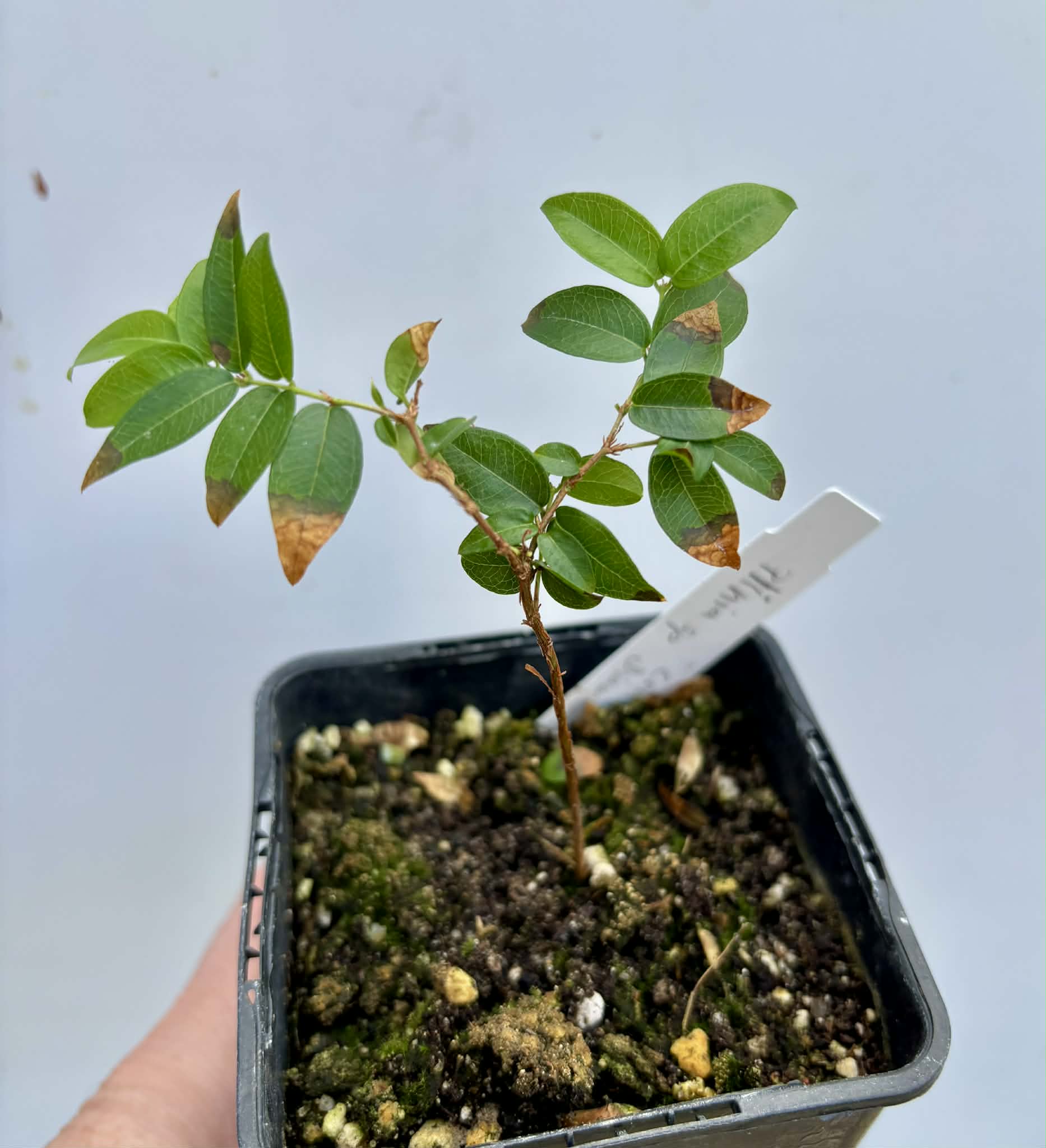
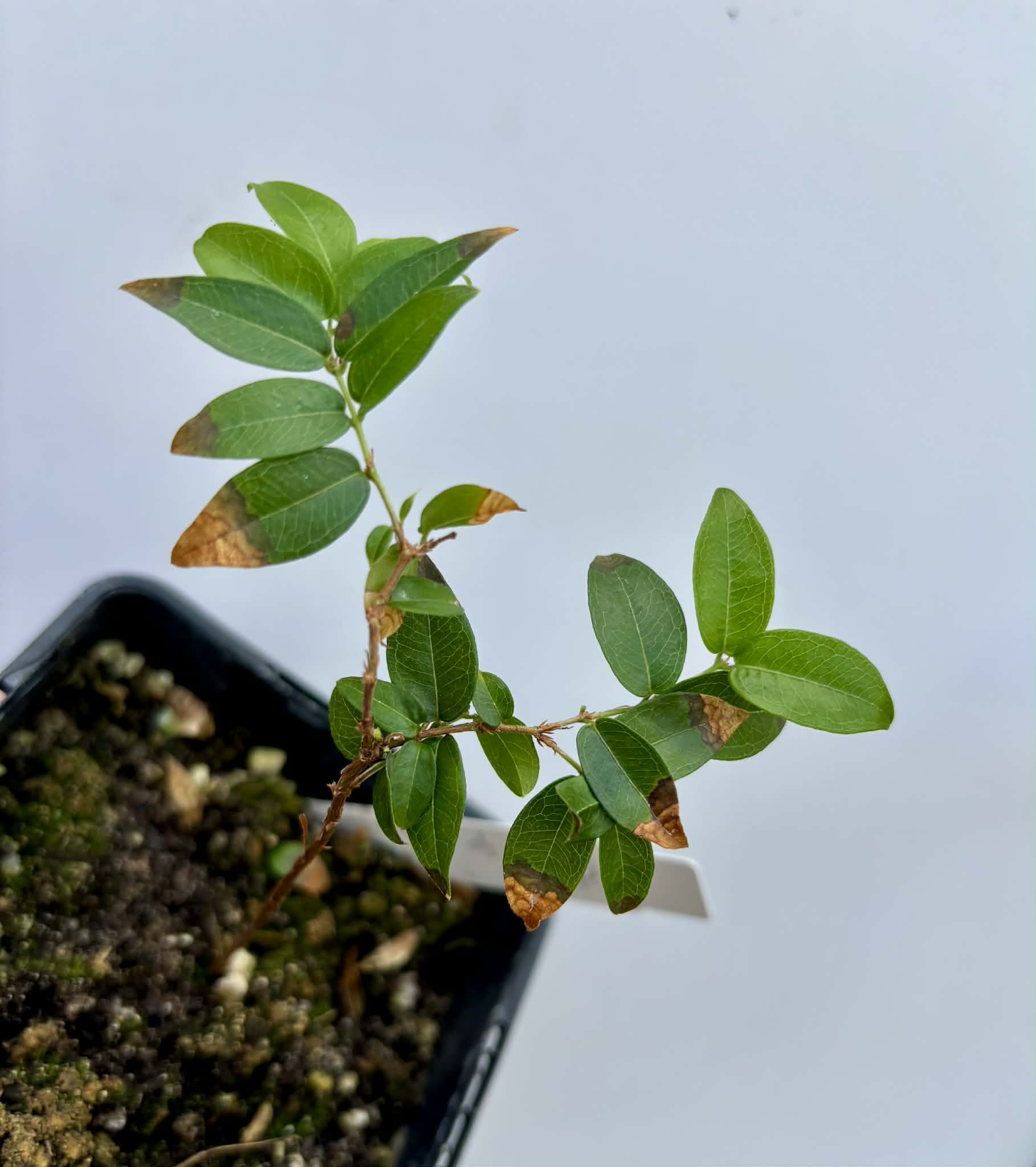
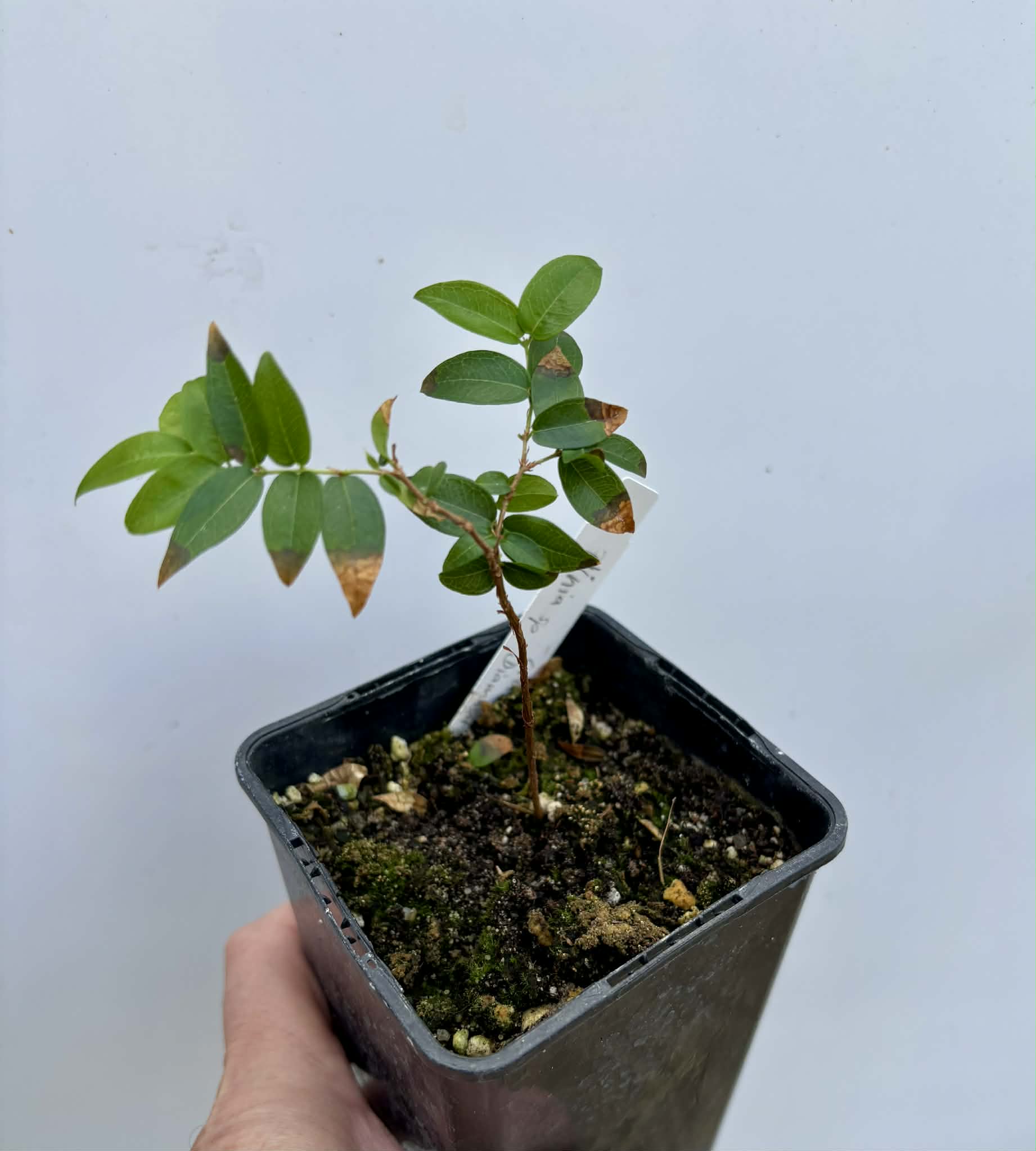
Plinia sp Cruz da Diamantina
Family / Familie: Myrtaceae
origin from / Herkunft: Brasil / Brasilien
Climate / Klima: temperate to warm (10-30C / 50-86F) / gemäßigt bis warm (10-30C / 50-86F)
Use / Verwendung: edible fruits, juice, jam, ice cream, etc. / essbare Früchte, Säfte, Marmelade, Eis usw.
you buy / sie kaufen: 1 potted seedling / 1 getopfter Sämling
Delivery EU only
Plinia sp. Cruz da Diamantina / Diamantina Cross Jaboticaba
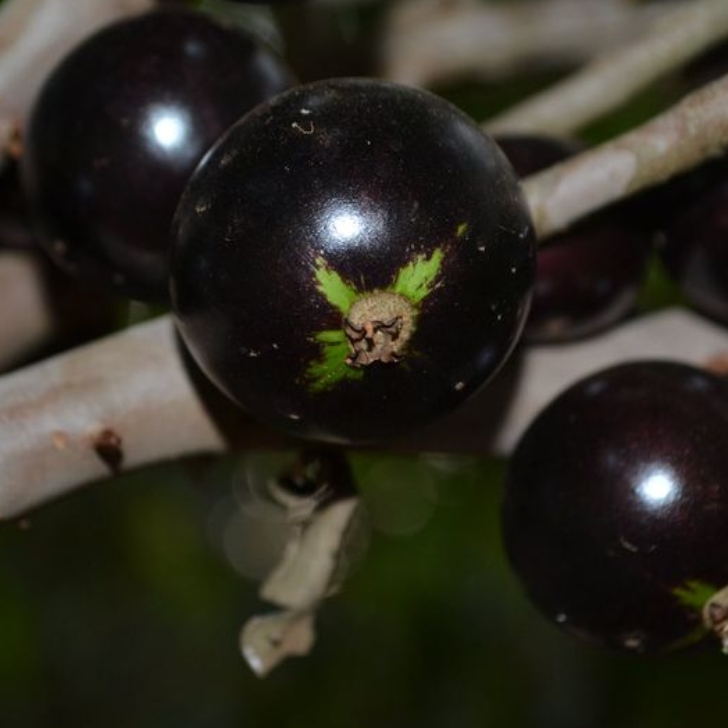
Plinia sp. Cruz da Diamantina is an extremely rare, botanically captivating Jaboticaba selection belonging to the Myrtle family (Myrtaceae). Discovered in the renowned, biodiversity-rich highlands of the Chapada Diamantina in Bahia, Brazil, this cauliflorous treasure ranks among the most sought-after acquisitions for collectors of Neotropical flora. Its name Cruz da Diamantina (Cross of Diamantina) references the remarkable botanical signature visible on its fruits: the persistent green calyx leaves form a distinct, contrasting cross pattern at the apex of each glossy, dark purple-to-black berry. True to the genus Plinia, flowers and fruits emerge directly along the woody trunk and main branches, creating a breathtaking visual during the cropping season. Beneath the shiny skin lies translucent, snow-white pulp of top-tier eating quality. On the palate, the Diamantina Cross Jaboticaba delivers a rich, candy-like sweetness with complex flavor notes reminiscent of dark Concord grapes, blueberries, and a subtle tropical finish. Hailing from the elevated montane habitats of Bahia, the species is adapted to cooler night temperatures and demonstrates excellent vigor and resilience in cultivation. In culture, Plinia sp. Cruz da Diamantina makes a holy-grail container specimen for conservatories, greenhouses, or protected sunny summer patios. For optimal growth, it requires a bright to sunny location alongside a slightly acidic, organic-rich substrate kept consistently moist. As a tropical/subtropical highland species, it is sensitive to frost and must be overwintered in a bright spot at a minimum temperature of 10 to 15 °C (50 to 59 °F).
Plinia sp. Cruz da Diamantina / Diamantina-Kreuz-Jaboticaba
Die Plinia sp. Cruz da Diamantina ist eine extrem seltene, botanisch faszinierende Jaboticaba-Rarität aus der Familie der Myrtengewächse (Myrtaceae).
Entdeckt in der weltberühmten, artenreichen Gebirgsregion der Chapada Diamantina im brasilianischen Bundesstaat Bahia, gehört diese Stammblüter-Selektion zu den gefragtesten Schätzen unter Neotropen-Sammlern.
Ihr Name Cruz da Diamantina (Kreuz von Diamantina) leitet sich von dem absolut einmaligen botanischen Merkmal ihrer Früchte ab: An der Spitze jeder dunkel-purpurroten bis glänzend schwarzen Beere bildet der grüne, kreuzförmige Kelchrest eine markante, stern- beziehungsweise kreuzförmige Zeichnung.
Wie für die Gattung Plinia typisch, erscheinen die Blüten und Früchte cauliflor direkt am holzigen Stamm und an den Hauptästen, was zur Reifezeit für ein spektakuläres Bild sorgt.
Unter der festen, glänzenden Schale verbirgt sich ein saftiges, schneeweißes Fruchtfleisch von herausragender kulinarischer Qualität.
Geschmacklich bietet die Diamantina-Kreuz-Jaboticaba ein erstklassiges, tiefes Süßeprofil mit feinen Noten von dunklen Weintrauben, Blaubeeren und einem Hauch von tropischer Frische.
Dank ihrer Herkunft aus den höher gelegenen Felsen- und Bergregionen Bahias ist die Art an kühlere Nächte gewöhnt und erweist sich in Kultur als erstaunlich robust und wuchsfreudig.
In Kultur ist Plinia sp. Cruz da Diamantina ein absolute Edel-Rarität für die dauerhafte Kübelhaltung im Wintergarten, im Tropengewächshaus oder an geschützten, sonnigen Plätzen im Sommer.
Für ein optimales Gedeihen bevorzugt sie einen sehr hellen bis sonnigen Standort sowie ein leicht saures, humoses Substrat (z. B. mit Sphagnum-, Bims- oder Torfanteil), das stets gleichmäßig feucht gehalten werden muss.
Als tropisch-subtropische Gebirgsart ist sie frostempfindlich und sollte an einem hellen Ort bei mindestens 10 bis 15 Grad Celsius überwintert werden.
Login