Kundong (Garcinia parvifolia) - 1 fresh seed / 1 frischer Samen
Kundong (Garcinia parvifolia)
Family / Familie: Clusiaceae
origin from / Herkunft: Asia / Asien
Climate / Klima: warm (15-30C / 60-84F) / warm (15-30C / 60-84F)
Use / Verwendung: edible fruits, juice, jam, ice cream, etc. / essbare Früchte, Säfte, Marmelade, Eis usw.
you buy / sie kaufen: 1 fresh seed / 1 frischer Samen
Delivery worldwide
Garcinia parvifolia / Kundong (Asam Aur)
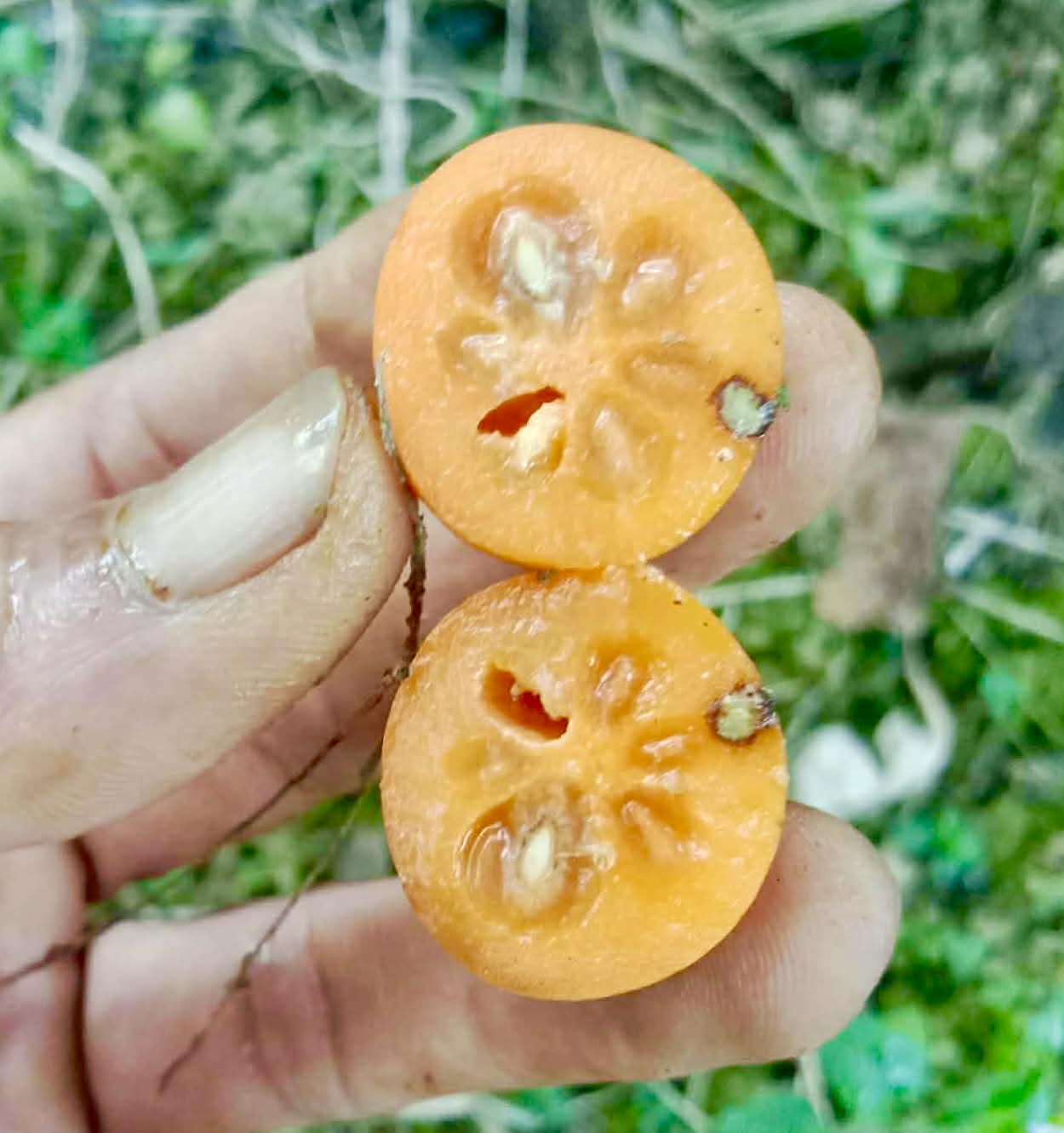
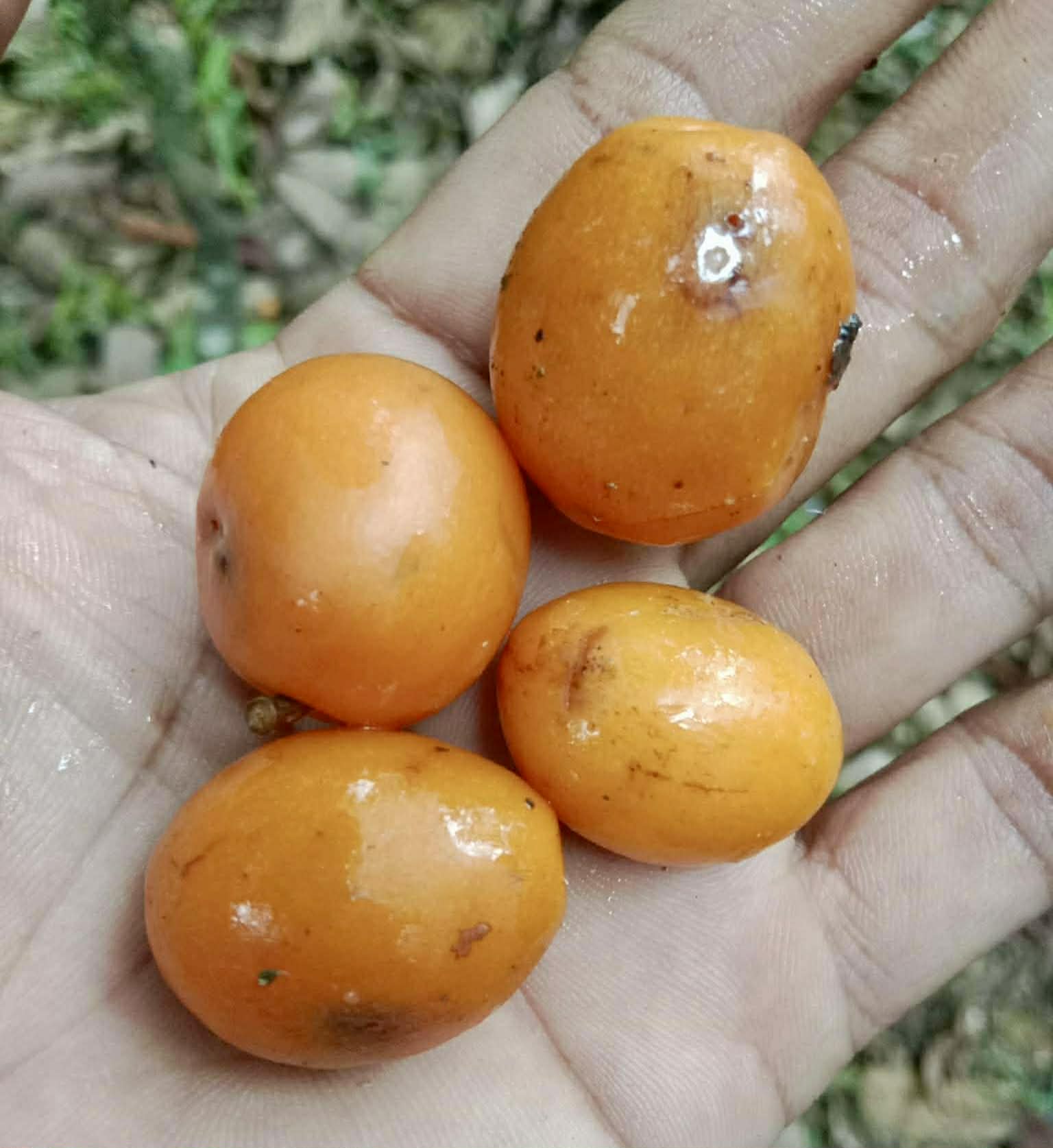
Important botanical note: Numerous misidentified images and incorrect photos circulate online under the name Garcinia parvifolia (frequently depicting distinctly ribbed species like Garcinia cowa). The wild collection offered here represents the genuine, taxonomically verified Garcinia parvifolia, featuring a smooth skin and 8-locular fruit cross-section. Garcinia parvifolia, locally known across Southeast Asia as Kundong, Buah Kundung, or Asam Aur, is a rare wild fruit species belonging to the family Clusiaceae. Native to the humid lowland rainforests and peat swamp ecosystems of Sumatra, Borneo, Java, and Peninsular Malaysia, it is a highly regarded wild fruit of the Malesian flora. Botanically, it forms a small to medium-sized evergreen tree with a refined canopy. The 2.5 to 3.5 cm berries mature into a rich warm yellow to apricot-orange shade, characterized by a completely smooth, glossy epicarp without any vertical ridging or grooves. In cross-section, the fruit reveals its diagnostic multilocular structure with exactly 8 (up to 12) symmetrically arranged locules. The translucent, juicy whitish to pale yellow sarcotesta enclosing the seeds offers a refreshing, tangy-acidic to pleasantly sweet flavor profile. In traditional Southeast Asian cuisine, the fresh fruits are enjoyed out of hand, while dried peels serve as a prized natural souring agent for savory fish dishes and curries. For successful container culture, Garcinia parvifolia prefers a bright, warm location with elevated atmospheric humidity and a rich, well-draining, slightly acidic substrate kept consistently moist. As an ultra-tropical lowland species, it is strictly cold-sensitive and must be overwintered in a bright, warm setting at a minimum temperature of 15 to 18 °C (59 to 64 °F).
Garcinia parvifolia / Kundong (Asam Aur)
Wichtiger botanischer Hinweis: Im Internet kursieren unter dem Namen Garcinia parvifolia zahlreiche Fehlbestimmungen und falsche Abbildungen (häufig gefurchte Arten wie Garcinia cowa). Die hier angebotene Wildaufsammlung entspricht exakt der echten, taxonomisch verifizierten Garcinia parvifolia mit spiegelglatter Schale und 8-fächrigem Fruchtquerschnitt. Die Garcinia parvifolia, regional in Südostasien bekannt als Kundong, Buah Kundung oder Asam Aur, ist eine seltene Wildfrucht-Art aus der Familie der Clusiaceae (Johanniskrautgewächse). Beheimatet in den feuchten Tiefland-Regenwäldern und Torfsumpfgebieten Sumatras, Borneos, Javas und der Malaiischen Halbinsel, gehört sie zu den geschätzten traditionellen Wildfrüchten der Malesischen Flora. Botanisch bildet die Art einen kleinen bis mittelgroßen, immergrünen Baum mit eleganter Krone. Die etwa 2,5 bis 3,5 cm großen Beeren reifen zu einem kräftigen Warmgelb bis Aprikosenorange aus und zeichnen sich durch eine makroskopisch vollkommen glatte, glänzende Schale ohne jegliche Längsfurchung aus. Im transversalen Schnitt zeigt die Frucht die für diese Art diagnostisch typische Multilokularität mit exakt 8 (bis 12) symmetrisch angeordneten Samenkammern. Das saftige, weißlich-transparente bis leicht gelbliche Fruchtfleisch umhüllt die flachen Samen und begeistert durch einen erfrischenden, ausgeprägt sauren bis feinsüßlichen Geschmack. In der südostasiatischen Kulinarik werden sowohl die frischen Früchte geschätzt als auch die getrockneten Fruchtschalen als edles Säuerungsmittel für traditionelle Fischgerichte und Currys verwendet. Für ein optimales Gedeihen im Kübel bevorzugt Garcinia parvifolia einen sehr hellen, warmen und geschützten Standort mit hoher Luftfeuchtigkeit sowie ein gut durchlässiges, leicht saures und nährstoffreiches Substrat, das stetig feucht gehalten wird. Als rein tropische Tieflandart ist sie frostempfindlich und muss an einem hellen Ort warm bei mindestens 15 bis 18 Grad Celsius überwintert werden.
Login
We also recommend this product: / Zu diesem Produkt empfehlen wir zusätzlich: